Artwork
Annette et Lubin
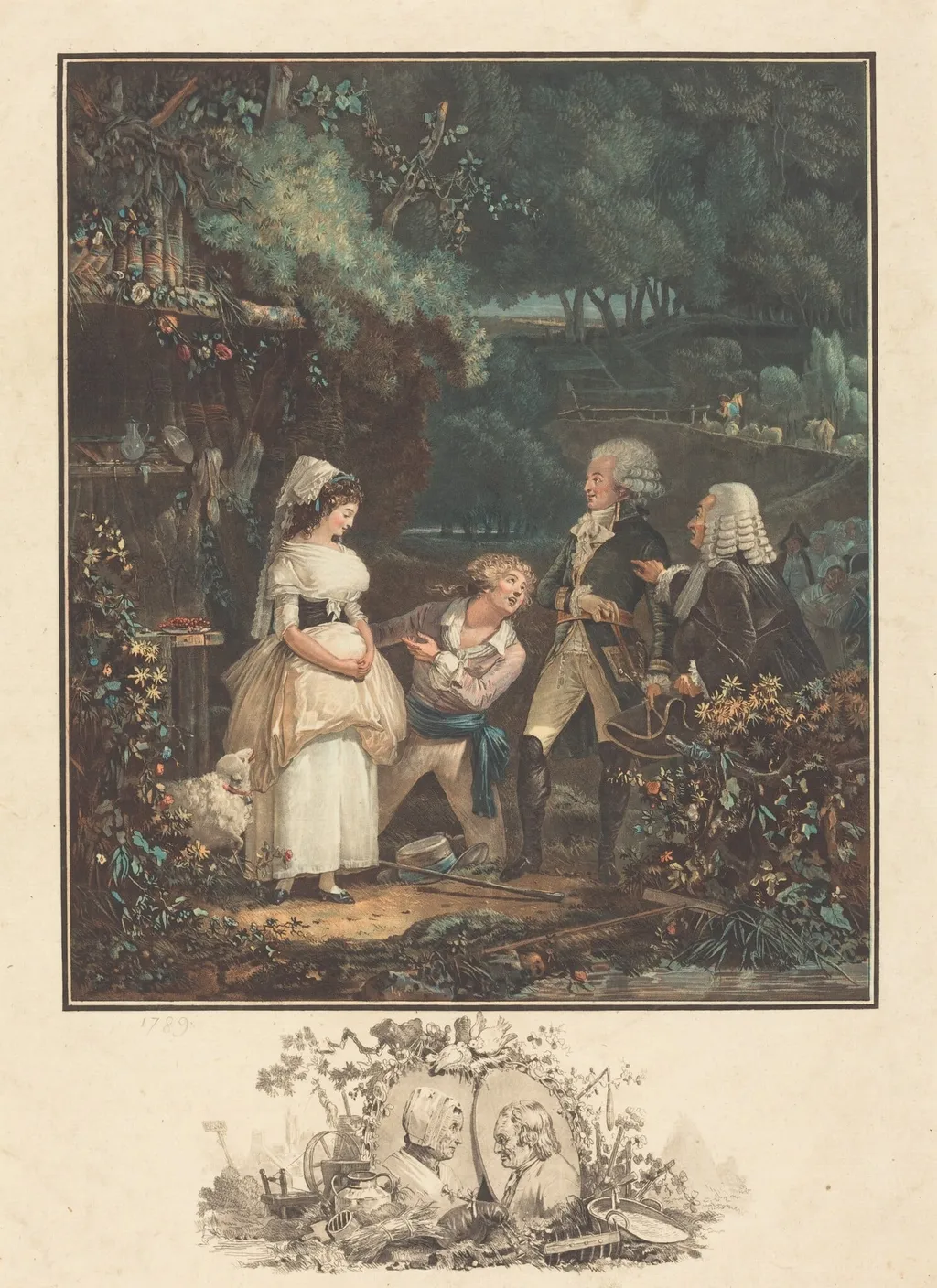
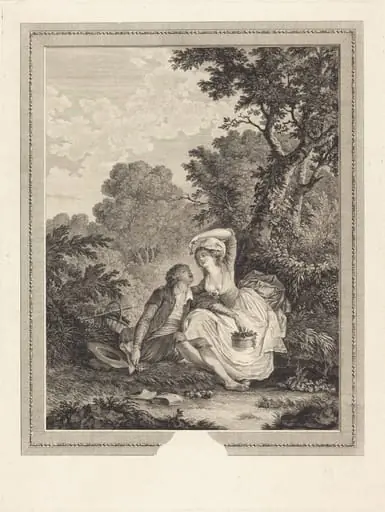
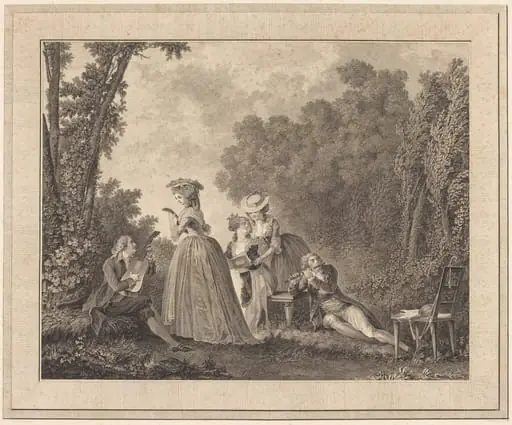
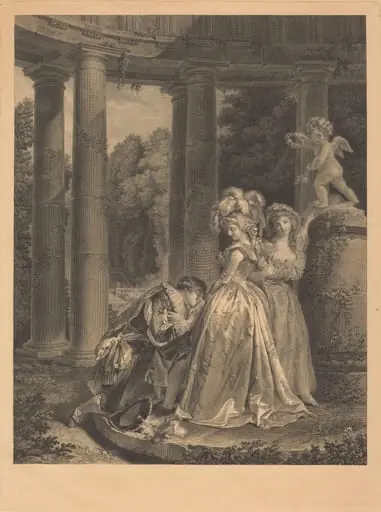
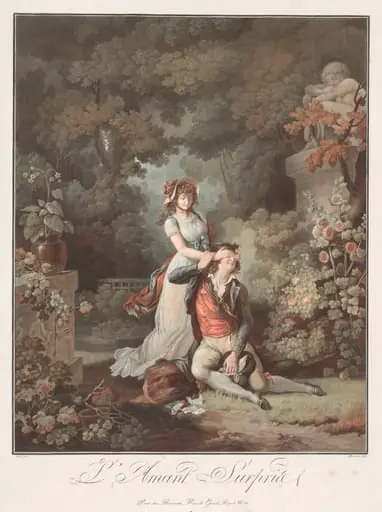
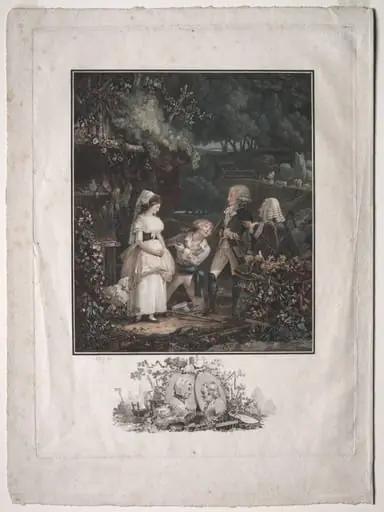
Annette et Lubin is an ink print by the Romanticist artist Philibert-Louis Debucourt. It dates from 1789 and is held in the collection of the National Gallery of Art.
About this work
Overview
The work belongs to the printmaking tradition of late 18th-century France, where technical innovation met intimate domestic subject matter.
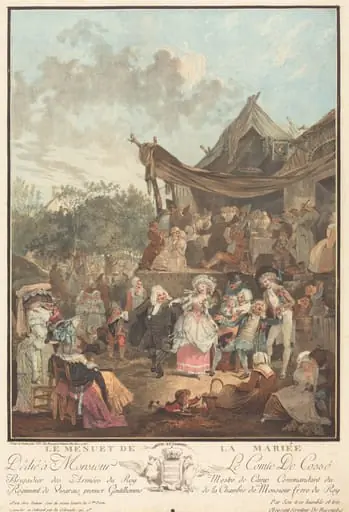
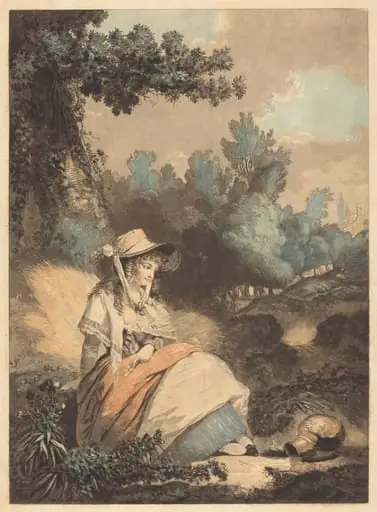
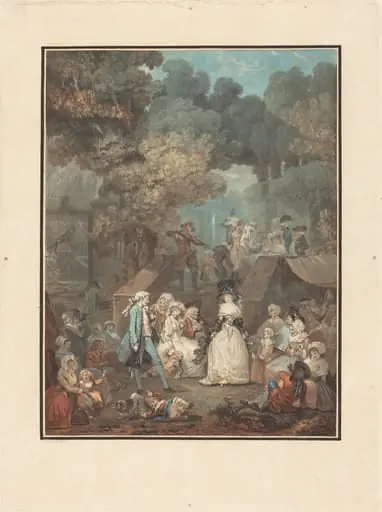
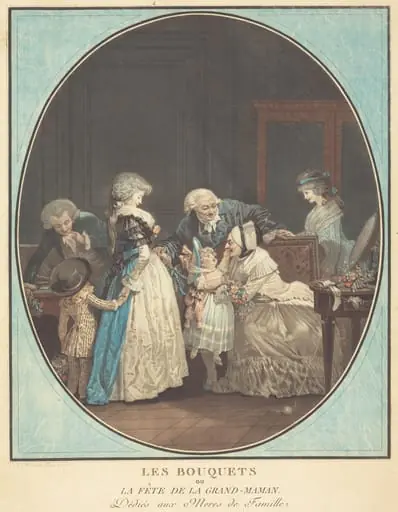
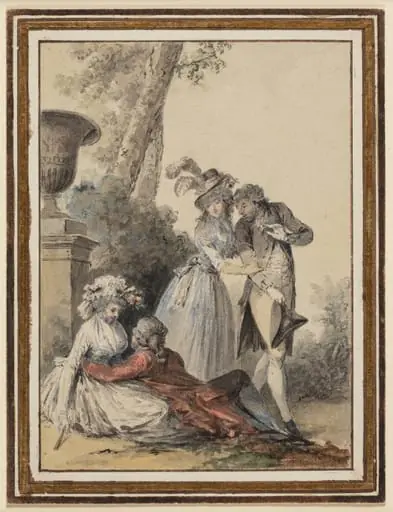
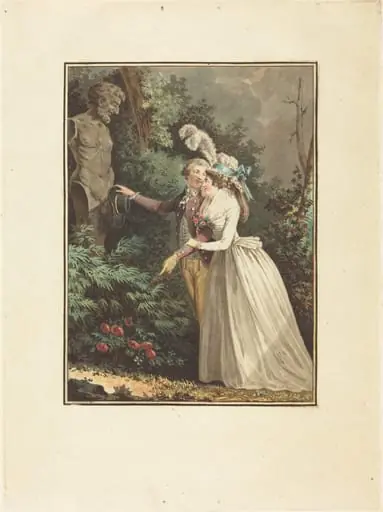
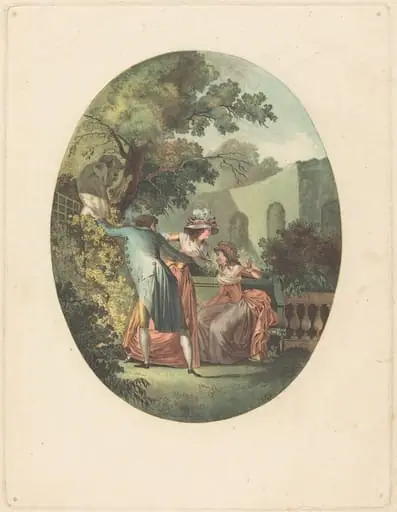
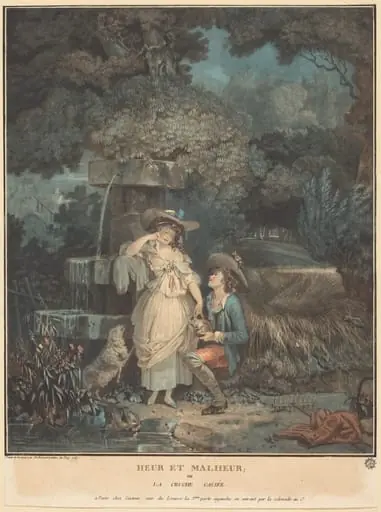
Annette et Lubin is a color etching with wash, executed in 1789 by Philibert-Louis Debucourt on laid paper. It depicts a quiet garden scene featuring five figures and a dog, rendered in soft, layered tones. The work belongs to the printmaking tradition of late 18th-century France, where technical innovation met intimate domestic subject matter. Its muted palette and delicate handling distinguish it from more dramatic contemporaries.
Subject & Meaning
The scene portrays a group of figures in a cultivated garden, suggesting a moment of everyday leisure. A woman in white stands to the left, while two men in contrasting coats occupy the center; an older couple observes from the right. The presence of a dog and lush foliage implies domestic harmony. No overt narrative is given, but the composition evokes quiet companionship and the dignity of ordinary life in pre-revolutionary France.
Technique & Style
Debucourt employed multiple color etchings with hand-applied wash to achieve subtle gradations of tone. The print’s soft greens, browns, and blues are layered to mimic the texture of foliage and fabric without bold outlines. Details in clothing and plant forms are rendered with precision, yet the overall effect remains gentle and atmospheric. This technique allowed for a painterly quality in print form, bridging drawing and painting traditions.
History & Provenance
Created in 1789, the year of the French Revolution, Annette et Lubin was produced during a period of social upheaval yet focuses on private, tranquil moments. It was likely made for the growing middle-class market that valued refined, accessible art. The work was well received in its time and entered major collections in the 19th century, where it remains studied for its technical sophistication and social nuance.
Context
While often associated with emerging Romantic sensibilities, Debucourt’s work resists dramatic emotion. Instead, it reflects the Rococo legacy of intimate genre scenes, adapted to a more restrained, observational mode. The garden setting aligns with contemporary French ideals of nature as orderly and restorative. Unlike later Romantic works, this print avoids idealization, favoring quiet realism over heightened feeling.
Legacy
Annette et Lubin is recognized as a high point in French color printmaking. Debucourt’s method influenced later artists seeking to elevate printmaking beyond reproductive functions. The work’s understated humanity and technical refinement continue to be studied in museums and academic circles, not as a revolutionary statement, but as a refined record of daily life at a turning point in French history.
Artist & collection
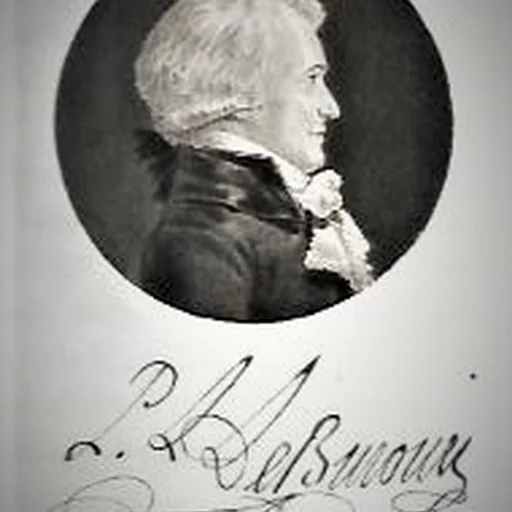
Artist
Philibert-Louis Debucourt (1755–1832) was a French artist, born in Paris.