Artwork
Moroccan Family
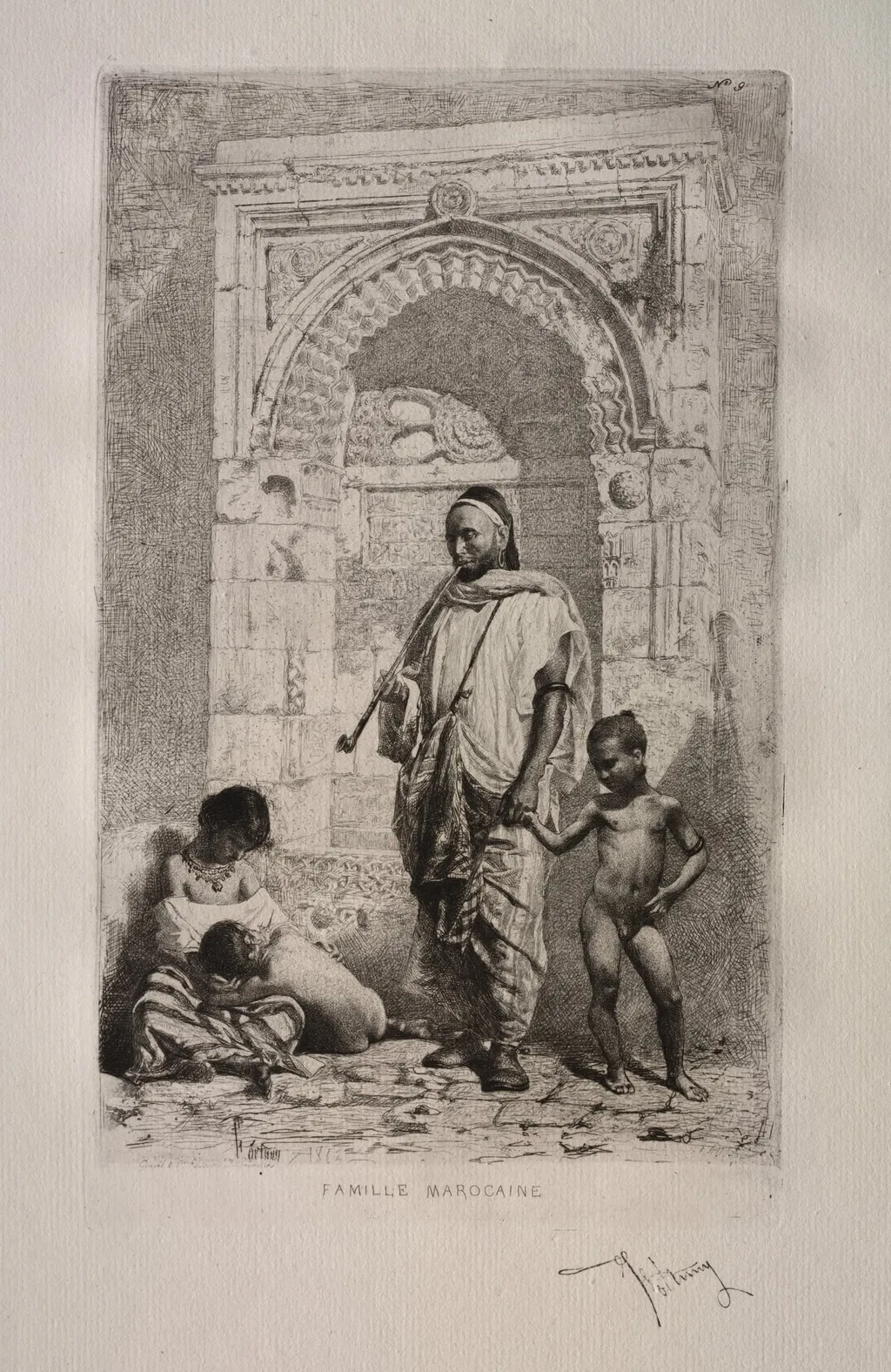
Moroccan Family is a print by the Impressionist artist Mariano Fortuny Marsal. It dates from 1862 and is held in the collection of the Cleveland Museum of Art.
About this work
Overview
Mariano Fortuny, a 19th-century Spanish artist, produced *Moroccan Family* in 1862 as part of his engagement with North African subjects.
Mariano Fortuny, a 19th-century Spanish artist, produced *Moroccan Family* in 1862 as part of his engagement with North African subjects. The work is a print derived from his earlier oil painting, capturing a domestic moment in a Moroccan setting. Fortuny’s travels in the region informed his detailed depictions of local life, distinguishing his approach from idealized Orientalist tropes common among contemporaries.
Subject & Meaning
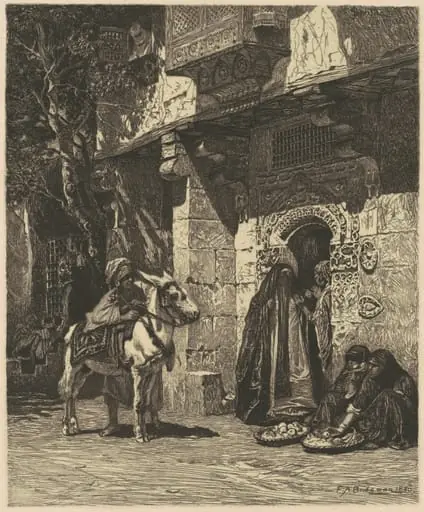
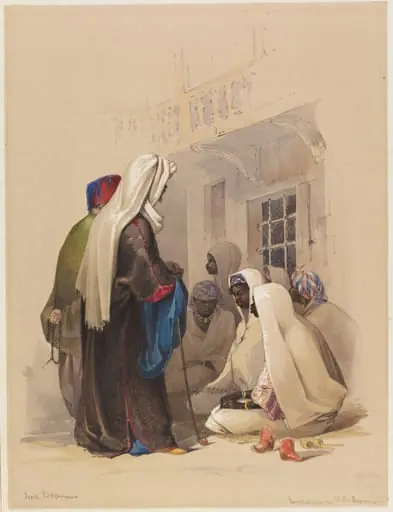
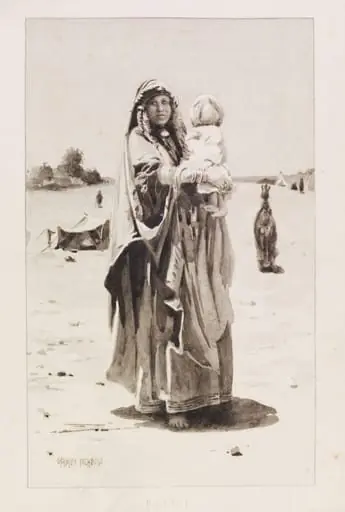
The composition centers on a Moroccan family gathered before a carved stone archway. The father, clad in a white robe and headscarf, holds the hand of a barefoot boy, while the mother, seated on the ground, cradles an infant. Their attire and posture suggest a quiet, intimate domesticity. The scene avoids theatricality, instead emphasizing familial bonds and cultural specificity through restrained gestures and naturalistic positioning.
Technique & Style
Fortuny employed precise draftsmanship and subtle chiaroscuro to model forms and suggest spatial depth. The stone archway, rendered with intricate detail, contrasts with the softer textures of fabric and skin. Light falls diagonally across the figures, enhancing volume without overpowering the scene. The print medium allowed for fine line work that preserved the delicacy of his original brushwork, reinforcing the tactile quality of the environment.
History & Provenance
Created after Fortuny’s 1859–60 journey to North Africa, *Moroccan Family* emerged during a period of heightened European interest in Oriental subjects. The print was likely produced to meet demand for accessible versions of his popular scenes. While the original oil painting’s current location is uncertain, the print circulated widely in European collections, reflecting Fortuny’s commercial success and scholarly appeal.
Context
In the mid-19th century, Spanish artists like Fortuny were increasingly drawn to North Africa as a site of cultural authenticity and visual richness. Unlike French Orientalists who often exoticized their subjects, Fortuny’s approach leaned toward observational accuracy, informed by firsthand experience. His work contributed to a more nuanced, if still filtered, representation of Maghrebi life within European art.
Legacy
Fortuny’s prints, including *Moroccan Family*, influenced later generations of Spanish painters seeking to reconcile realism with ethnographic detail. His emphasis on cultural specificity, rather than fantasy, set a precedent for more respectful depictions of non-European subjects. Though overshadowed by larger movements, his prints remain valued for their technical precision and quiet humanity.
Artist & collection
Artist
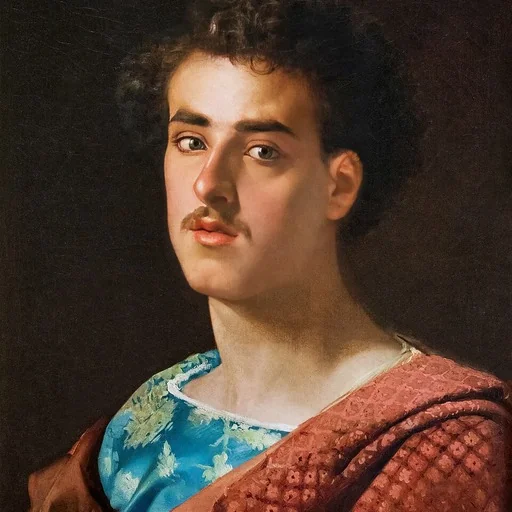
Mariano Fortuny y Marsal (Catalan: Marià Fortuny i Marsal, pronounced ; June 11, 1838 – November 21, 1874) was a Spanish painter known for works focusing on Romantic fascination with Orientalist themes, historicist…