Artwork
Entablature
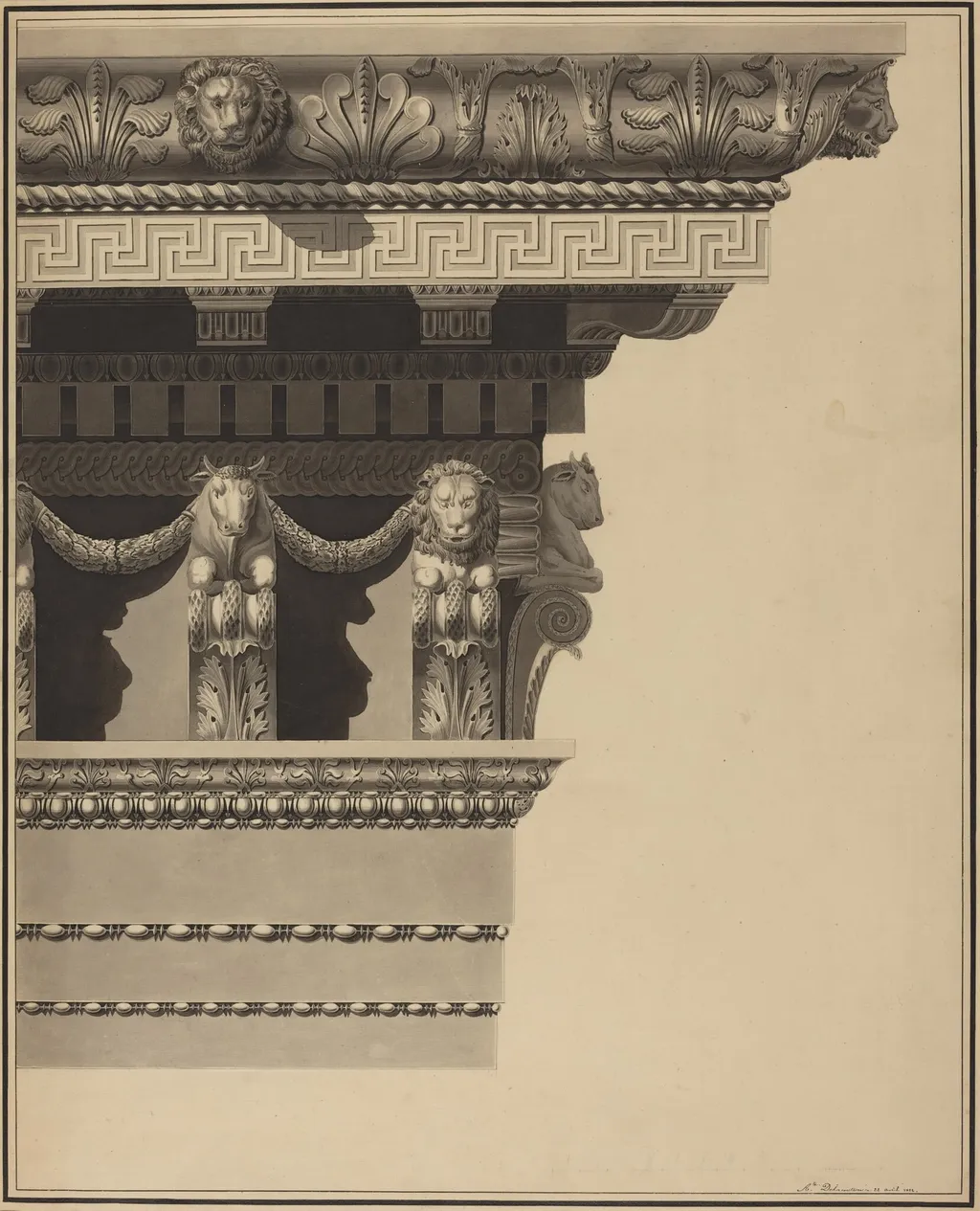
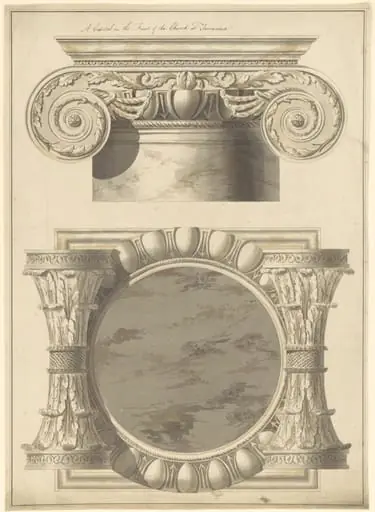
Entablature is an ink drawing by the Romanticist artist Auguste Delacouture. It dates from 1822 and is held in the collection of the National Gallery of Art.
About this work
He left no notes about why he picked this fragment, so we don’t know if it was for a bigger project or just practice.
This drawing shows a row of classical columns with a flat roof on top. The artist used fine black lines and soft gray washes to shade the stone. You can see the paper’s faint grid pattern behind the ink.
Delacouture drew this in 1822, when artists often studied ancient ruins for training. He left no notes about why he picked this fragment, so we don’t know if it was for a bigger project or just practice.
Look for similar crisp lines in drawings by Delacouture, Auguste.
Overview
Entablature is a drawing by Auguste Delacouture, executed in 1822 using pen and black ink with gray wash on laid paper. The work depicts a classical architectural element.
Subject & Meaning
The drawing focuses on a row of classical columns surmounted by a flat roof, showcasing a specific architectural motif. The artist's intent behind selecting this fragment remains unclear, potentially created for either practice or a larger, unspecified project.
Technique & Style
Delacouture employed fine black lines for delineation, complemented by soft gray washes to suggest the texture and shading of stone. The underlying paper's faint grid pattern is visible, underscoring the medium's transparency.
History & Provenance
Created in 1822, a period when studying ancient ruins was a common practice among artists for training. The drawing's provenance and the artist's specific motivations for its creation are not documented.
Context
Entablature reflects the early 19th-century artistic practice of rendering classical architectural elements, likely for educational or compositional purposes, aligning with the era's emphasis on classical study.
Legacy
While the drawing's individual impact is not broadly noted, it exemplifies Delacouture's consistent use of crisp lines, a stylistic trait observable across his body of work.
Artist & collection


 L'Ordre Corinthian
 Paradigmata Graphics Variorum Artificum
 Facade for a Church with a Sculpture Representing Faith
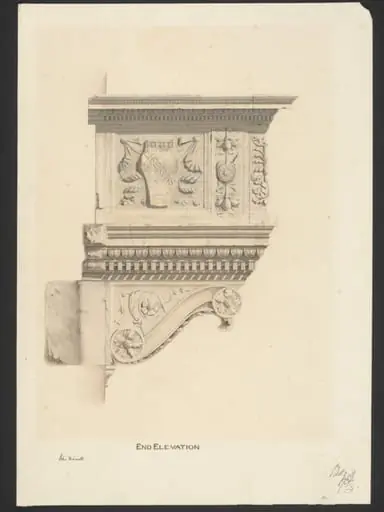 Drawing of the cantoria of Santa Maria Novella, Florence
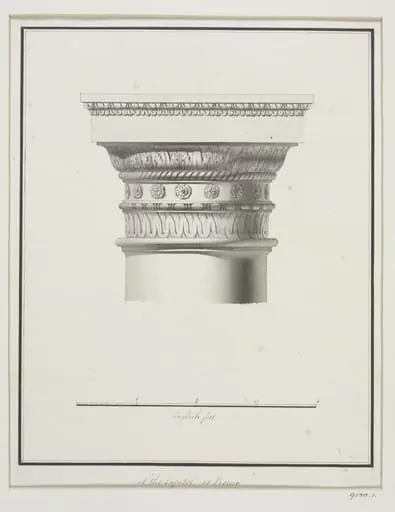 Untitled
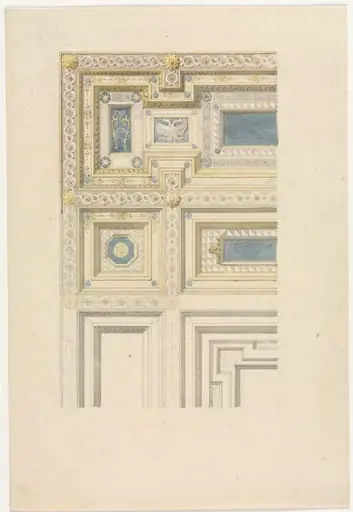 Design for Ornamental Ceiling
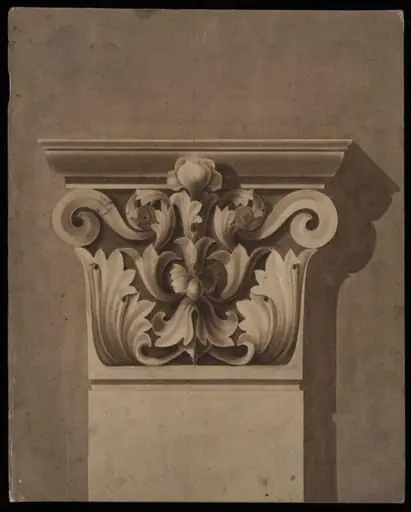 Untitled
 Untitled
 Architectural drawing of Tirumala Nayak at Madura,
 Shiva Ravananugrahamurti; woman holding a flywhisk; rearing yali
 Untitled
 Plan and elevation of a capital in the front of the church at Terracina