Artwork
Facade for a Church with a Sculpture Representing Faith
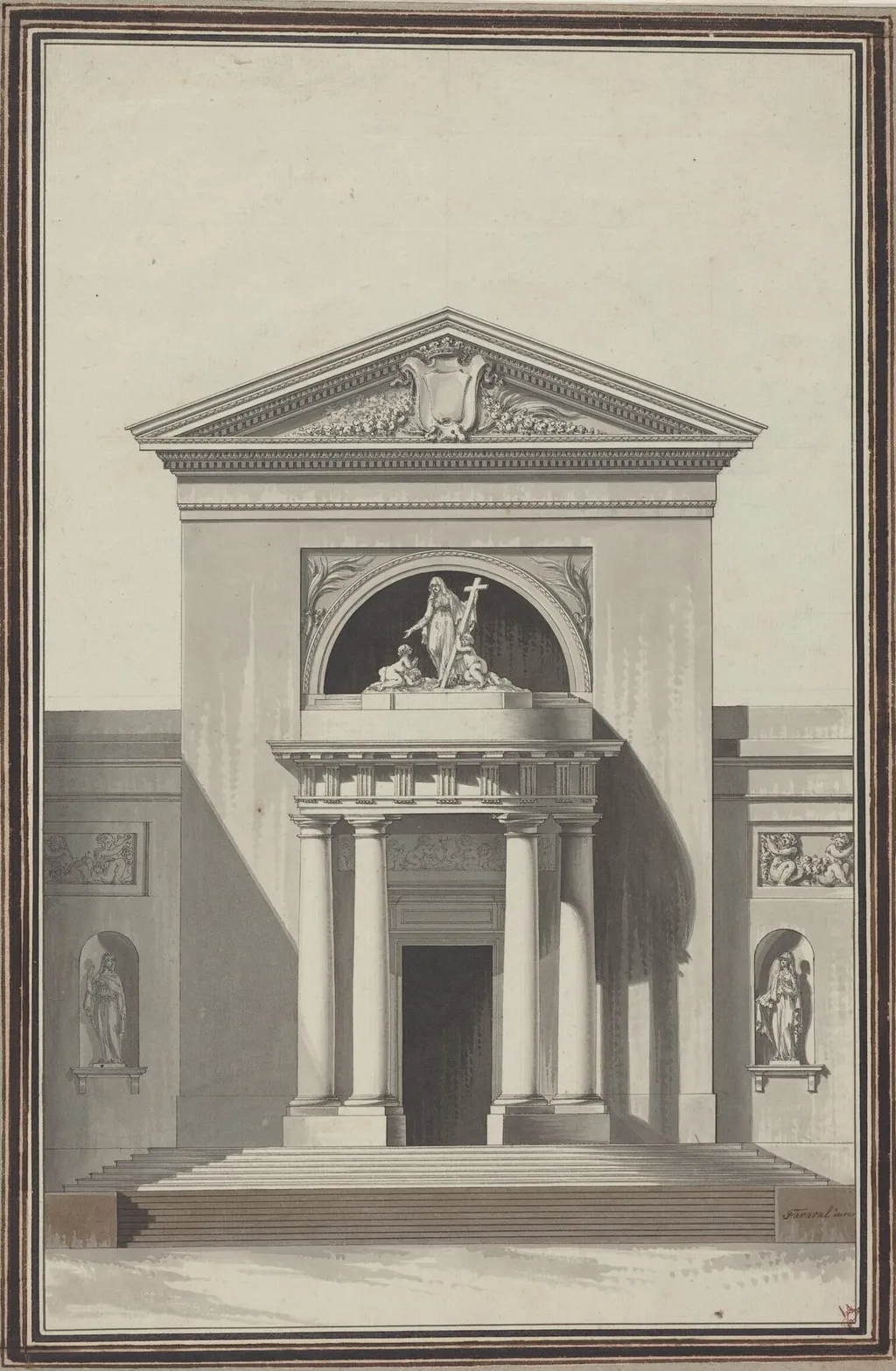
Facade for a Church with a Sculpture Representing Faith is an ink drawing by the Romanticist artist Louis Gustave Taraval. It dates from 1768 and is held in the collection of the National Gallery of Art.
About this work
Overview
Louis‑Gustave Taraval’s drawing, dated around 1768, presents a frontal view of a church façade rendered in pen and gray ink with washes of gray and brown applied over black chalk on laid paper. The composition functions as a preparatory study, outlining the architectural elements and sculptural decorations that would adorn the building’s entrance.
Subject & Meaning
The central focus of the sketch is a niche positioned above the main portal, housing a robed figure clutching a cross, an emblem traditionally associated with the concept of Faith. Flanking the central columns are two smaller statues set within arched frames, reinforcing the religious symbolism without elaborating a narrative beyond their iconographic role.
Technique & Style
Taraval employs a combination of pen line work and subtle wash shading to model volume and depth, creating a sense of three‑dimensionality reminiscent of stage scenery. Cross‑hatching and tonal variations in the washes suggest light falling across the stone surfaces, while the laid‑paper support adds a textured background to the architectural study.
History & Provenance
Created in the late eighteenth century, the drawing belongs to a period when architects and artists produced detailed façade studies for ecclesiastical commissions. Its attribution to Taraval, a French painter and draftsman active in the mid‑1700s, aligns with his known practice of producing preparatory sketches for religious structures.
Context
The work reflects the neoclassical interest in classical orders, evident in the three tall columns and triangular pediment that frame the church front. Such compositional choices echo contemporary architectural trends that sought to convey order, harmony, and the solemnity appropriate to sacred spaces.
Legacy
While primarily a design document, the drawing offers insight into eighteenth‑century approaches to integrating sculpture and architecture in ecclesiastical settings. It serves as a reference for scholars studying the visual planning methods of the period and the role of symbolic statuary in church façades.
Artist & collection


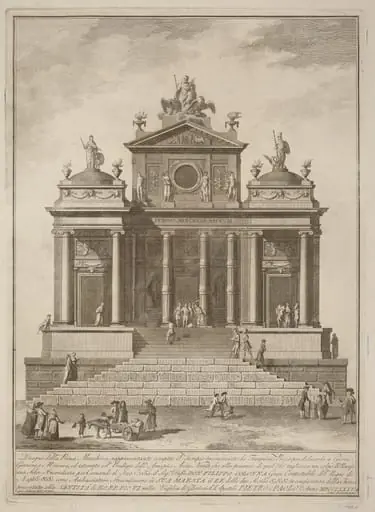 The Prima Macchina for the Chinea of 1785: The Temple of Jupiter Begun by Tarquinius Priscus with the Marvel of Accius Naevius
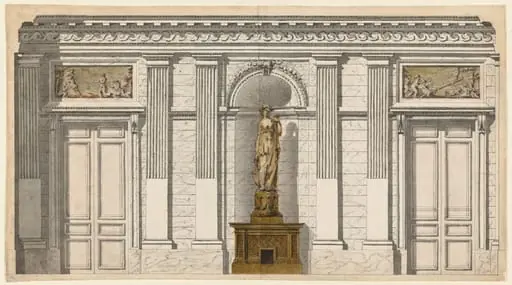 Design for a Wall with Two Doors and a Sculpture
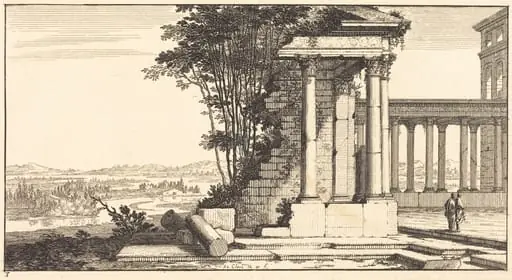 Landscape with Classical Ruins
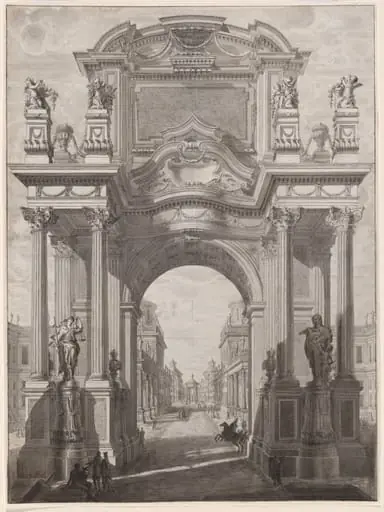 An Architectural Capriccio with a Triumphal Arch
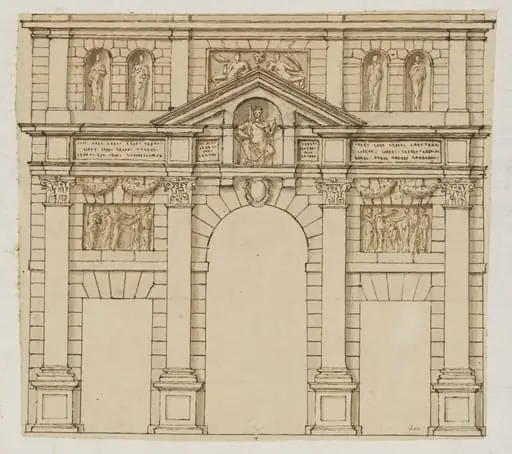 Study for a gateway
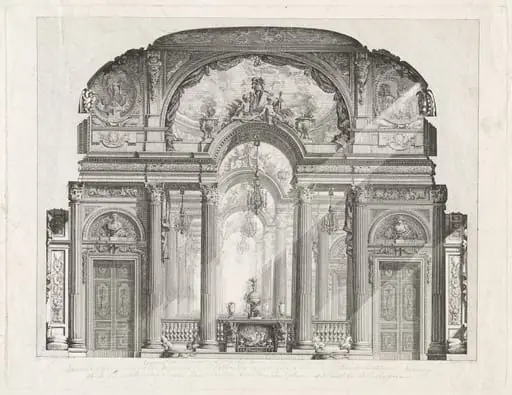 Cross Section of the Salon of the Palazzo Spinola, Genoa
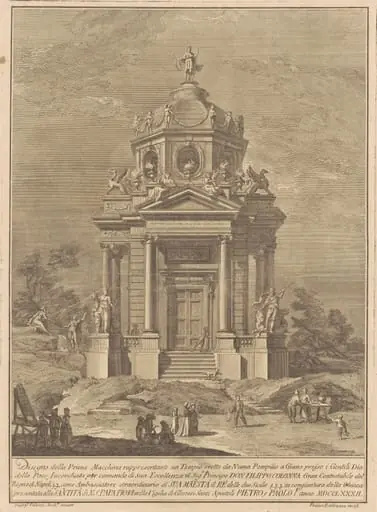 The Prima Macchina for the Chinea of 1782: The Temple of Janus Built by Numa Pompilius
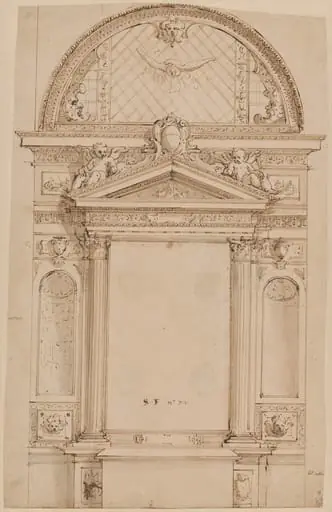 Design for an Altar
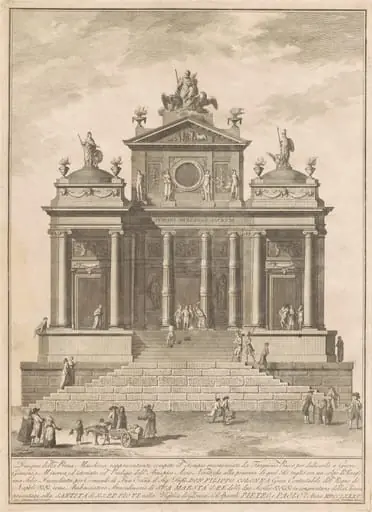 The Prima Macchina for the Chinea of 1785: The Temple of Jupiter Begun by Tarquinius Priscus with the Marvel of Accius Naevius
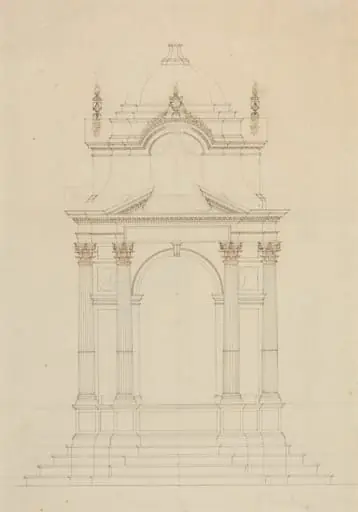 Design for a Baldaquin
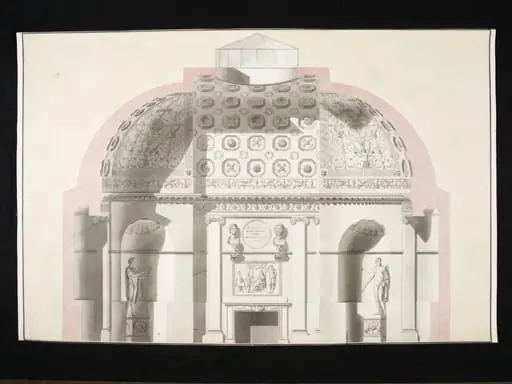 Design for an Antique Gallery