Artwork
Jewish Woman of Algiers (Juive d'Alger)
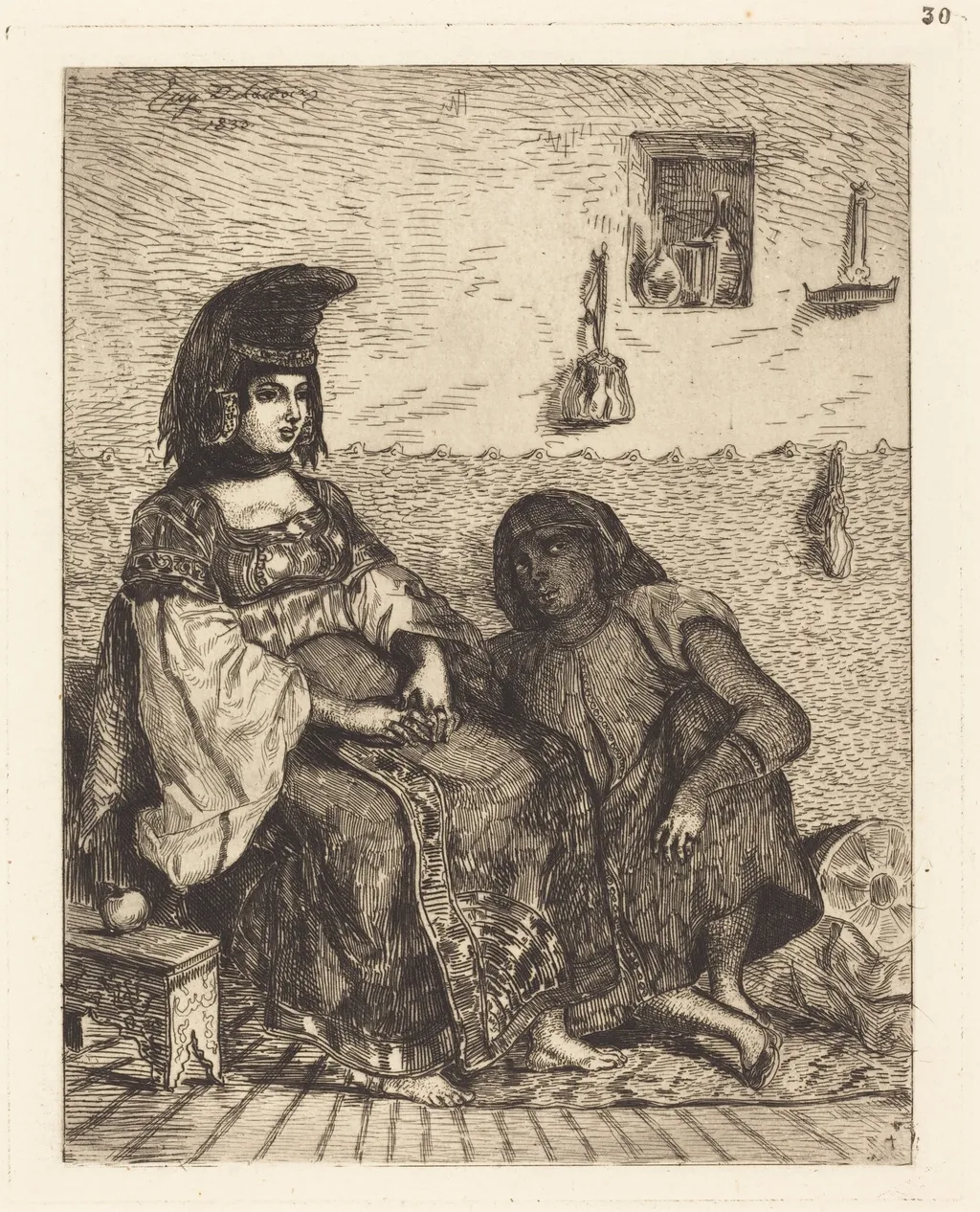
Jewish Woman of Algiers (Juive d'Alger) is an ink print by the Romanticist artist Eugène Delacroix. It dates from 1833 and is held in the collection of the National Gallery of Art.
About this work
Overview
Eugène Delacroix produced this etching in 1833 during a period of intense engagement with North African imagery following his travels to Morocco and Algeria.
Eugène Delacroix produced this etching in 1833 during a period of intense engagement with North African imagery following his travels to Morocco and Algeria. The work belongs to a series of prints inspired by his observations of local life, capturing intimate domestic moments with quiet realism. Unlike his more colorful oil paintings, this piece relies on the precision of line and tonal contrast to convey atmosphere and presence.
Subject & Meaning
Two women are depicted seated on the floor of a modest interior, one veiled in dark fabric, the other in lighter attire. Their postures suggest a moment of stillness, perhaps conversation or quiet contemplation. Delacroix avoids exoticism, instead portraying them with dignity and individuality. The veil and clothing reflect cultural norms without sensationalizing difference, emphasizing personal presence over stereotypical representation.
Technique & Style
Using etching, Delacroix employed fine, controlled lines to model form and suggest texture in fabric, skin, and architecture. Subtle shading builds depth without heavy cross-hatching, allowing the paper’s natural tone to contribute to the composition. The restrained palette of ink on paper aligns with Romanticism’s interest in emotional nuance, prioritizing mood over theatricality, and revealing his mastery of graphic medium.
History & Provenance
Created shortly after Delacroix’s return from North Africa, the etching was likely made for private circulation or as part of a portfolio documenting his journey. It was not widely published at the time, and surviving impressions are rare. The work entered institutional collections in the late 19th century, valued for its early ethnographic sensitivity and technical refinement within printmaking.
Context
Delacroix’s interest in Algiers emerged amid France’s colonial expansion into North Africa. While many artists depicted the region through orientalist tropes, he sought authenticity through direct observation. His prints and paintings from this period reflect a shift toward documenting daily life rather than constructing fantasy, distinguishing his approach from contemporaries who emphasized spectacle over subtlety.
Legacy
This etching contributed to a broader redefinition of how non-European subjects could be represented in European art. Its quiet intimacy influenced later realist and impressionist printmakers who valued observational detail over idealization. Delacroix’s restrained treatment of cultural difference helped pave the way for more nuanced portrayals in 19th-century graphic art.
Artist & collection
Artist
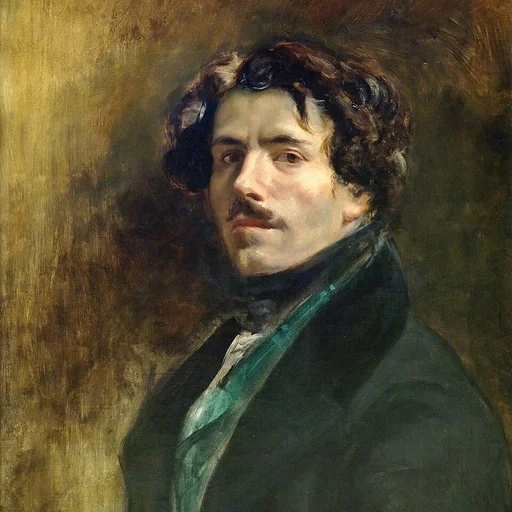
Ferdinand Victor Eugène Delacroix ( DEL-ə-krwah, -KRWAH; French: ; 26 April 1798 – 13 August 1863) was a French Romantic artist who was regarded as the leader of the French Romantic school.

![Market in Tangiers [Mercato di Tangeri], by E. Tommasi](https://artifactworldgallery.com/img/e-tommasi--market-in-tangiers-mercato-di-tangeri--dd40f2e0c7e6fcf9-w320.webp)