Artwork
Il appliqua sur cette main un baiser que je sentis sur mon coeur
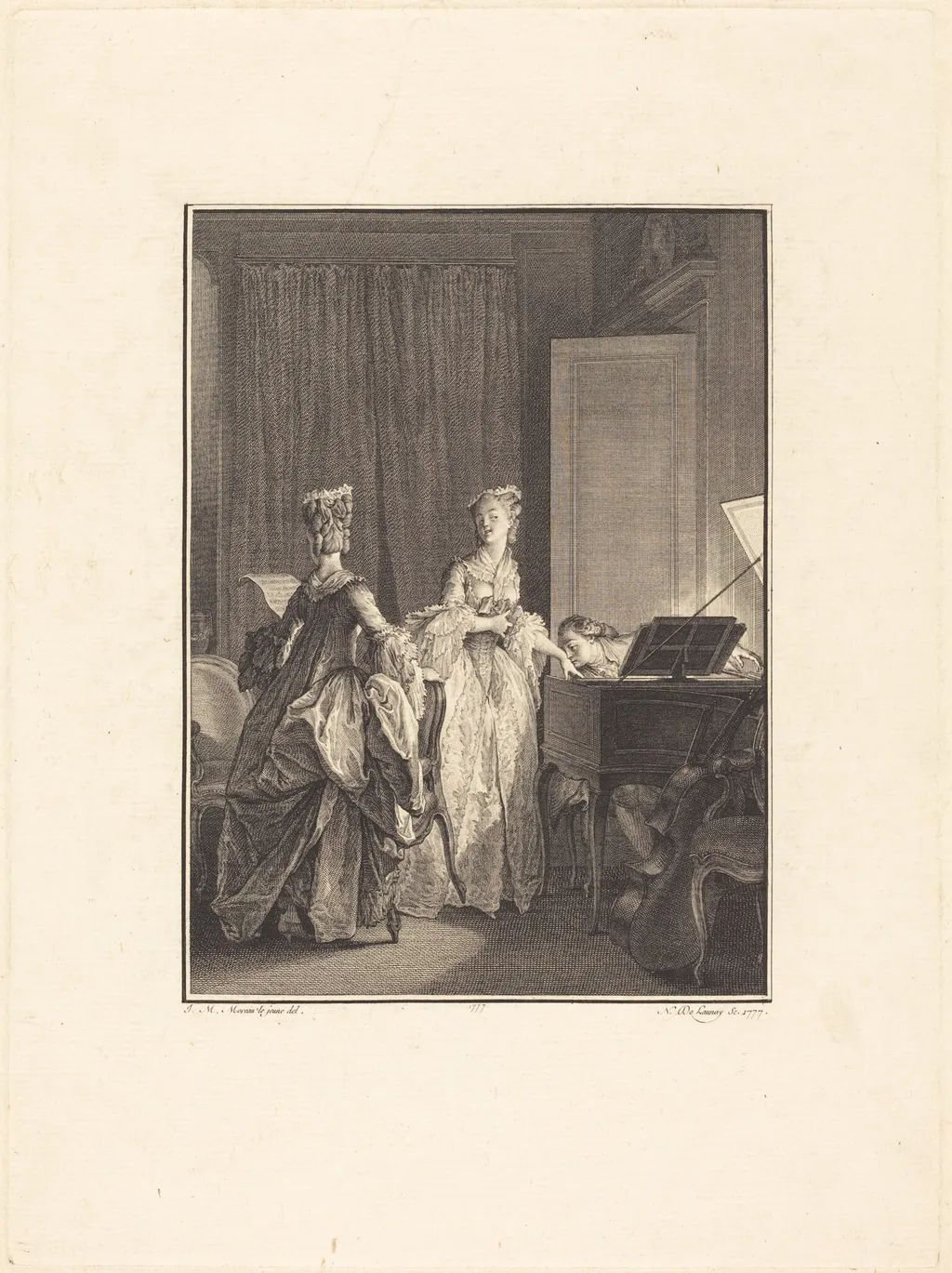
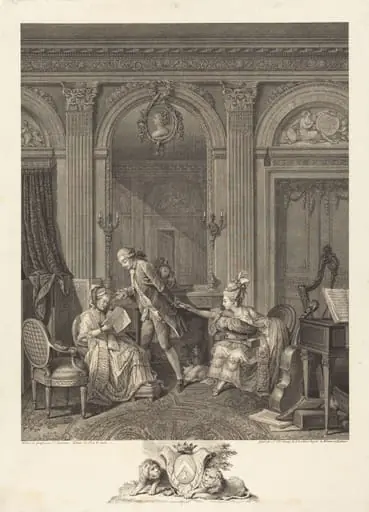
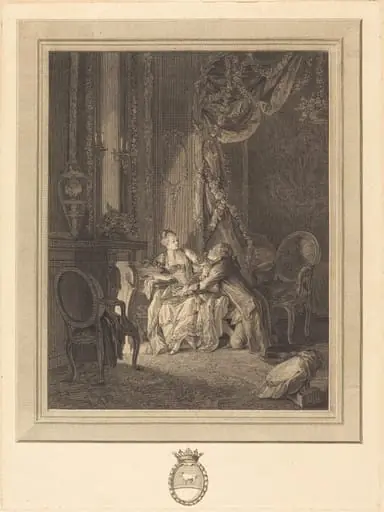
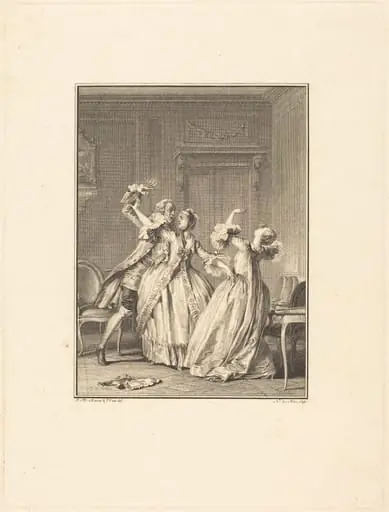
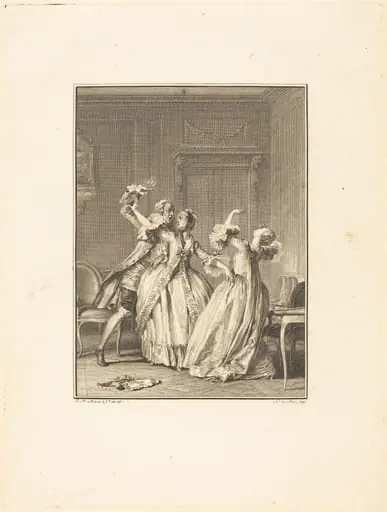
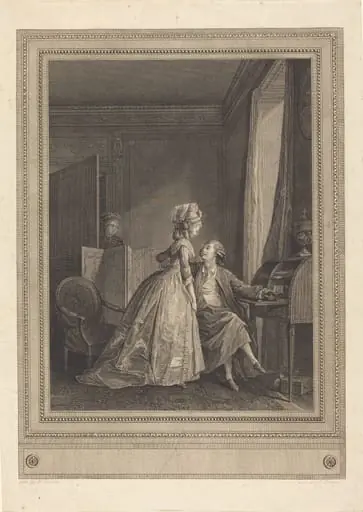
Il appliqua sur cette main un baiser que je sentis sur mon coeur is an ink print by the Romanticist artist Nicolas Delaunay. It dates from 1777 and is held in the collection of the National Gallery of Art.
About this work
Overview
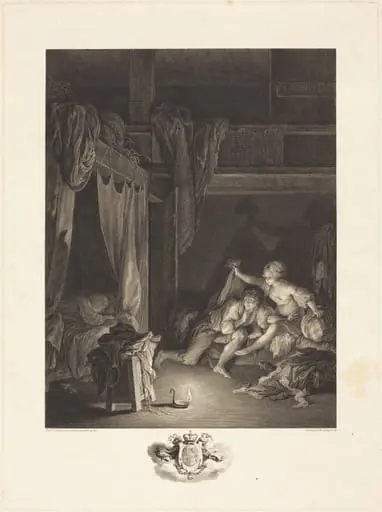
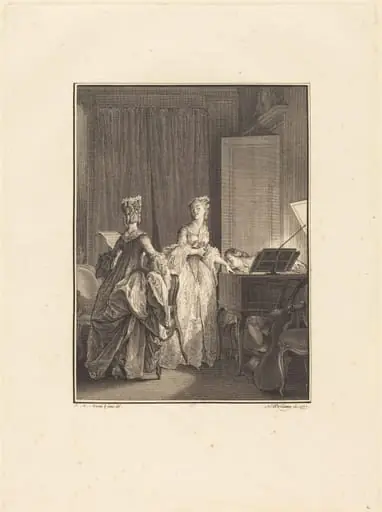
Created in 1777, this black‑and‑white print by Nicolas Delaunay bears the title Il appliqua sur cette main un baiser que je sentis sur mon coeur. Executed as an etching and engraving, the work depicts an intimate interior scene illuminated by a modest lamp, with three women arranged around a piano and a curtained window.
Subject & Meaning
The composition presents a quiet domestic moment: a woman seated at a piano, her hand poised on the keys while a child leans forward to read the music; a second woman in a dark dress observes, holding a sheet of paper; a third figure stands nearby. The title suggests an emotional exchange, likening a kiss placed on a hand to a feeling that reaches the heart.
Technique & Style
Delaunay employed fine, closely spaced lines characteristic of 18th‑century etching, incising the image onto a metal plate before inking and pressing it onto paper. The delicate rendering of fabric folds, the subtle gradations of light, and the careful delineation of the interior objects demonstrate the artist’s skill in manipulating line to convey texture and atmosphere.
History & Provenance
The print was produced in the late 1770s, a period when French printmakers frequently explored genre scenes of everyday life. While specific ownership records are scarce, the work has been documented in several catalogues of Delaunay’s oeuvre and appears in collections focusing on French Enlightenment-era prints.
Context
During the late eighteenth century, domestic interiors became a popular subject for French engravers, reflecting contemporary interests in private life and sentiment. Delaunay’s choice of a musical setting aligns with the era’s association of music with refinement and emotional expression.
Legacy
Although not as widely reproduced as some contemporaneous prints, this work exemplifies the technical proficiency and thematic concerns of French engraving in the pre‑revolutionary period, offering insight into the visual culture of intimate, middle‑class settings.
Artist & collection