Artwork
Le soufflet
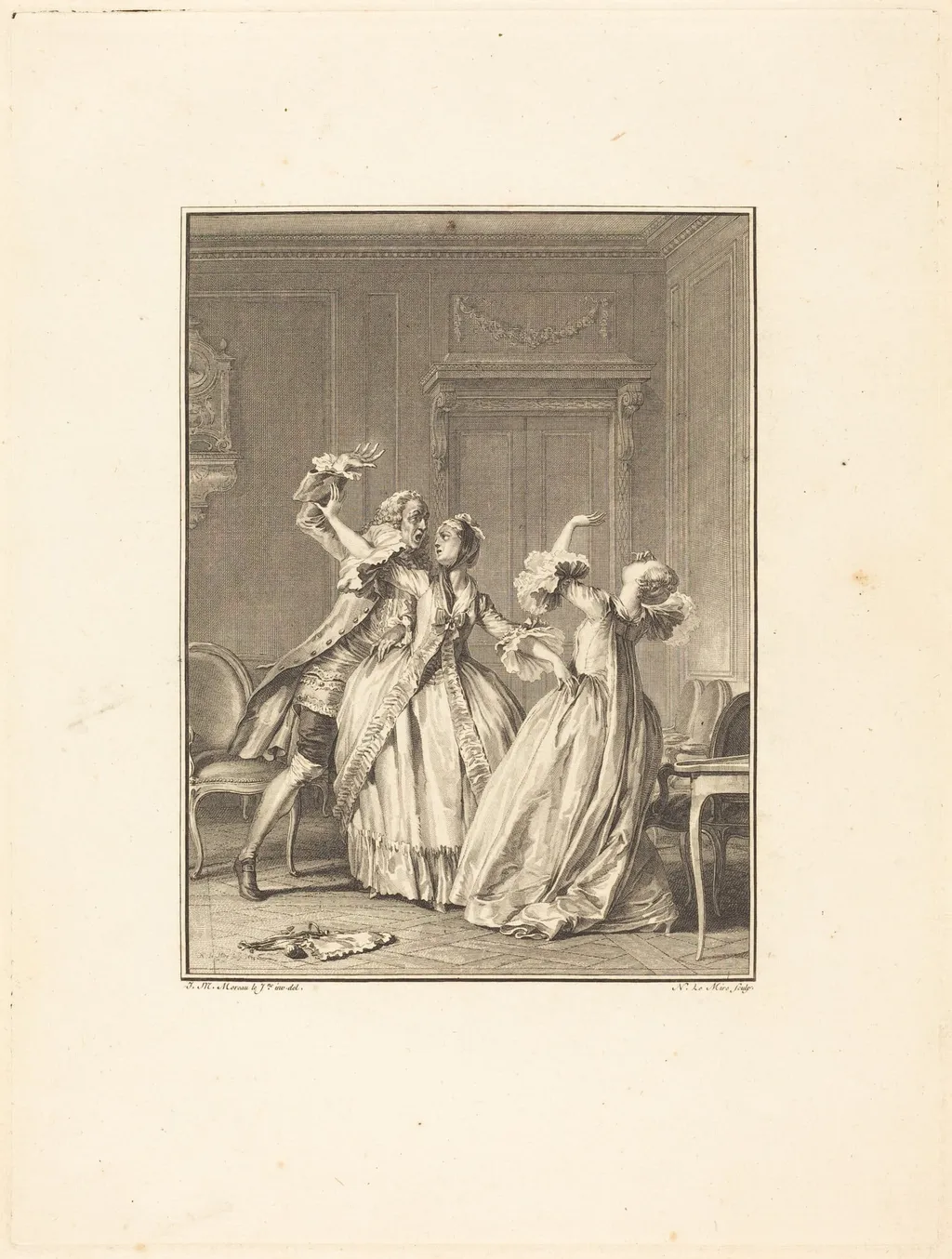
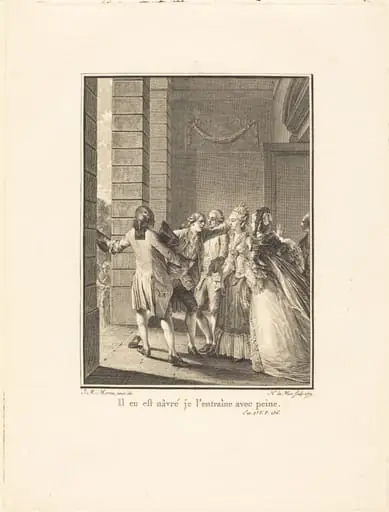
Le soufflet is an ink print by the Romanticist artist Noël Le Mire. It dates from 1774 and is held in the collection of the National Gallery of Art.
About this work
Overview
The composition relies on fine line work to convey motion and emotional tension, typical of 18th-century printmaking traditions focused on domestic scenes.
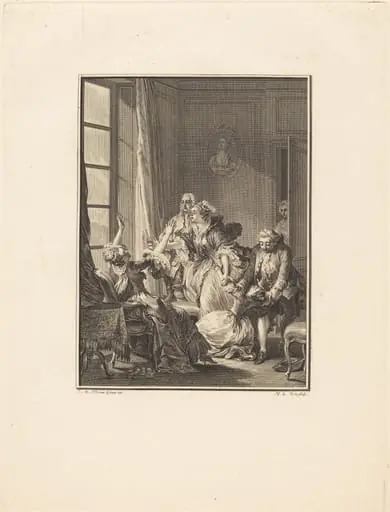
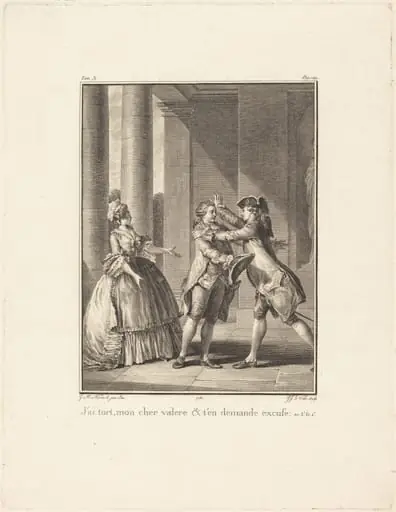
Le soufflet is a black-and-white print made in 1774 by French artist Noël Le Mire, using etching and engraving techniques. It captures a single, dynamic moment in an interior setting, depicting three figures engaged in a sudden, theatrical interaction. The composition relies on fine line work to convey motion and emotional tension, typical of 18th-century printmaking traditions focused on domestic scenes.
Subject & Meaning
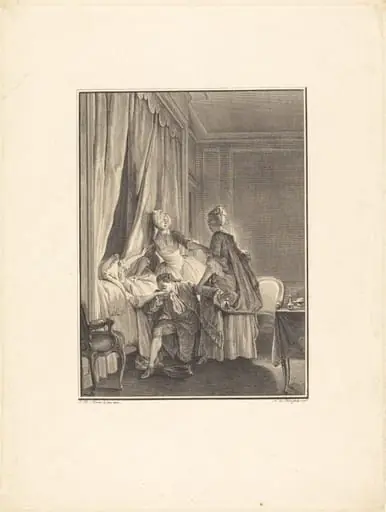
The scene portrays a man mid-gesture, as if delivering a light slap to one of two women, both dressed in elaborate attire and reacting with surprise or amusement. A broken fan lies at their feet, suggesting a disruption in social decorum. The moment implies playful intimacy or a breach of etiquette, common in genre scenes of the period that explored the subtleties of interpersonal dynamics among the upper classes.
Technique & Style
Le Mire employed fine etched lines and controlled engraving to render texture, movement, and expression without color. Shading and varying line density suggest the folds of fabric, the flicker of firelight, and the abruptness of the gesture. The composition directs the viewer’s eye through the figures’ poses and the diagonal of the fallen fan, enhancing the sense of sudden action within a confined space.
History & Provenance
Created in 1774, the print was likely produced for a broader audience interested in fashionable domestic life. Le Mire was known for reproductive engravings and genre scenes, often based on paintings by contemporaries. While the exact provenance of this specific impression is undocumented, it aligns with the commercial print market of late 18th-century France, where such images circulated as affordable art.
Context
In the decades before the French Revolution, prints like Le soufflet reflected growing public interest in intimate, anecdotal moments from aristocratic life. These scenes balanced humor and social observation, offering viewers a glimpse into private behavior while reinforcing norms of decorum through their depiction of disruption. The work fits within a broader trend of genre prints that humanized the elite through everyday drama.
Legacy
Le soufflet remains a representative example of French printmaking’s capacity to capture fleeting emotion with precision. Though not widely exhibited today, it contributes to the historical record of how visual culture documented social nuance in pre-revolutionary France. Its technique and subject matter influenced later artists exploring narrative in print, particularly in the realm of domestic comedy.
Artist & collection