Artwork
Constantin Huygens
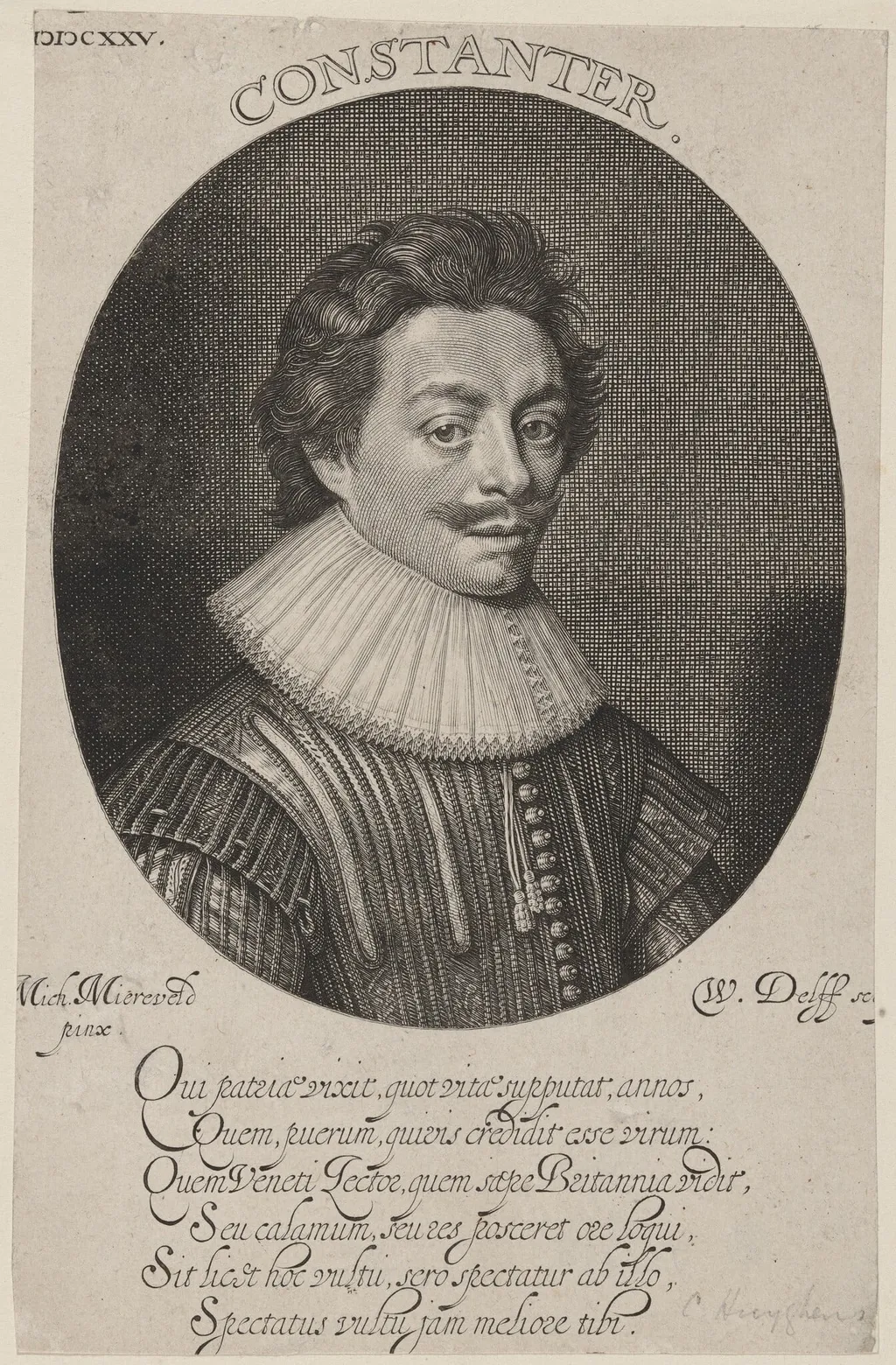
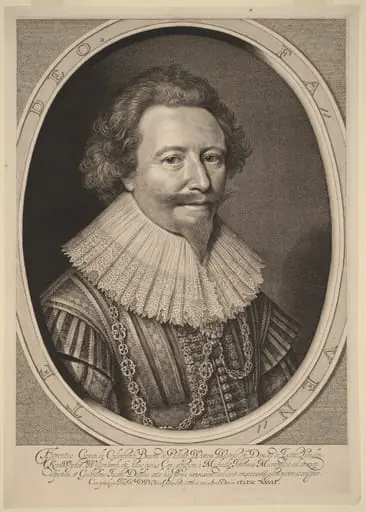
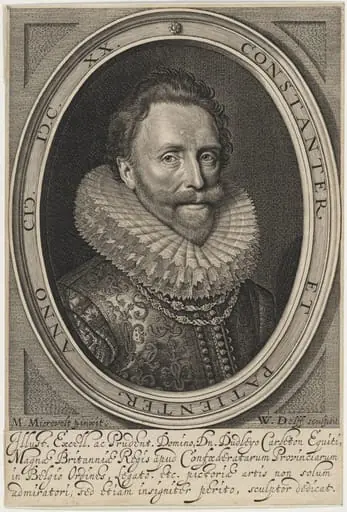
Constantin Huygens is an ink print by the Baroque artist Willem Jacobsz Delff. It dates from 1625 and is held in the collection of the National Gallery of Art.
About this work
Overview
This 1625 engraving by Willem Jacobsz Delff depicts Constantin Huygens, a Dutch intellectual known for his work in music and literature.
This 1625 engraving by Willem Jacobsz Delff depicts Constantin Huygens, a Dutch intellectual known for his work in music and literature. Unlike many portrait prints of the era, which often celebrated nobility or clergy, this work captures a scholar whose influence extended beyond politics or religion. The image is rendered in fine linear detail, characteristic of Delff’s mastery of the engraving technique, which allowed for precise reproduction and wide circulation among educated audiences.
Subject & Meaning
Constantin Huygens, father of the scientist Christiaan Huygens, was a respected poet, musician, and diplomat. His portrayal here reflects his intellectual stature rather than his social rank. The sober expression and restrained attire suggest introspection and erudition, aligning with the humanist values of the Dutch Republic. The portrait functions not as mere likeness but as a visual endorsement of cultural achievement, positioning Huygens as a figure of scholarly dignity.
Technique & Style
Delff employed engraving, a method involving incised lines on a copper plate inked and pressed onto paper. His use of fine, controlled strokes defines the contours of Huygens’s face and collar with clarity, while subtle hatching models volume without heavy shading. The style is restrained and precise, typical of early 17th-century Dutch portraiture in print, emphasizing clarity and intellectual gravitas over ornamental flourish.
History & Provenance
Created in 1625, the engraving was likely produced to accompany Huygens’s published writings or to circulate among his literary and musical circles. It was part of a broader trend in the Dutch Republic of using prints to disseminate images of notable figures. While the original plate’s later history is unclear, surviving impressions are held in major print collections, indicating its enduring recognition among connoisseurs of Dutch graphic art.
Context
In early 17th-century Holland, engraving became a primary medium for disseminating portraits of intellectuals, scientists, and artists. Unlike painting, prints could be reproduced and distributed widely, making them ideal for building reputations. Huygens’s portrait reflects this cultural shift, where merit in the arts and sciences was increasingly honored through visual representation, independent of aristocratic patronage.
Legacy
Delff’s engraving of Constantin Huygens remains a significant example of how print culture in the Dutch Republic elevated non-noble figures to public visibility. It contributed to the tradition of portraying scholars as cultural authorities, influencing later portrait prints of scientists and writers. The work endures as a quiet testament to the value placed on intellectual life in early modern Europe.
Artist & collection