Artwork
Frederik Hendrik, Prince of Nassau-Orange
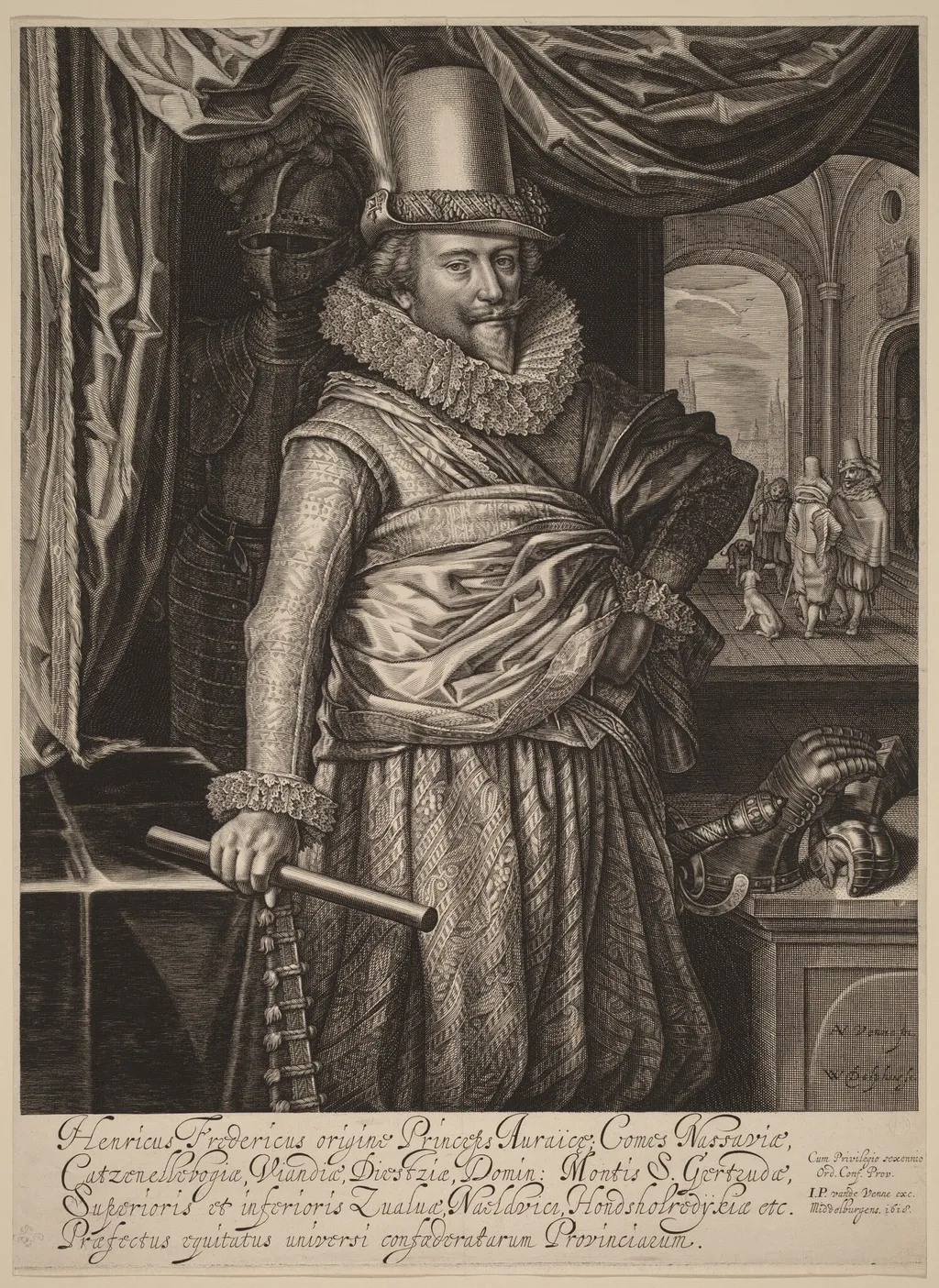
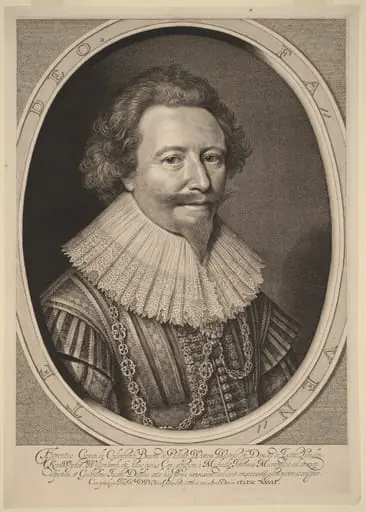
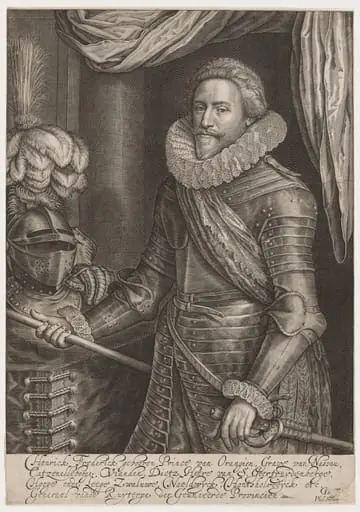
Frederik Hendrik, Prince of Nassau-Orange is an ink print by the Baroque artist Willem Jacobsz Delff. It dates from 1618 and is held in the collection of the National Gallery of Art.
About this work
Overview
The composition balances the figure’s formal presence with surrounding details such as a suit of armor and domestic animals.
Willem Jacobsz Delff’s 1618 engraving presents Frederik Hendrik, Prince of Nassau‑Orange, in a richly appointed interior. The print captures the prince standing beside a table, his right hand gripping a staff and his left resting on the surface, while a large window reveals a bustling street scene beyond. The composition balances the figure’s formal presence with surrounding details such as a suit of armor and domestic animals.
Subject & Meaning
The portrait emphasizes the prince’s status and martial associations through his elaborate dress, feathered hat, and the nearby armor. The staff, a symbol of authority, and the inclusion of everyday life outside the window suggest a connection between his noble role and the broader realm he governs, reflecting early‑seventeenth‑century notions of princely duty and presence.
Technique & Style
Delff employs fine cross‑hatching to model surfaces, creating a nuanced play of light and shadow that gives volume to fabrics, metal, and stone. The intricate line work renders textures—from the sheen of the cloak to the reflective armor—while the depth of the interior is achieved through graduated tonal values, characteristic of Baroque printmaking’s attention to dramatic chiaroscuro.
History & Provenance
Executed in 1618, the engraving was likely produced for dissemination among the Dutch elite, serving both as a commemorative image and a statement of political allegiance. Copies of the print have appeared in several early modern collections, and the work is now held by institutions specializing in Dutch printmaking, where it contributes to the study of portraiture in the Dutch Golden Age.
Context
The image reflects the cultural climate of the Dutch Republic during the early Baroque period, when portraiture often combined realism with symbolic elements to convey power. Frederik Hendrik, a key military and political figure, is depicted in a setting that merges domestic comfort with martial readiness, aligning with contemporary visual conventions that linked personal virtue with public authority.
Artist & collection