Artwork
Catherine, Countess of Pallandt
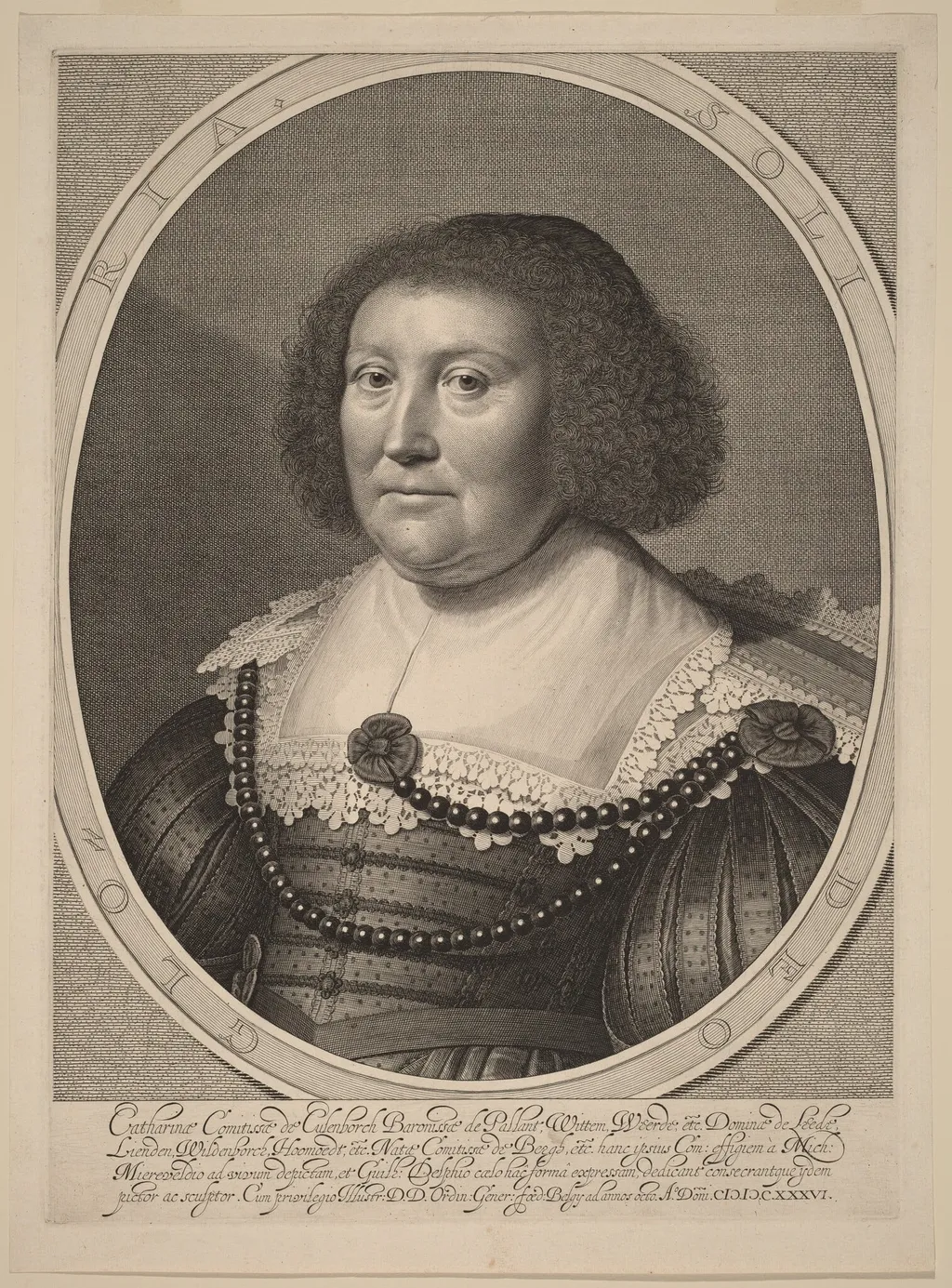
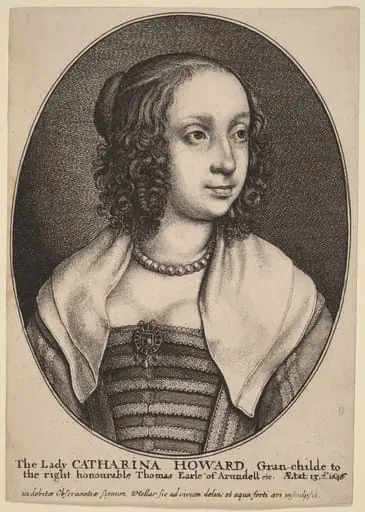
Catherine, Countess of Pallandt is an ink print by the Baroque artist Willem Jacobsz Delff. It dates from 1636 and is held in the collection of the National Gallery of Art.
About this work
To learn more about the artist who made this, look up the artist: Delff, Willem Jacobsz.
This portrait shows a woman, Catherine, Countess of Pallandt, in a formal dress.
She looks straight at us with a calm face.
The interesting thing about this engraving is that it was made with a lot of detail, which was likely done by hand, and it's from the 17th century, which makes it a pretty old piece of art.
To learn more about the artist who made this, look up the artist: Delff, Willem Jacobsz.
Overview
Willem Jacobsz Delff’s 1636 engraving presents Catherine, Countess of Pallandt, in a composed, formal pose. Executed on paper, the image captures the noblewoman’s steady gaze and dignified bearing, offering a clear example of early‑modern portraiture in print form.
Subject & Meaning
The work portrays Catherine, Countess of Pallandt, a member of the Dutch aristocracy, rendered in attire befitting her rank. Her direct stare and serene expression convey both personal poise and the social expectations of a 17th‑century noblewoman, emphasizing status and decorum.
Technique & Style
Delff employed fine, hand‑incised lines to achieve a high level of detail, characteristic of Dutch engraving of the period. The careful modulation of hatching creates subtle tonal variations, rendering the texture of the dress and the softness of the face with notable precision.
History & Provenance
Created in 1636, the engraving reflects the flourishing market for portrait prints in the Dutch Golden Age, where prints served both as personal commemorations and as collectible images. The piece has been documented in several early catalogues of Delff’s oeuvre, though its later ownership trail remains limited.
Context
The portrait belongs to a broader tradition of Dutch portraiture that emphasized realism and individual character. Engravings such as this allowed the likeness of elite individuals to be reproduced and circulated beyond the confines of painted portraits, extending their visual presence.
Artist & collection


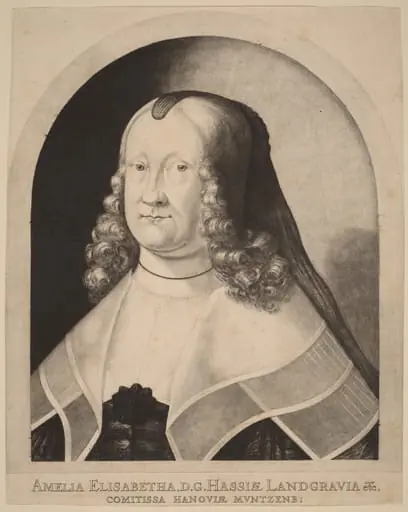 Amelia Elizabeth, Countess of Hesse
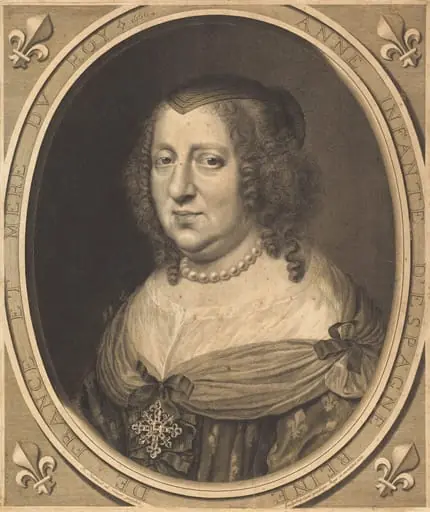 Anne of Austria, Queen of France and Navarre
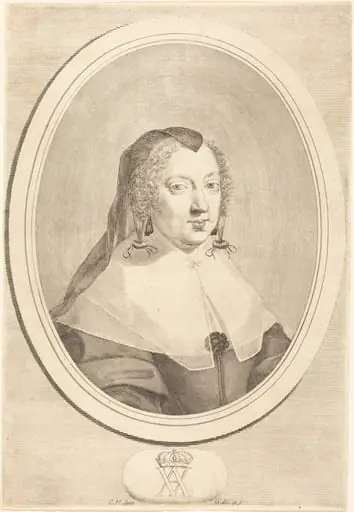 Anne of Austria
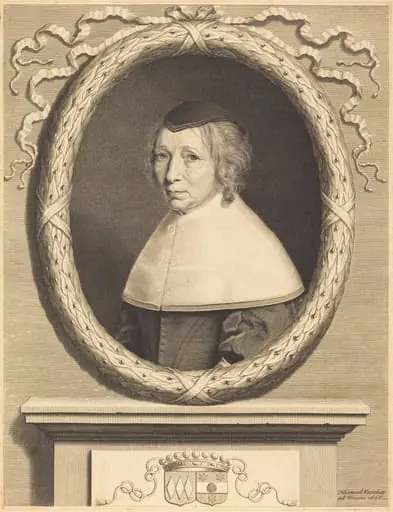 Madame Bouthillier
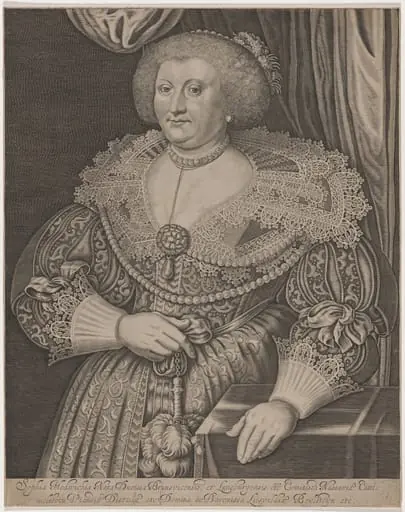 Sophia Hedwig, Duchess of Brunswick
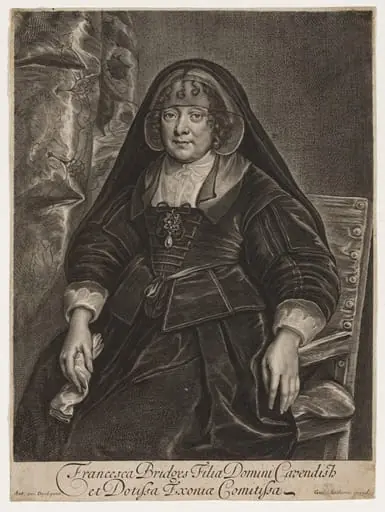 Frances Bridges
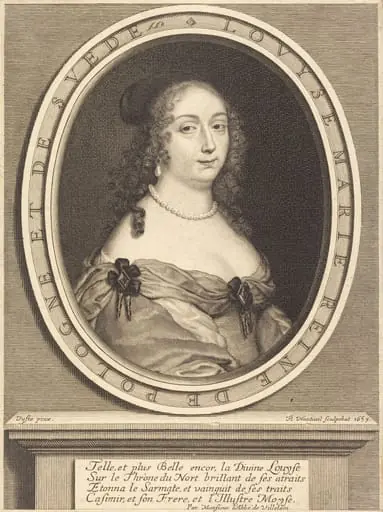 Louis-Marie, Queen of Poland
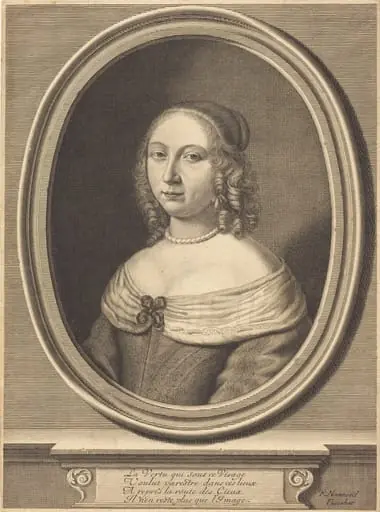 Madame de Gillier
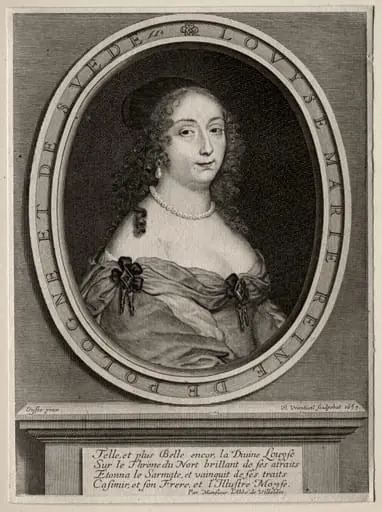 Marie Louise de Gonzague, Reine de Pologne
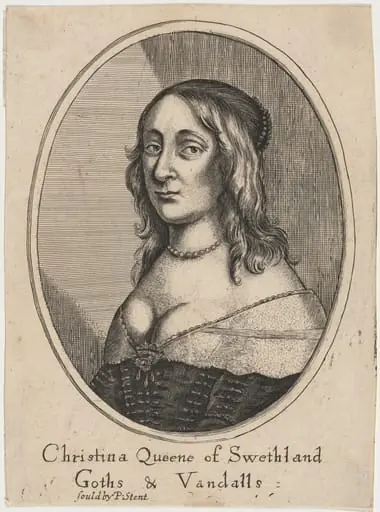 Queen Christina
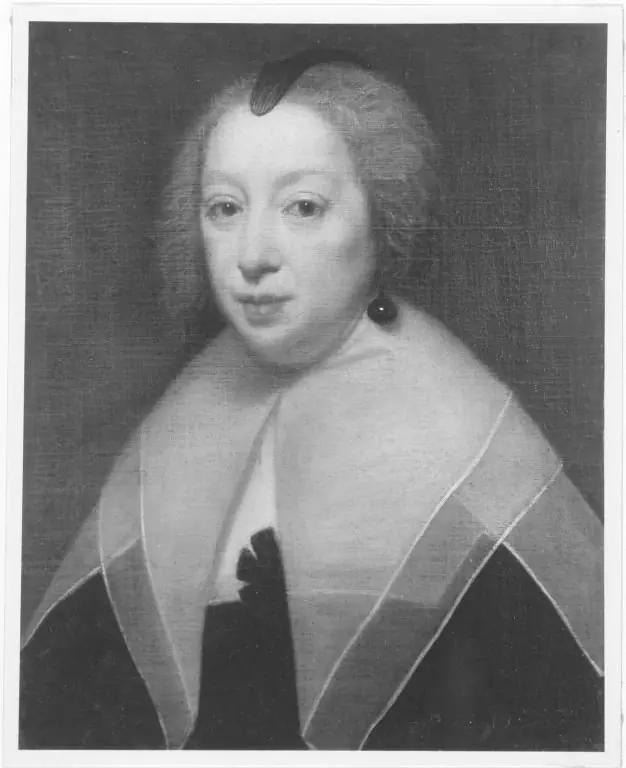 Bildnis einer Frau
 Lady Catherine Howard