Artwork
Rumoldus Hogerbeets Hornanus
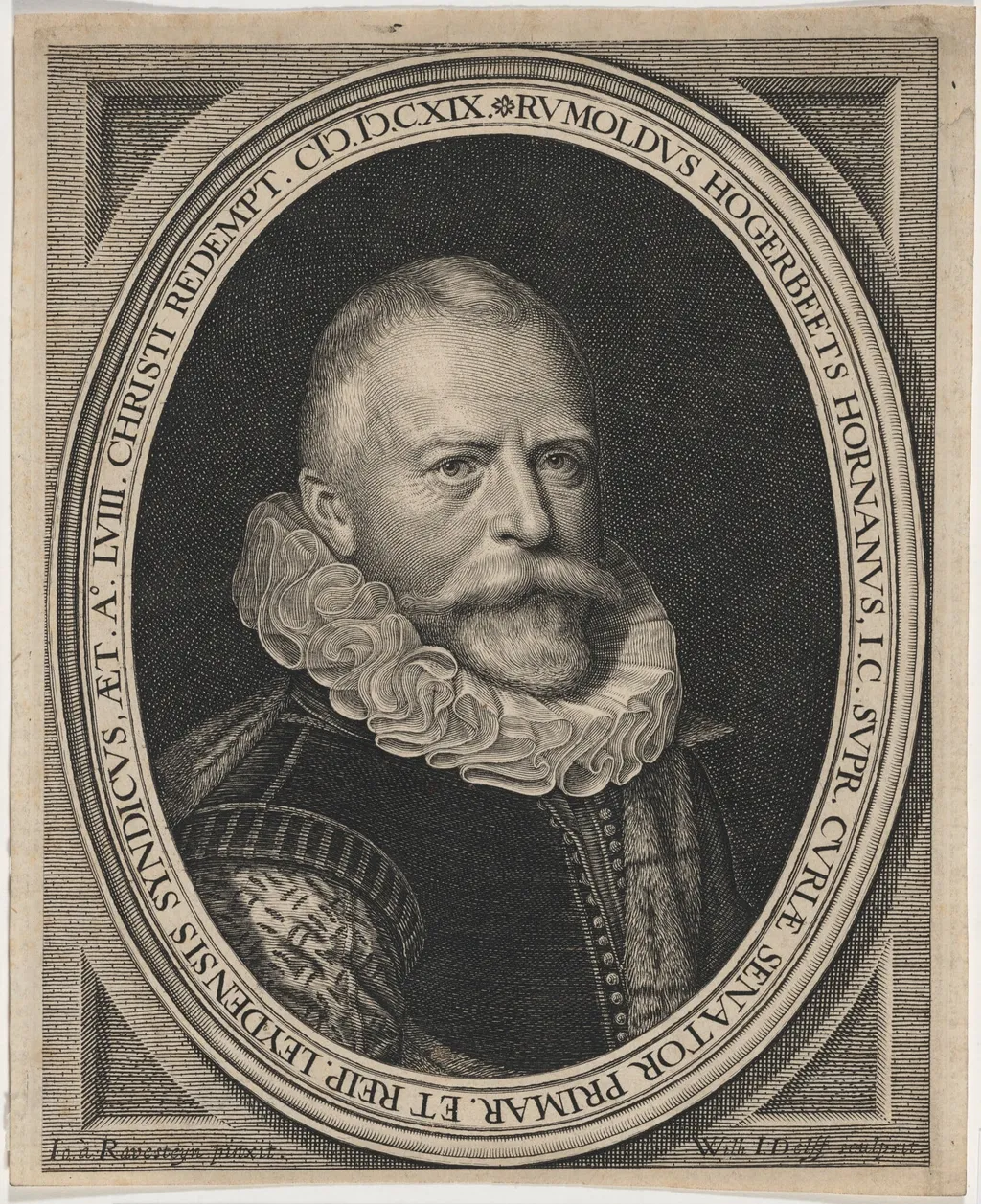
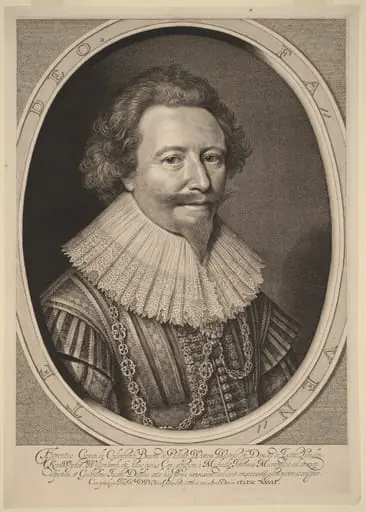
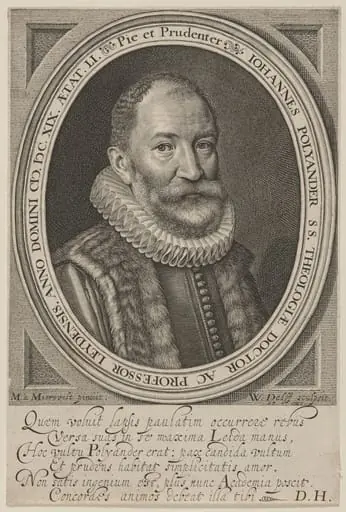
Rumoldus Hogerbeets Hornanus is an ink print by the Baroque artist Willem Jacobsz Delff. It dates from 1619 and is held in the collection of the National Gallery of Art.
About this work
Overview
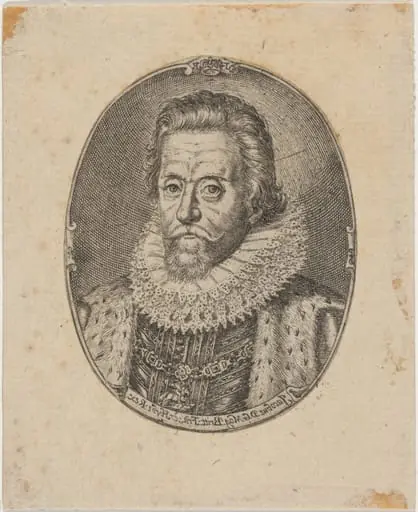
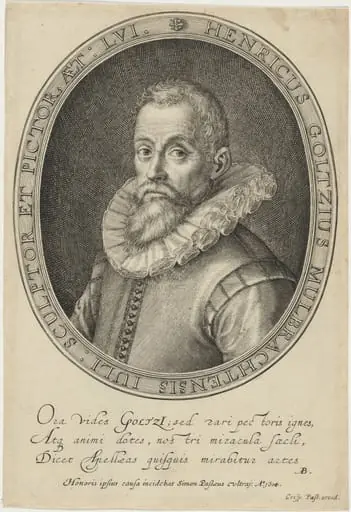
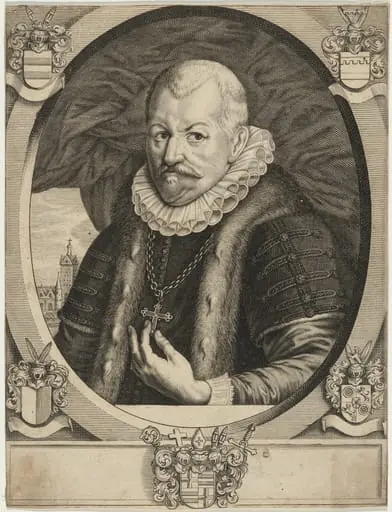
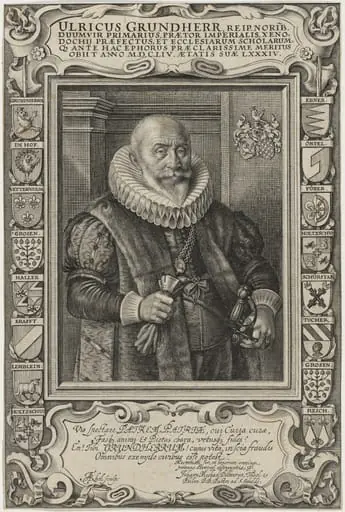
Rendered in monochrome, the portrait follows the conventions of early 17th-century print portraiture, emphasizing precision and textual detail.
Created in 1619 by Willem Jacobsz Delff, this engraving depicts Rumoldus Hogerbeets Hornanus, a Dutch legal scholar and statesman. Rendered in monochrome, the portrait follows the conventions of early 17th-century print portraiture, emphasizing precision and textual detail. The image is contained within an oval border densely inscribed with Latin text, likely enumerating the subject’s titles and achievements, a common practice for scholarly figures of the period.
Subject & Meaning
Rumoldus Hogerbeets Hornanus was a prominent jurist and member of the States of Holland. The portrait conveys his status through formal attire—a high lace ruff and a chain of office—symbols of civic authority and intellectual distinction. The absence of a background focuses attention on his dignified bearing, while the surrounding Latin inscriptions reinforce his public identity, transforming the print into both likeness and official record.
Technique & Style
Delff employed fine, controlled lines typical of engraving to model form and texture. The beard and ruff are rendered with meticulous cross-hatching and stippling, creating subtle gradations of light and shadow. The oval frame’s border is densely packed with minute lettering, requiring careful handwork. The technique prioritizes clarity and detail over atmospheric depth, aligning with the era’s preference for precise, legible portraiture in printed media.
History & Provenance
The engraving was produced shortly after Hogerbeets’ death in 1619, likely as part of a commemorative series honoring Dutch civic leaders. It circulated among scholars and officials, serving as a visual testament to his legacy. Early copies are held in institutional collections, including the Rijksmuseum and the British Museum, indicating its recognition within contemporary networks of intellectual and political elites.
Context
In early 17th-century Holland, engraved portraits of jurists and magistrates were common tools for reinforcing civic identity and institutional continuity. Delff’s work reflects the Republic’s emphasis on merit and public service, where visual culture supported the glorification of legal and administrative figures. The use of Latin inscriptions underscores the scholarly culture of the time, linking visual representation to classical traditions of record-keeping.
Legacy
This engraving remains a key example of Dutch portrait printmaking in the early Baroque period. It preserves the visual language of authority used by civic elites and demonstrates the technical skill of engravers like Delff. While not widely known outside specialized circles, it continues to inform studies of Dutch legal history and the role of print in shaping public memory.
Artist & collection