Artwork
Sir Dudley Carleton, Viscount Dorchester
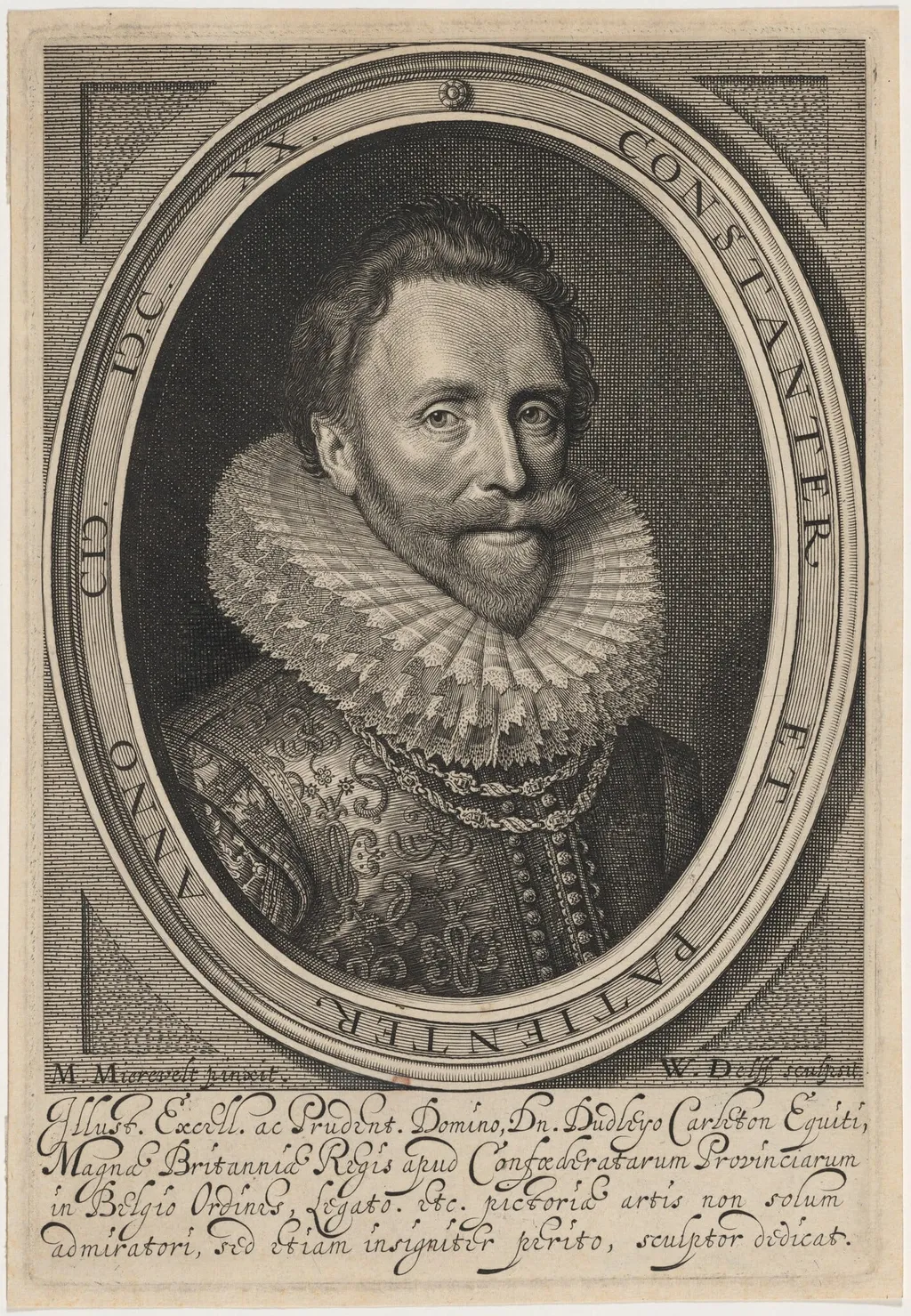
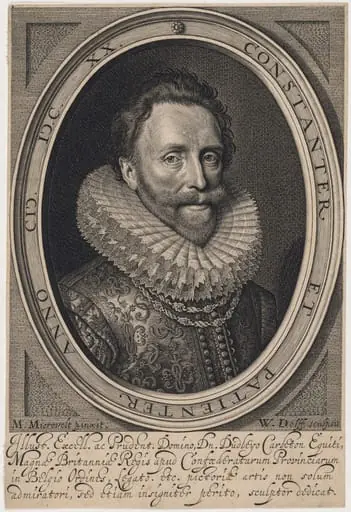
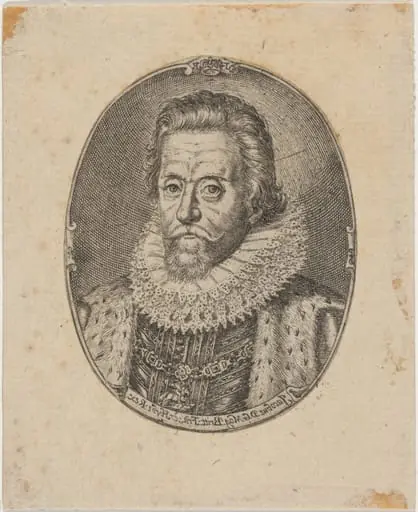
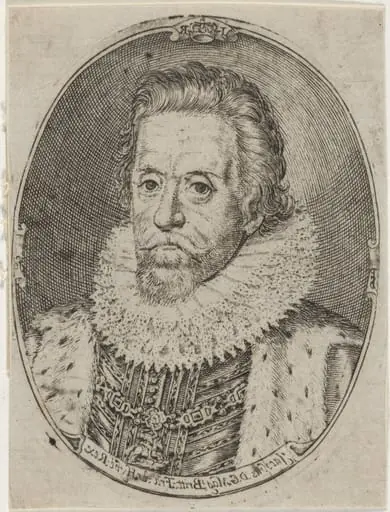
Sir Dudley Carleton, Viscount Dorchester is an ink print by the Renaissance artist Willem Jacobsz Delff. It dates from 1609 and is held in the collection of the National Gallery of Art.
About this work
Overview
The composition is tightly framed within a dark oval, set against a subtly textured ground.
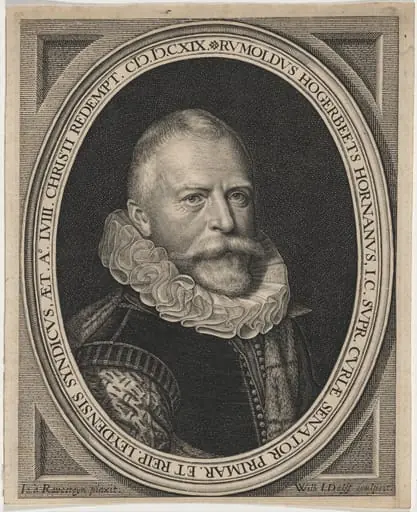
This black-and-white print is an engraving by Willem Jacobsz Delff, completed in 1609. It depicts Sir Dudley Carleton, later Viscount Dorchester, in formal attire. The composition is tightly framed within a dark oval, set against a subtly textured ground. Fine linear detail defines the texture of his clothing and facial features, reflecting the precision typical of early 17th-century Northern European portraiture.
Subject & Meaning
Sir Dudley Carleton was an English diplomat and statesman whose career spanned service at the courts of James I and the Dutch Republic. The portrait emphasizes his status through the high lace collar and gold chain, symbols of rank and office. His composed expression and direct gaze convey authority and gravitas, aligning with the expectations of elite portraiture in an era when visual representation reinforced social position.
Technique & Style
Delff employed fine-line engraving to render subtle gradations of light and shadow, particularly in the beard and fabric folds. The use of cross-hatching and delicate stippling creates volume without color, relying on tonal contrast. The ornate script bordering the image, likely an inscription or dedication, was common in printed portraits of the period, adding textual legitimacy to the visual likeness.
History & Provenance
The engraving was produced shortly after Carleton’s appointment as English ambassador to the Dutch Republic, likely for circulation among diplomatic circles. It may have served as a gift or official record of his standing. Delff, a respected Dutch engraver, frequently worked from painted portraits to produce reproductive prints, making this image part of a broader network of early modern image dissemination.
Context
In the early 1600s, engraved portraits were vital tools for projecting political identity across distances. With limited means of mass communication, such prints allowed diplomats and nobles to maintain visibility in foreign courts. Delff’s work reflects the close ties between Dutch print culture and English political figures, illustrating how visual media supported transnational diplomacy.
Legacy
This engraving remains a documented example of how portraiture functioned as both personal representation and political instrument. Though not widely known today, it contributes to the historical record of Carleton’s public persona and the role of print in early modern elite culture. Its survival in institutional collections underscores its value as a material artifact of diplomatic history.
Artist & collection