Artwork
Ornamental Frieze with Grape Vine
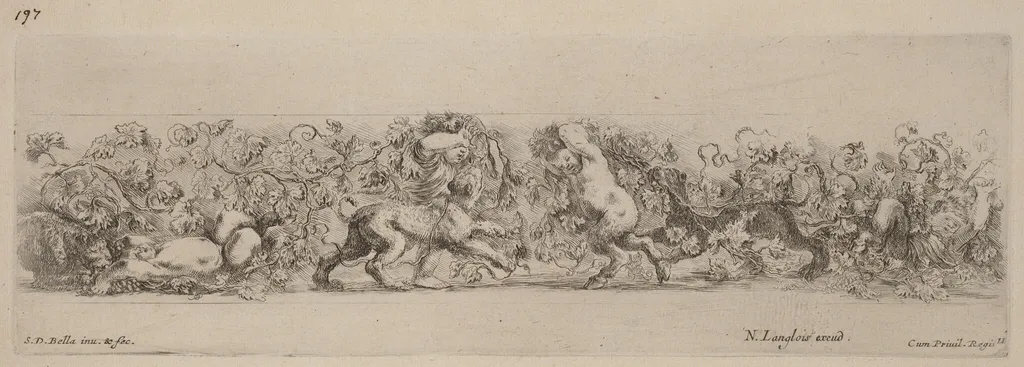
Ornamental Frieze with Grape Vine is an ink print by the Baroque artist Stefano Della Bella. It dates from 1648 and is held in the collection of the National Gallery of Art.
About this work
Overview
Known primarily for his prolific printmaking, he created over a thousand works across varied subjects, from battle scenes to botanical studies.
Stefano della Bella, a Florentine artist active in the mid-17th century, produced this ornamental etching around 1648. Known primarily for his prolific printmaking, he created over a thousand works across varied subjects, from battle scenes to botanical studies. This frieze exemplifies his mastery of the etching technique, emphasizing intricate line work over painterly expression. It stands as one of many decorative prints he made, distinct from his single known painting.
Subject & Meaning
The composition depicts a continuous band of grapevines, their tendrils and leaves interwoven in a rhythmic, looping pattern. Rather than narrating a story, the design serves a decorative function, likely intended for architectural or manuscript borders. The absence of figures or symbolic elements shifts focus to the natural form itself, suggesting an appreciation for organic movement and structural harmony in ornamentation.
Technique & Style
Executed in etching, the frieze reveals fine, controlled lines achieved through acid-bitten copper plates. Della Bella’s precision in rendering delicate vines and overlapping foliage demonstrates his command of the medium. The curves suggest fluid motion, achieved not through shading but through the density and direction of incised lines. His style blends naturalism with stylized repetition, characteristic of Baroque ornamental design.
History & Provenance
The work dates to a period when della Bella was active in Florence and later Paris, producing prints for collectors and publishers. While specific early ownership records are sparse, similar etchings circulated among European patrons interested in decorative arts. Its survival reflects the demand for ornamental prints as standalone works or as models for artisans in architecture and textiles.
Context
In mid-17th-century Italy, ornamental prints like this were widely used as sources for craftsmen in fresco, stucco, and bookbinding. Della Bella’s work aligned with a broader trend of naturalistic decoration, influenced by classical motifs and contemporary botanical studies. His prints bridged fine art and applied design, serving both aesthetic and functional roles in elite interiors and publishing.
Legacy
Though not as widely studied as his narrative prints, this frieze illustrates della Bella’s versatility and influence on decorative arts. His precise linework and organic compositions informed later generations of printmakers and designers. Surviving examples of his ornamental prints remain in museum collections, valued for their technical refinement and contribution to the history of print-based ornamentation.
Artist & collection
Artist
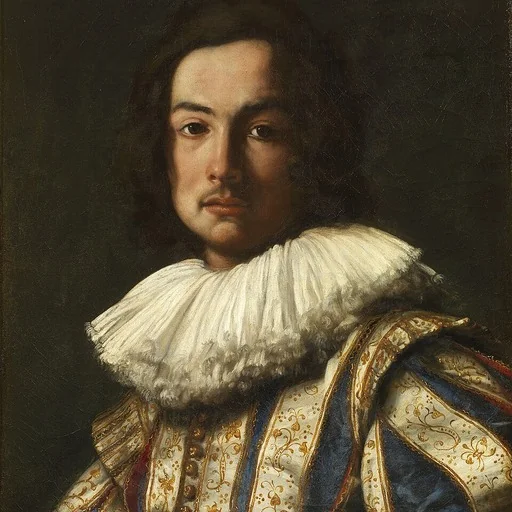
Stefano della Bella (18 May 1610 – 12 July 1664) was an Italian draughtsman and printmaker known for etchings of a great variety of subjects, including military and court scenes, landscapes, and lively genre scenes.

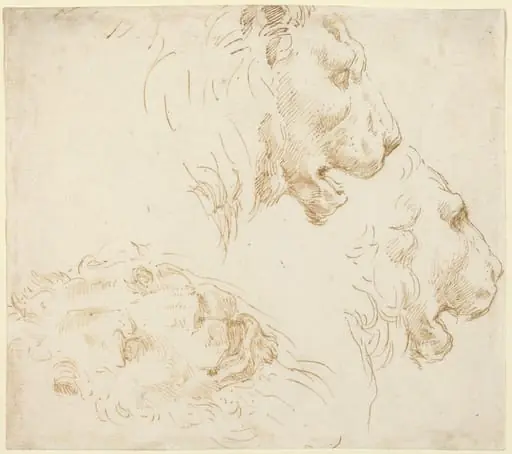
![The Flight into Egypt [verso], by Stefano Della Bella](https://artifactworldgallery.com/img/stefano-della-bella--the-flight-into-egypt-verso--3a100db72e6d25e3-w320.webp)
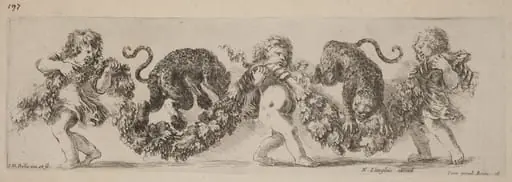 Two Leopards Jumping a Festoon Supported by Children
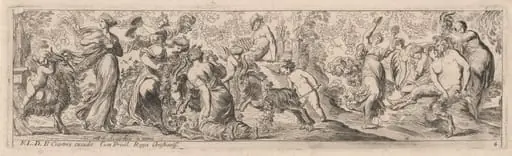 Putto Herding Goats through Garlands
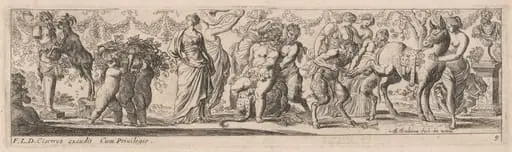 Drunken Silenus
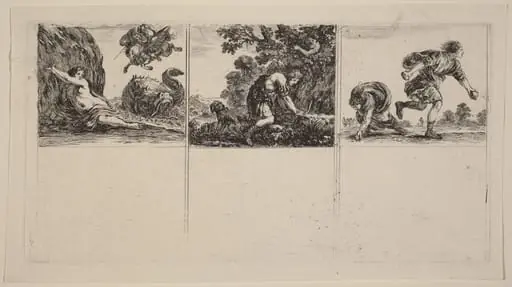 Perseus and Andromeda; Cephalus and Procris; Hippomene and Atalantus
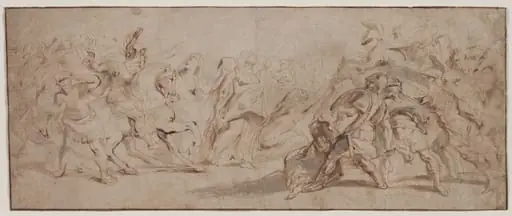 Reconciliation of the Romans and the Sabines (recto)
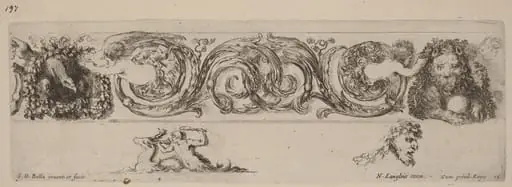 Ornamental Frieze with Eagle and Lion Engarlanded by Children
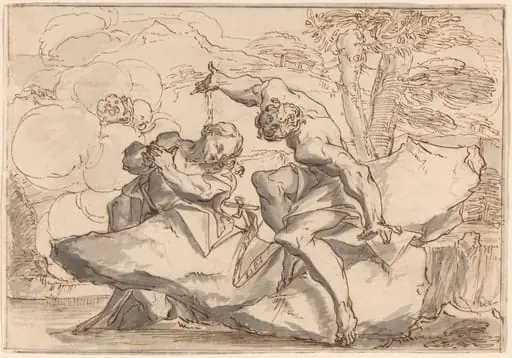 The Baptism of Christ
 Boar Hunt
 The Large Lion Hunt