Artwork
Putto Herding Goats through Garlands
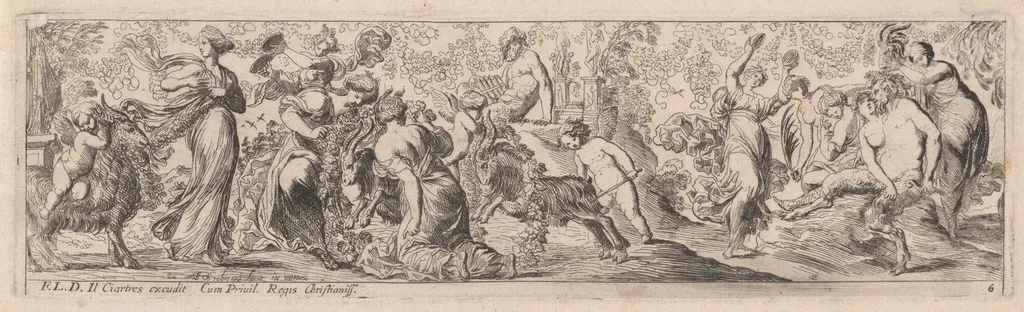
Putto Herding Goats through Garlands is an ink print by the Baroque artist Pierre Brebiette. It dates from 1626 and is held in the collection of the National Gallery of Art.
About this work
Overview
The work belongs to a tradition of allegorical prints that blend mythological figures with natural elements, characteristic of early Baroque decorative art.
Created in 1626 by Pierre Brebiette, this etching on laid paper depicts a whimsical pastoral scene centered on a winged child guiding goats through a garden adorned with floral garlands. The composition balances movement and stillness, with the putto’s gentle direction contrasting the goats’ varied behaviors. The work belongs to a tradition of allegorical prints that blend mythological figures with natural elements, characteristic of early Baroque decorative art.
Subject & Meaning
The putto, a common motif in Renaissance and Baroque art, symbolizes innocence and divine playfulness. Here, it herds goats through garlands—symbols of abundance and seasonal celebration—suggesting harmony between human-like figures and nature. The goats’ interaction with the garlands, some nibbling, others gazing upward, introduces subtle narrative tension, hinting at the fragility of order within a lush, untamed world.
Technique & Style
Brebiette employed fine, fluid lines typical of etching to render texture and motion: the goats’ wool, the curling vines, and the putto’s wings are defined with delicate cross-hatching and varying line weights. The background foliage is suggested rather than detailed, creating depth without clutter. The composition’s asymmetry and dynamic energy reflect Baroque sensibilities, emphasizing liveliness over rigid symmetry.
History & Provenance
The print was produced in France during the 1620s, a period when etching gained popularity among artists seeking accessible, reproducible formats for decorative imagery. While Brebiette’s oeuvre is limited, this work aligns with prints made for private collections and aristocratic interiors. No documented early ownership records survive, but its survival in institutional collections suggests continued appreciation in later centuries.
Context
This print emerged amid a flourishing of mythological and pastoral themes in French decorative arts, influenced by Italian Mannerism and Flemish genre scenes. Artists often used putti to animate garden settings, reflecting contemporary ideals of refined leisure. Such imagery catered to patrons seeking elegance and allegorical depth, blending classical references with everyday naturalism in domestic spaces.
Legacy
Though not widely known today, Brebiette’s etching contributes to a broader understanding of 17th-century print culture’s role in disseminating playful, symbolic imagery. Its preservation in museum collections underscores its value as an example of how minor artists helped shape visual language in Baroque interiors, offering quiet counterpoints to grander historical or religious narratives.
Artist & collection


 Drunken Silenus
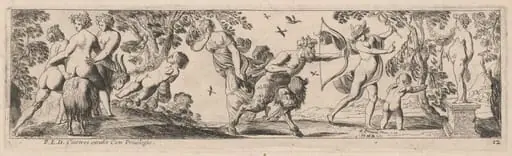
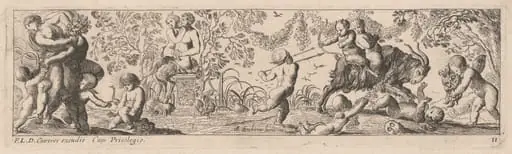 Putti and Satyrs Shooting Arrows
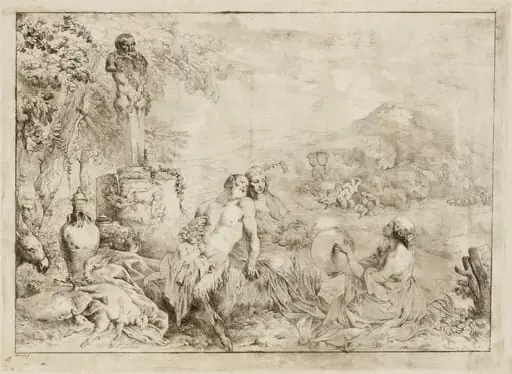 Landscape with a Satyr Family and Classical Sculpture
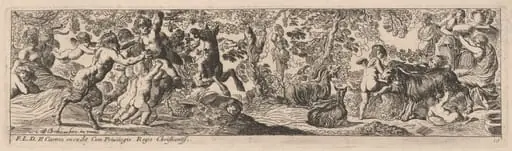 Satyrs and Putti Playing with Animals
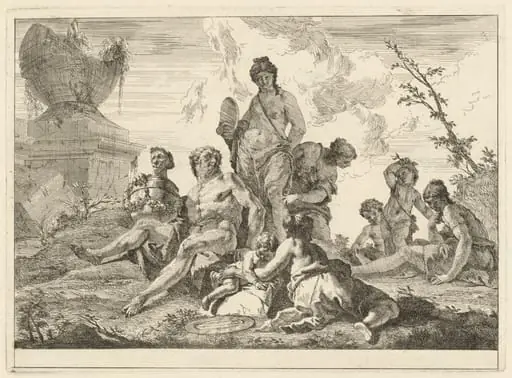 Venus and Vulcan with Three Nymphs and Three Cupids
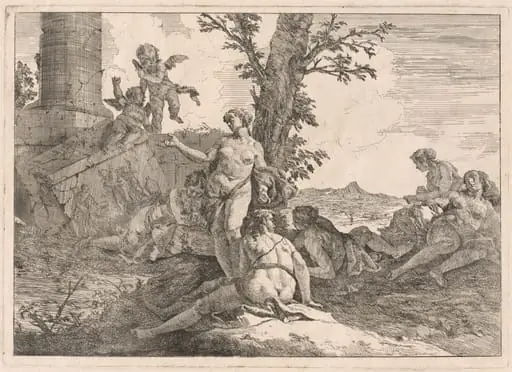 Six Nymphs and Two Cupids in a Landscape
![Temporalis Aeternitas [Second Version], by Italian 17th Century](https://artifactworldgallery.com/img/italian-17th-century--temporalis-aeternitas-second-version--2b55857961773f67-w320.webp) Temporalis Aeternitas [Second Version]
Temporalis Aeternitas [Second Version]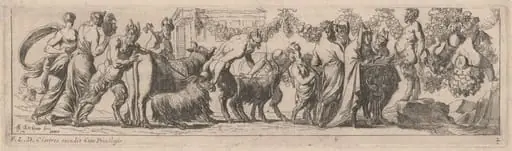 Satyrs Bringing Animals to an Altar
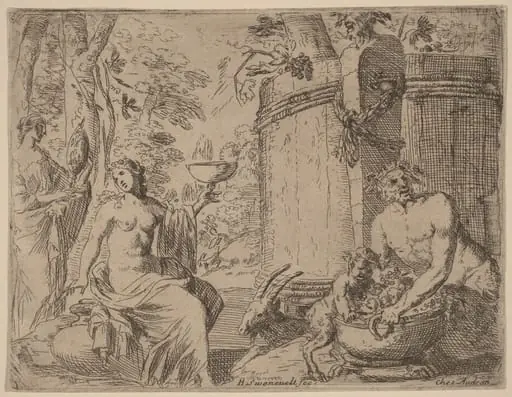 Two Nymphs and a Satyr before a Large Vat
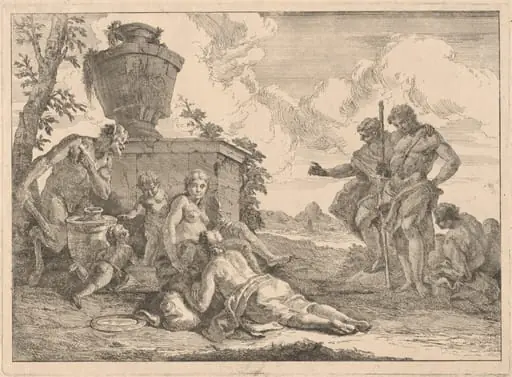 A Satyr with a Staff and Seven Other Figures