Artwork
Suceava
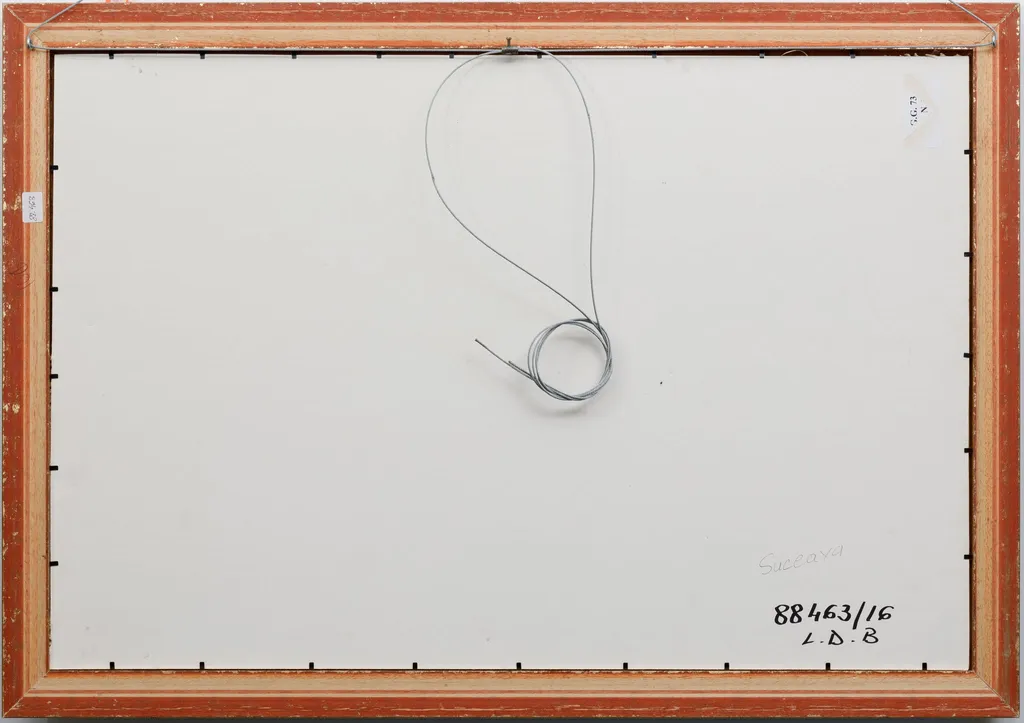
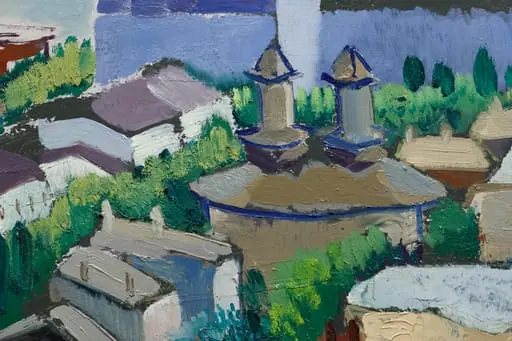
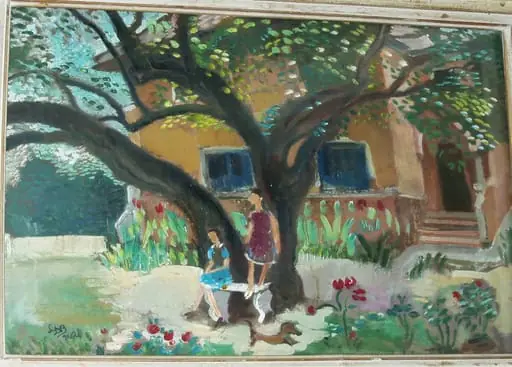
Suceava is an unspecified painting by Lucia Dem-Bălăcescu. It dates from 1850 and is held in the collection of the National Museum of Art of Romania.
About this work
Overview
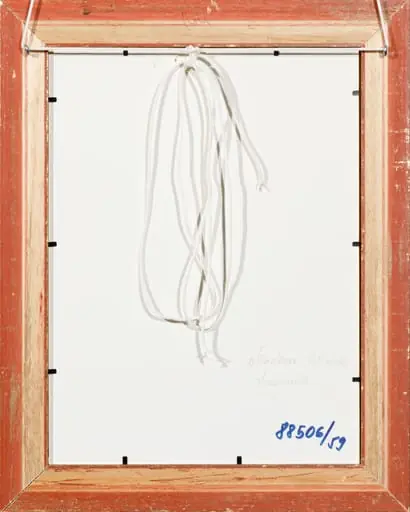
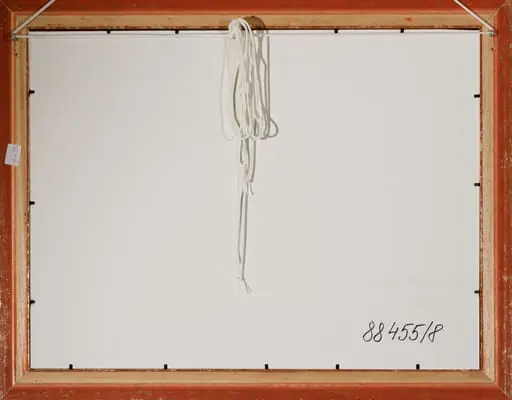
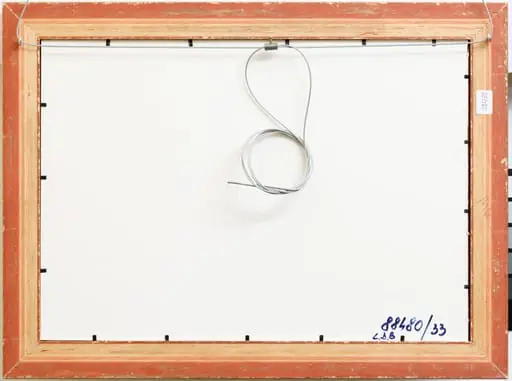
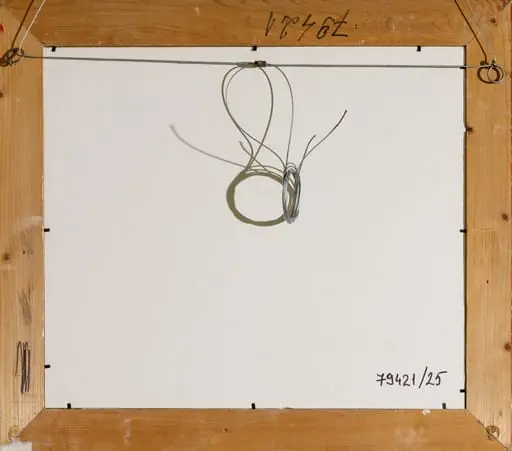
Created around 1850 by Lucia Dem-Bălăcescu, this work presents a bare wooden frame containing a white canvas. A single silver wire, bent into a loose, hook-like form, is suspended slightly off-center. The title 'Suceava' is inscribed in pencil at the corner. The composition lacks pigment or brushwork, suggesting an experimental or preparatory gesture rather than a conventional finished painting.
Subject & Meaning
The subject is non-representational: the wire’s ambiguous shape—resembling a question mark or a hook—invites interpretation without offering narrative. Its placement and material imply a focus on line, presence, and absence. The title, tied to a Romanian town, may reference place or memory, but the work resists clear symbolism, emphasizing instead the tension between intention and void.
Technique & Style
Dem-Bălăcescu employed minimalism before it was formally recognized. The wire, likely attached directly to the canvas, introduces a three-dimensional element into a two-dimensional format. The absence of paint, the raw wood frame, and the pencil inscription all point to a deliberate rejection of traditional techniques, favoring restraint and material honesty over decorative finish.
History & Provenance
The work’s origins are undocumented beyond its estimated date and artist. No exhibition records or contemporary references to it exist from the mid-19th century. It survived in private hands, possibly as an artist’s study or personal experiment, until its later recognition. Its survival suggests it was preserved not for public display but for its quiet, unresolved character.
Context
In mid-19th-century Romania, academic painting dominated, emphasizing historical or religious themes. Dem-Bălăcescu’s work diverges sharply, anticipating later avant-garde inquiries into materiality and negation. Its isolation from contemporaneous trends underscores its uniqueness, possibly reflecting the artist’s private exploration beyond institutional norms.
Legacy
Though not widely known during her lifetime, this piece has gained retrospective attention for its early engagement with conceptual and minimalist ideas. It stands as a quiet precursor to 20th-century explorations of art as gesture rather than image. Dem-Bălăcescu’s work, though sparse in output, contributes an unusual voice to the history of Romanian visual culture.
Artist & collection