Artwork
Curte
Curte is a print by Lucia Dem-Bălăcescu. It dates from 1850 and is held in the collection of the National Museum of Art of Romania.
About this work
Overview
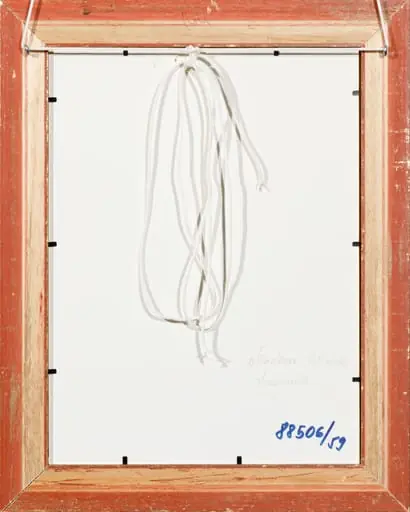
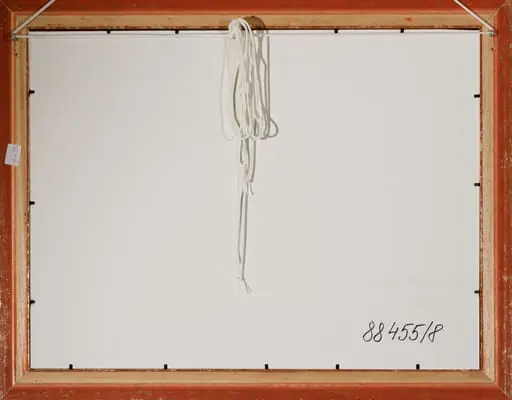
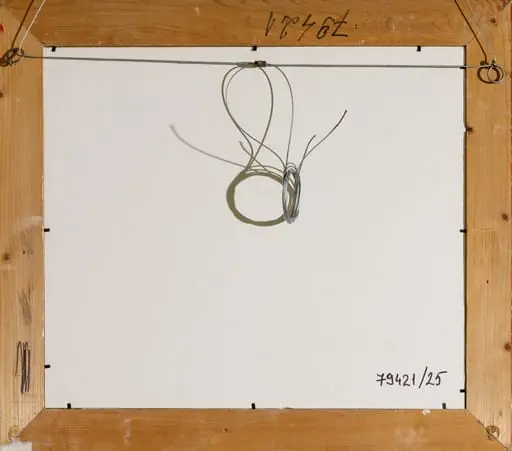
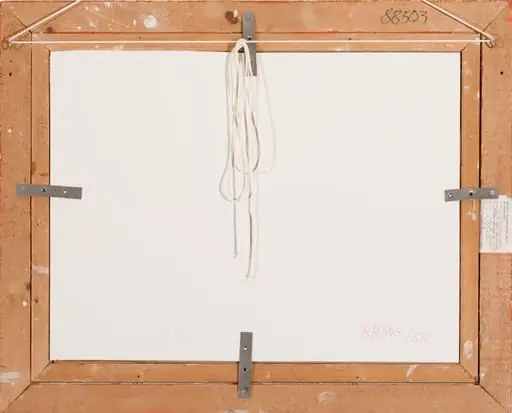
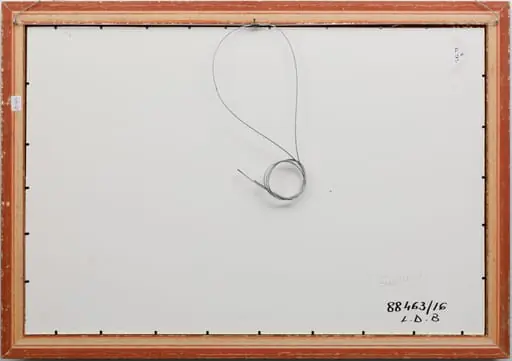
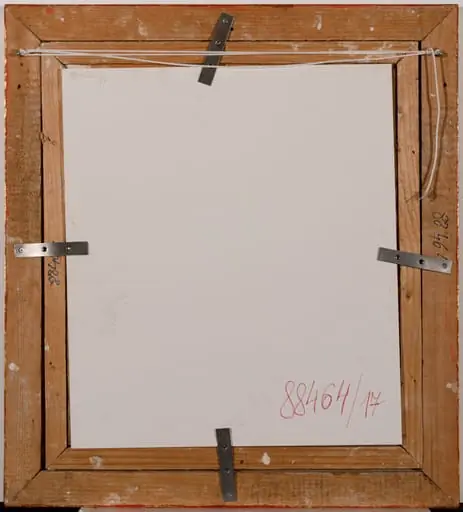
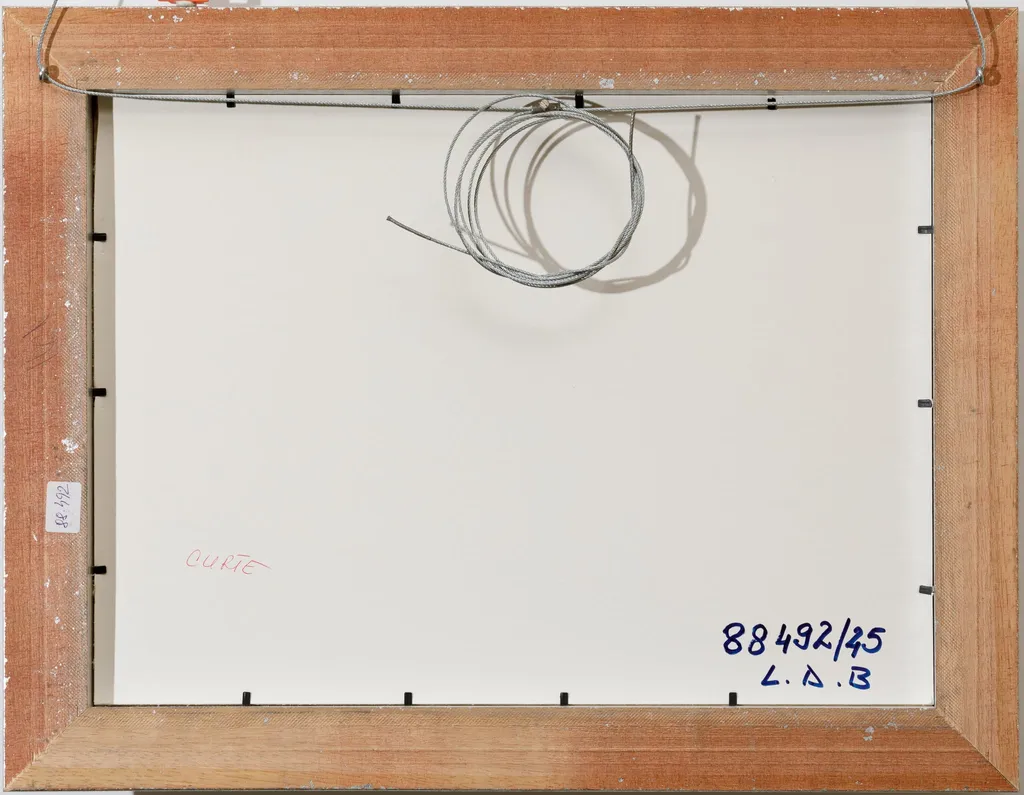
Curte, created circa 1850 by Lucia Dem-Bălăcescu, presents a seemingly minimalist composition. At its core, it features a blank white rectangle encased in a worn wooden frame, accented by a loose metal wire loop across the top and titular red ink notation at the lower left.
Subject & Meaning
The subject of Curte appears to be the absence of visual content, juxtaposed with the presence of framing elements and textual identifiers. The blank white space may provoke reflections on the nature of art, representation, and the role of the frame. The wire loop introduces an element of casual disruption.
Technique & Style
Technically, Curte utilizes a blank canvas, red ink for the title, and a simple wooden frame secured with black screws. The style blends elements of minimalism with an air of neglect or post-completion alteration, as suggested by the worn frame and loose wire.
History & Provenance
Created in the mid-19th century, Curte's early history is not detailed here. It is currently accompanied by a blue museum label, indicating its inclusion in a collection, possibly related to the Museum of Ethnography, though its connection to ethnographic themes is not immediately apparent from the work itself.
Context
Given its date (c. 1850), Curte predates the modern and contemporary art movements that would later embrace similar minimalist and conceptual themes. Its existence suggests early experimentation with the boundaries of artistic expression.
Legacy
The legacy of Curte is not widely documented in the provided information. However, as part of a museum collection, it contributes to discussions on the evolution of artistic practices and the broader acceptance of non-traditional art forms over time.
Artist & collection