Artwork
Jacques-Onesyme Bergeret de Grancourt
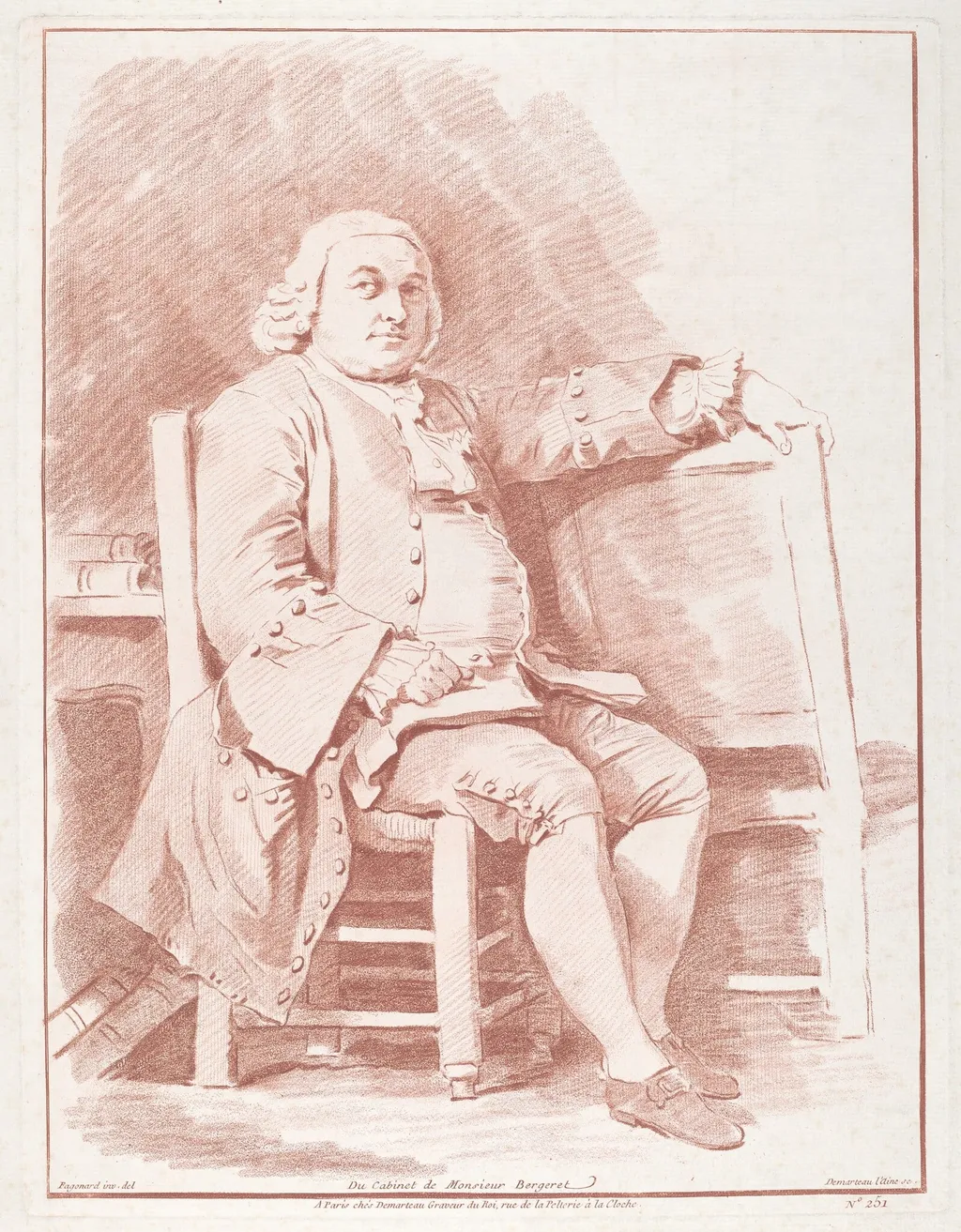
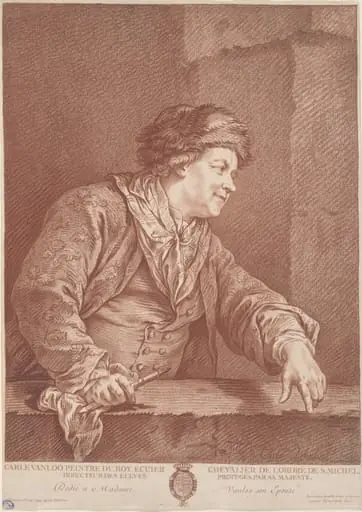
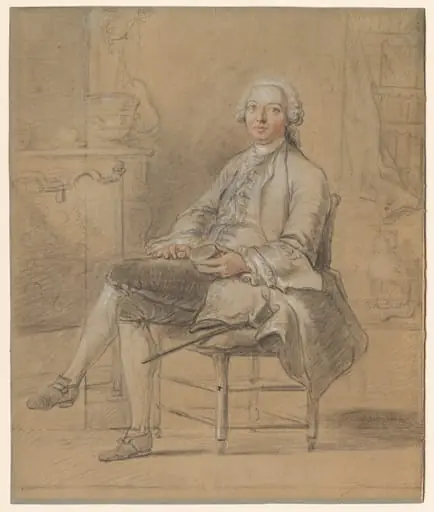
Jacques-Onesyme Bergeret de Grancourt is a chalk print by the Romanticist artist Gilles Demarteau the Elder. It dates from 1770 and is held in the collection of the National Gallery of Art. Jacques‑Onesyme Bergeret de Grancourt is a red‑chalk manner print executed on laid paper in 1770.
About this work
Overview
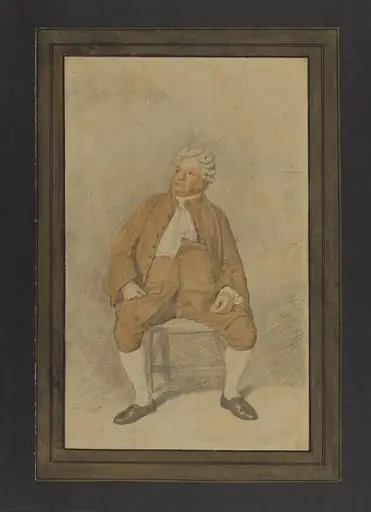
Jacques‑Onesyme Bergeret de Grancourt is a red‑chalk manner print executed on laid paper in 1770. The work is attributed to the French engraver Gilles Demarteau the Elder, known for his innovative use of the chalk drawing technique in printmaking. The image presents a single figure rendered with a loose, sketch‑like hand, emphasizing immediacy over finish.
Subject & Meaning
The composition depicts a gentleman seated in an upholstered chair, attired in elaborate eighteenth‑century costume with a buttoned coat. He holds a folded sheet in one hand while his arm rests on the chair’s armrest, suggesting a moment of private contemplation or correspondence. Minimal background elements—a hinted table and scattered papers—focus attention on the individual’s relaxed posture.
Technique & Style
The deliberately sketchy execution conveys a sense of spontaneity, aligning the print with the era’s interest in drawing as a primary mode of expression.
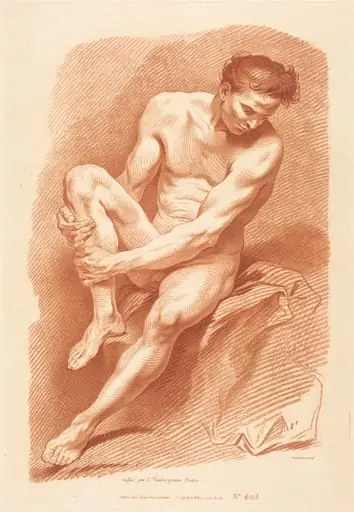
Demarteau employed the chalk manner, a method that imitates the tonal qualities of chalk drawing through a red ink on laid paper. Strong contour lines and subtle shading create a chiaroscuro effect, modeling the figure’s volume with light and shadow. The deliberately sketchy execution conveys a sense of spontaneity, aligning the print with the era’s interest in drawing as a primary mode of expression.
History & Provenance
Created in 1770, the print belongs to a period when Demarteau was expanding the possibilities of reproductive printmaking in Paris. Though specific ownership records are scarce, works of this type were often circulated among collectors of fashionable portraiture and served as affordable alternatives to painted likenesses. The piece reflects the broader market for portrait prints in the late Ancien Régime.
Context
The image emerges from a French artistic climate that prized the depiction of contemporary elites in a manner reminiscent of drawing studies. The use of red chalk manner aligns with the period’s fascination with chiaroscuro and the desire to capture the immediacy of a live sketch, bridging the gap between fine art and commercial print.
Artist & collection