Artwork
Consfătuire țărănească
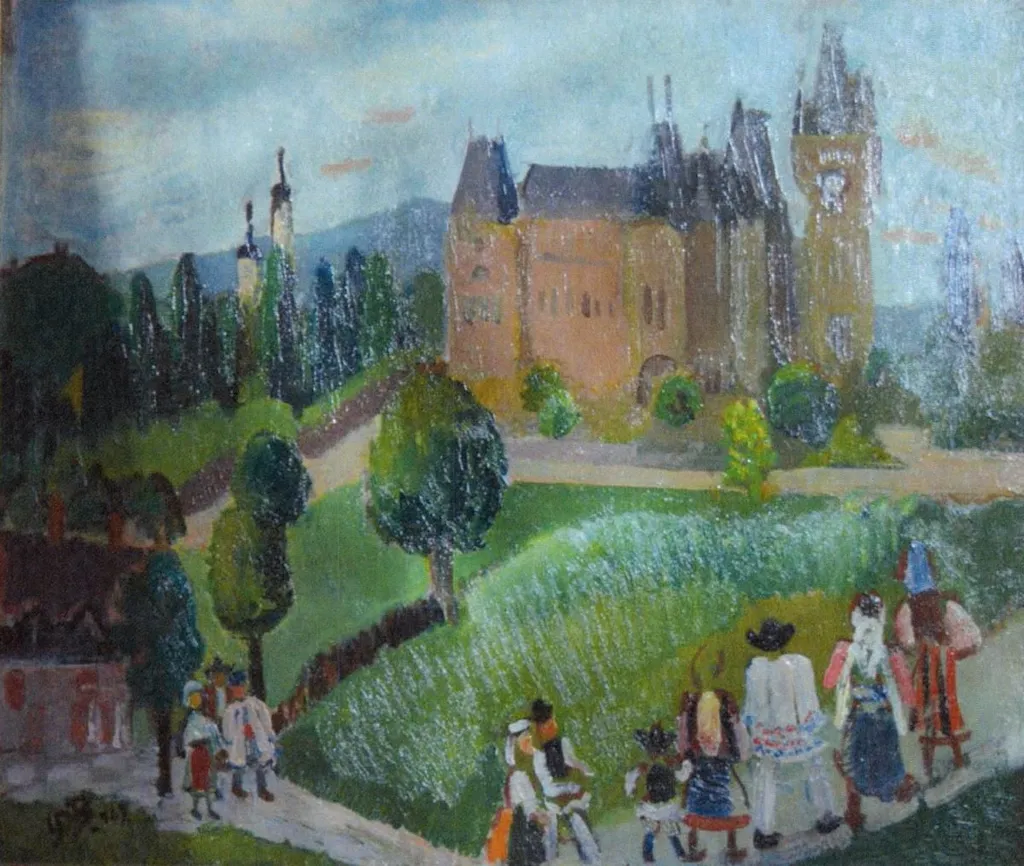
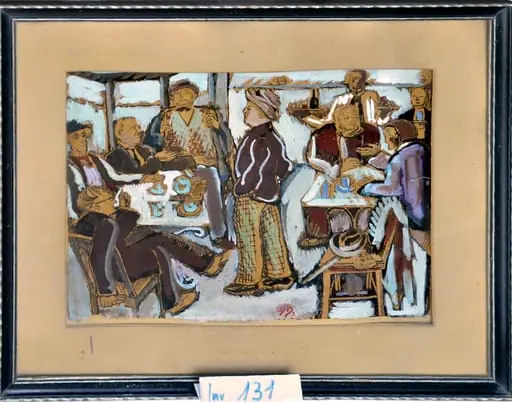
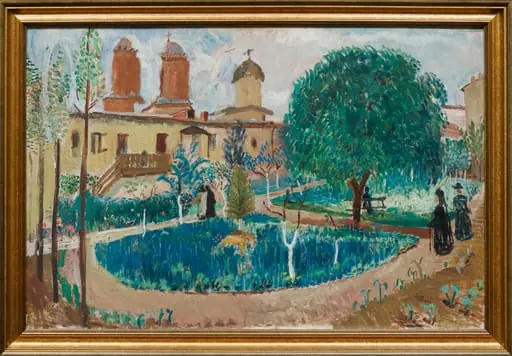
Consfătuire țărănească is a print by Lucia Demetriade-Bălăcescu. It dates from 1943 and is held in the collection of the Bucharest Municipality Museum.
About this work
Overview
Created in 1943 by Lucia Demetriade-Bălăcescu, this print captures a rural gathering set against the backdrop of a historic castle.
Created in 1943 by Lucia Demetriade-Bălăcescu, this print captures a rural gathering set against the backdrop of a historic castle. Rendered in a quiet, observational style, the scene presents a procession of villagers moving along a tree-lined path. The work is held in the collection of the Museum of Ethnography, where it serves as a visual record of traditional Romanian communal life during the mid-20th century.
Subject & Meaning
The image depicts a rural assembly, likely tied to seasonal or ceremonial customs, with figures of varying ages and dress moving in loose unison. The contrast between elaborately patterned garments and simpler attire suggests social diversity within the community. The distant castle, though imposing, does not dominate the scene; instead, it frames human activity as central, emphasizing continuity between local tradition and the built heritage of the land.
Technique & Style
The print employs soft, muted tones and delicate linework to convey atmosphere rather than detail. The sky is rendered with gentle gradations, and the foliage is suggested through loose, rhythmic strokes. Figures are simplified but distinct in posture and clothing, avoiding idealization. The composition directs the viewer’s eye along the path, linking the foreground gathering with the architectural presence of the castle in the distance.
History & Provenance
The work was produced in 1943 during a period of heightened interest in Romanian folk culture, amid broader national efforts to document rural life. It entered the Museum of Ethnography’s collection shortly after its creation, where it has remained as part of a curated archive of visual ethnography. No record of prior ownership or exhibition beyond the museum is documented.
Context
In the early 1940s, Romanian artists and scholars increasingly turned to rural subjects as symbols of cultural authenticity. This print aligns with that movement, reflecting both an ethnographic impulse and a quiet resistance to urban modernization. The castle in the background may reference local noble estates, now repurposed as cultural landmarks, subtly grounding the scene in a layered historical landscape.
Legacy
While not widely reproduced, the work remains a quiet example of mid-century Romanian printmaking focused on folk life. It contributes to the Museum of Ethnography’s mission of preserving visual records of traditional customs. Its enduring presence in the collection underscores its value as a documentary artifact, offering insight into how rural communities were visually represented during a time of national identity formation.
Artist & collection
Artist
Lucia Demetriade-Bălăcescu painted city scenes and rural life in the 1920s and 1930s.