Artwork
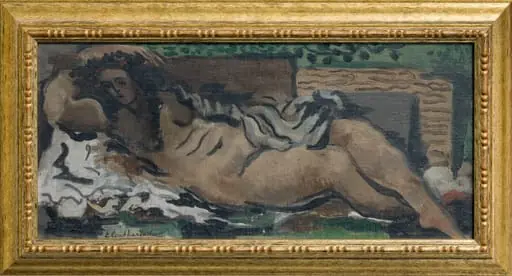
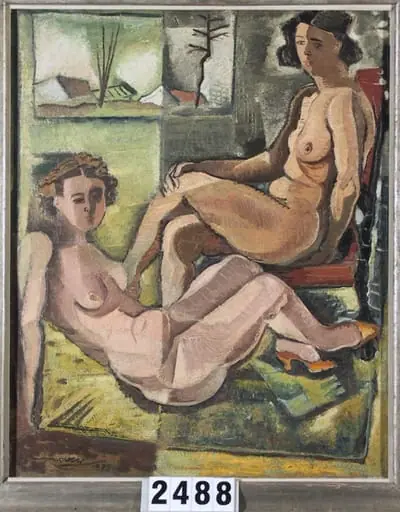
Compoziție cu nuduri (Omagiu lui Manet)
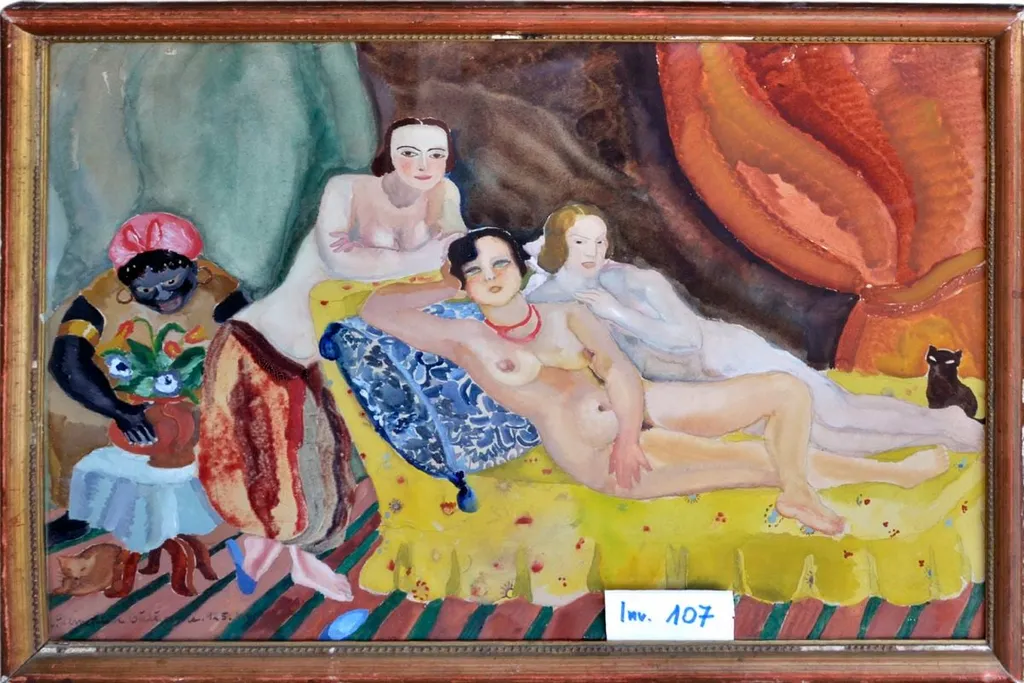
Compoziție cu nuduri (Omagiu lui Manet) is an unspecified painting by Lucia Demetriade-Bălăcescu. It dates from 1925 and is held in the collection of the National Museum of Romanian Literature.
About this work
Overview
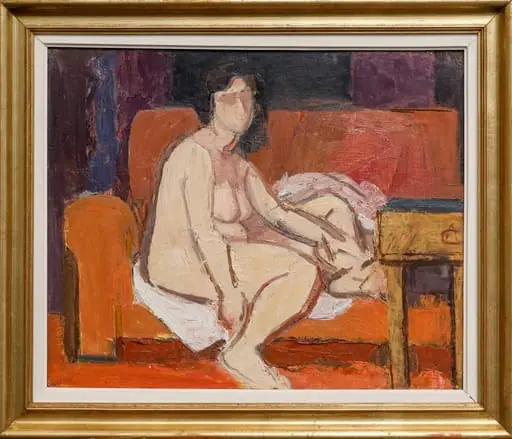
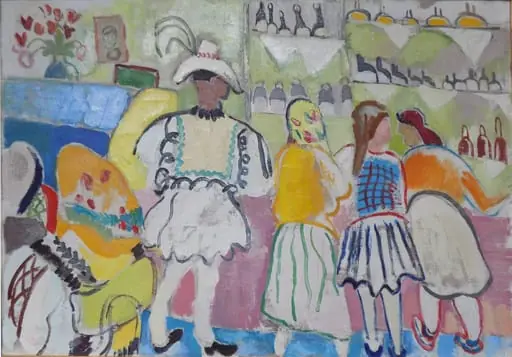
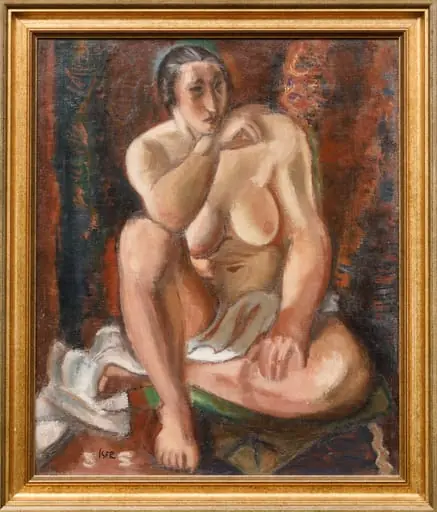
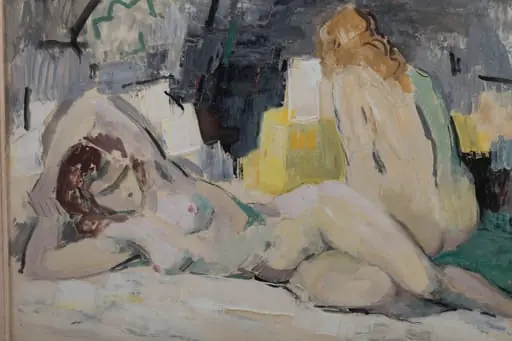
Created in 1925 by Romanian artist Lucia Demetriade‑Bălăcescu, this composition presents a leisurely interior populated by several women, three of whom are nude. The work functions as an homage to the French painter Édouard Manet, echoing his interest in modern life and the nude figure.
Subject & Meaning
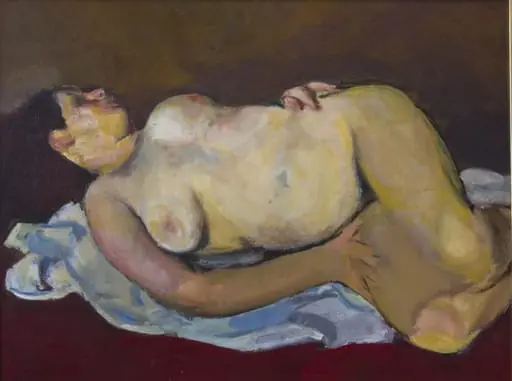
At the centre, a reclining woman rests on a yellow sofa, supported by a blue‑and‑white patterned pillow. Behind her, another seated figure observes, while a third woman in a white robe stands to the right, accompanied by a black cat. A fourth figure, wearing a red hat and a brown dress with a white apron, tends a potted plant, suggesting domestic intimacy and the quiet pleasures of everyday life.
Technique & Style
The painting employs a vivid palette of greens, browns, oranges and yellows, creating layered depth through contrasting hues. The arrangement of figures and objects forms a balanced yet informal composition, while the handling of light and color reflects an early‑20th‑century modernist approach reminiscent of Manet’s loose brushwork.
History & Provenance
First exhibited shortly after its completion, the work entered the collection of a private Romanian patron before being acquired by a regional museum in the mid‑20th century. Documentation traces its ownership through several public institutions, where it remains on display as part of the museum’s modern Romanian art holdings.
Context
Demetriade‑Bălăcescu painted this piece during a period of heightened interest in European avant‑garde trends. By referencing Manet, she aligns herself with a lineage of artists who explored the nude within contemporary settings, bridging French modernism and Romanian artistic developments of the 1920s.
Artist & collection
Artist
Lucia Demetriade-Bălăcescu painted city scenes and rural life in the 1920s and 1930s.

Museum
National Museum of Romanian Literature
Continue through works from the same source collection.