Artwork
Vue de Obélisque dite de Cléopatre à Alexandrie
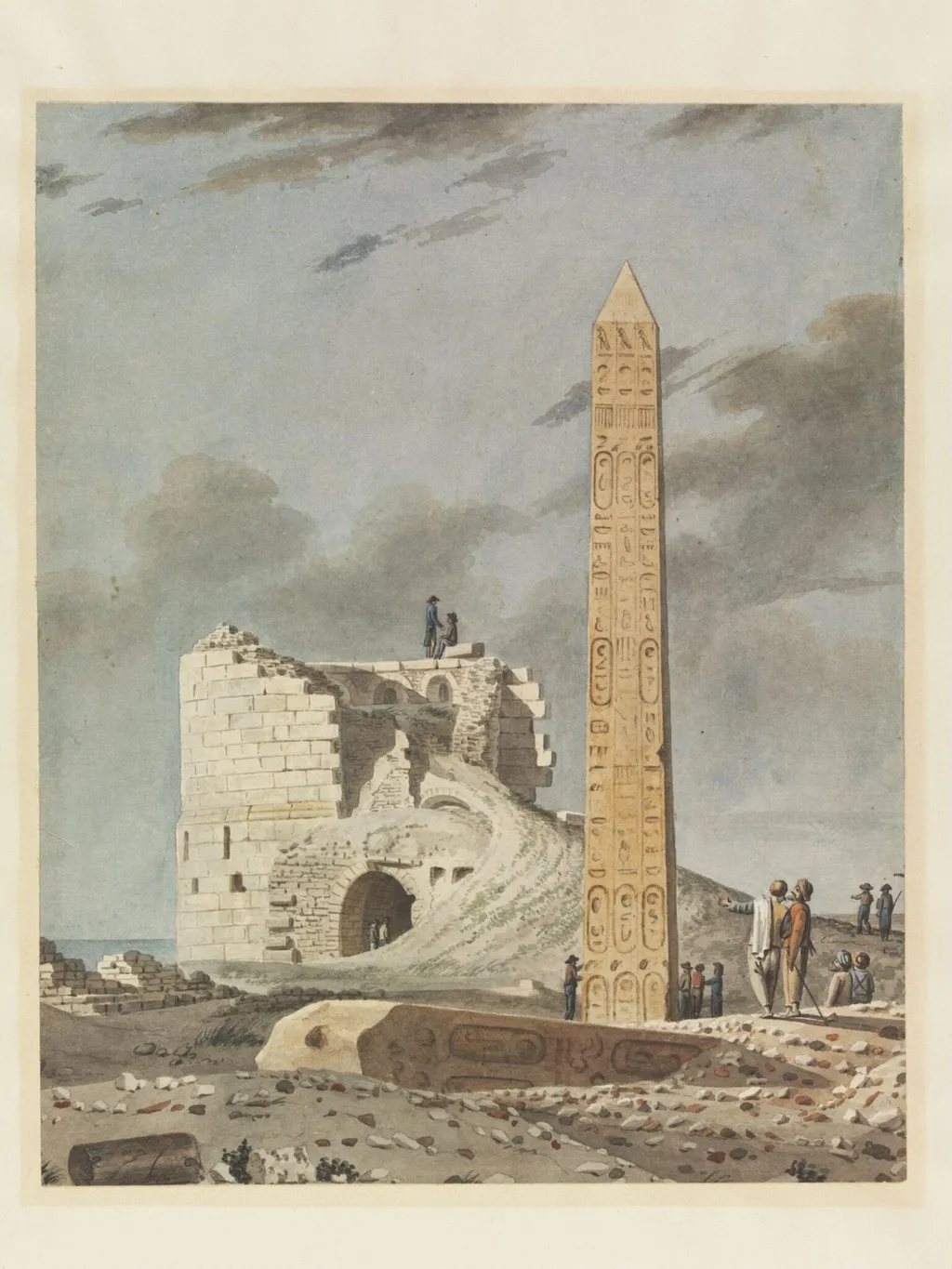
Vue de Obélisque dite de Cléopatre à Alexandrie is a watercolor work on paper by the Romanticist artist Dominique Vivant Denon. It dates from 1798 and is held in the collection of the Victoria and Albert Museum.
About this work
Overview
Dominique Vivant, Baron Denon, rendered a watercolour of the monument known as Cleopatra’s Needle in Alexandria during the French expedition of 1798. Executed in July of that year, the drawing records the obelisk’s placement amid the city’s ruins, framed by a cloudy sky and a few figures that suggest everyday activity.
Subject & Meaning
The composition centers on the slender, hieroglyph‑covered obelisk, a relic of ancient Egypt, juxtaposed with the remnants of a classical building. By situating the monument within a lived urban environment, Denon emphasizes the continuity between past and present, inviting viewers to contemplate the endurance of cultural symbols amid decay.
Technique & Style
Executed in watercolor, the work balances precise line work for the hieroglyphs with softer washes that convey atmospheric conditions. Denon’s handling of light and shadow creates a realistic sense of depth, while the muted palette underscores the somber, overcast sky, reflecting the Romantic interest in ruins and the sublime.
History & Provenance
Originally part of the collection of the Duc de Montpensier, the watercolour entered the public domain after being purchased from the dealer Valenti in 1967. Its provenance traces a path from private aristocratic ownership to museum acquisition, preserving its connection to the early French campaign in Egypt.
Artist & collection

Artist
Dominique Vivant, Baron Denon was a French artist, writer, diplomat, author, and archaeologist.

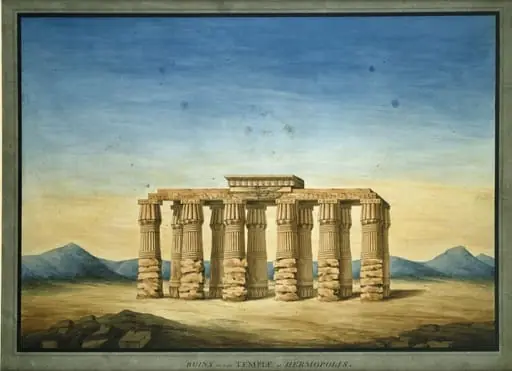 Ruins of the Temple of Hermopolis
![View of an Egyptian Temple. [Dendara]. 1807, by Dominique Vivant Denon](https://artifactworldgallery.com/img/dominique-vivant-denon--view-of-an-egyptian-temple-dendara-1807--69b7b6b17d97f4dc-w320.webp) View of an Egyptian Temple. [Dendara]. 1807
View of an Egyptian Temple. [Dendara]. 1807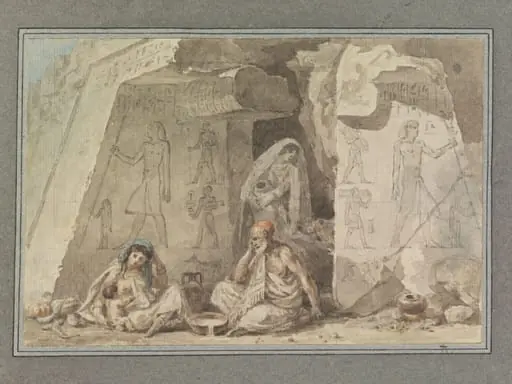 Family of Egyptian Fellahin, at Tomb Entrance
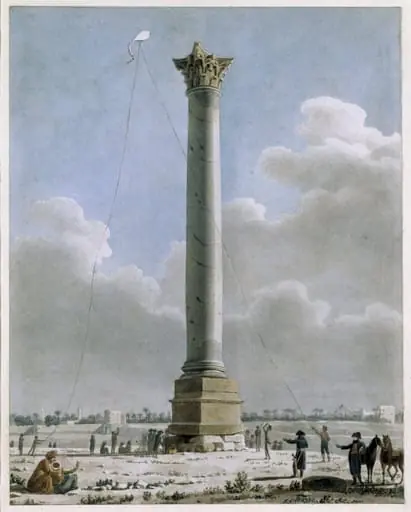 Vue de la colonne de Pompée à Alexandrie
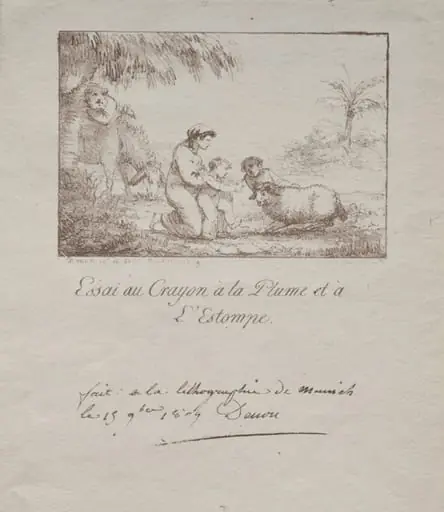 Holy Family on the Flight into Egypt
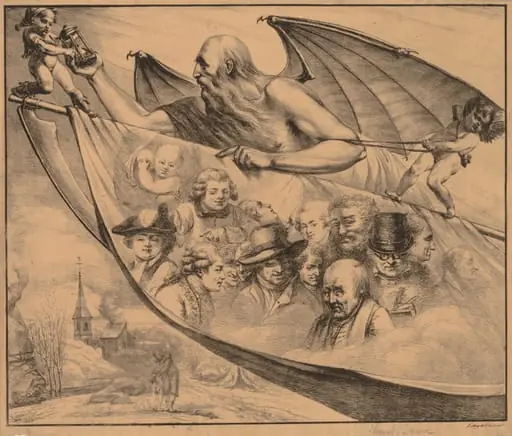 Allegory: Portraits of the Artist at Different Ages
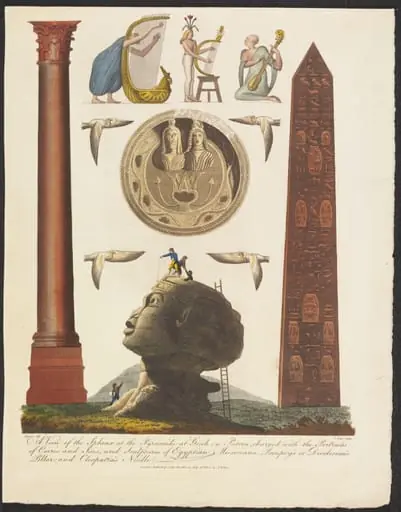 A view of the Sphinx at the Pyramids at Gizeh, a Patera, charged with the portraits of Osiris and Isis, and Sculptures of Egyptian Musicians, Pompey's or Dioclesian's Pillar, and Cleopatra's Needle
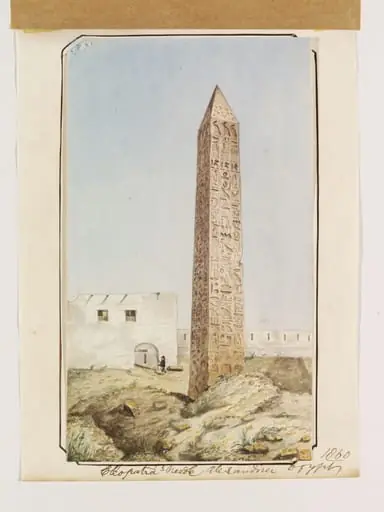 Cleopatra's Needle, Alexandria, Egypt
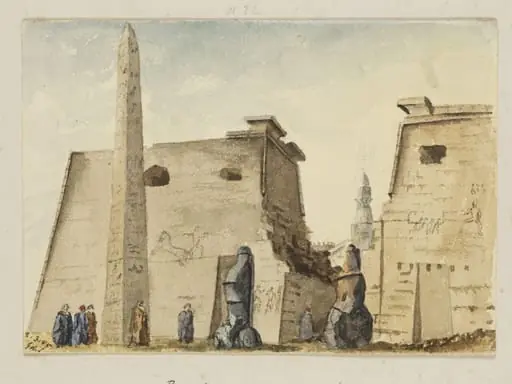 `Propyla of Great Temple. Luxor, Thebaid'
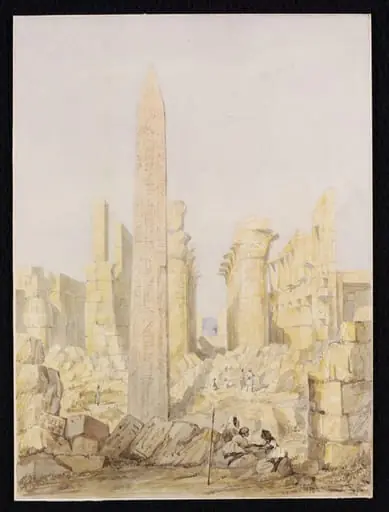 Great Temple. Karnac. Thebes
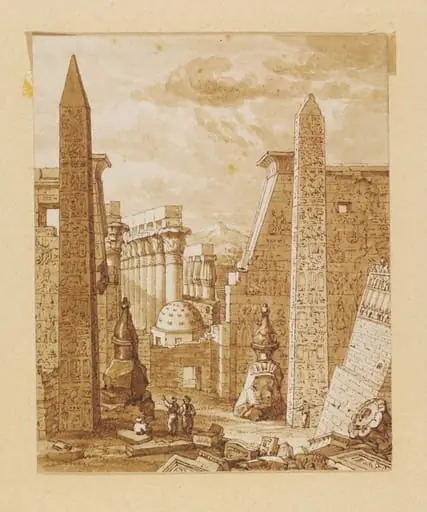 Entry of Palace of Luxor, formerly Thebes
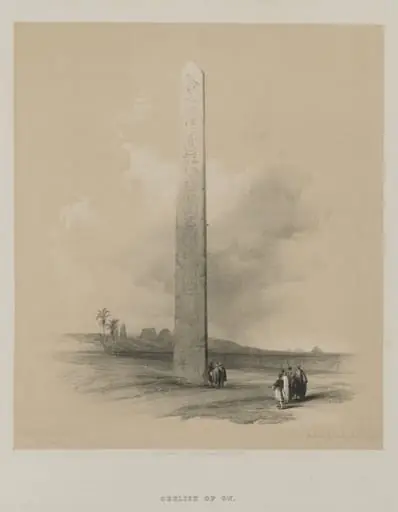 Egypt and Nubia, Volume II: Obelisk of Heliopolis
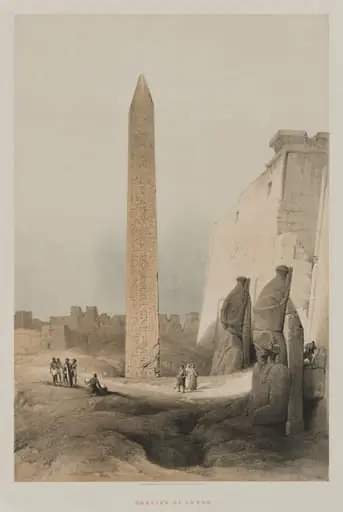 Egypt and Nubia, Volume I: Luxor
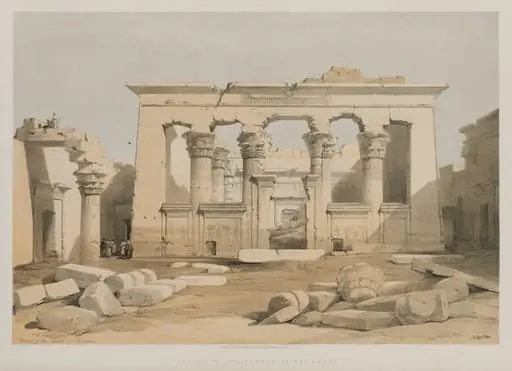 Egypt and Nubia, Volume I: Portico of the Temple of Kalabshe
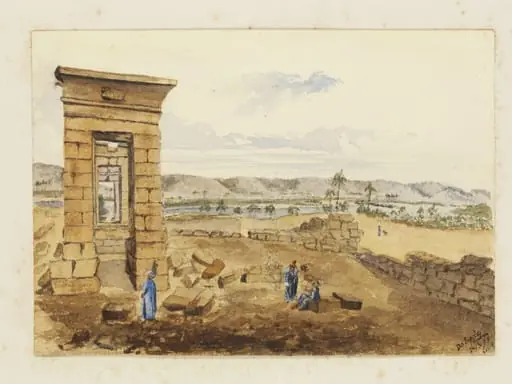 `Dabode Nubia '
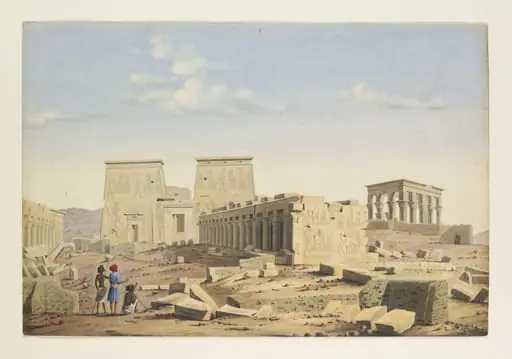 Ile de Philoé
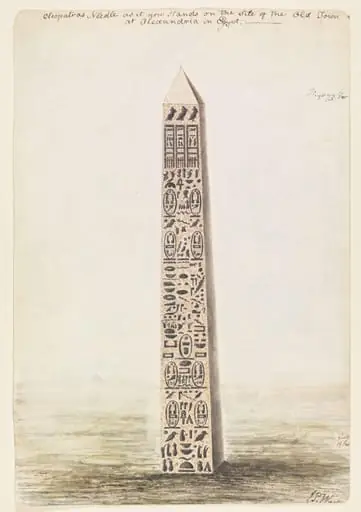 Cleopatras Needle as it now Stands on the Site of the Old Town at Alexandria in Egypt
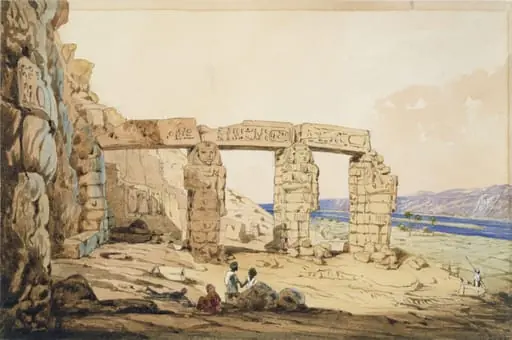 Guerfeh Hassan - Nubia
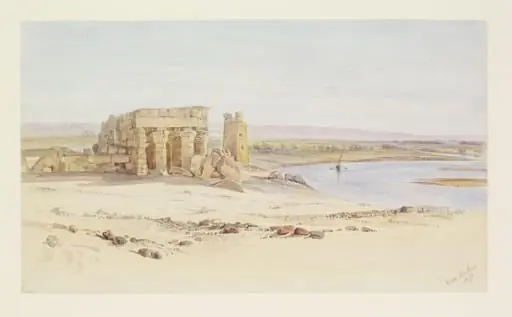 Kom Ombos