Artwork
A view of the Sphinx at the Pyramids at Gizeh, a Patera, charged with the portraits of Osiris and Isis, and Sculptures of Egyptian Musicians, Pompey's or Dioclesian's Pillar, and Cleopatra's Needle
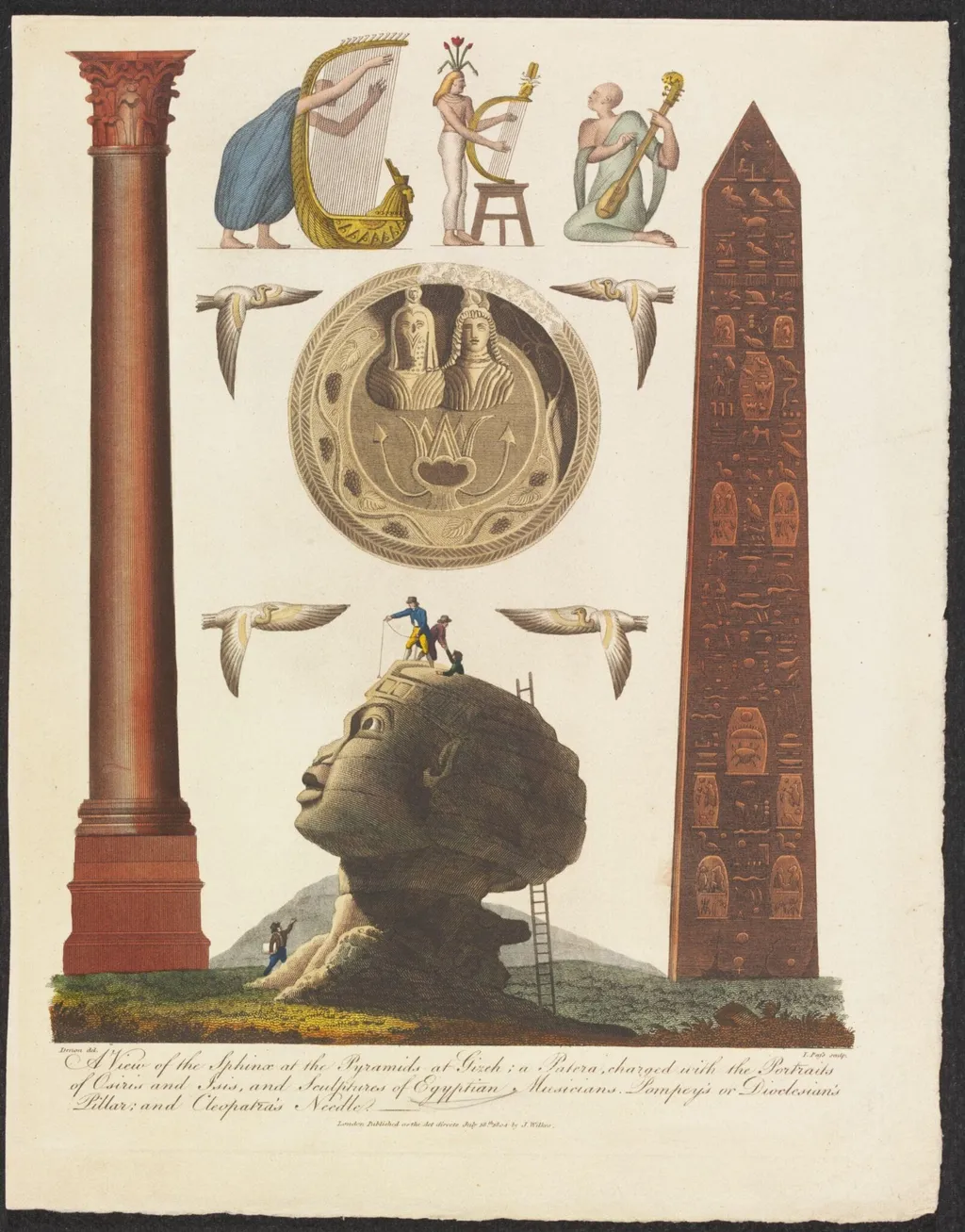
A view of the Sphinx at the Pyramids at Gizeh, a Patera, charged with the portraits of Osiris and Isis, and Sculptures of Egyptian Musicians, Pompey's or Dioclesian's Pillar, and Cleopatra's Needle is a print by the Romanticist artist Dominique Vivant Denon. It dates from 1802 and is held in the collection of the Victoria and Albert Museum.
About this work
This print is titled A view of the Sphinx at the Pyramids at Gizeh.
It was created by Dominique Vivant Denon in 1802, based on his travels with Napoleon's army in Egypt.
The print is part of a larger work called Description de l‘Egypte, which features many engravings of Egyptian scenes and landmarks.
Check out the movement Romanticism to learn more about this style of art.
Overview
This print, titled 'A view of the Sphinx at the Pyramids at Gizeh', is an engraving from the monumental 'Description de l’Egypte', a 23-volume work published between 1809 and 1828. The image originates from sketches by Dominique Vivant, Baron de Denon, created during his 1798 journey with Napoleon's army in Egypt.
Subject & Meaning
The print depicts the Sphinx alongside the Pyramids at Gizeh, incorporating a patera with portraits of Osiris and Isis, Egyptian musicians, Pompey's or Dioclesian's Pillar, and Cleopatra's Needle. These elements reflect the expedition's broad interest in Egyptian antiquities, mythology, and architecture.
Technique & Style
The engraving is based on Denon's on-site sketches, later translated into print form. While the style aligns with the documentary precision demanded by the Commission des Sciences et Arts d’Égypte, it also anticipates the romantic fascination with the exotic and ancient that characterized the emerging Romantic movement.
History & Provenance
Originally sketched in 1798, the print was first published in Denon's 'Voyage dans la Basse et la Haute Egypte' (1802) before being included in 'Description de l’Egypte' (1809-1828). It was part of a comprehensive project to record Egyptian topography, life, and antiquities led by Napoleon's commissioned scholars.
Context
Created amidst Napoleon's Egyptian campaign, the print embodies the intersection of military conquest, scientific inquiry, and artistic expression. It reflects the era's scholarly and public fascination with Ancient Egypt, facilitated by French imperial endeavors.
Legacy
Denon's illustrations, including this print, spurred a revival of interest in Egyptian arts, influencing French architecture and decorative arts with Egyptian motifs. The 'Description de l’Egypte' remains a seminal work in the history of Egyptology and the broader Orientalist movement.
Artist & collection
Artist
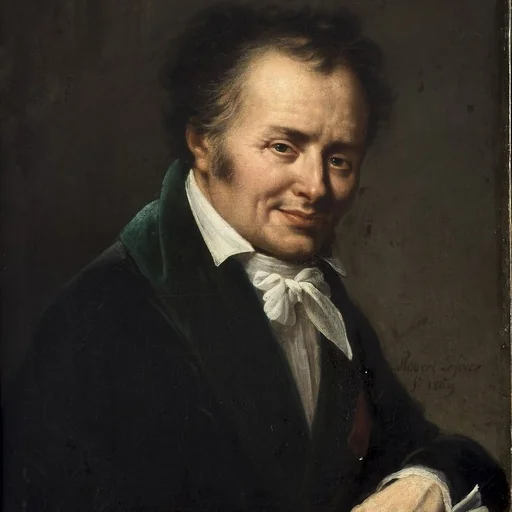
Dominique Vivant, Baron Denon was a French artist, writer, diplomat, author, and archaeologist.

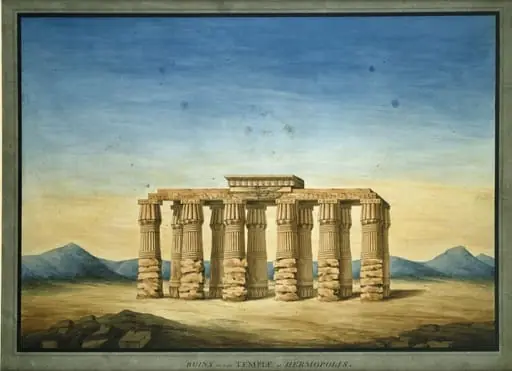
![View of an Egyptian Temple. [Dendara]. 1807, by Dominique Vivant Denon](https://artifactworldgallery.com/img/dominique-vivant-denon--view-of-an-egyptian-temple-dendara-1807--69b7b6b17d97f4dc-w320.webp)
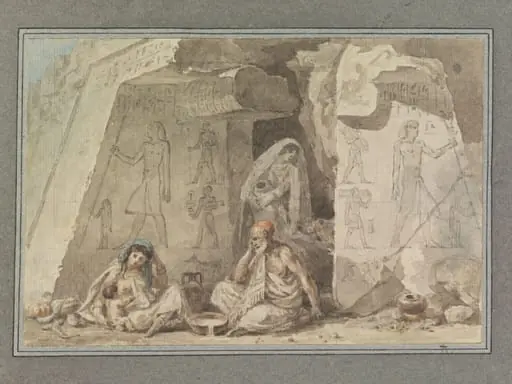
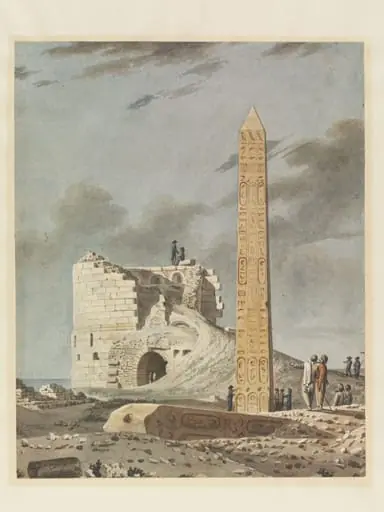
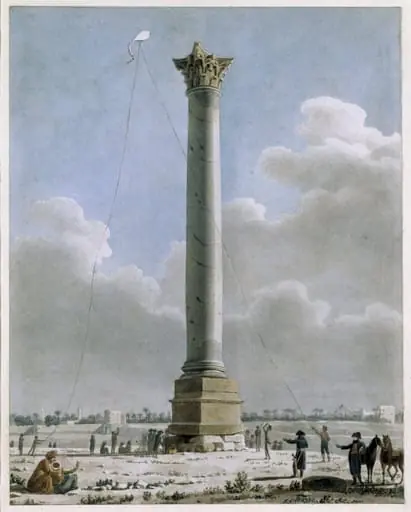
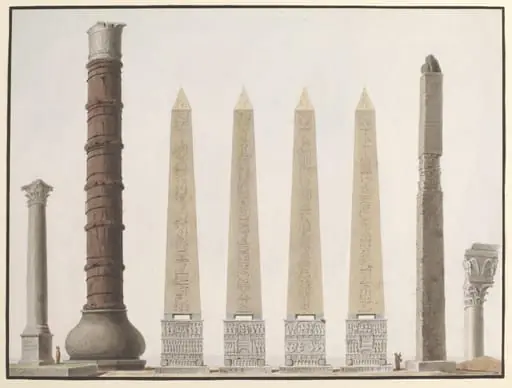 An illustration showing the ancient columns and the Egyptian oblelisk
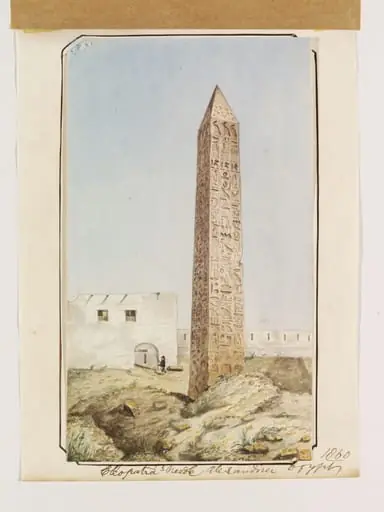 Cleopatra's Needle, Alexandria, Egypt
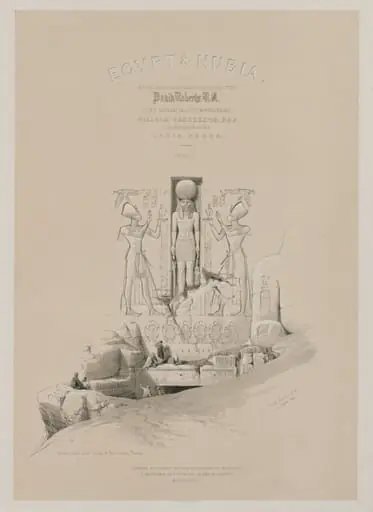 Egypt and Nubia, Volume I: Frontispiece
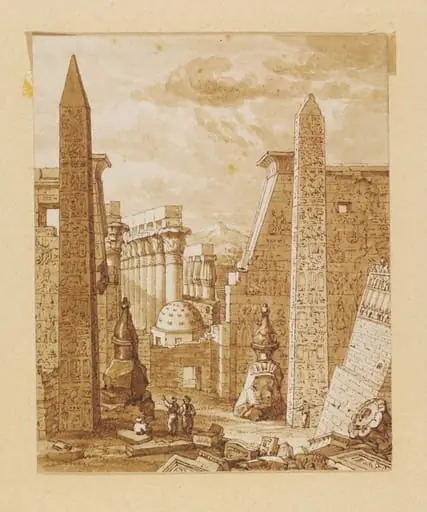 Entry of Palace of Luxor, formerly Thebes
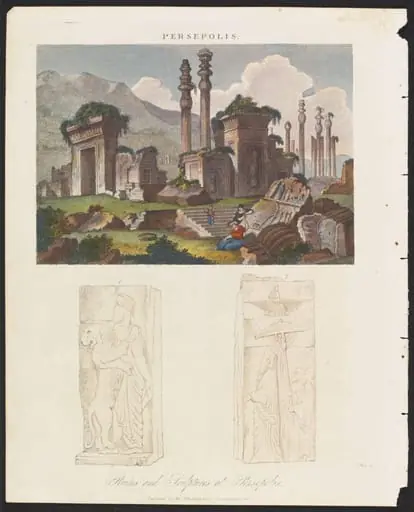 Persepolis. Ruins and Sculptures at Persepolis
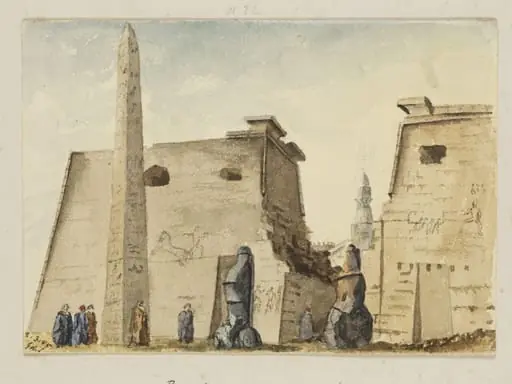 `Propyla of Great Temple. Luxor, Thebaid'
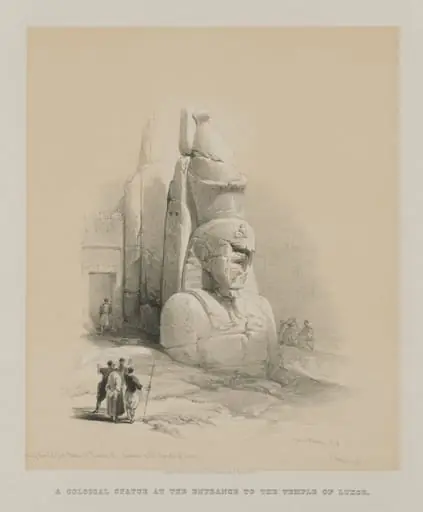 Egypt and Nubia, Volume I: One of Two Colossal Statues of Rameses II. Entrance to the Temple of Luxor
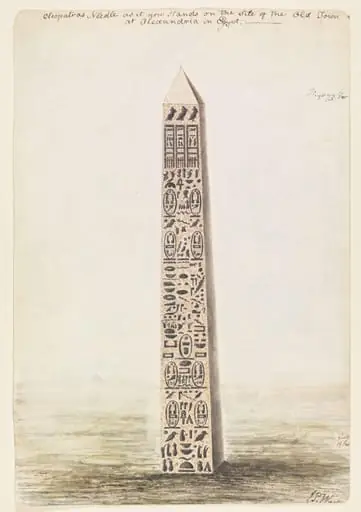 Cleopatras Needle as it now Stands on the Site of the Old Town at Alexandria in Egypt