Artwork
Interior: saints Agatha and Claire
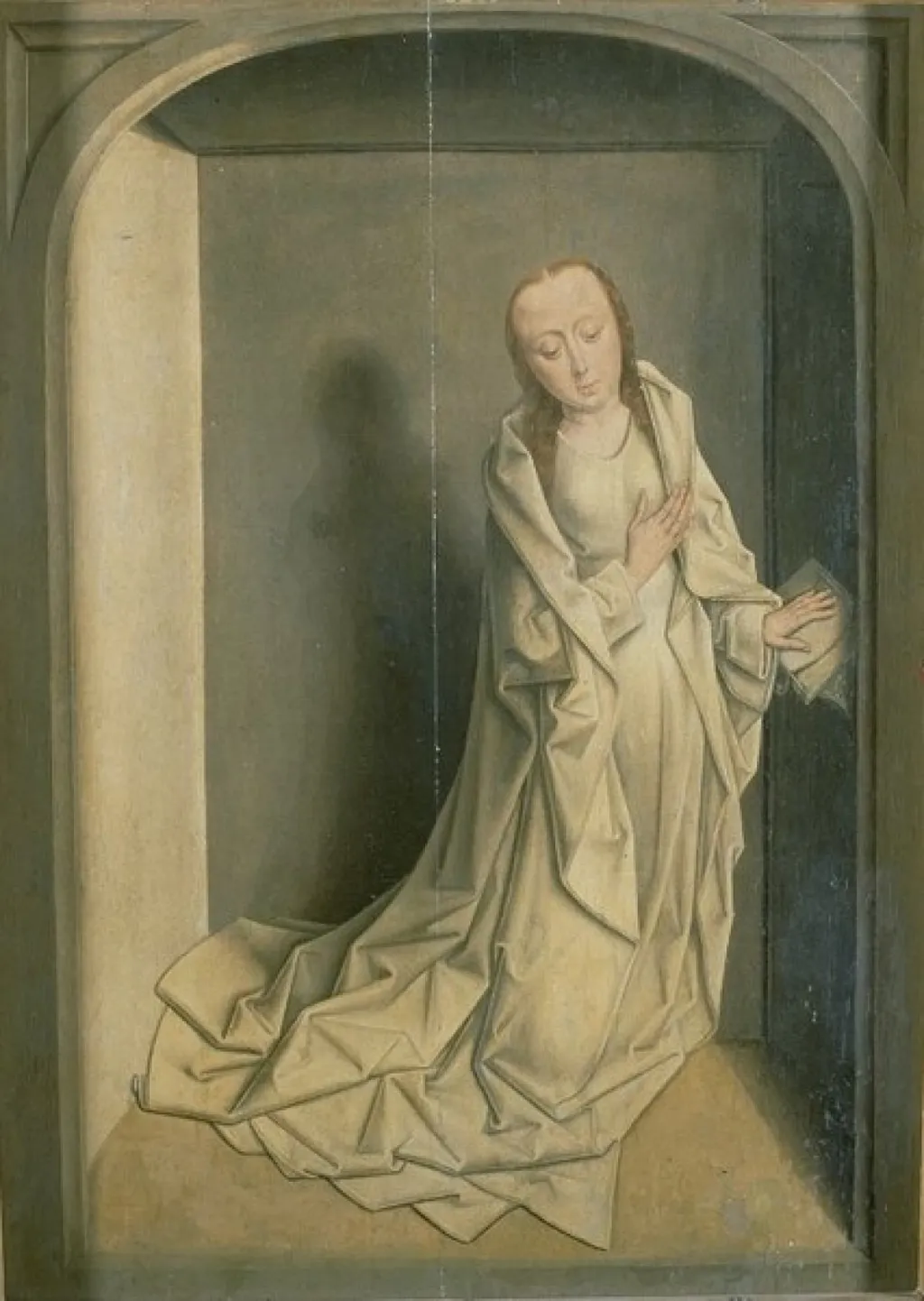
Interior: saints Agatha and Claire is a paint painting by the Northern Renaissance artist Dieric Bouts. It is held in the collection of the Gemäldegalerie Berlin.
About this work
Overview
This diptych, attributed to the Early Netherlandish artist Dieric Bouts, presents two distinct yet related subjects. The interior panels portray the saints Agatha and Clare, while the exterior sides depict the Annunciation scene with the Virgin Mary. Executed in oil paint, the work exemplifies the Northern Renaissance style and is part of the collection of the Gemäldegalerie in Berlin.
Subject & Meaning
The interior images focus on the martyrdom of Saint Agatha and the piety of Saint Clare, emphasizing themes of sacrifice and devotion. On the reverse, the Annunciation captures Mary at the moment of divine revelation, her hands clasped in prayer, embodying humility and obedience.
Technique & Style
Bouts employs a restrained palette of muted greys and soft whites, allowing subtle chiaroscuro to model the figures and suggest depth. The delicate rendering of fabrics and the calm, introspective expressions reflect the influence of contemporaries such as Rogier van der Weyden and Jan van Eyck, while maintaining the artist’s characteristic compositional clarity.
History & Provenance
Created in the latter half of the 15th century, the diptych remained in private hands before entering the Gemäldegalerie, Berlin, where it is displayed today. Its attribution to Bouts rests on stylistic analysis linking it to his known oeuvre in Leuven.
Context
The work belongs to a period when devotional diptychs were common in Northern Europe, serving both private contemplation and liturgical function. The pairing of saints with the Annunciation reflects a theological program linking earthly intercession with the Incarnation.
Artist & collection
Artist
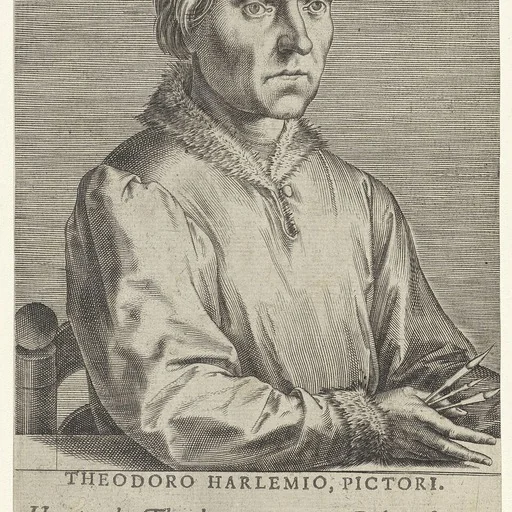
Dieric Bouts (born c. 1415 – 6 May 1475) was an Early Netherlandish painter. Bouts may have studied under Rogier van der Weyden, and his work was influenced by van der Weyden and Jan van Eyck. He worked in Leuven from…

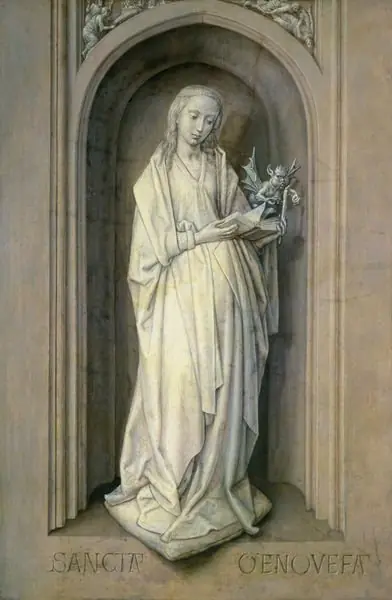 Genevieve
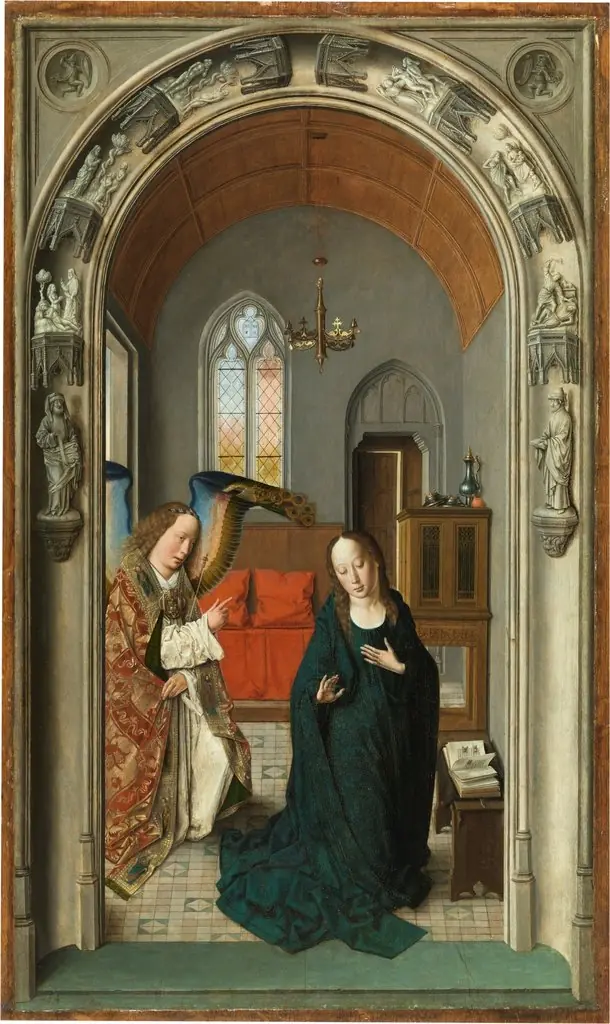
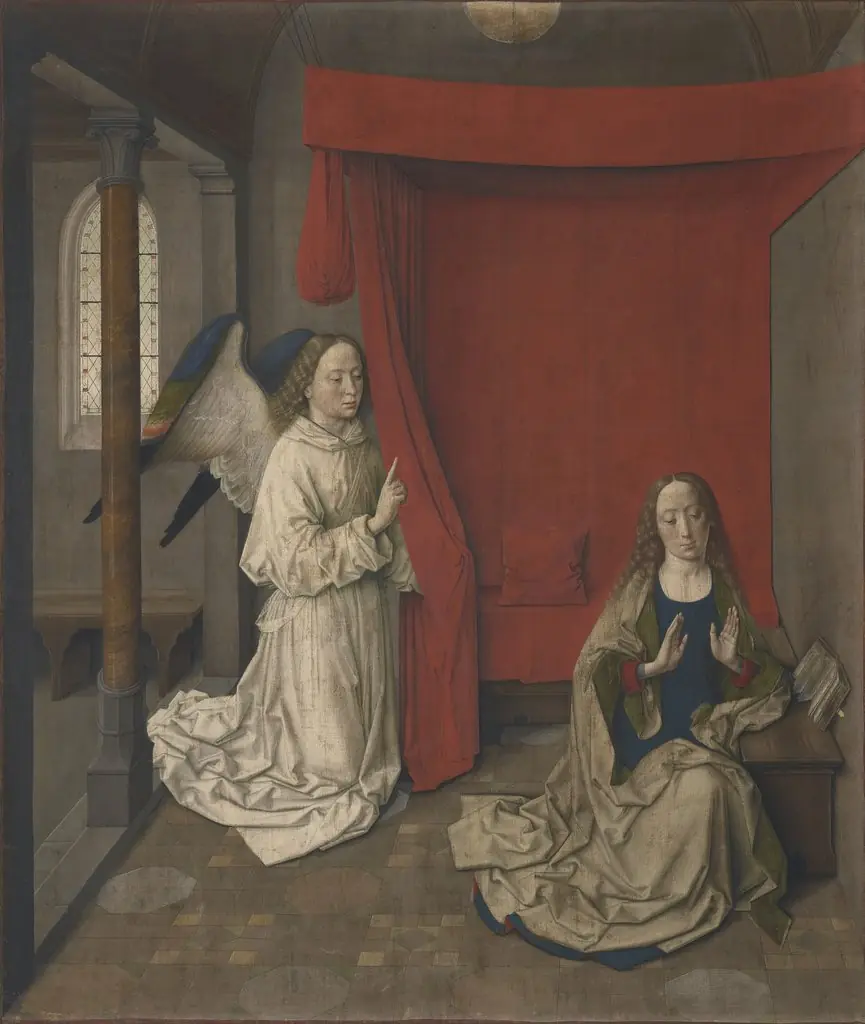 The Annunciation
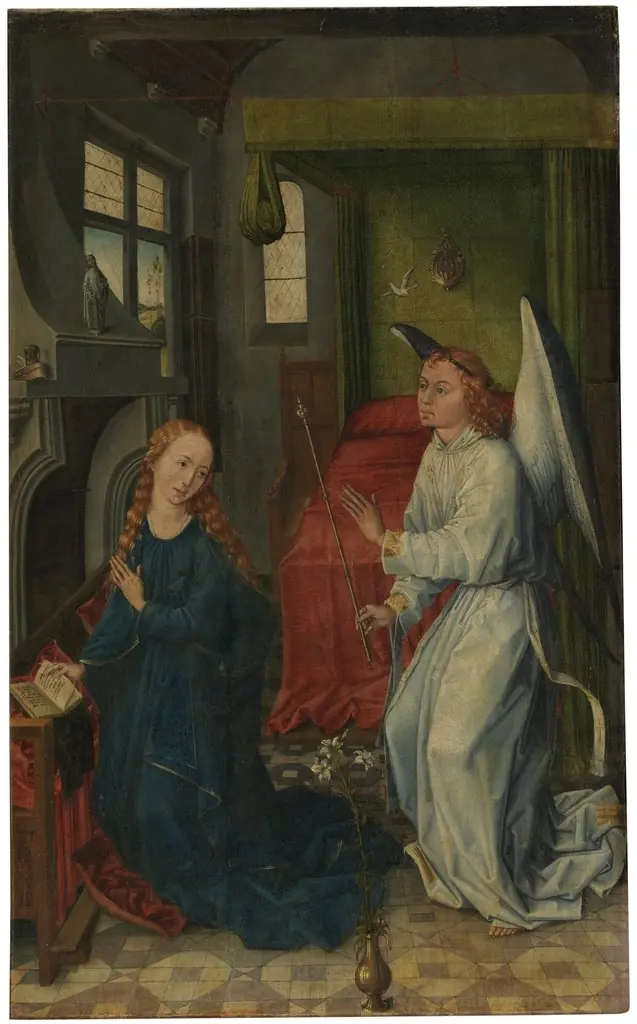 The Annunciation
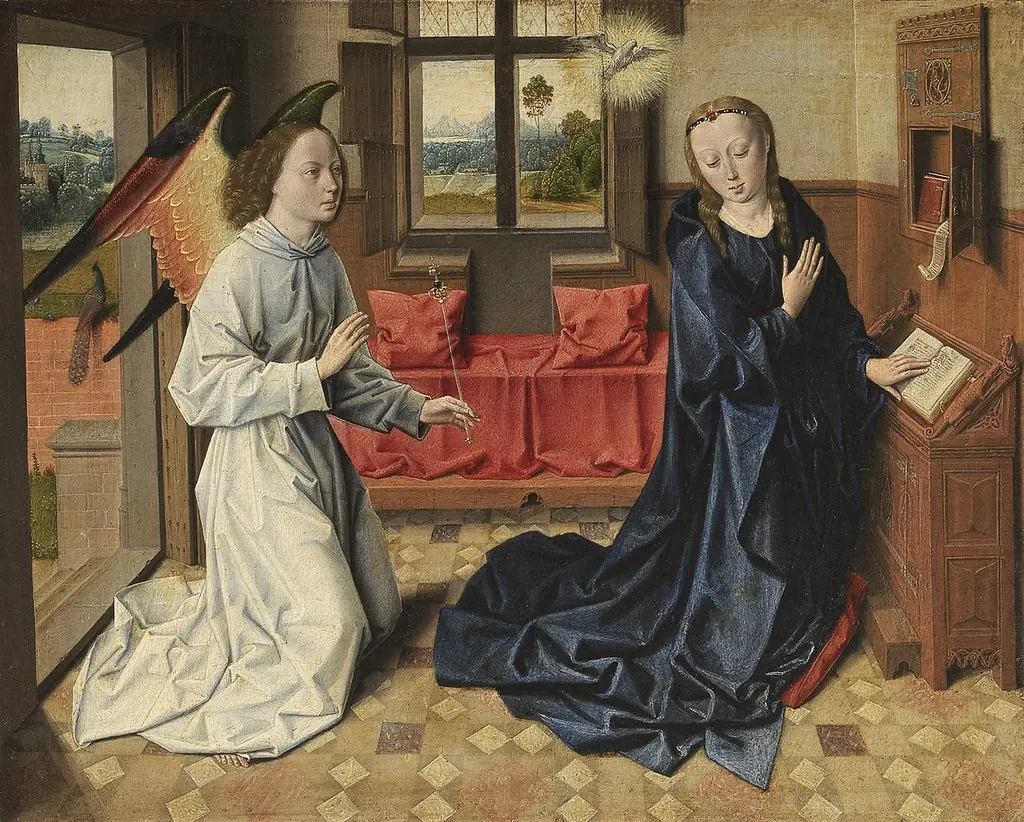 The Annunciation
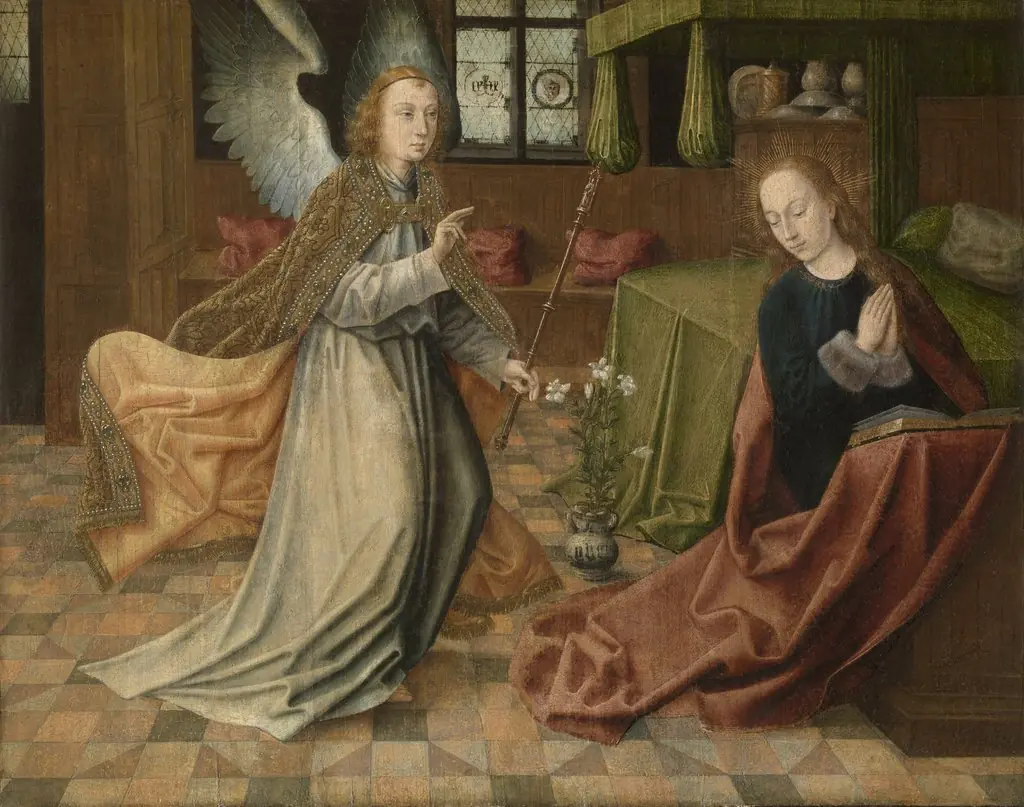 The Annunciation
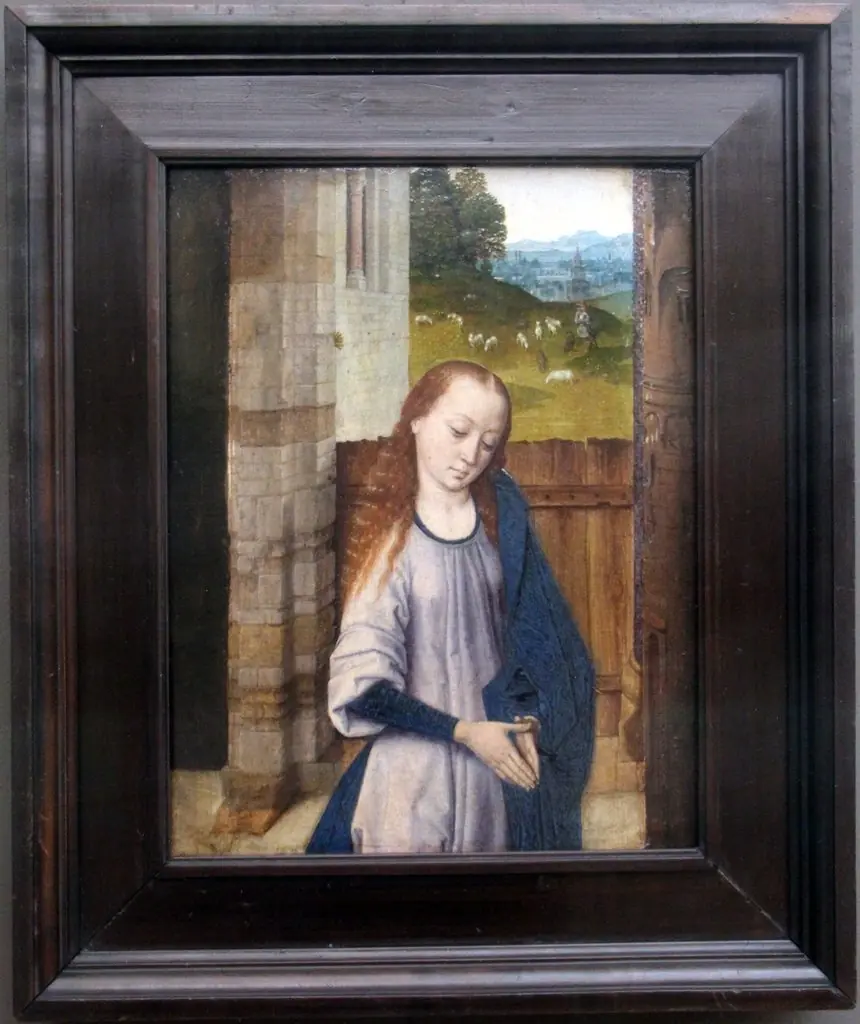 Maria in Prayer
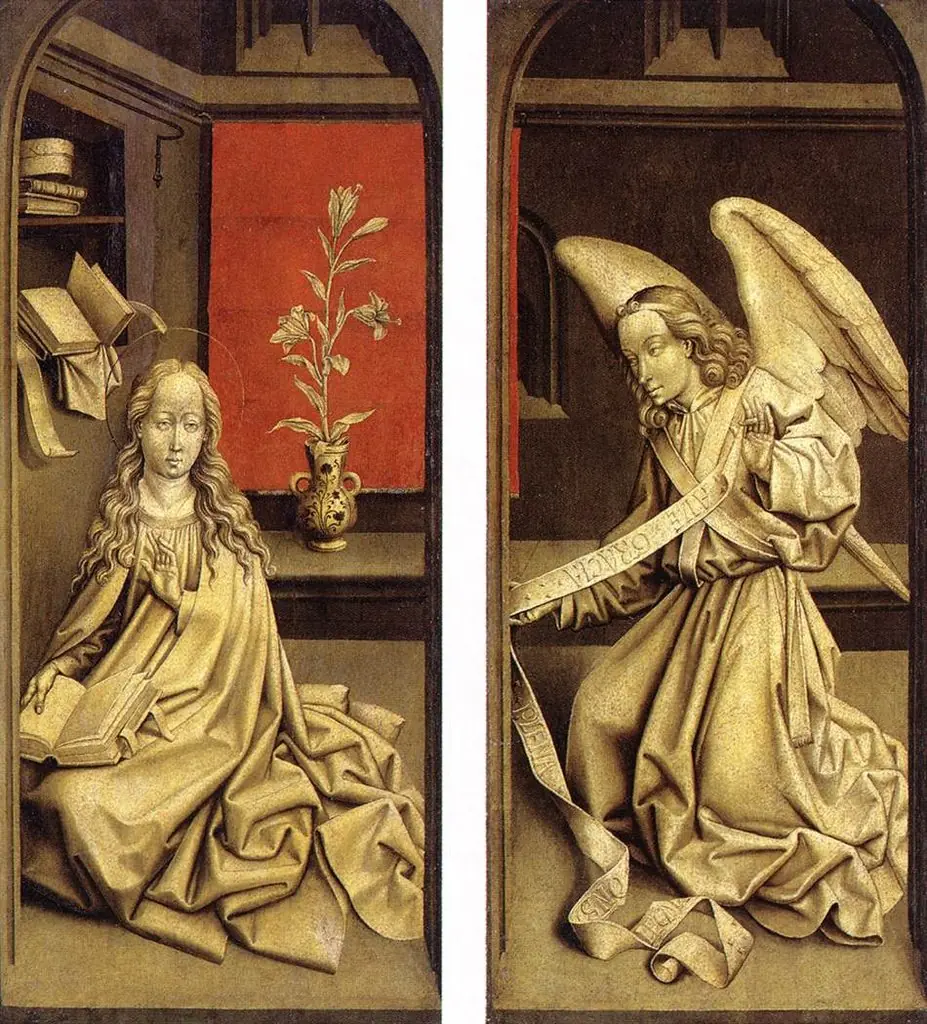 Bladelin Triptych Annunciation (exterior, closed)
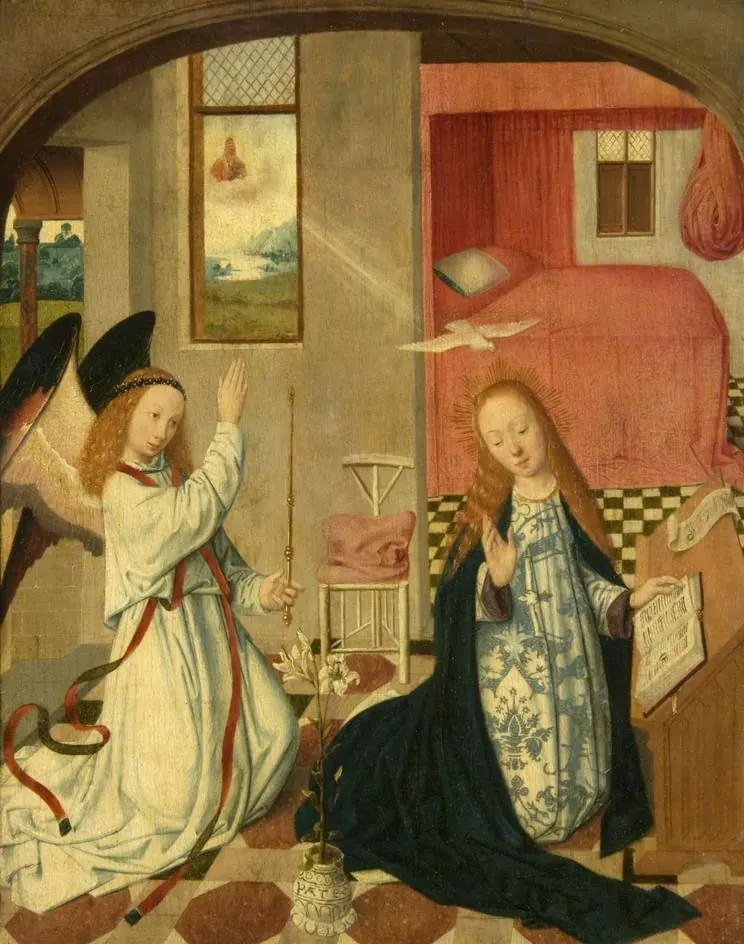 The Annunciation
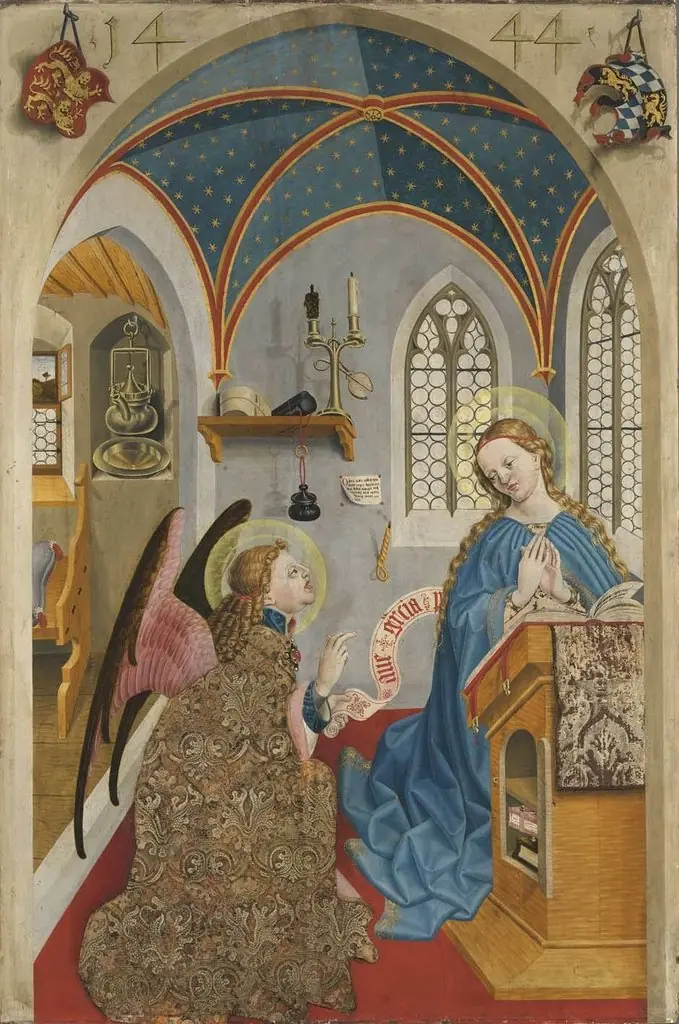 Altar of Mary: Annunciation to Mary
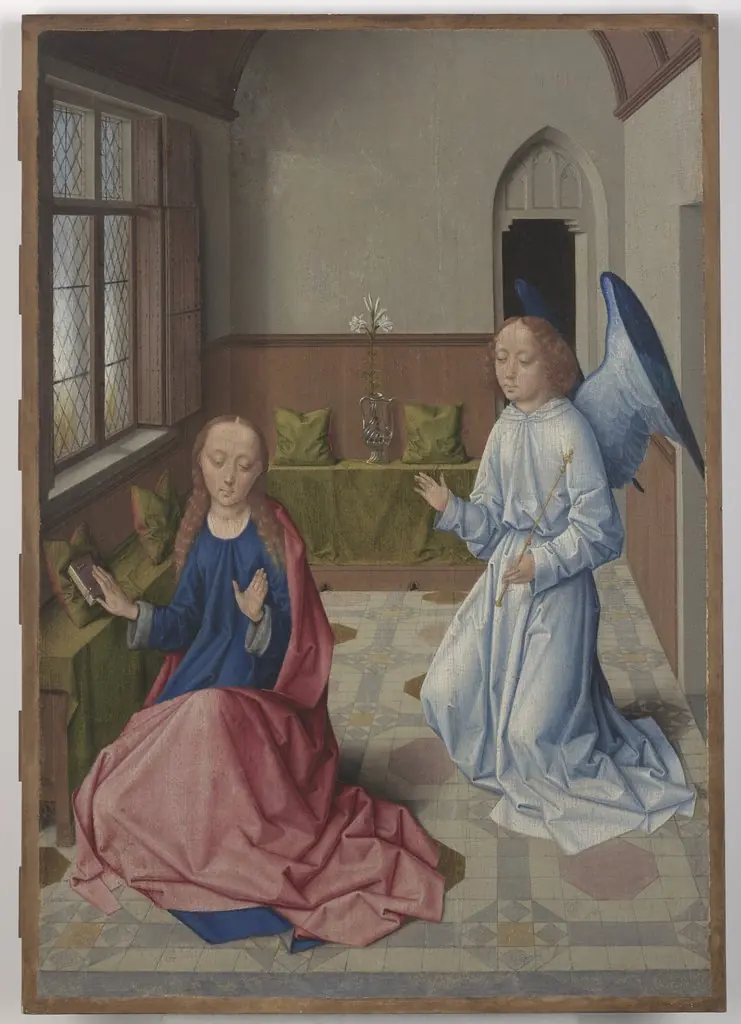 Annunciation
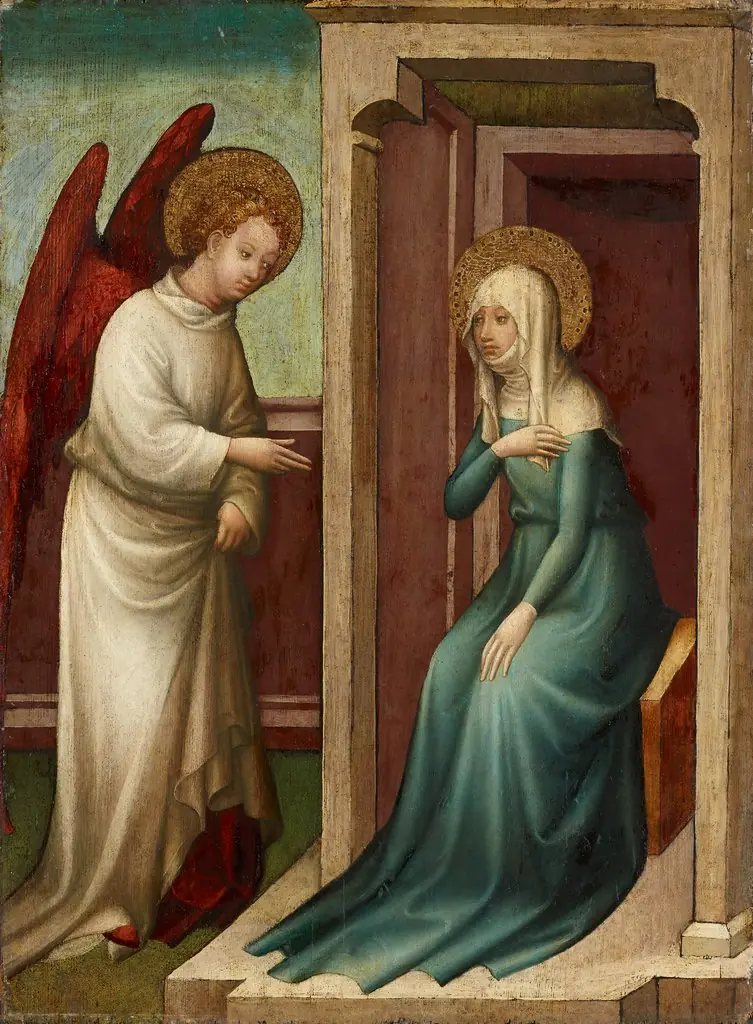 Annunciation to Saint Ann
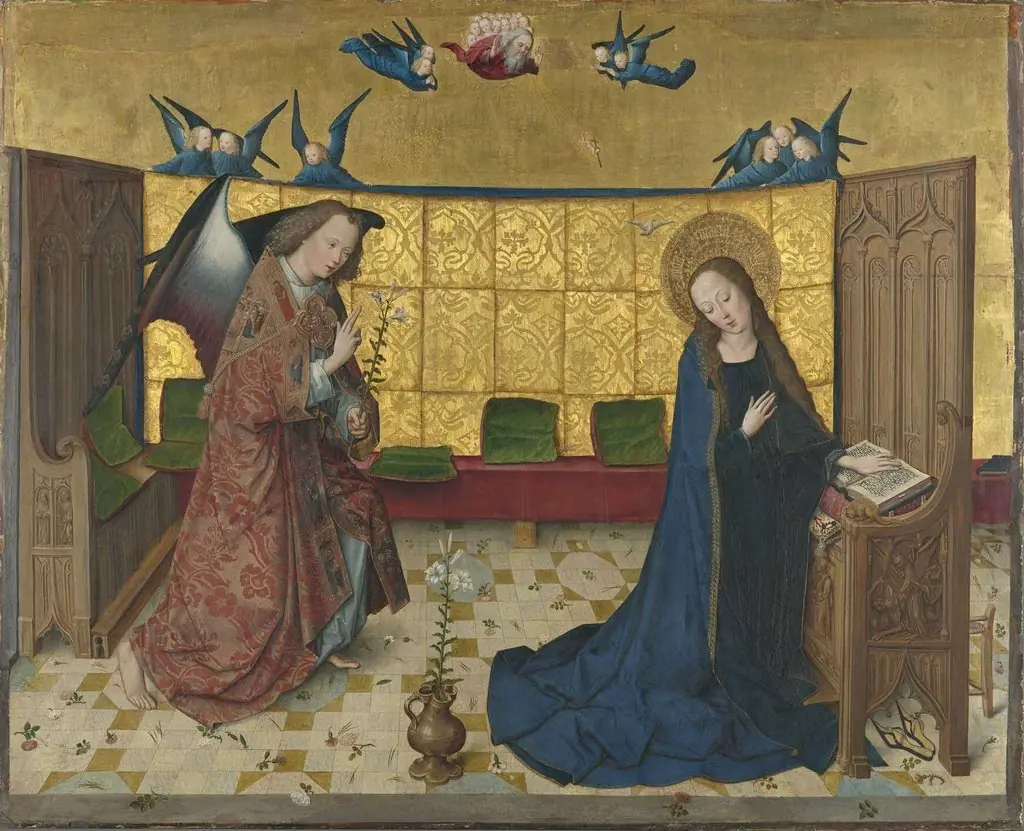 The Life of Mary: the Annunciation (lower half of the Crucifixion of Christ)