Artwork
Oriental in a Fantastic Headdress
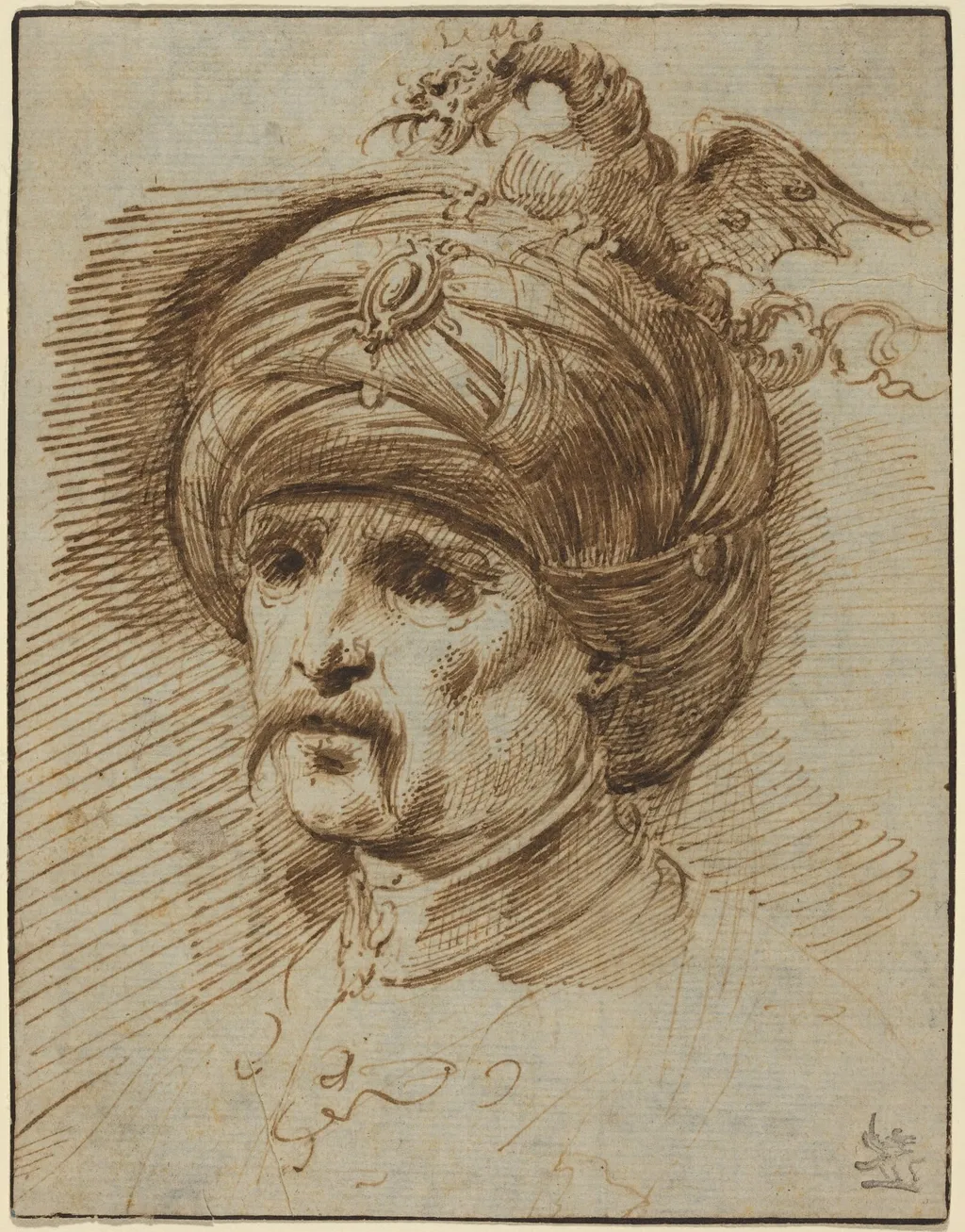
Oriental in a Fantastic Headdress is an ink drawing by the Baroque artist Christian Wilhelm Ernst Dietrich. It dates from 1732 and is held in the collection of the National Gallery of Art.
About this work
This movement was popular in Europe during the 17th and 18th centuries and is known for its dramatic lighting and detailed designs.
The painting is called Oriental in a Fantastic Headdress.
It was made by Dietrich, Christian Wilhelm Ernst in 1731 or 1732.
The artist used pen and brown ink on laid paper to create this portrait, which is part of the Baroque movement.
This movement was popular in Europe during the 17th and 18th centuries and is known for its dramatic lighting and detailed designs.
To learn more about this style, check out the movement: Baroque.
Overview
Christian Wilhelm Ernst Dietrich’s drawing titled Oriental in a Fantastic Headdress dates from the early 1730s, most likely 1732. Executed with pen and brown ink on laid paper, the work presents a single figure rendered in the detailed, expressive manner characteristic of the late Baroque period.
Subject & Meaning
The composition depicts a solitary figure dressed in an elaborate, exotic headdress, suggesting an imagined Oriental identity. While the attire is fanciful rather than ethnographically accurate, the image reflects contemporary European fascination with the exotic and the decorative possibilities of costume.
Technique & Style
Dietrich employed fine pen work and a rich brown ink to model the facial features and intricate headgear, exploiting the texture of laid paper to enhance tonal variation. The drawing’s careful line work and controlled shading align with Baroque sensibilities for dramatic contrast and ornamental detail.
History & Provenance
Created during Dietrich’s mature period, the piece was likely produced for a private collector interested in genre and costume studies. Its provenance before entering public collections remains undocumented, a common circumstance for many 18th‑century drawings.
Context
The work belongs to the broader Baroque movement that dominated European art in the 17th and early 18th centuries. Artists of the time often explored theatricality and exoticism, using costume studies to display skill and to cater to patrons’ tastes for the unusual.
Own this work as a print
Artist & collection


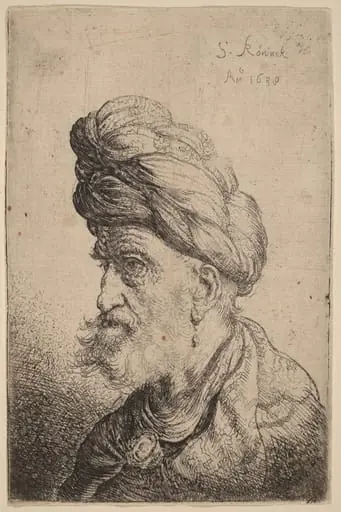 Bust of a Man with a Turban Facing Left
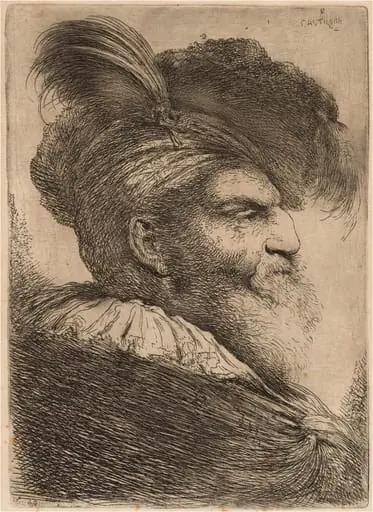 Man with a Long Beard and Headdress, Facing Right
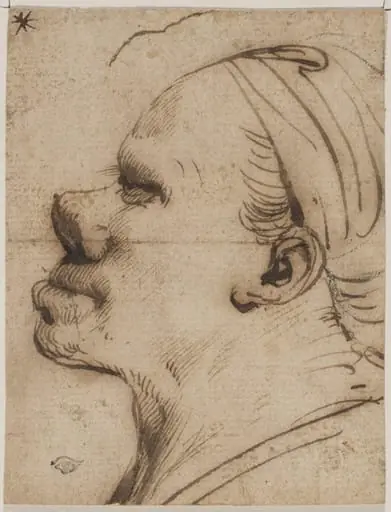 Caricature, a man's head in profile
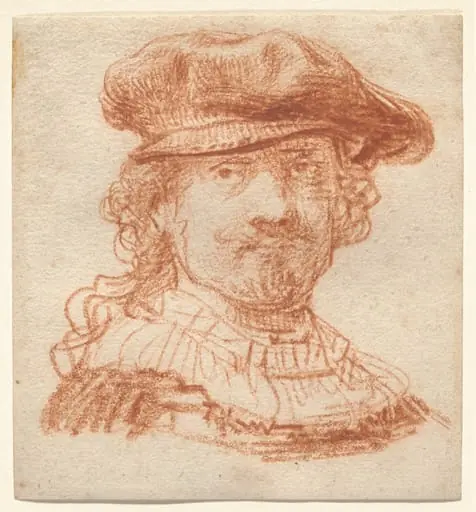 Self-Portrait
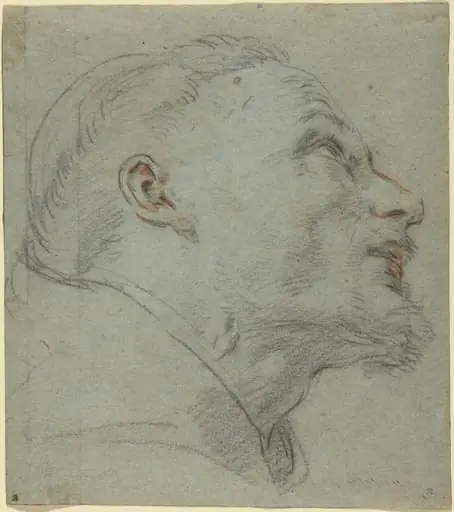 Head of Saint Francis
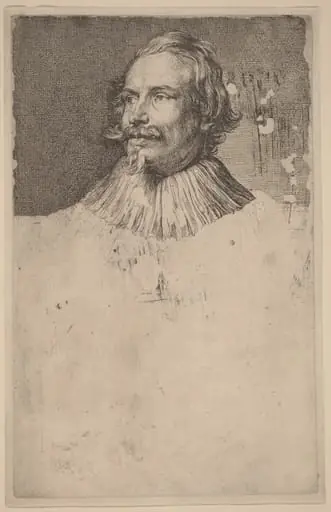 Paul de Vos
![Head of a Man [recto], by Théodore Géricault](https://artifactworldgallery.com/img/theodore-gericault--head-of-a-man-recto--d6e68ba78da40efa-w320.webp) Head of a Man [recto]
Head of a Man [recto]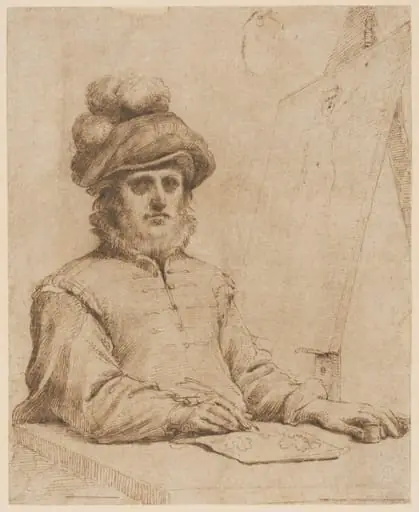 Portrait of an artist
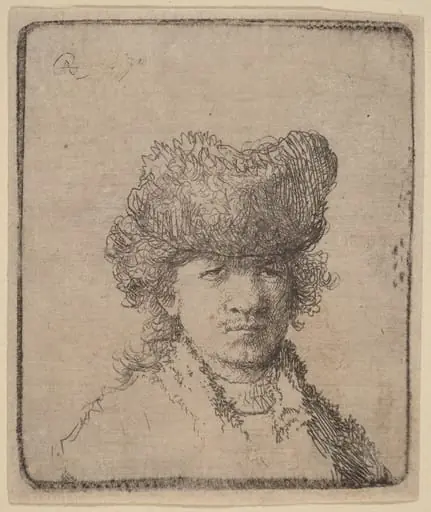 Self-Portrait in a Fur Cap
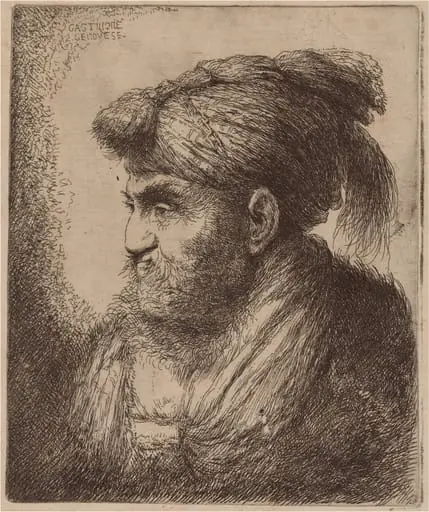 Man with a Beard and a Tassled Headdress, Facing Left
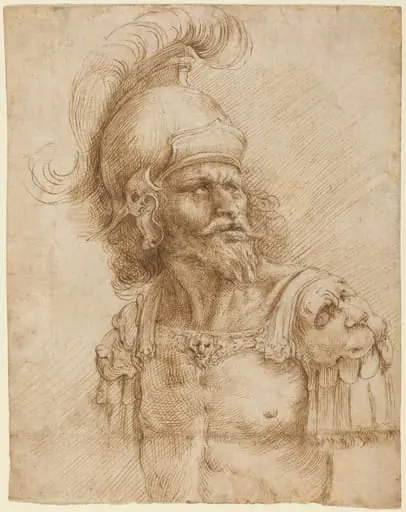 A Helmeted Soldier
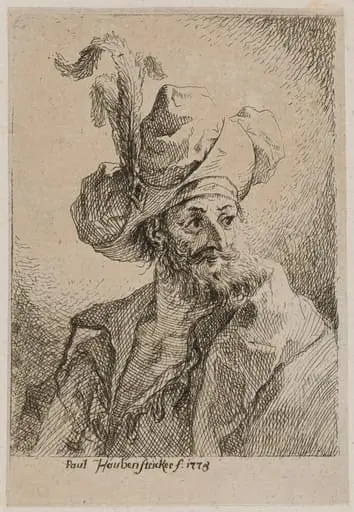 Oriental with a Plumed Hat, Looking Right