Artwork
Painting
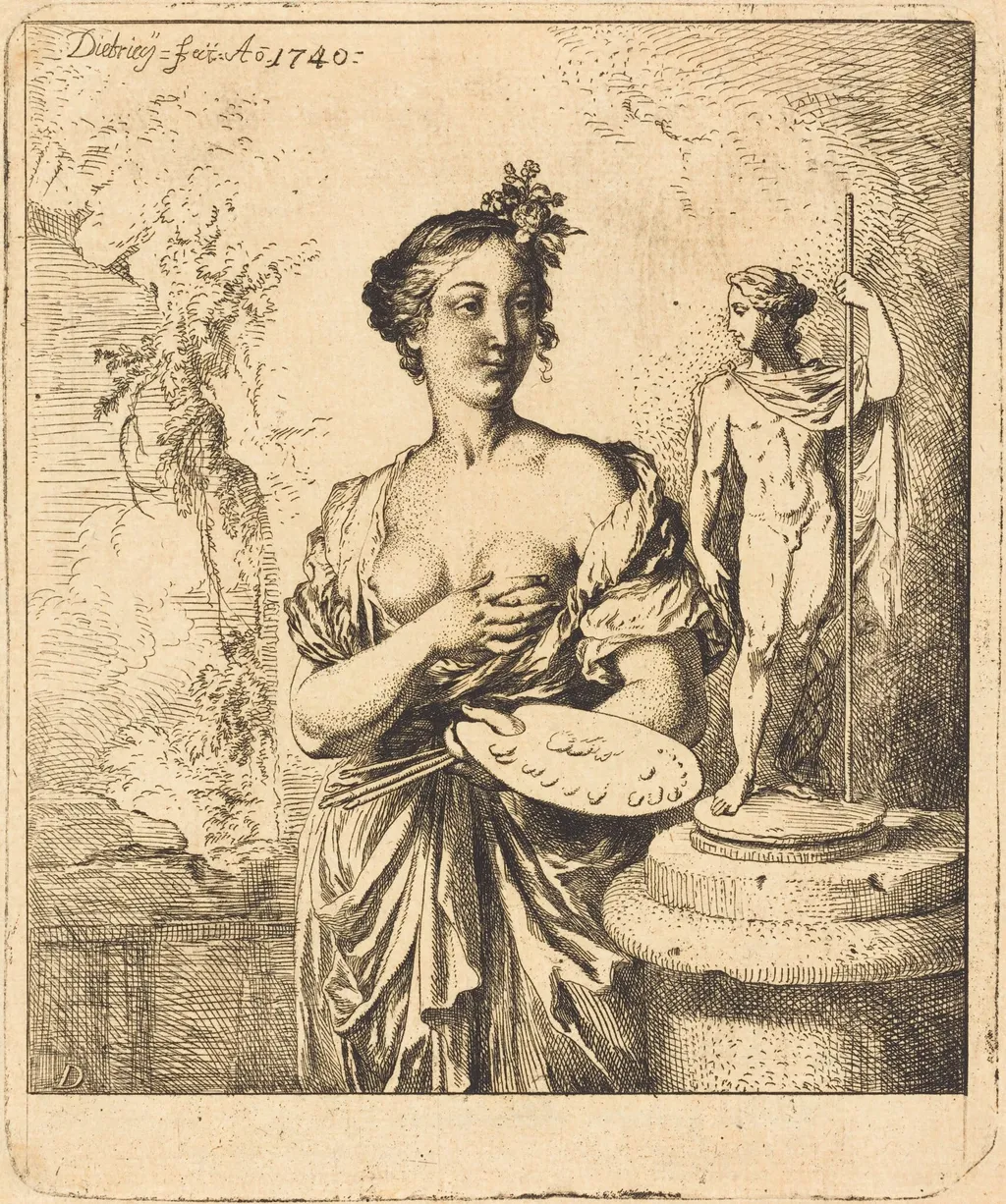
Painting is an ink print by the Baroque artist Christian Wilhelm Ernst Dietrich. It dates from 1740 and is held in the collection of the National Gallery of Art.
About this work
Overview
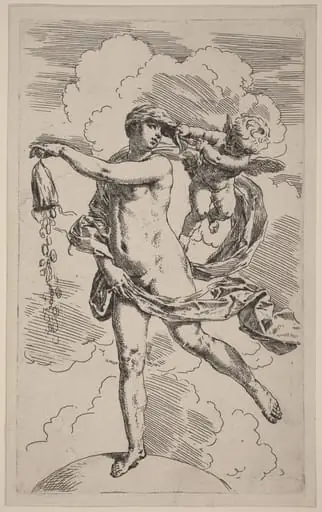
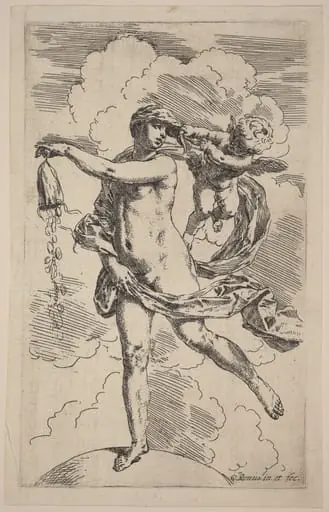
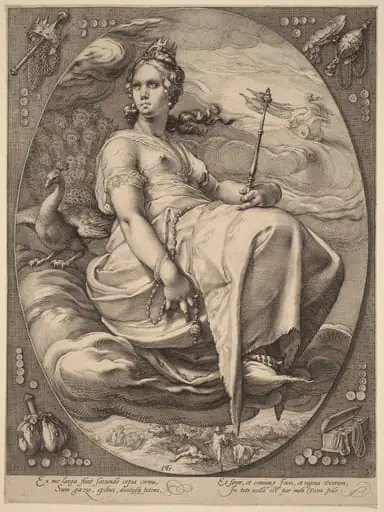
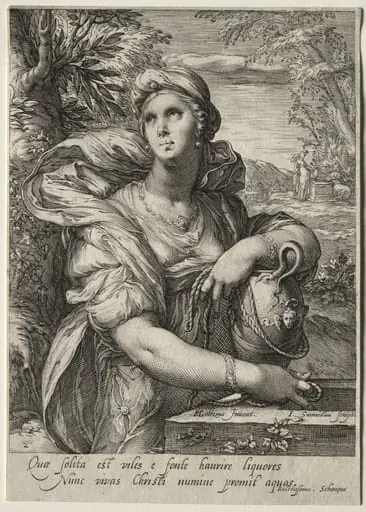
Christian Wilhelm Ernst Dietrich’s work titled “Painting” is an etching executed on laid paper in 1740. The print presents a central female figure, robed and crowned with foliage, holding a small palette and brushes, set against a garden‑like backdrop that includes a broken column, vines, and a statue of a spear‑bearing woman.
Subject & Meaning
The primary figure’s attire, artistic tools, and poised stance suggest an allegorical representation of the painter or the concept of artistic creation. The accompanying statue, echoing classical motifs, reinforces the theme by juxtaposing the act of painting with martial or heroic symbolism, inviting viewers to contemplate the relationship between art and virtue.
Technique & Style
Dietrich employed traditional intaglio methods, incising lines into a copper plate before transferring the image onto laid paper. The composition displays characteristic Baroque qualities: strong chiaroscuro, intricate detailing of fabrics and foliage, and a dynamic arrangement that guides the eye through foreground and background elements.
History & Provenance
Created in the mid‑18th century, the etching reflects Dietrich’s engagement with academic and decorative subjects common to his oeuvre. While specific ownership records are sparse, the print has appeared in several catalogues of German printmakers, indicating its circulation among collectors of Baroque graphic art.
Context
During the 1740s, German artists often looked to Italian and French models, integrating classical allegory with contemporary artistic discourse. Dietrich’s “Painting” aligns with this trend, embodying the period’s fascination with personified arts and the didactic use of mythological settings to celebrate creative practice.
Artist & collection