Artwork
Landscape
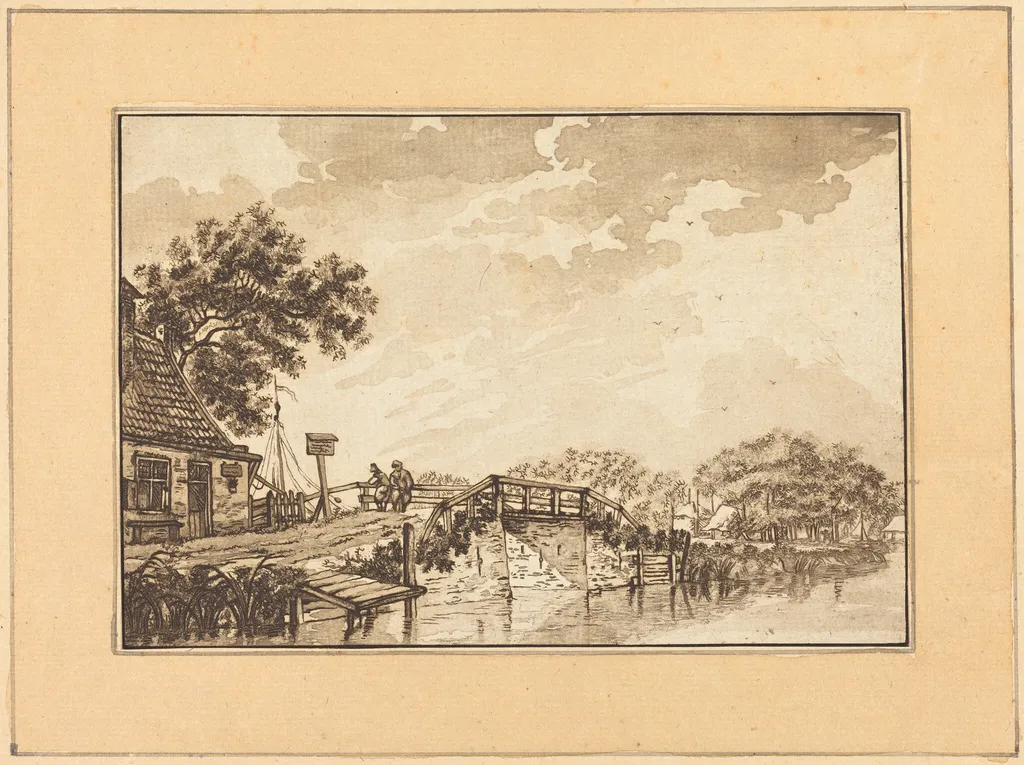
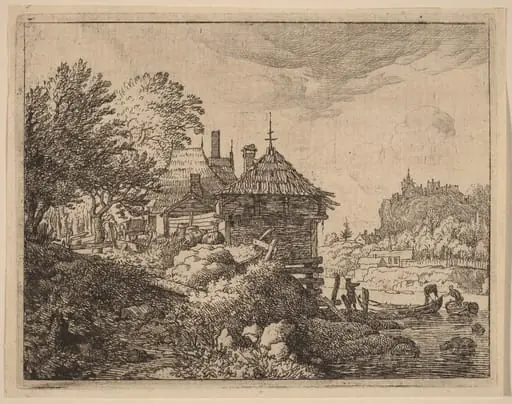
Landscape is an ink print by the Romanticist artist Schönecker. It dates from 1784 and is held in the collection of the National Gallery of Art.
About this work
Overview
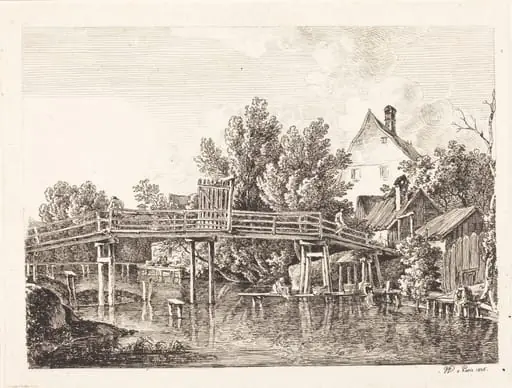
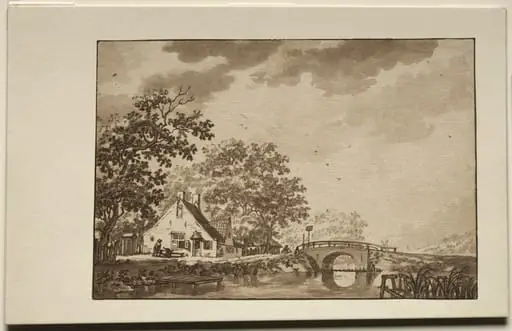
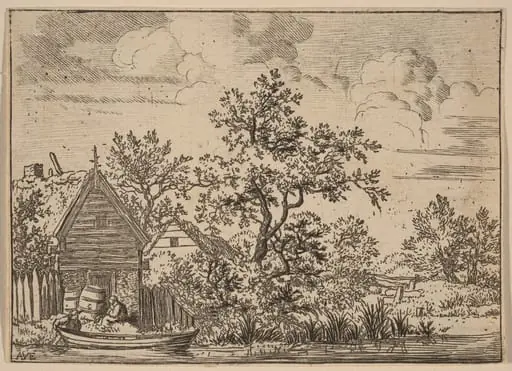
Created in 1784, this print by Schönecker combines etching and aquatint techniques to render a tranquil riverside scene in subtle brown and gray tones. The composition captures a quiet moment in nature, with minimal human presence and a restrained palette that enhances its atmospheric stillness. The work belongs to the tradition of topographical prints, valuing observation over dramatic effect.
Subject & Meaning
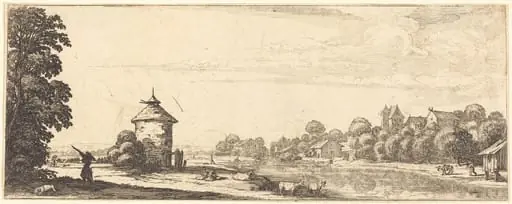
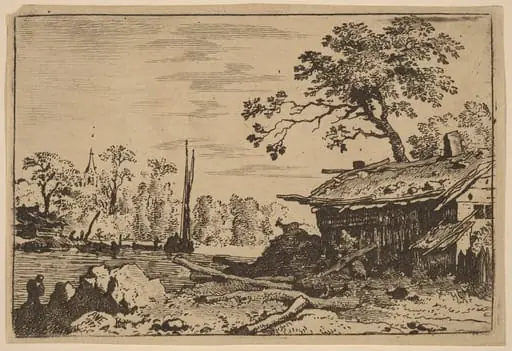
The scene depicts a modest wooden dwelling beside a still river, connected by a narrow bridge to a path where two figures stand quietly. A tied-up boat and dense trees frame the water, suggesting a rural, uneventful daily life. The absence of narrative or symbolism points to an appreciation of ordinary place and light, reflecting an 18th-century shift toward intimate, contemplative landscapes.
Technique & Style
Schönecker employed etching for fine linear details and aquatint to achieve soft gradations of tone. The layered brown and gray inks mimic natural light, particularly the hazy glow of early morning on water and foliage. Drypoint may have been used sparingly to deepen shadows, but the overall effect remains delicate, avoiding harsh contrasts in favor of muted harmony.
History & Provenance
The print was made in 1784 during a period when German-speaking artists increasingly turned to landscape as a subject independent of myth or history. Though Schönecker’s broader oeuvre is not widely documented, this work survives as a representative example of regional printmaking practices, likely produced for private collectors interested in serene natural scenes.
Context
In the late 18th century, European printmakers moved away from grand historical themes toward intimate, observed landscapes. Schönecker’s work aligns with this trend, echoing the quietude found in Dutch and English topographical prints. The emphasis on atmosphere and natural detail reflects broader Enlightenment interests in empirical observation and the beauty of the everyday.
Legacy
This print contributes to a lesser-known but persistent stream of 18th-century landscape etchings that prioritized mood over spectacle. While Schönecker did not achieve widespread fame, works like this helped sustain interest in print-based landscape studies, influencing later generations who valued subtlety and technical restraint in depicting the natural world.
Artist & collection