Artwork
Nymph of the Luo River, Taipei copy B

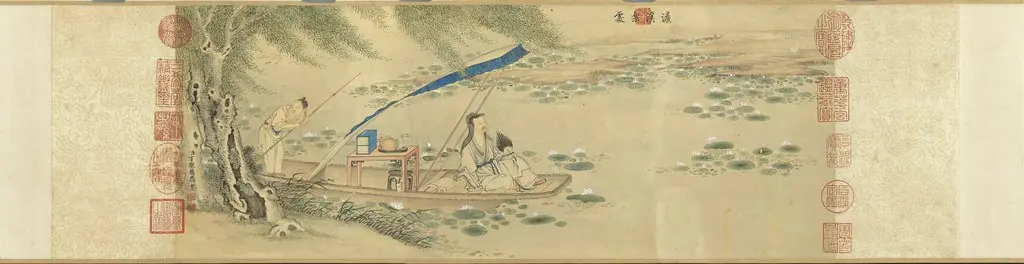
Nymph of the Luo River, Taipei copy B is an unspecified painting by the Rococo painting artist Ding Guanpeng. It dates from 1754 and is held in the collection of the National Palace Museum.
About this work
Overview
The work measures a long, narrow format and presents a tranquil riverscape populated by numerous diminutive figures engaged in everyday activities.
Created in 1754, *Nymph of the Luo River, Taipei copy B* is a hand‑scroll painting by Qing‑dynasty court artist Ding Guanpeng. The work measures a long, narrow format and presents a tranquil riverscape populated by numerous diminutive figures engaged in everyday activities. Its palette of greens, blues and earthy browns contributes to a calm atmosphere, while the intricate brushwork invites close inspection.
Subject & Meaning
The scene illustrates the legendary Luo River goddess, a motif drawn from the ancient Chinese poem “Rhapsody on the Luo River Goddess.” Figures labor in a field on the left, a solitary boat drifts in the central waterway, and attendants gather on the right bank, suggesting a narrative of reverence and the gentle flow of mythic presence within a pastoral setting.
Technique & Style
Executed in the rococo‑influenced court style, Ding combines delicate coloration with fine, precise lines to render the multitude of small figures. The composition relies on layered washes of green and blue to suggest depth, while detailed stippling adds texture to foliage and clothing. The overall effect balances decorative elegance with the disciplined brush techniques taught at the Imperial Painting Academy.
History & Provenance
Ding Guanpeng served the Kangxi and Qianlong emperors, producing nearly two hundred works during his tenure at the Palace Painting Academy. This particular copy entered the National Palace Museum’s collection, where it remains catalogued as part of the museum’s extensive Qing court painting holdings, reflecting the artist’s official status and the work’s preservation within the imperial archive.
Context
The painting belongs to a broader tradition of visualizing literary subjects that flourished in the Qing court, where scholars and artists often rendered classic poems as decorative scrolls. Its rococo touches echo contemporary European influences filtered through Chinese court aesthetics, illustrating the period’s openness to stylistic synthesis while maintaining a distinctly Chinese narrative focus.
Artist & collection
Artist
Ding Guanpeng (traditional Chinese: 丁觀鵬; simplified Chinese: 丁观鹏; pinyin: Dīng Guānpéng; Wade–Giles: Ting Kuan-p'eng) (active 1708–1771) was a Chinese painter who lived during the Qing dynasty.

 Nine Songs
 Reviewing the Examination Results
 Flowers of Four Seasons, with Poems
 A Hundred Sparrows in a Lofty Grove
 Zhao Mengfu Writing the Heart (Hridaya) Sutra in Exchange for Tea
 Palace Ladies
 Untitled
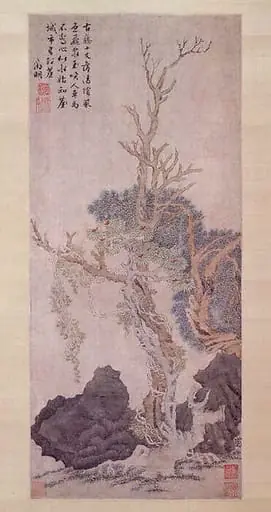 明? 佚名 傳文徵明 古藤樹石圖 軸|Old Wisteria among Trees and Rocks
 Fisherman's Joy
 Returning to the Village in a Rainstorm
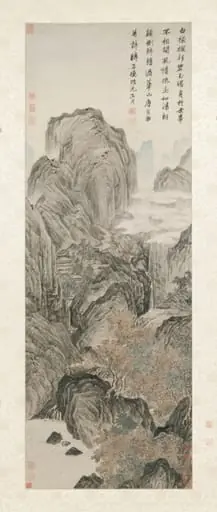 Mount Hua
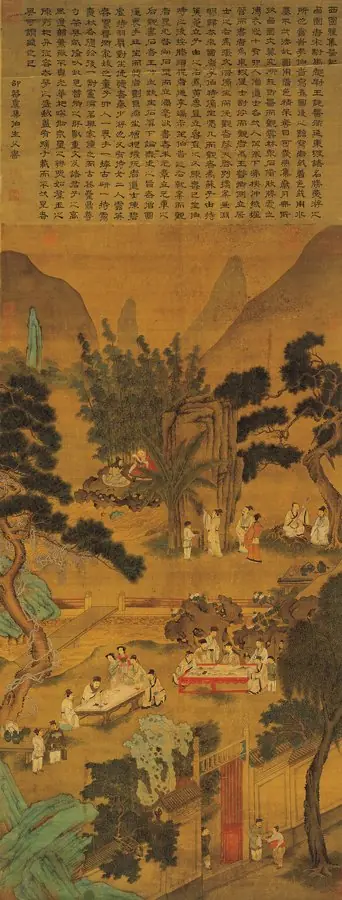 Elegant Gathering in the Western Garden