Artwork
Palace Ladies

Palace Ladies is an unspecified painting by the Baroque artist Qiu Ying. It is held in the collection of the Cleveland Museum of Art. This handscroll depicts a sequence of daily activities among court women within the secluded gardens of a Qing dynasty palace.
About this work
You see a long scroll filled with women in a palace garden—swinging, playing music, feeding fish, and catching butterflies.
You see a long scroll filled with women in a palace garden—swinging, playing music, feeding fish, and catching butterflies.
This painting shows the daily life of elite women in China’s Qing dynasty. They were mostly confined to private gardens, so these quiet moments were their world. The details feel lived-in, like a snapshot of real routines, not just pretty scenes.
If you like this, look up more about the subject: *china, qing dynasty (1644-1911)*.
Overview
This handscroll depicts a sequence of daily activities among court women within the secluded gardens of a Qing dynasty palace. The composition unfolds horizontally, capturing moments of leisure and quiet interaction. Figures are arranged in naturalistic groupings, suggesting a continuous, unscripted flow of time rather than a staged scene. The setting is enclosed, emphasizing the physical and social boundaries of their world.
Subject & Meaning
The painting portrays elite women engaged in refined pastimes—swinging, playing the qin, tending flowers, feeding fish, and chasing butterflies. These activities reflect the limited sphere of their existence, confined to inner courtyards. While the scenes appear serene, they subtly convey the monotony and isolation inherent in their lives, where personal agency was minimal and fulfillment often deferred.
Technique & Style
Rendered in delicate ink and color on silk, the brushwork is precise yet fluid, capturing textures of fabric, foliage, and water with subtle gradations. Figures are rendered with soft outlines and minimal facial detail, prioritizing posture and gesture over individual expression. The composition avoids dramatic perspective, instead relying on rhythmic repetition and spatial layering to guide the viewer’s eye along the scroll’s length.
History & Provenance
The painting originates from the Qing dynasty, likely produced in the 18th century by an anonymous court artist. It was probably commissioned for imperial or high-ranking aristocratic use, intended for private viewing in domestic settings. Its survival suggests it was carefully preserved, possibly within palace collections, though its exact early ownership remains undocumented.
Context
During the Qing dynasty, elite women’s lives were governed by Confucian norms that restricted their movement to domestic spaces. The palace garden became both sanctuary and prison—a place of beauty and ritual, yet also of enforced seclusion. This painting reflects a cultural idealization of feminine leisure, masking the underlying constraints of their social role.
Legacy
The scroll remains a key visual record of gendered space in late imperial China. It informs modern scholarship on domestic life, artistic patronage, and the representation of women in court culture. While not widely exhibited in its time, its quiet realism has since drawn attention for its unembellished portrayal of a world rarely documented with such intimacy.
Artist & collection


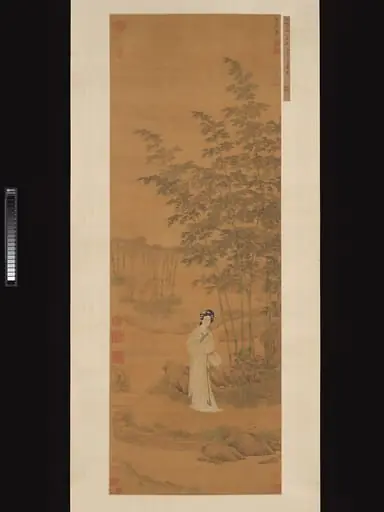 明 傳仇英 文玉圖 軸圖 軸|Lady in a Bamboo Grove
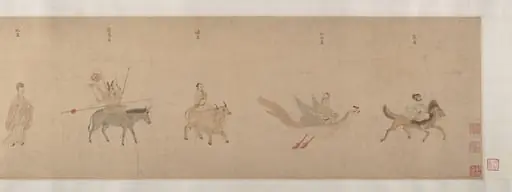 明 傳仇英 五星二十八宿神形圖 卷|Divinities of the Planets and Constellations
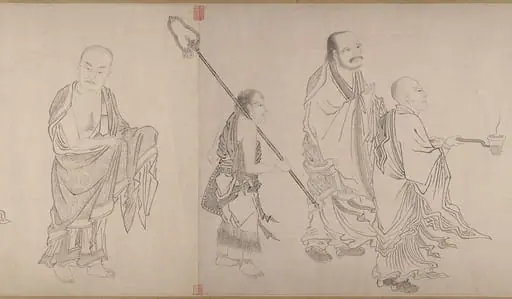 明 傳仇英 十六羅漢圖 卷|The Sixteen Luohans
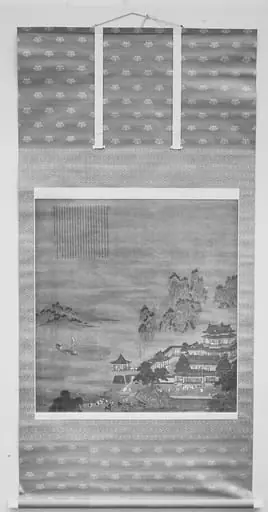 明 佚名 傳仇英 唐宫圖 軸|A Tang Palace
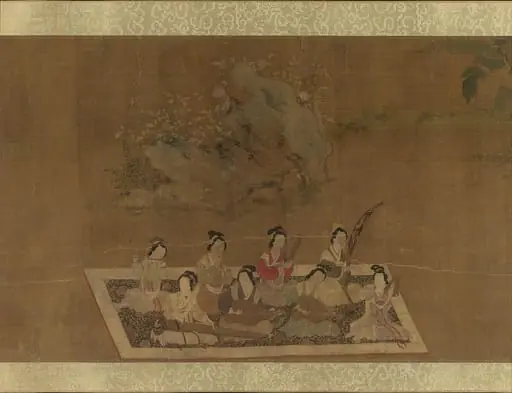 明 佚名 蘇蕙璇璣圖 卷|Lady Su Hui and Her Verse Puzzle
 Zhao Mengfu Writing the Heart (Hridaya) Sutra in Exchange for Tea
 Garden for Solitary Enjoyment
 Pałac nad brzegiem jeziora - pejzaż
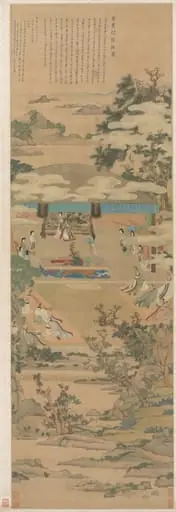 Lady Xuanwen Giving Instruction on the Rites of Zhou
 Spring Morning in the Han Palace
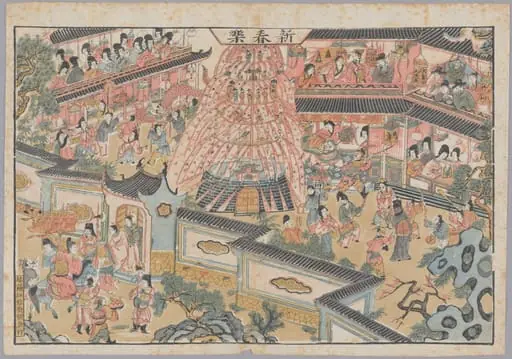 Happy New Year
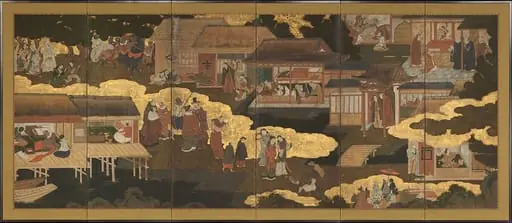 南蛮屏風|Arrival of the Europeans
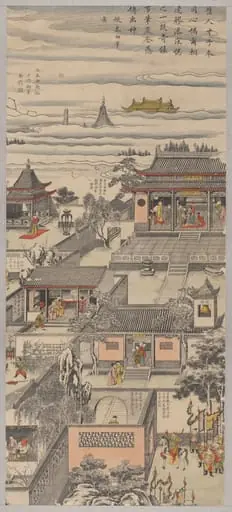 First Part of Story of The Western Chamber
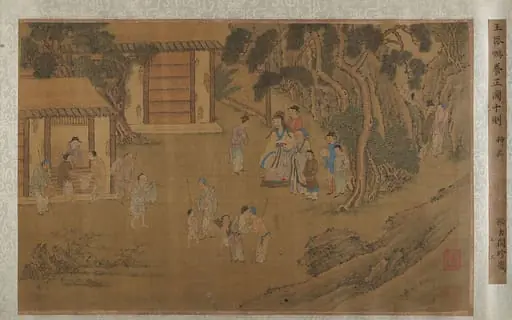 明/清 佚名 舊傳王振鵬 養正圖 卷|Family Training
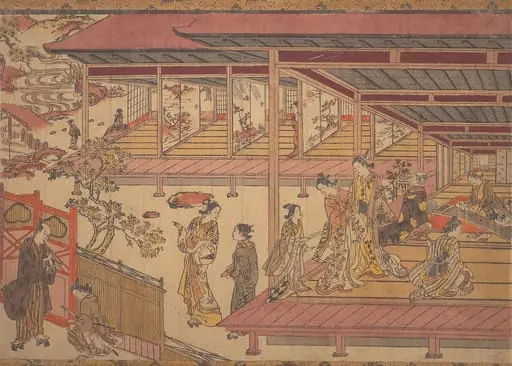 Untitled
 Sericulture (The Process of Making Silk)
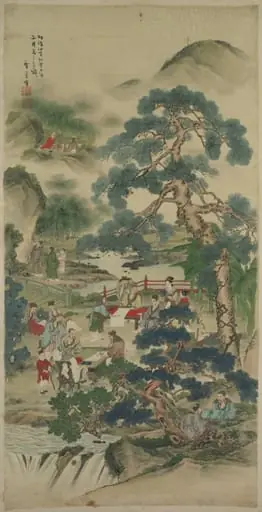 Chinese Sages in a Garden
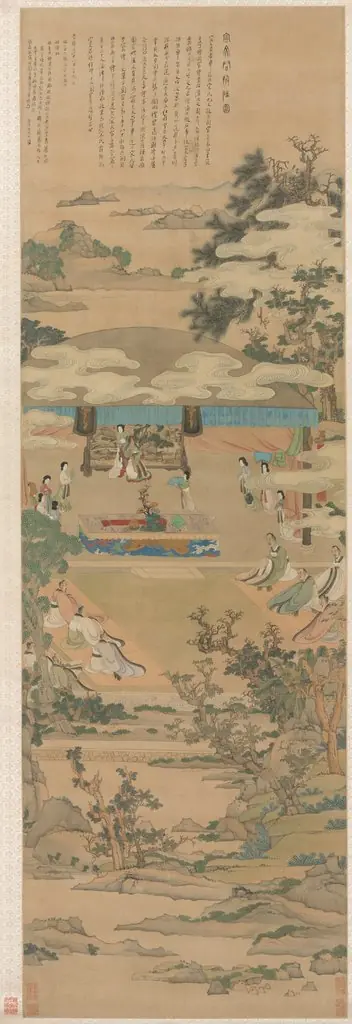 Lady Xuanwen Giving Instruction on the Rites of Zhou
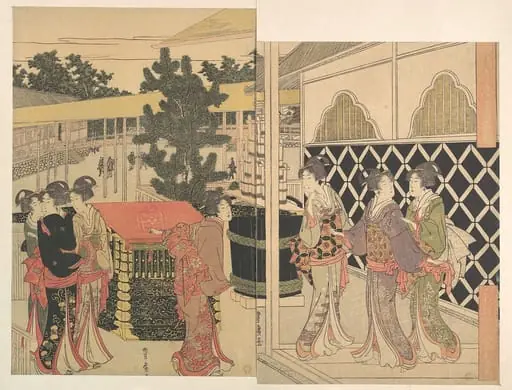 Horinouchi Myōhōji Eho Mairi no Zu|Pilgrimage to Myōhōji in Horinouchi, Edo
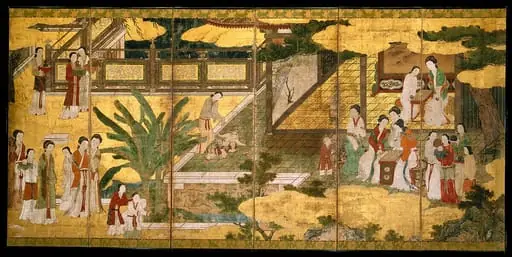 伝狩野永徳筆 唐美人唐子図屏風|Chinese Women and Children in a Palace Garden