Artwork
Incantation
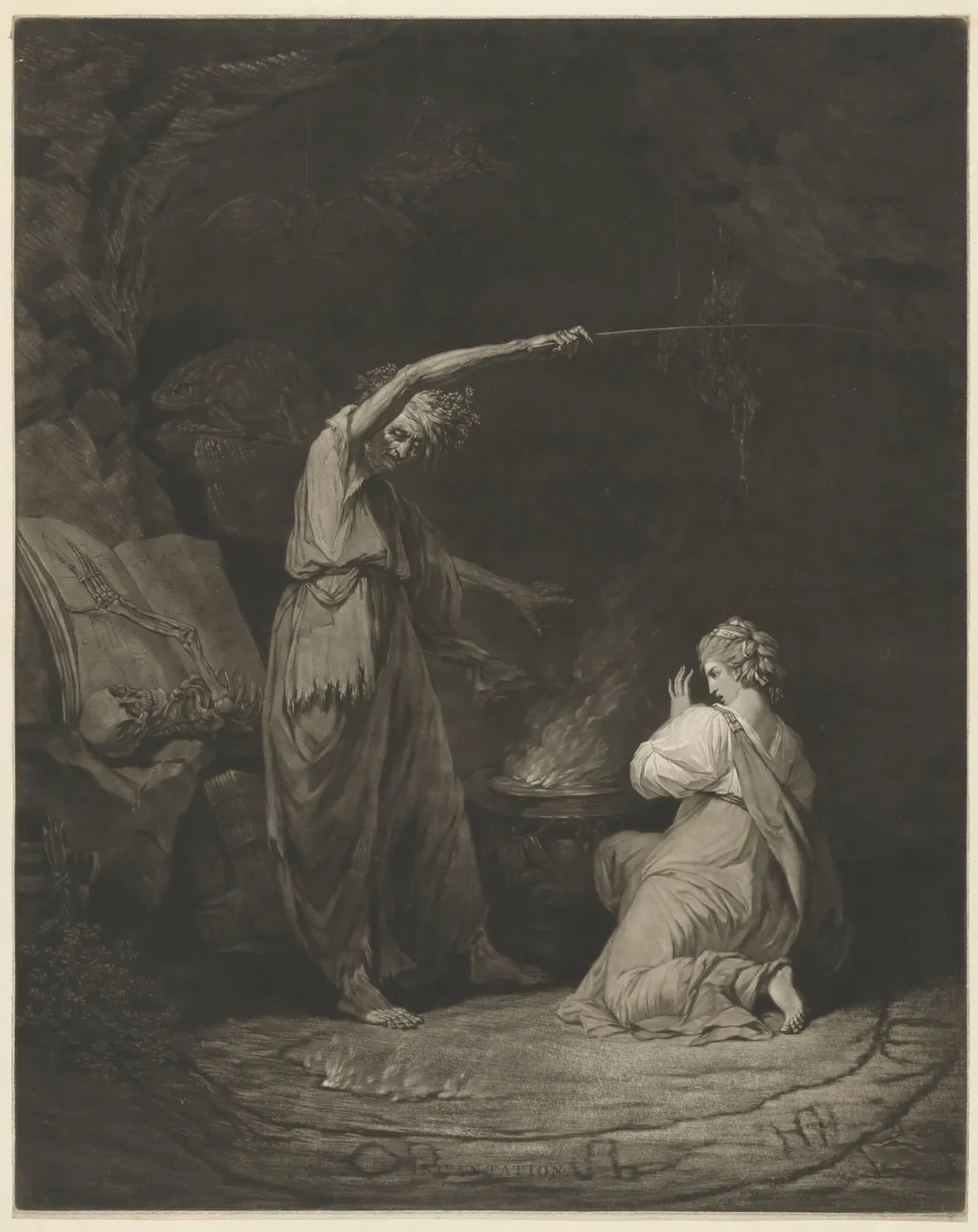
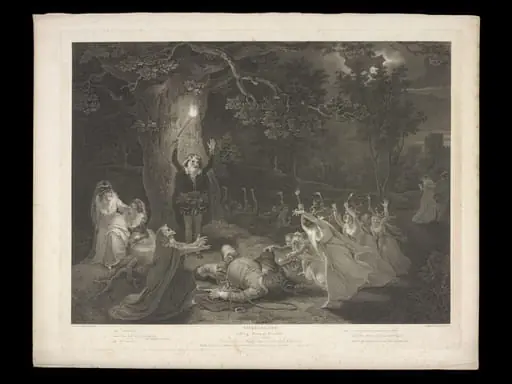
Incantation is an ink print by the Baroque artist John Dixon. It dates from 1773 and is held in the collection of the National Gallery of Art.
About this work
Overview
John Dixon’s 1773 mezzotint entitled Incantation presents a nocturnal tableau rendered on laid paper. The composition is dominated by two female figures set within a dimly lit, rocky interior, their forms emerging from deep shadows. A tall, upright woman brandishes a staff‑like object while a kneeling companion covers her face, creating a stark contrast of posture and emotion.
Subject & Meaning
The upright figure, crowned with a wreath of leaves, appears to embody a potent, possibly mythic, force of nature or authority, her raised arms suggesting invocation or command. In contrast, the kneeling woman’s bowed head and concealed visage convey submission, fear, or penitence, hinting at a narrative of ritualized power dynamics or a moment of supplication within an unseen rite.
Technique & Style
Executed as a mezzotint, the work exploits the medium’s capacity for rich tonal gradations, achieving a velvety darkness that envelops the scene.
Executed as a mezzotint, the work exploits the medium’s capacity for rich tonal gradations, achieving a velvety darkness that envelops the scene. Dixon’s handling of light and shadow aligns with Baroque sensibilities, emphasizing dramatic contrast and emotional intensity. The textured background and the subtle modeling of the figures demonstrate the printmaker’s skill in manipulating tonal depth on laid paper.
History & Provenance
Incantation was produced in the late eighteenth century, a period when mezzotint enjoyed popularity among British printmakers for its capacity to reproduce painterly effects. While specific ownership records are scarce, the work is documented in catalogues of Dixon’s oeuvre and has appeared in several public and private collections dedicated to British printmaking of the era.
Context
The image reflects the broader Baroque fascination with theatricality and chiaroscuro, where light becomes a narrative device. Dixon’s choice of a mythic or allegorical subject mirrors contemporary interests in classical themes, while the stark emotional contrast between the two women resonates with the period’s exploration of power, devotion, and the supernatural.
Own this work as a print
Artist & collection