Artwork
Lear and Cordelia
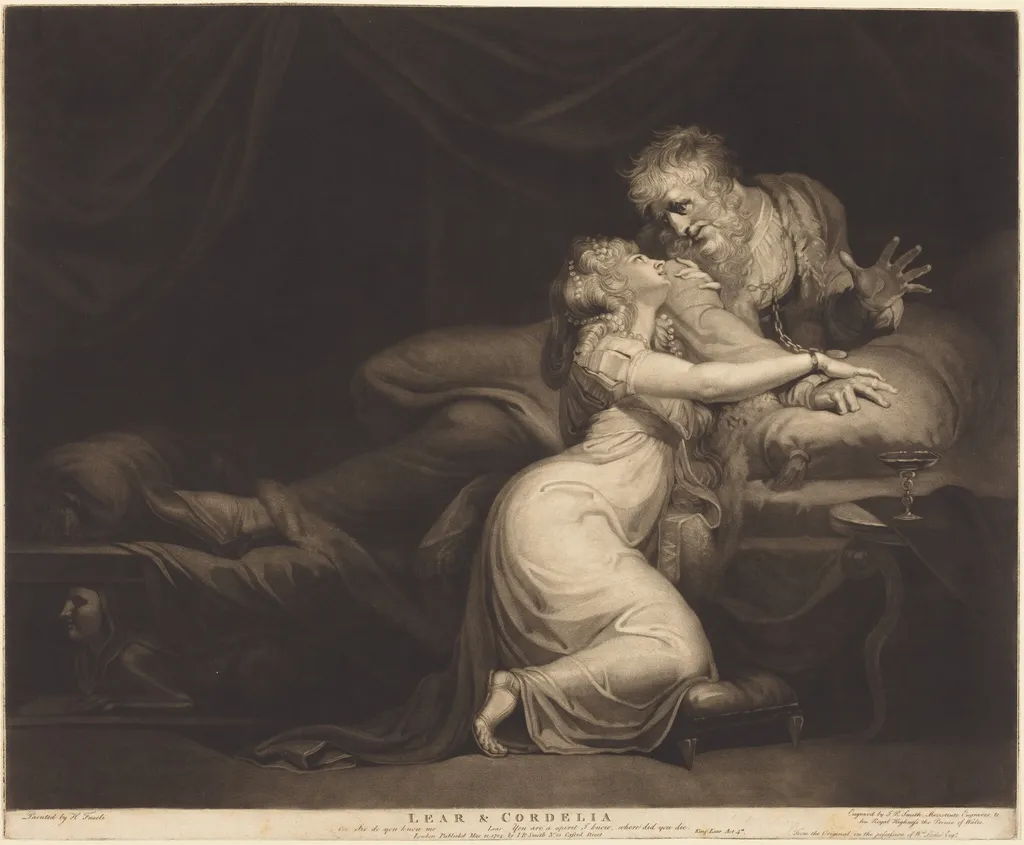
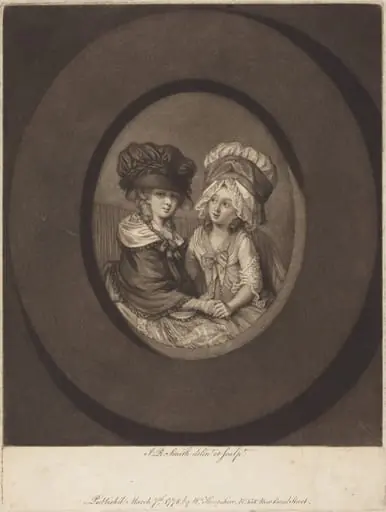
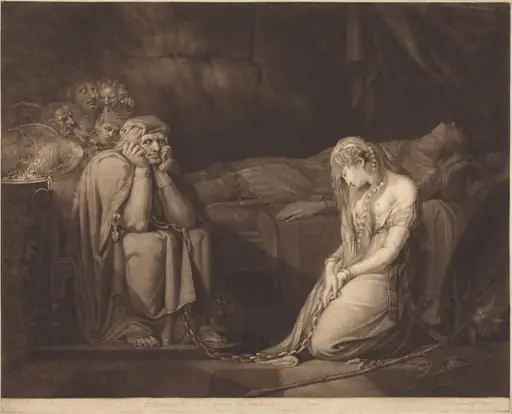
Lear and Cordelia is an ink print by the Romanticist artist John Raphael Smith. It dates from 1784 and is held in the collection of the National Gallery of Art.
About this work
Overview
John Raphael Smith produced this mezzotint in 1784, translating a dramatic moment from Shakespeare’s *King Lear* into a printed image.
John Raphael Smith produced this mezzotint in 1784, translating a dramatic moment from Shakespeare’s *King Lear* into a printed image. As a British artist known for his work in mezzotint and painting, Smith adapted theatrical emotion into a graphic medium. The print is executed on laid paper, a common support for fine prints of the period, and reflects his technical skill in rendering tonal depth through the mezzotint process.
Subject & Meaning
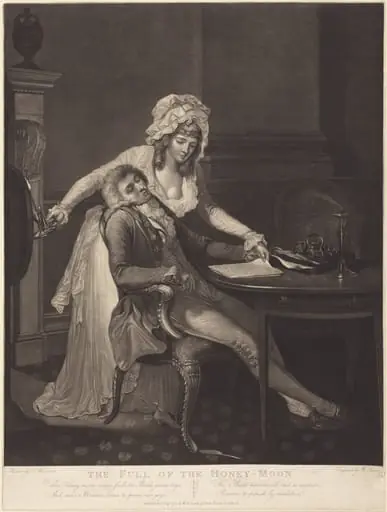
The scene captures King Lear, aged and broken, cradling his faithful daughter Cordelia after her return from exile. Their postures convey vulnerability and reunion amid ruin: Lear leans heavily over her, while Cordelia, in white, arches backward as if overwhelmed by grief or exhaustion. The moment reflects themes of familial betrayal, remorse, and fragile redemption, central to Shakespeare’s tragedy and rendered with restrained pathos.
Technique & Style
Smith employed mezzotint, a labor-intensive engraving method that builds tone from dark to light by roughening the plate’s surface. The print uses deep blacks and soft gradations to sculpt form and mood, emphasizing chiaroscuro to isolate the figures against an opaque background. The texture of the laid paper enhances the tactile quality of the shadows, reinforcing the scene’s intimacy and emotional weight.
History & Provenance
Created during a period when Shakespearean subjects were popular in British print culture, this work was likely made for private collectors rather than public display. Smith, who reproduced works by other artists and designed original prints, often targeted literary themes to appeal to educated audiences. The print’s survival in institutional collections suggests its recognition as a significant example of late 18th-century reproductive printmaking.
Context
In the 1780s, British artists increasingly turned to Shakespeare for subject matter, aligning with a broader cultural revival of national literary heritage. Mezzotint, prized for its ability to mimic painterly effects, was widely used to disseminate such scenes to middle-class households. Smith’s print thus participated in a visual economy that brought high drama into domestic spaces through affordable, reproducible imagery.
Legacy
Though not widely exhibited today, the print remains a representative example of how 18th-century printmakers interpreted literary tragedy through tonal subtlety. Smith’s approach influenced later reproductive artists seeking emotional resonance without overt theatricality. The work endures as a quiet testament to the intersection of print technology, literary culture, and the visual expression of human vulnerability.
Own this work as a print
Artist & collection

Artist
John Raphael Smith (25 May 1751 – 2 March 1812) was a British painter and mezzotinter. He was the son of the landscape painter Thomas Smith and the father of John Rubens Smith, a painter who emigrated to the United States.