Artwork
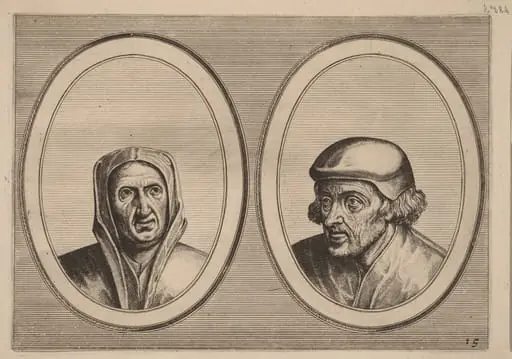
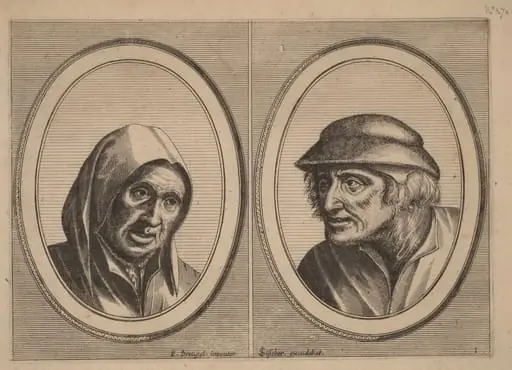
"Erlijcke Lyn" and "Snoepighe Steeve"
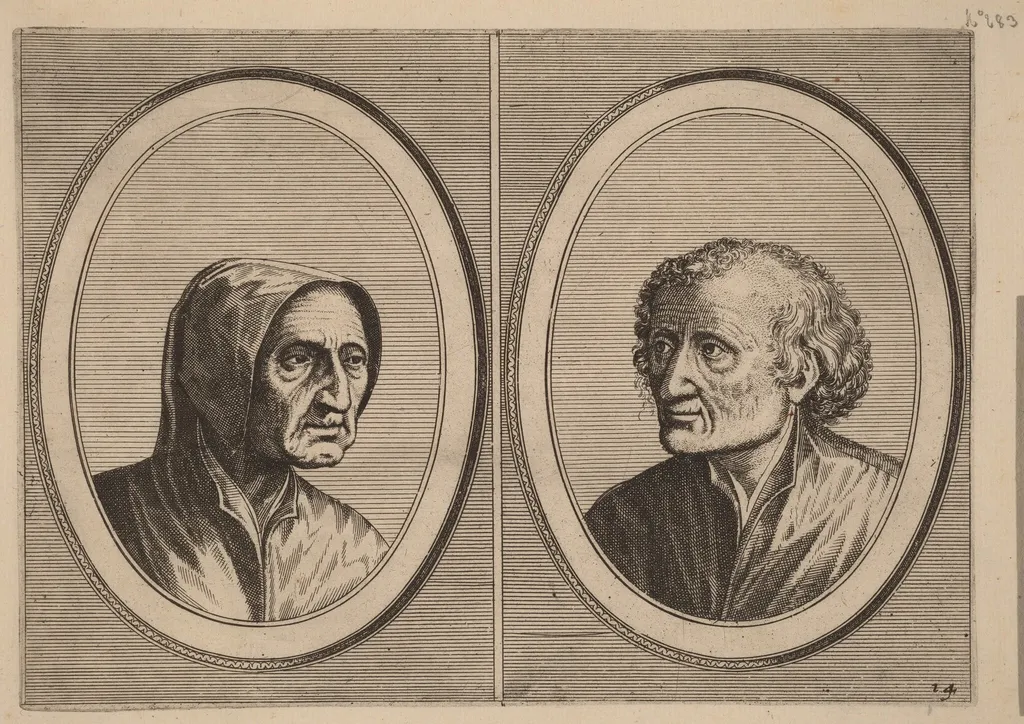
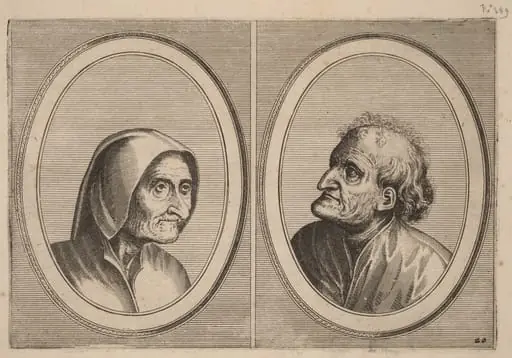
"Erlijcke Lyn" and "Snoepighe Steeve" is an ink print by the Renaissance artist Lucas van Doetechum. It dates from 1564 and is held in the collection of the National Gallery of Art.
About this work
Overview
Lucas van Doetechum’s mid‑sixteenth‑century etching presents a pair of oval‑framed portrait heads rendered in black ink on paper. Executed around 1564, the work juxtaposes two male figures whose expressions are sober and whose features are rendered with precise, yet restrained, line work.
Subject & Meaning
The two sitters are identified only by the informal titles *Erlijcke Lyn* and *Snoepighe Steeve*, suggesting playful or colloquial nicknames rather than formal appellations. Their serious gazes and modest attire hint at a focus on individual character rather than status or narrative.
Technique & Style
Van Doetechum employed the traditional etching process, incising fine lines into a copper plate before applying acid to bite the design. The resulting delicate hatching creates subtle textures that model the faces, hair and clothing, while the oval frames emphasize the intimate, portrait‑like quality of the images.
History & Provenance
The print originates from the artist’s workshop in the Low Countries during the early Renaissance period. Though specific ownership records are scarce, the work survives in several museum collections, indicating it was reproduced and circulated among contemporaneous collectors of portrait prints.
Context
In the 1560s, portrait etchings served both as personal mementos and as a means for artists to demonstrate technical skill. Van Doetechum’s choice of informal titles aligns with a broader trend of vernacular labeling that appealed to a growing middle‑class audience interested in recognizable, everyday subjects.
Legacy
While not widely known today, the piece exemplifies the early modern shift toward individualized portraiture in print media. Its careful line work and focus on character continue to inform studies of Northern European etching practices and the social functions of portrait prints in the sixteenth century.
Artist & collection


 "Ritze Stijn" and "Schurckje Sonder-Baerdt"
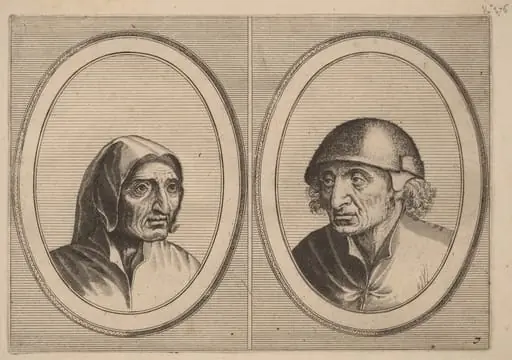 "Rijckje Schimmel-penninghs" and "Lubbert Leever-worst"
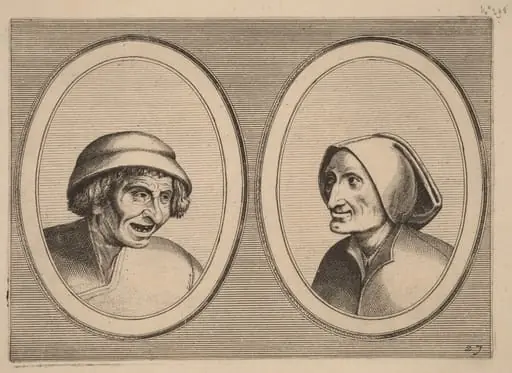 "Keesje Licht-hart" and "Verblinde Swaen"
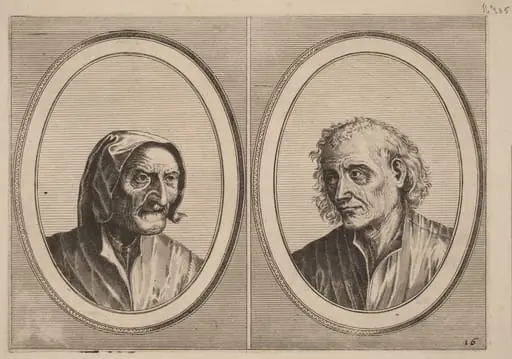 "Foockel Frons-muyl" and "Pietje Hard-loop"
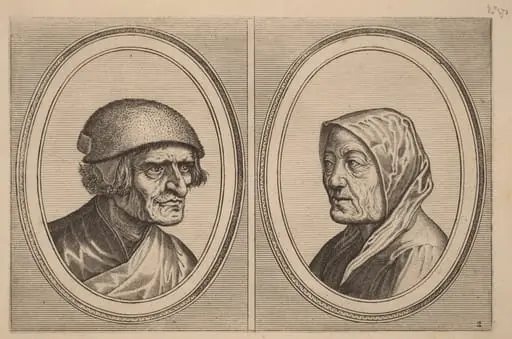 "Beleefde Goossen" and "Prijne Lecker-tants"
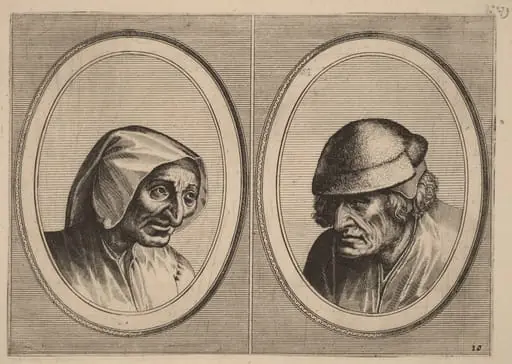 "Verdorde Nel" and "Jan Afterlam"
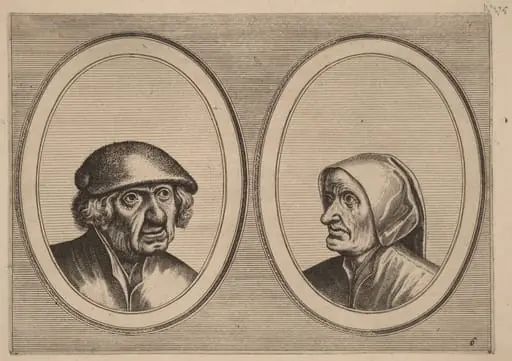 "Dirck Domp" and "Zeedighe Kniertje"
 "Susanna Smuls" and "Leuye Joost"
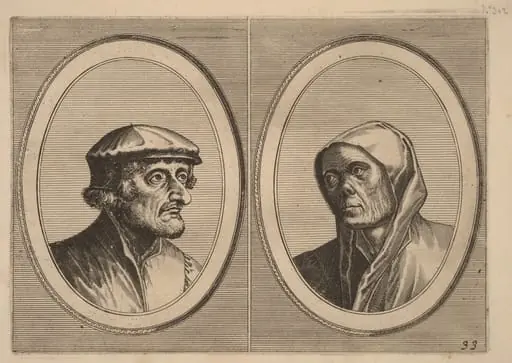 "Voorsichtighe Krijn" and "Broentje Spaer-pots"
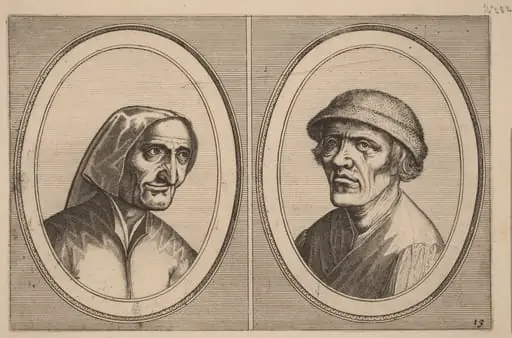 "Maey Veeghde-pot" and "Pannetje Vet"