Artwork
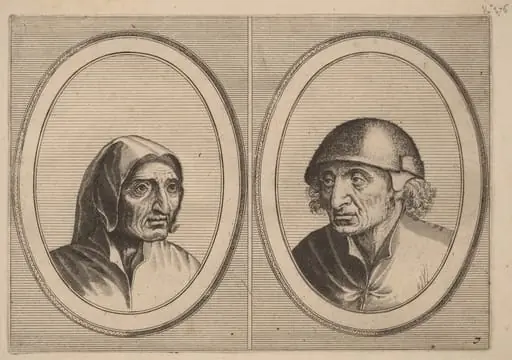
"Voorsichtighe Krijn" and "Broentje Spaer-pots"
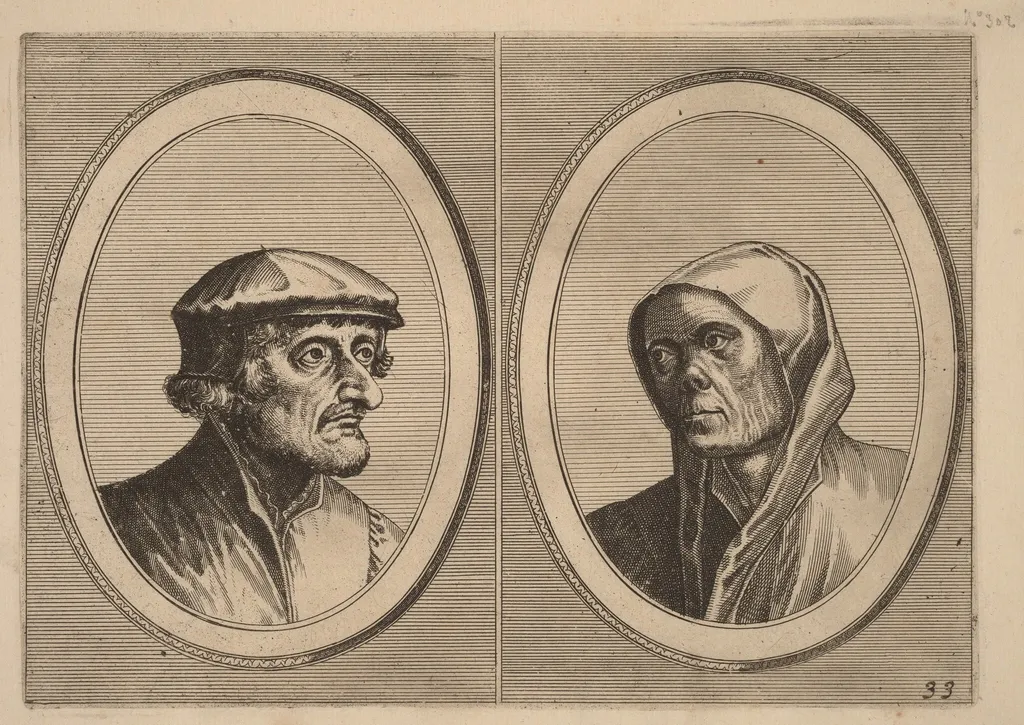
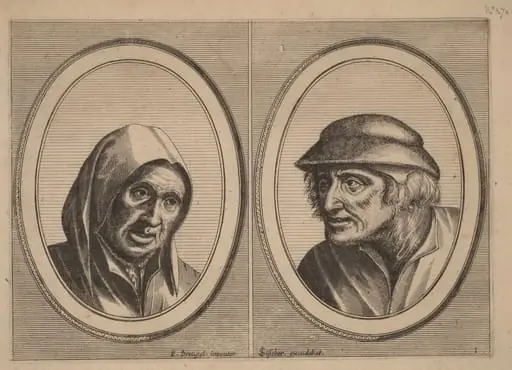
"Voorsichtighe Krijn" and "Broentje Spaer-pots" is an ink print by the Renaissance artist Johannes van Doetechum the Elder. It dates from 1564 and is held in the collection of the National Gallery of Art.
About this work
Overview
Executed in the etching technique, the works reflect van Doetecum’s dual role as both a reproductive printmaker and a cartographer.
Created around 1564 by Johannes van Doetecum the Elder, this pair of etchings—*Voorsichtighe Krijn* and *Broentje Spaer-pots*—depicts two male figures in intimate, unidealized portraits. Executed in the etching technique, the works reflect van Doetecum’s dual role as both a reproductive printmaker and a cartographer. The images are framed within ovals, emphasizing their focus on individual character rather than narrative context.
Subject & Meaning
The two figures, identified by colloquial Dutch names, appear as ordinary men of modest means, rendered with unflinching realism. Their wrinkled skin, stern expressions, and plain attire suggest a focus on personal dignity and social type rather than status. The titles imply regional or folk identities, possibly referencing local proverbs or archetypes, grounding the portraits in the everyday culture of the Low Countries.
Technique & Style
Van Doetecum employed etching to achieve a direct, tactile quality, using acid to bite lines into a metal plate. The resulting marks are dense, uneven, and sharply defined, conveying texture through scratchy, energetic strokes. This method allowed for fine detail without the polish of engraving, lending the portraits a sense of immediacy and raw observation, as if drawn in real time onto the surface.
History & Provenance
Johannes van Doetecum the Elder, born in Deventer, was active in the mid-16th century and later settled in Haarlem by 1578. He frequently collaborated with his brother Lucas, producing prints after Pieter Bruegel the Elder’s compositions and detailed maps of the Netherlands. These portraits likely circulated among collectors of Northern European genre imagery, though their specific early ownership remains undocumented.
Context
In the 1560s, the Low Countries saw a rise in secular portraiture beyond aristocratic commissions, reflecting broader interest in individual identity and civic life. Van Doetecum’s etchings align with this trend, echoing the humanist gaze of contemporaries like Bruegel. His work bridges the worlds of cartography and printmaking, contributing to the visual documentation of regional character during a period of political and religious upheaval.
Legacy
Though less celebrated than his brother or Bruegel, van Doetecum’s prints preserved the visual language of Northern European everyday life. His technique influenced later generations of printmakers who valued expressive line over idealized form. These portraits remain rare examples of early etched character studies, offering insight into how ordinary individuals were perceived and recorded in 16th-century Dutch society.
Artist & collection

Artist
Johannes van Doetechum the Elder
Joannes van Doetecum the Elder (1530 – 1605) was a Dutch engraver-cartographer known for his etched works after genre scenes by Pieter Bruegel the Elder and maps of various cities in the Netherlands.

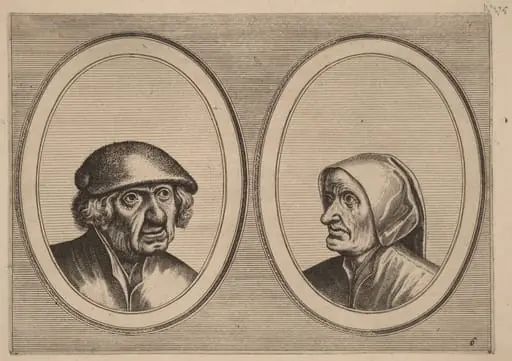 "Dirck Domp" and "Zeedighe Kniertje"
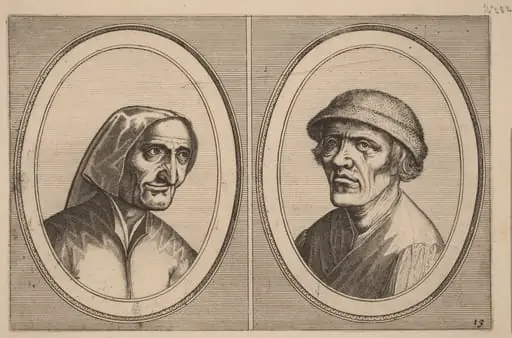 "Maey Veeghde-pot" and "Pannetje Vet"
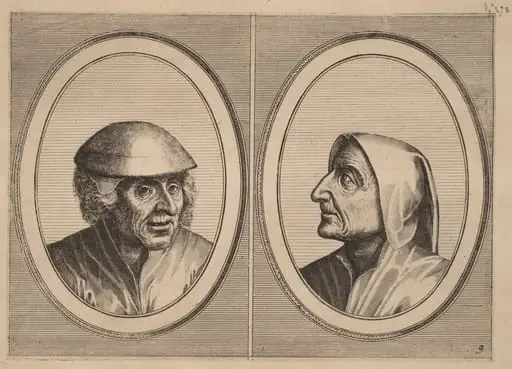 "Kees Geldt-sack" and "Kaarighe Truy"
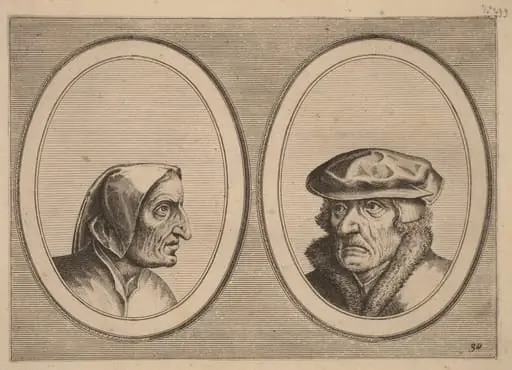 "Buyltje On-versaed" and "Waerner Altijdt-meer"
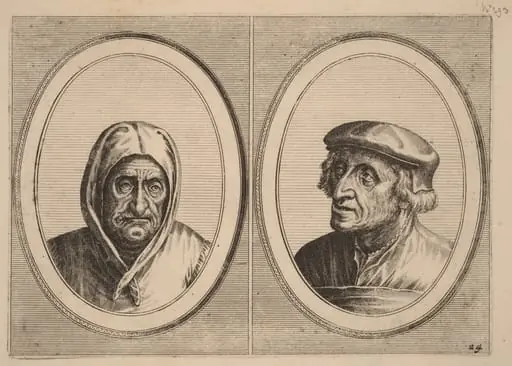 "Aecht Sonder-Ziel" and "Heertje Al-te-mooy"
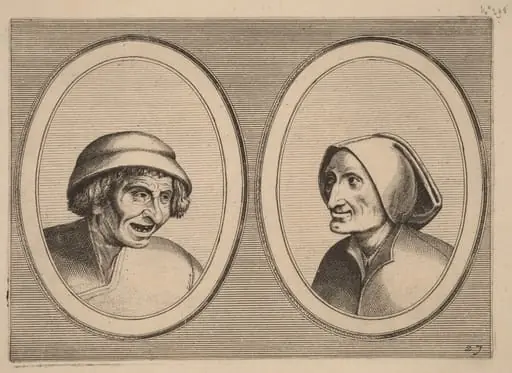 "Keesje Licht-hart" and "Verblinde Swaen"
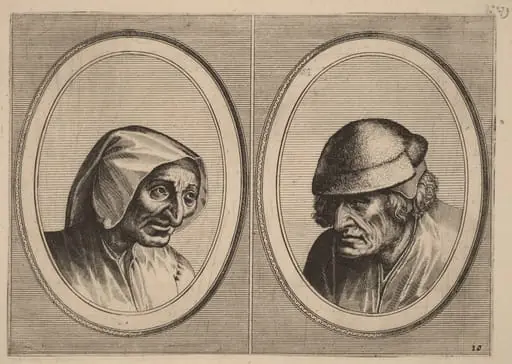 "Verdorde Nel" and "Jan Afterlam"
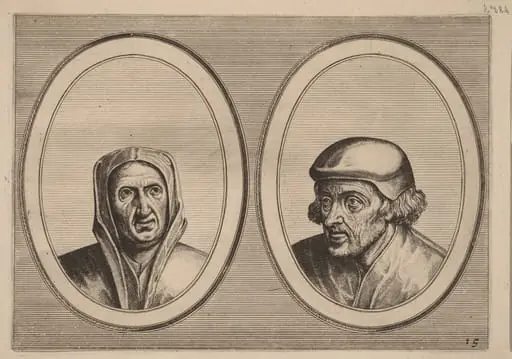 "Beveynsde Hil" and "Listighe Jorden"
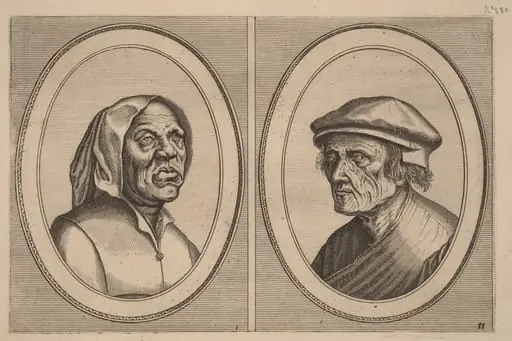 "Baef Schol-becx" and "Spruyt Vroegh-bedorven"
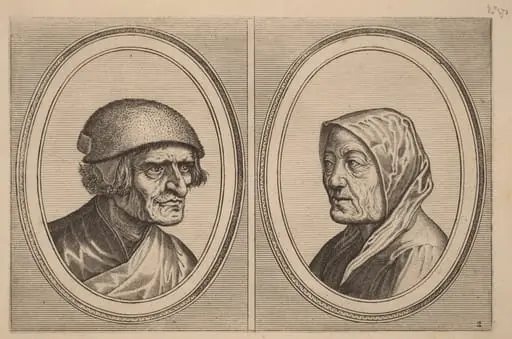 "Beleefde Goossen" and "Prijne Lecker-tants"
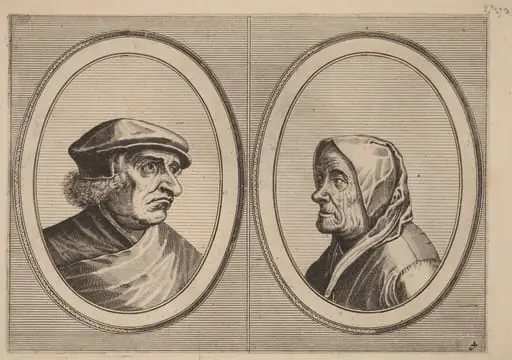 "Joris Ysegrim" and "Quastighe Jopje"
 "Susanna Smuls" and "Leuye Joost"