Artwork
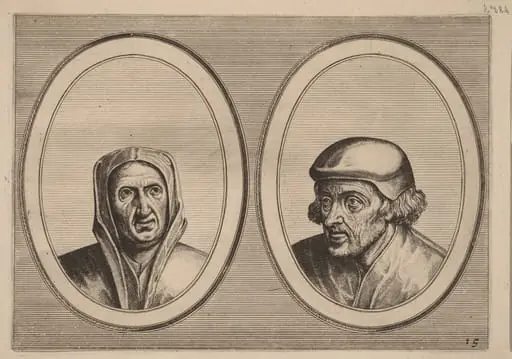
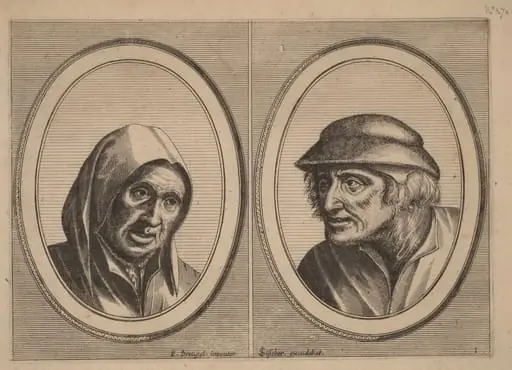
"Foockel Frons-muyl" and "Pietje Hard-loop"
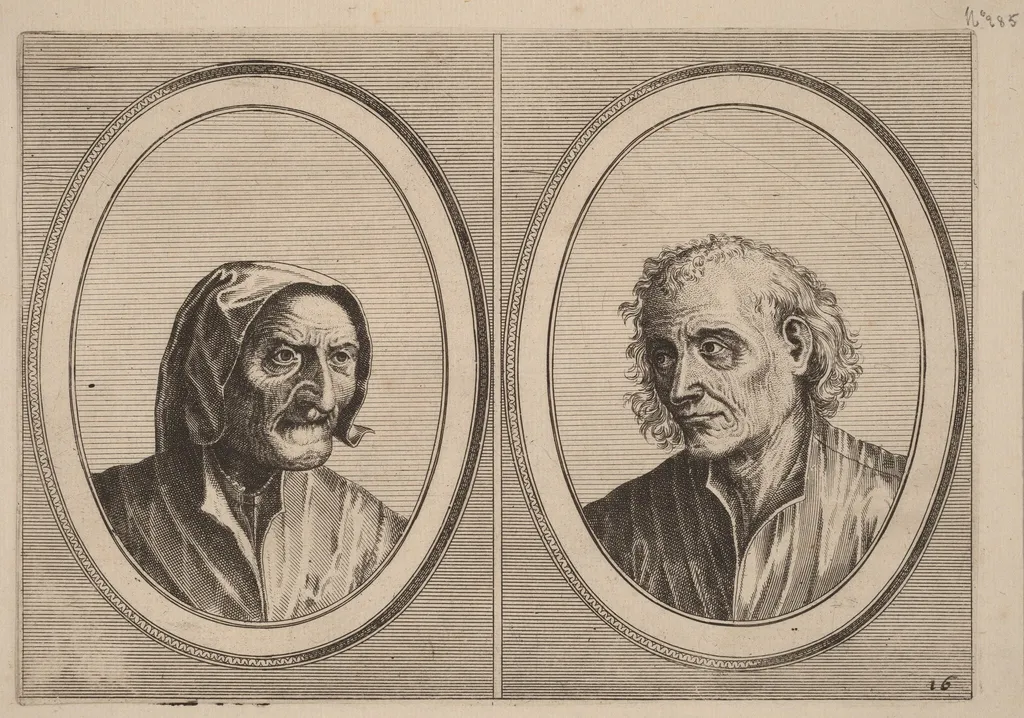
"Foockel Frons-muyl" and "Pietje Hard-loop" is an ink print by the Renaissance artist Lucas van Doetechum. It dates from 1564 and is held in the collection of the National Gallery of Art.
About this work
Overview
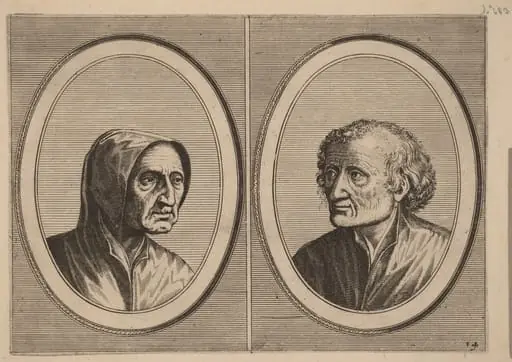
A thin vertical line divides the composition, distinguishing two individual figures: an elderly woman on the left and an elderly man on the right.
Two oval portraits, side by side, form this etching by Lucas van Doetechum, dated around 1564. A thin vertical line divides the composition, distinguishing two individual figures: an elderly woman on the left and an elderly man on the right. Both are rendered in fine, precise lines against a pale ground, their dark clothing contrasting subtly with the background. The work belongs to a tradition of paired character studies common in Northern Renaissance printmaking.
Subject & Meaning
The figures are likely intended as archetypal representations rather than specific individuals. The woman, wearing a headscarf, and the man, with curled hair and a stern expression, suggest common types of rural or civic elders. Their quiet, inward gazes invite reflection on age, dignity, and daily life. No attributes or symbols clarify their roles, leaving their identities open, perhaps emphasizing universal human presence over individual biography.
Technique & Style
Executed in etching, the work employs fine, controlled lines to model form and texture. Delicate hatching and cross-contouring define the folds of fabric, the texture of skin, and the curl of hair. The light background enhances the tonal contrast, drawing focus to the faces and garments. The style is meticulous but restrained, avoiding dramatic expression in favor of quiet realism, typical of mid-16th-century Dutch printmakers.
History & Provenance
The etching is attributed to Lucas van Doetechum, active in the Low Countries during the 1560s. Few of his works survive, and this pair is among the better-documented. It likely circulated as a standalone print or as part of a series of character studies. Early ownership records are sparse, but it appears in several 18th- and 19th-century European print collections, suggesting continued interest in its typological clarity.
Context
In the mid-16th century, Northern European printmakers increasingly turned to secular portraits of ordinary people, moving beyond religious or noble subjects. This work aligns with a growing interest in depicting common folk with dignity. Similar paired portraits appear in the oeuvres of contemporaries like Pieter Bruegel, reflecting broader cultural shifts toward observing and valuing everyday life in the wake of the Reformation.
Legacy
Though not widely reproduced in modern times, this etching remains a quiet example of early Dutch portraiture’s humanist impulse. Its restrained technique and unadorned subjects influenced later genre printmakers who sought to capture character without embellishment. It endures as a testament to the value placed on ordinary lives in 16th-century visual culture, preserved through the durability of the printed image.
Artist & collection


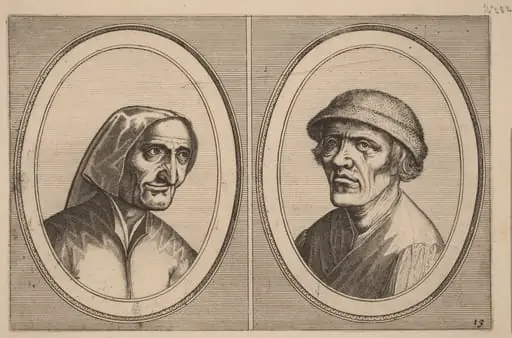 "Maey Veeghde-pot" and "Pannetje Vet"
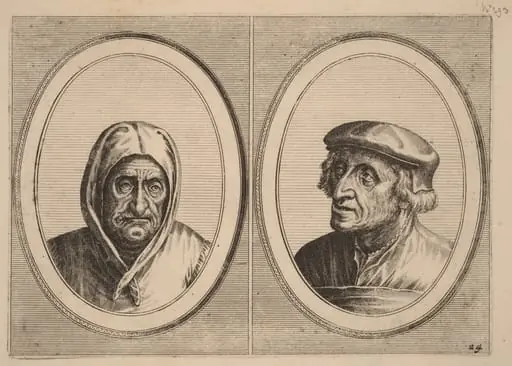 "Aecht Sonder-Ziel" and "Heertje Al-te-mooy"
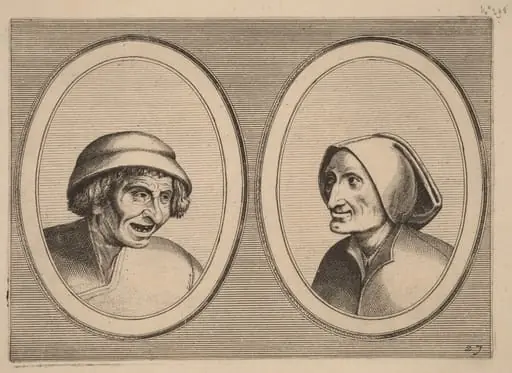 "Keesje Licht-hart" and "Verblinde Swaen"
 "Erlijcke Lyn" and "Snoepighe Steeve"
 "Ritze Stijn" and "Schurckje Sonder-Baerdt"
 "Rijckje Schimmel-penninghs" and "Lubbert Leever-worst"
 "Verdorde Nel" and "Jan Afterlam"
 "Susanna Smuls" and "Leuye Joost"
 "Baef Schol-becx" and "Spruyt Vroegh-bedorven"