Artwork
"Harme Snap-op" and "Keursje-sonder-naed"
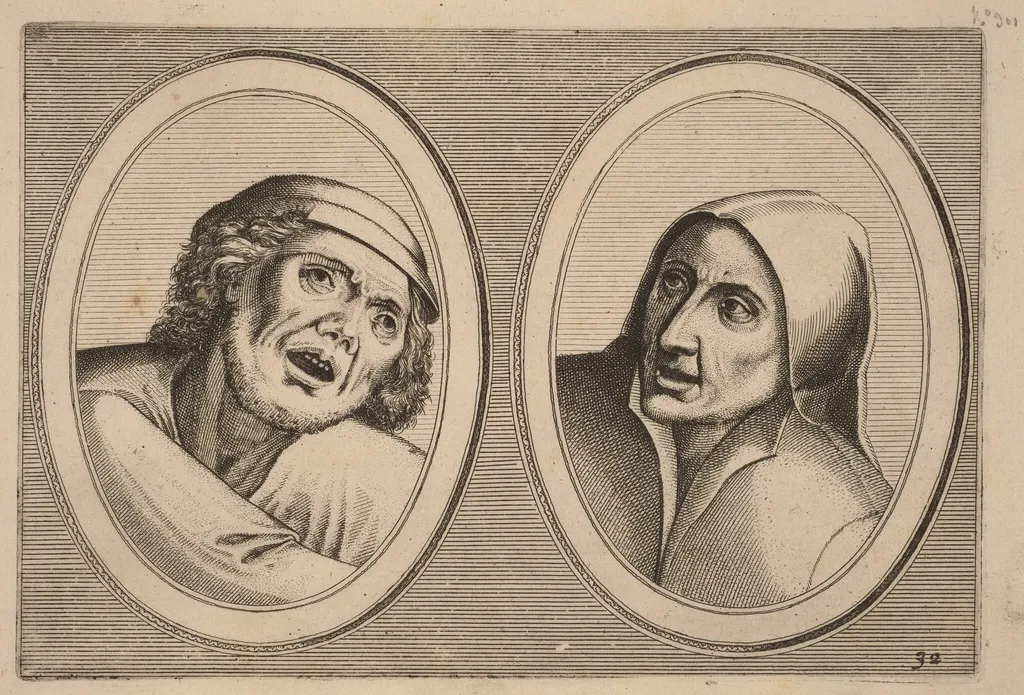
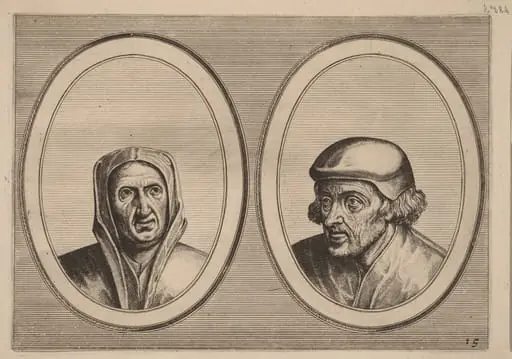
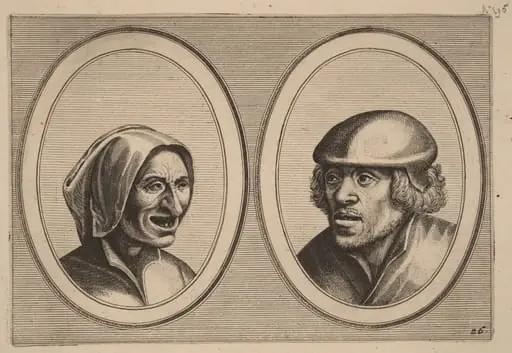
"Harme Snap-op" and "Keursje-sonder-naed" is an ink print by the Renaissance artist Lucas van Doetechum. It dates from 1564 and is held in the collection of the National Gallery of Art.
About this work
Overview
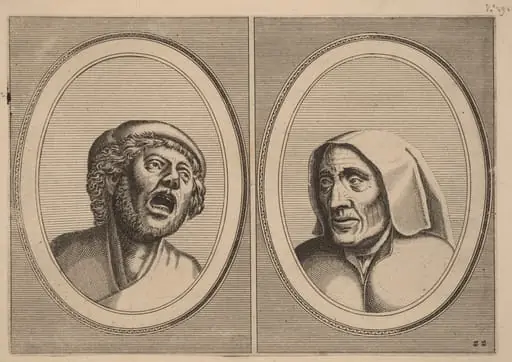
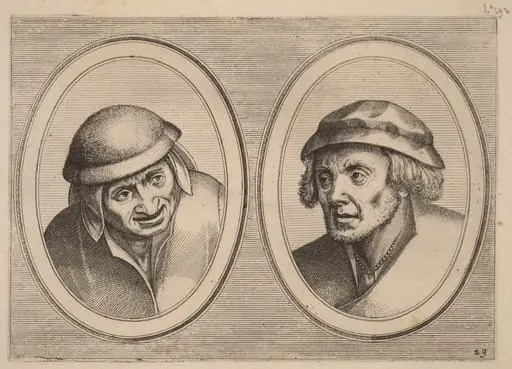
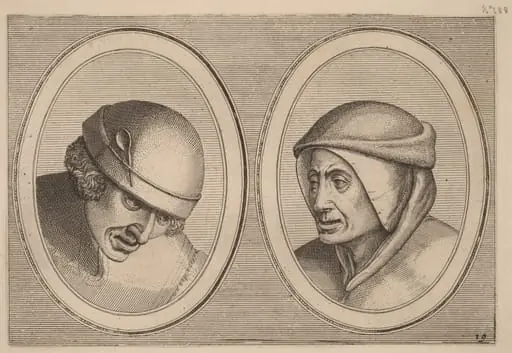
The work presents paired likenesses in a restrained, linear style, framed by a plain border and set against a subtly textured ground.
Two oval portraits, titled 'Harme Snap-op' and 'Keursje-sonder-naed,' were etched around 1564 by Lucas van Doetechum. The work presents paired likenesses in a restrained, linear style, framed by a plain border and set against a subtly textured ground. Each figure is rendered with precise incised lines, characteristic of Renaissance printmaking techniques. The composition emphasizes individual expression over narrative context.
Subject & Meaning
The two figures appear to be portraits of individuals, possibly contemporaries of the artist. The left subject, with curly hair and an open, surprised expression, contrasts with the right, whose capped head and stern gaze suggest a more reserved demeanor. The titles, in Dutch dialect, hint at personal or colloquial identifiers, suggesting these may be informal studies rather than formal commissions, capturing character through subtle facial nuance.
Technique & Style
Executed in etching, the work relies on acid-bitten lines on a metal plate to achieve fine detail and tonal variation. Sharp contours define facial features, while hatching and cross-hatching model shadows, particularly around the jaw and brow of the right figure. The style is disciplined and economical, favoring clarity over ornamentation, typical of Northern European printmakers of the mid-16th century.
History & Provenance
The etching dates to circa 1564, placing it within Lucas van Doetechum’s active period in the Low Countries. No documented early ownership records are widely known, but the work survives in institutional collections, likely through later print portfolios. Its survival reflects the circulation of small-scale portraits among collectors interested in character studies rather than grand historical themes.
Context
During the mid-1500s, etching emerged as a favored medium for intimate portraiture in the Netherlands, offering artists greater flexibility than engraving. Van Doetechum’s work aligns with a trend of depicting ordinary individuals with psychological nuance, distinct from idealized aristocratic portraits. These prints often circulated as keepsakes or artistic exercises, bridging the gap between fine art and personal memento.
Legacy
Though not widely reproduced in later centuries, the etching remains a representative example of 16th-century Dutch printmaking’s focus on individuality. It contributes to the understanding of how artists captured personality through minimal means, influencing later generations in portraiture and graphic arts. Its preservation underscores the value placed on modest, observational works within early modern visual culture.
Artist & collection