Artwork
Milites Requiescentes (Soldiers at Rest)
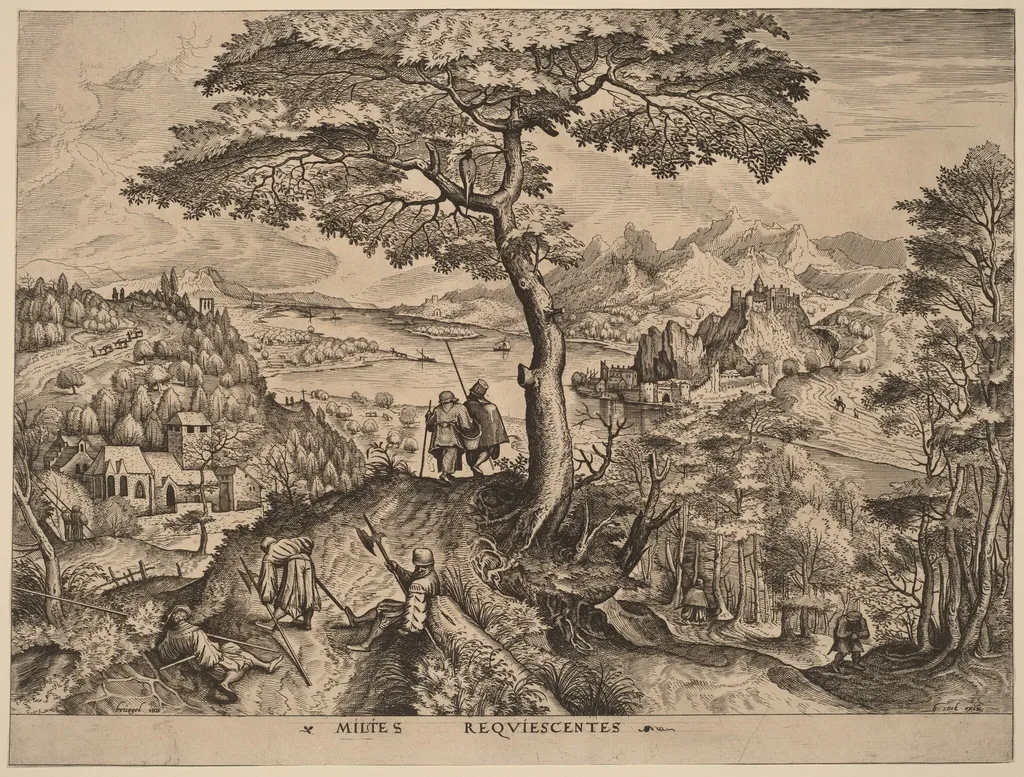
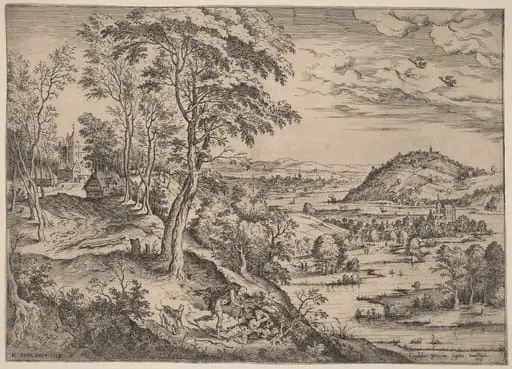
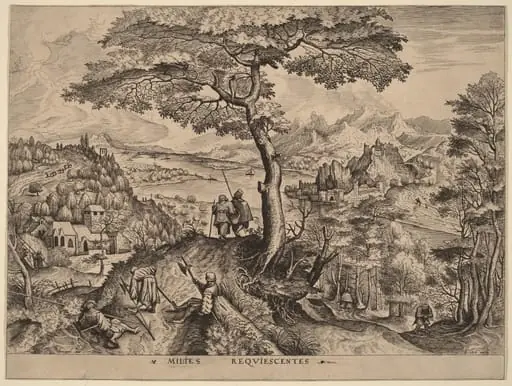
Milites Requiescentes (Soldiers at Rest) is an ink print by the Renaissance artist Lucas van Doetechum. It dates from 1556 and is held in the collection of the National Gallery of Art.
About this work
Overview
Created around 1556 by Lucas van Doetechum, Milites Requiescentes is a black-and-white print combining etching and engraving techniques.
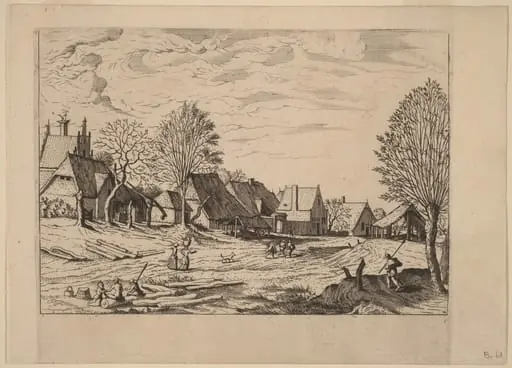
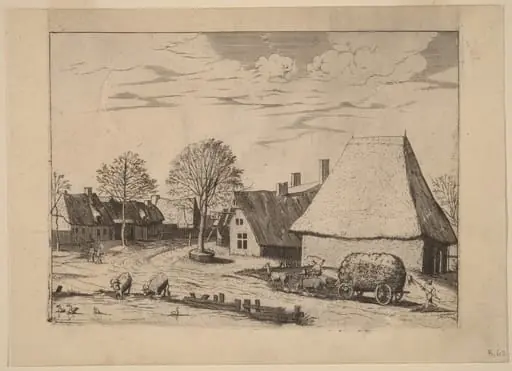
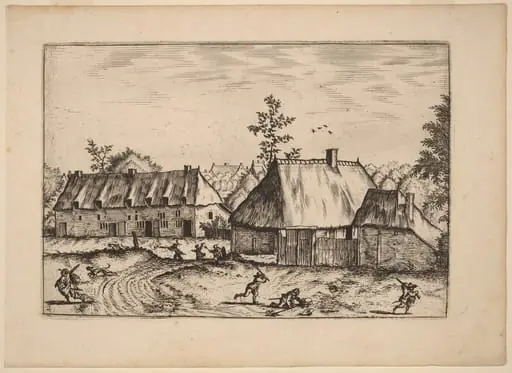
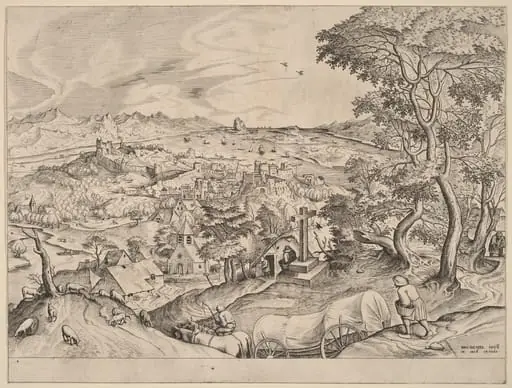
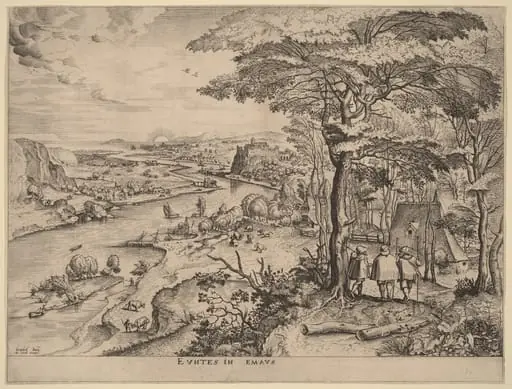
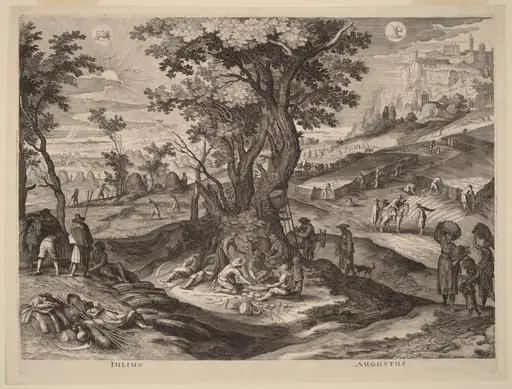
Created around 1556 by Lucas van Doetechum, Milites Requiescentes is a black-and-white print combining etching and engraving techniques. It depicts a wooded landscape where soldiers pause from their duties, scattered in quiet repose beneath a large tree. The composition extends beyond the immediate figures to include a distant village, a winding river, and hilltop structures, suggesting a broader military context beyond the moment of rest.
Subject & Meaning
The title, meaning 'Soldiers at Rest,' frames the scene as a pause in military life, yet the image resists simplicity. Figures engage in varied activities—sleeping, conversing, tending a fire—while the surrounding landscape hints at ongoing campaigns. The presence of distant settlements and ruins implies a war-torn region, transforming the rest into a fleeting respite rather than a peaceful interlude.
Technique & Style
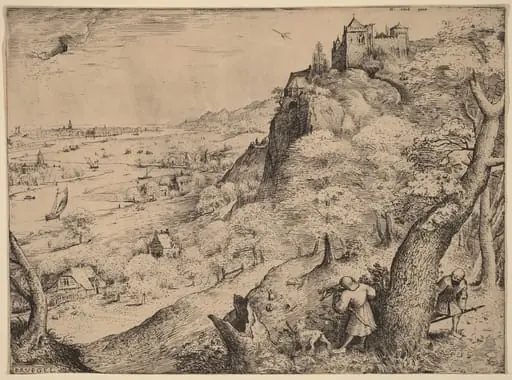
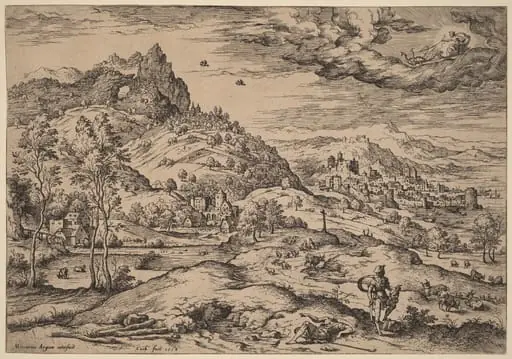
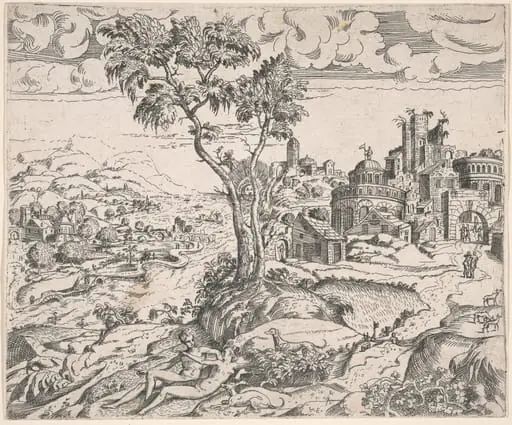
Van Doetechum employed fine, controlled lines typical of engraving and the fluidity of etching to render texture and depth. The dense foliage, varied terrain, and layered distance are achieved through meticulous hatching and crosshatching. Despite the absence of color, the print conveys atmospheric perspective, guiding the viewer’s eye from the foreground figures to the hazy horizon beyond.
History & Provenance
The print emerged during the mid-16th century, a period when Northern European artists increasingly produced detailed prints for collectors and scholars. Van Doetechum, active in the Low Countries, was part of a tradition that valued intricate narrative scenes. While specific early ownership records are sparse, the work aligns with the broader circulation of engraved military and landscape subjects in print markets of the time.
Context
This print reflects the era’s fascination with military life amid the religious and territorial conflicts of the Reformation. Soldiers were common subjects in prints, often shown in moments of downtime to humanize their experience. The inclusion of a village and ruins may reference the devastation of war, subtly critiquing the cost of prolonged campaigns without overt political commentary.
Legacy
Milites Requiescentes exemplifies the Northern Renaissance’s capacity to embed narrative complexity within small-scale prints. Though not widely reproduced in later centuries, its detailed landscape and layered storytelling influenced subsequent generations of printmakers who sought to convey expansive scenes with precision and quiet observation.
Artist & collection