Artwork
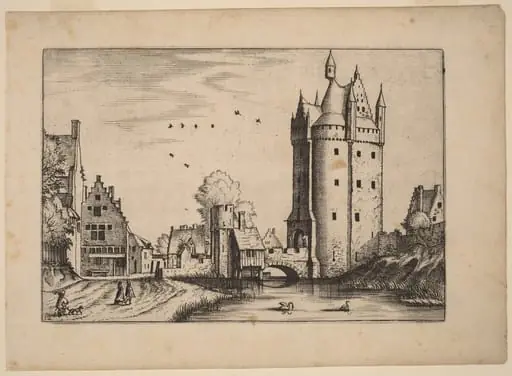
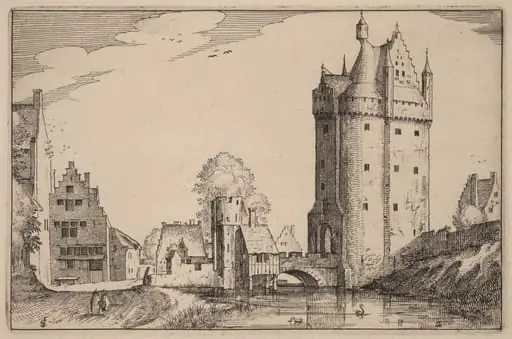
Town Gate with Country Houses
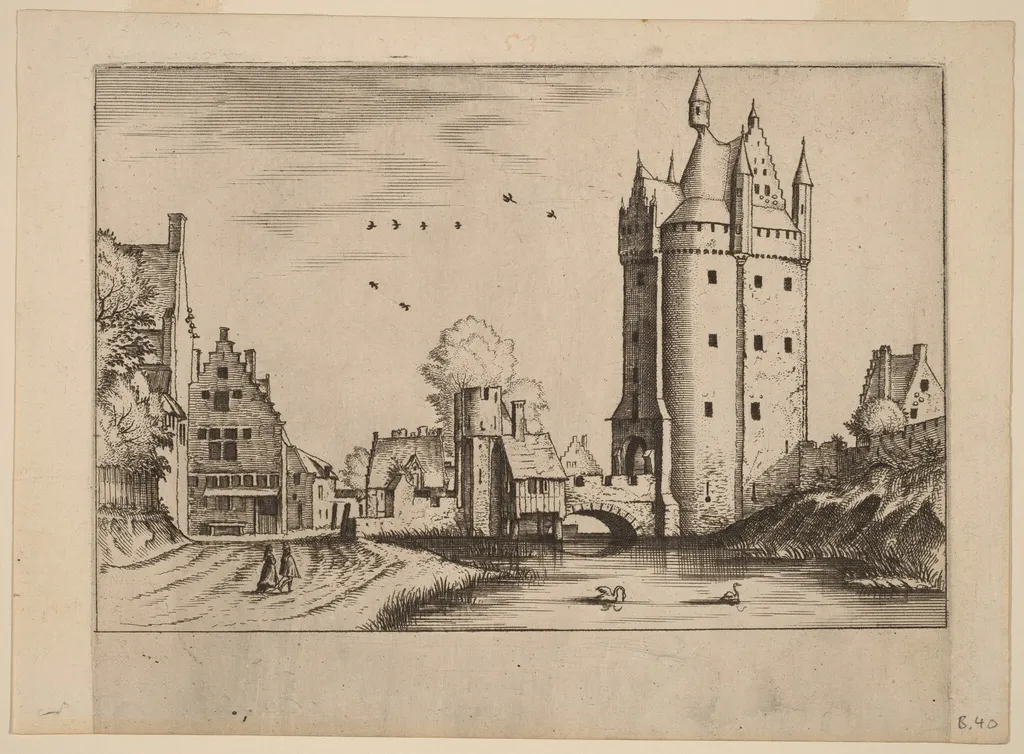
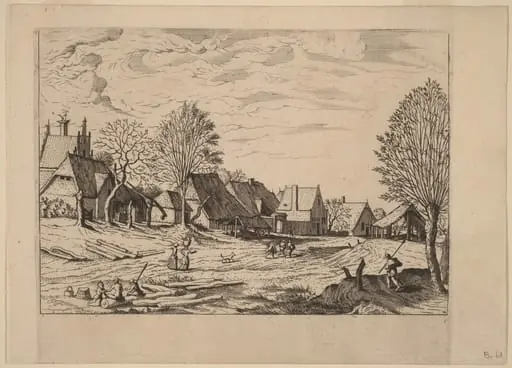
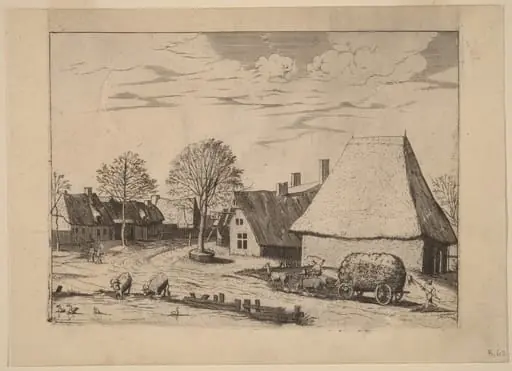
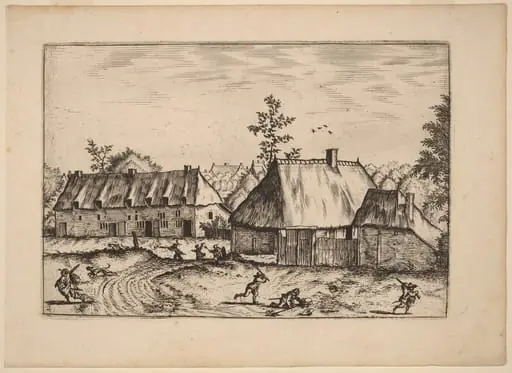
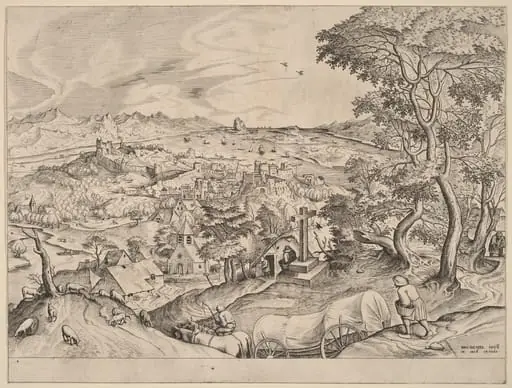
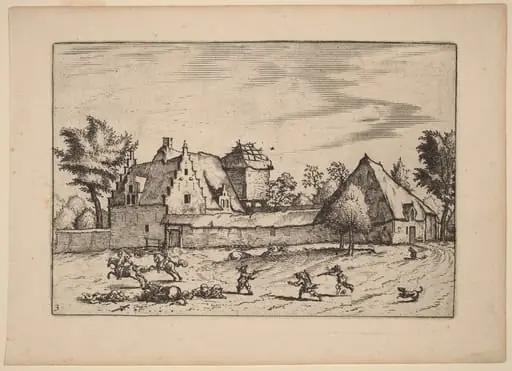
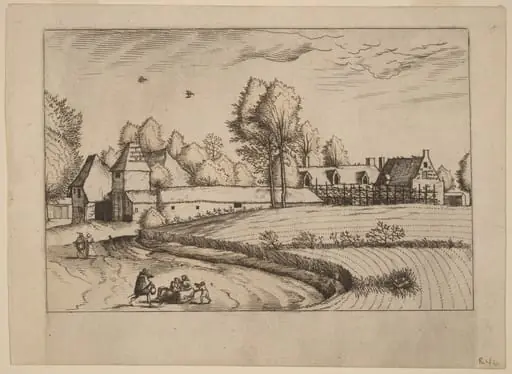
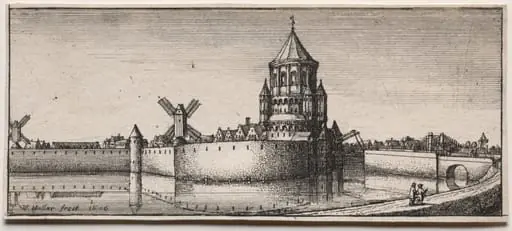
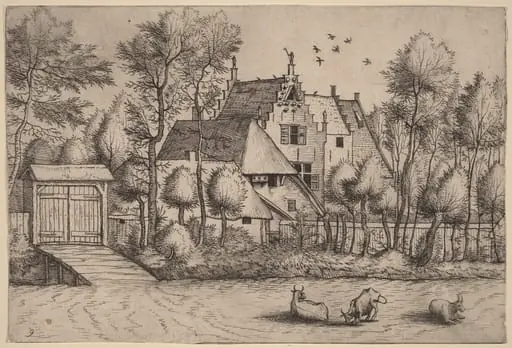
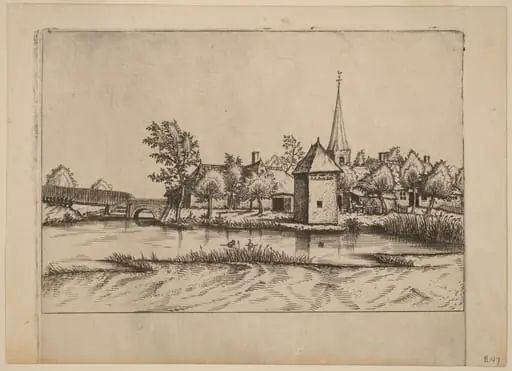
Town Gate with Country Houses is an ink print by the Renaissance artist Lucas van Doetechum. It dates from 1560 and is held in the collection of the National Gallery of Art.
About this work
Overview
The composition emphasizes spatial depth through layered lines and subtle tonal contrasts, typical of 16th-century Northern European topographical prints.
Created in 1560 by Lucas van Doetechum, this print depicts a modest town entrance framed by a fortified gate. Executed in etching with selective engraving, the work captures a quiet rural scene: a narrow river crosses beneath a bridge, flanked by dirt paths and simple dwellings with steeply pitched roofs. The composition emphasizes spatial depth through layered lines and subtle tonal contrasts, typical of 16th-century Northern European topographical prints.
Subject & Meaning
The scene presents a functional urban threshold—gate, bridge, and path—suggesting movement between countryside and settlement. The absence of grand figures or narrative elements shifts focus to architecture and environment. The gate, though castle-like, appears more symbolic than defensive, possibly representing civic order or the boundary between rural life and town authority.
Technique & Style
Van Doetechum combined etching’s fluid lines with the precision of engraving to define textures and forms. The gate’s stonework is rendered with dense hatching, while the river and sky use sparse, horizontal strokes to suggest calm. Trees and rooftops are indicated with quick, angular marks, balancing detail with atmospheric economy. This hybrid technique was common among printmakers seeking both speed and refinement.
History & Provenance
The print originates from the mid-16th century, a period when Northern European artists increasingly documented landscapes and urban structures for scholarly and commercial audiences. While specific early ownership records are unverified, similar works by van Doetechum circulated in print collections across the Low Countries and Germany, often used as references for topography or architectural study.
Context
In the 1560s, detailed town views were valued for their documentary quality, serving cartographic, civic, or personal interests rather than purely aesthetic ones. Artists like van Doetechum worked within a tradition that prioritized accuracy over drama, reflecting a broader Renaissance interest in observing and recording the physical world with systematic clarity.
Legacy
Though not widely known today, van Doetechum’s prints contributed to the development of topographical printmaking in Northern Europe. His use of mixed techniques influenced later generations of draftsmen who sought to capture architectural detail with both precision and naturalism, helping to bridge the gap between cartography and artistic representation.
Artist & collection