Artwork
Country Houses
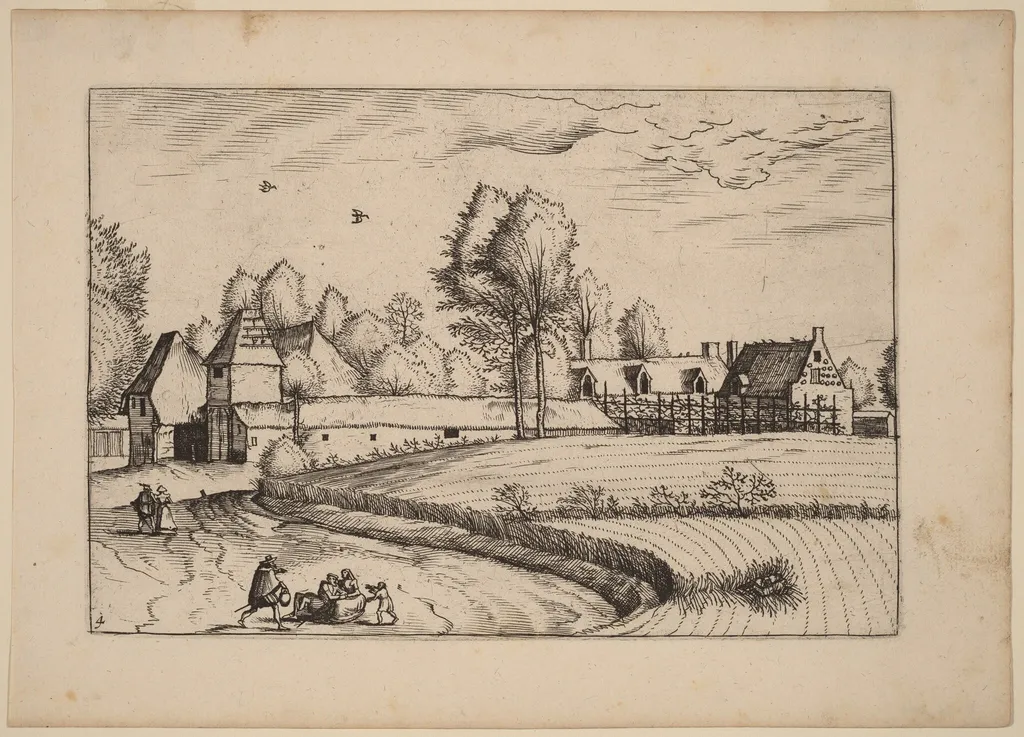
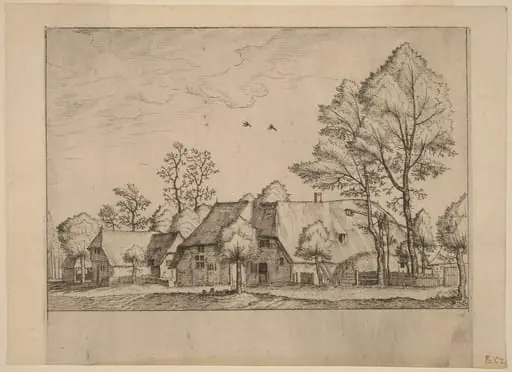
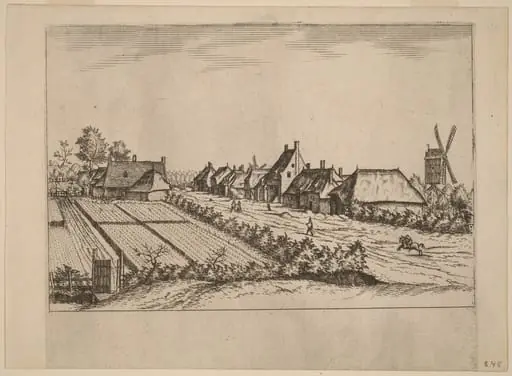
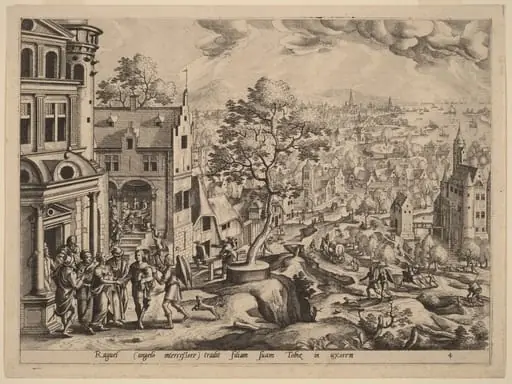
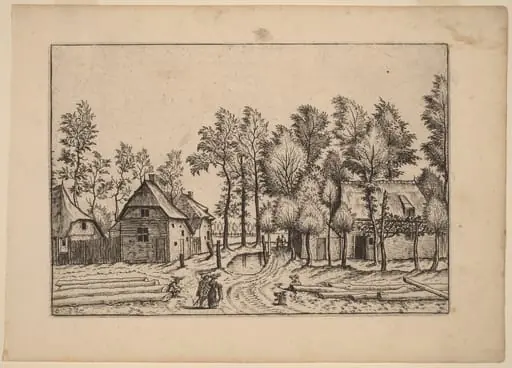
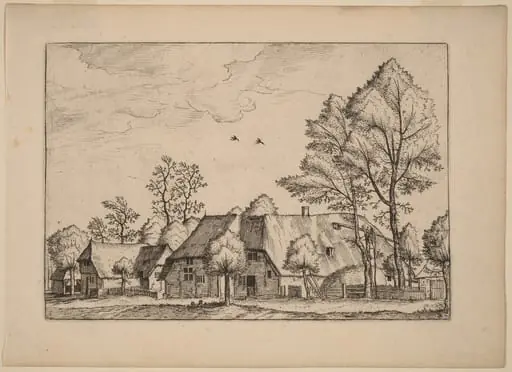
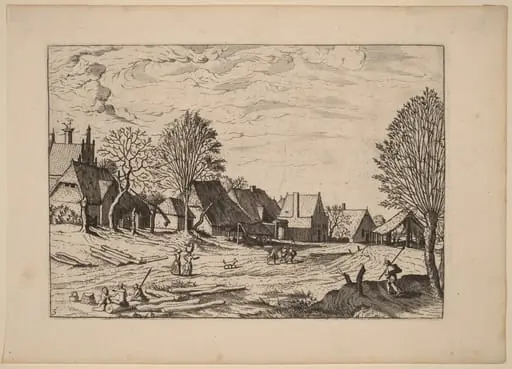
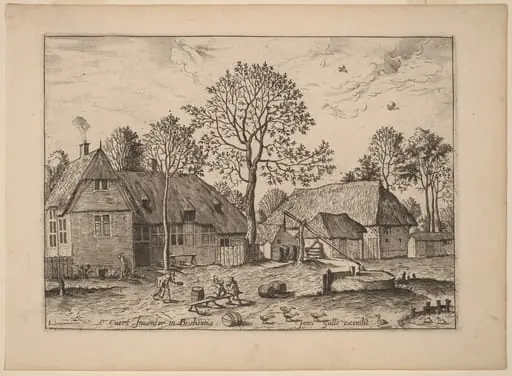
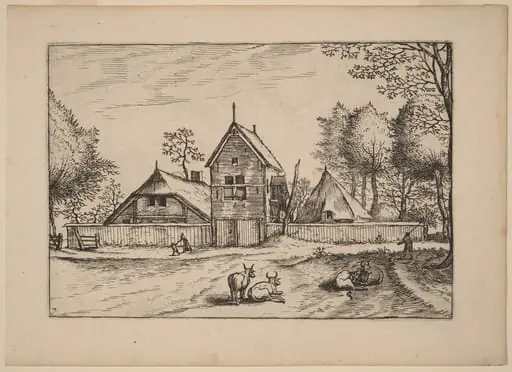
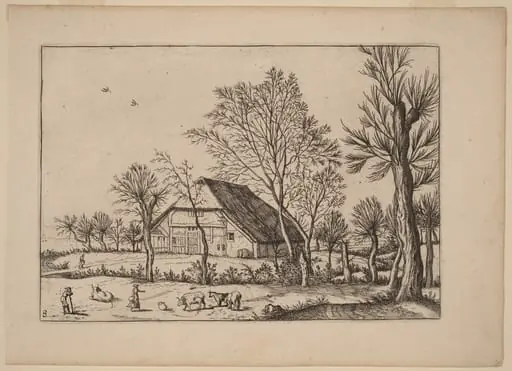
Country Houses is an ink print by the Baroque artist Johannes van Doetechum the Elder. It is held in the collection of the National Gallery of Art.
About this work
Overview
Created in 1676 by Johannes van Doetecum the Elder, this black-and-white print combines etching with selective engraving to depict a tranquil rural scene.
Created in 1676 by Johannes van Doetecum the Elder, this black-and-white print combines etching with selective engraving to depict a tranquil rural scene. Van Doetecum, active in Haarlem after relocating from Deventer, was known for his precise draftsmanship and landscape subjects. The work exemplifies his technical skill in printmaking, capturing everyday life with quiet detail rather than dramatic emphasis.
Subject & Meaning
The scene portrays a modest Dutch countryside, featuring a winding path lined with trees, clustered farmhouses with steep roofs, and a wagon drawn by a horse carrying three figures. Two pedestrians walk alongside, suggesting routine travel. The composition conveys neither grandeur nor narrative tension, instead offering a grounded observation of rural labor and settlement, reflecting the quiet rhythm of provincial life in the late 17th century.
Technique & Style
Van Doetecum employed fine, controlled etched lines to model form and atmosphere, enhanced by sharper engraving for structural details like fences and roof tiles. The absence of color relies entirely on tonal variation and line density to suggest depth and texture. Shadows are subtly rendered, giving the buildings and landscape a sense of solidity, while the delicate handling of foliage and road surface adds spatial nuance without embellishment.
History & Provenance
Johannes van Doetecum the Elder, born in Deventer in 1530, settled in Haarlem around 1578 and became known for reproductive prints after artists like Pieter Bruegel the Elder and for cartographic work. While few of his original landscapes survive, this print aligns with his documented interest in topographical accuracy and vernacular architecture. Its date of 1676 places it late in his career, possibly among his final known works.
Context
In the late 17th century, Dutch printmakers increasingly turned to landscape and genre scenes as commercial demand grew beyond religious or mythological subjects. Van Doetecum’s work fits within this trend, offering viewers a familiar, unidealized vision of rural life. His prints circulated among collectors and artisans, contributing to a broader visual culture that valued observation over ornament.
Legacy
Though not widely celebrated in his time, van Doetecum’s prints, including this one, remain valuable for their technical clarity and documentary quality. They provide insight into how Dutch artists recorded everyday environments before photography. His integration of cartographic precision with landscape observation influenced later generations of printmakers focused on regional topography and rural economy.
Artist & collection

Artist
Johannes van Doetechum the Elder
Joannes van Doetecum the Elder (1530 – 1605) was a Dutch engraver-cartographer known for his etched works after genre scenes by Pieter Bruegel the Elder and maps of various cities in the Netherlands.