Artwork
Farmstead
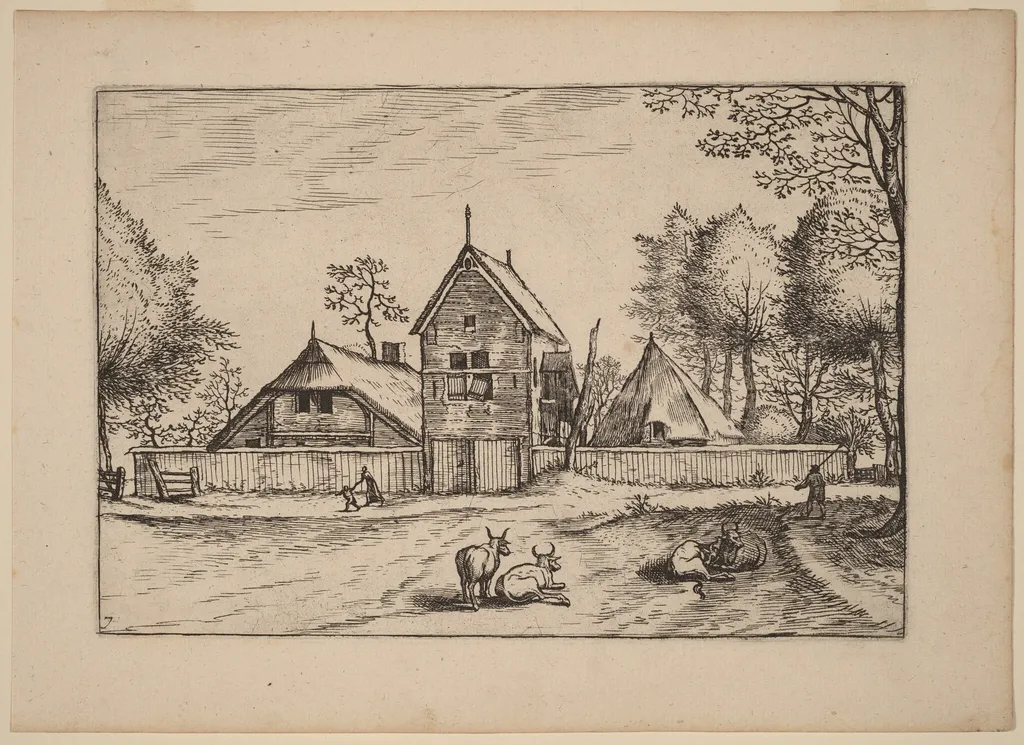
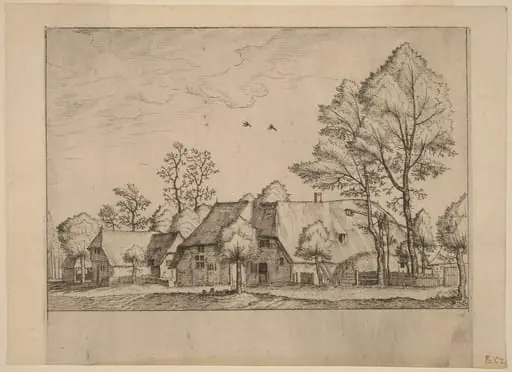
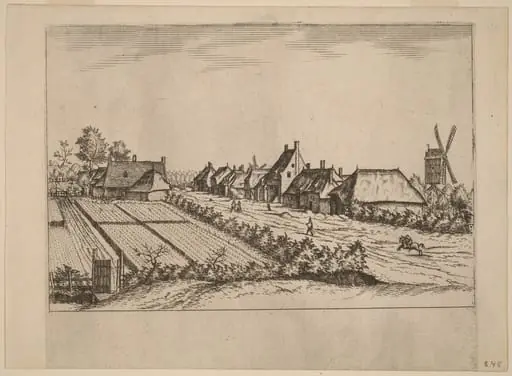
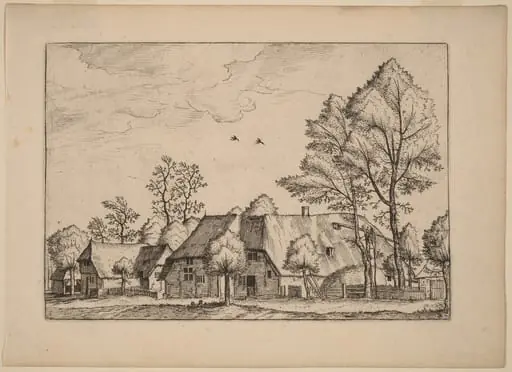
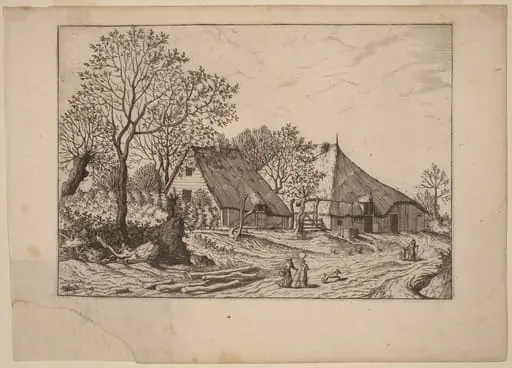
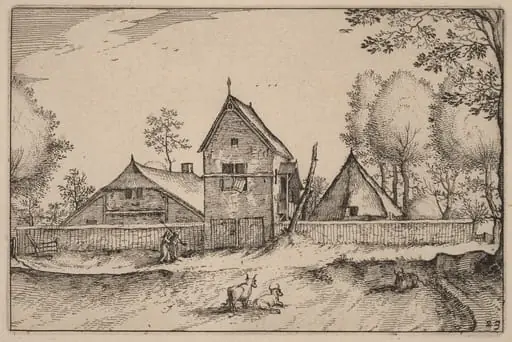
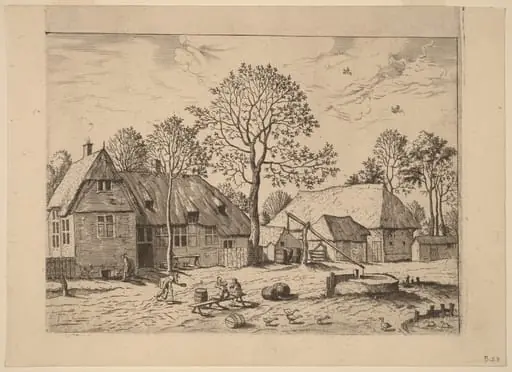
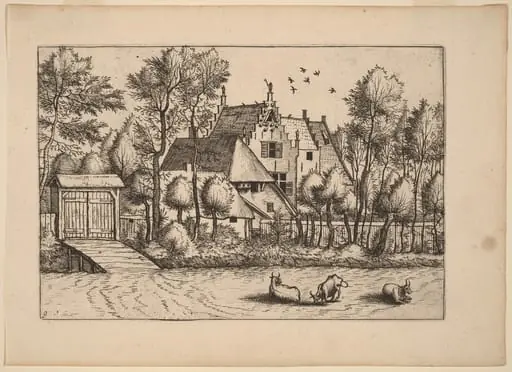
Farmstead is an ink print by the Baroque artist Johannes van Doetechum the Elder. It is held in the collection of the National Gallery of Art.
About this work
Overview
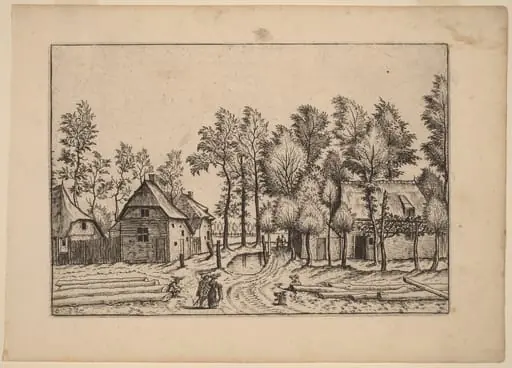
Created in 1676, *Farmstead* is a print that combines etching with later engraving touches. The composition presents a countryside homestead set within a verdant landscape, featuring a main house with a steep roof and chimney, a smaller outbuilding, and a small group of livestock attended by a figure. The scene conveys a calm, rural atmosphere typical of 17th‑century Dutch genre imagery.
Subject & Meaning
The image portrays a working farm, emphasizing the relationship between architecture, land, and animal husbandry. By including a caretaker alongside a cow, goat and sheep, the print underscores the everyday labor that sustains rural life. The tranquil setting and balanced arrangement reflect contemporary interest in documenting the ordinary world with a sense of order and modest prosperity.
Technique & Style
The handling of light and shadow, together with a modestly dramatic perspective, aligns the work with the broader Baroque sensibility in Dutch printmaking.
Doetecum employed a dual process: an initial etching to lay out the composition, followed by selective engraving to sharpen lines and deepen contrast. This combination allows fine detail in the buildings and foliage while preserving the softer tonal qualities of the etched areas. The handling of light and shadow, together with a modestly dramatic perspective, aligns the work with the broader Baroque sensibility in Dutch printmaking.
History & Provenance
Johannes van Doetecum the Elder, a Deventer‑born engraver‑cartographer active in Haarlem from the late 1570s, produced *Farmstead* as part of his broader output that included topographical maps and reproductions of Pieter Bruegel the Elder’s genre scenes. He often collaborated with his brother Lucas on series of prints, and this work exemplifies the family’s technical expertise in merging etching and engraving techniques.
Context
The print emerges from a period when Dutch artists increasingly turned to detailed depictions of everyday environments, reflecting both market demand for genre subjects and a growing interest in documenting the countryside. Such images served both decorative and informational purposes, resonating with a society that valued both the aesthetic appeal of rural life and its economic significance.
Artist & collection

Artist
Johannes van Doetechum the Elder
Joannes van Doetecum the Elder (1530 – 1605) was a Dutch engraver-cartographer known for his etched works after genre scenes by Pieter Bruegel the Elder and maps of various cities in the Netherlands.