Artwork
Tablou „Spre comuniste zări”, ulei pe pânză, semnat Doina Catargiu. Tabloul îl prezintă pe Nicolae Ceaușescu salutând realizările arhitecturale și industriale ale socialismului. Realizări redate în spatele său sub forma unei construcții gigantice. La baza acestei construcții stau oamenii muncii. Tablou comandat de Comitetul Județean de Partid Suceava și oferit lui Nicolae Ceaușescu cu ocazia aniversării vârstei de 71 de ani (ianuarie 1989).
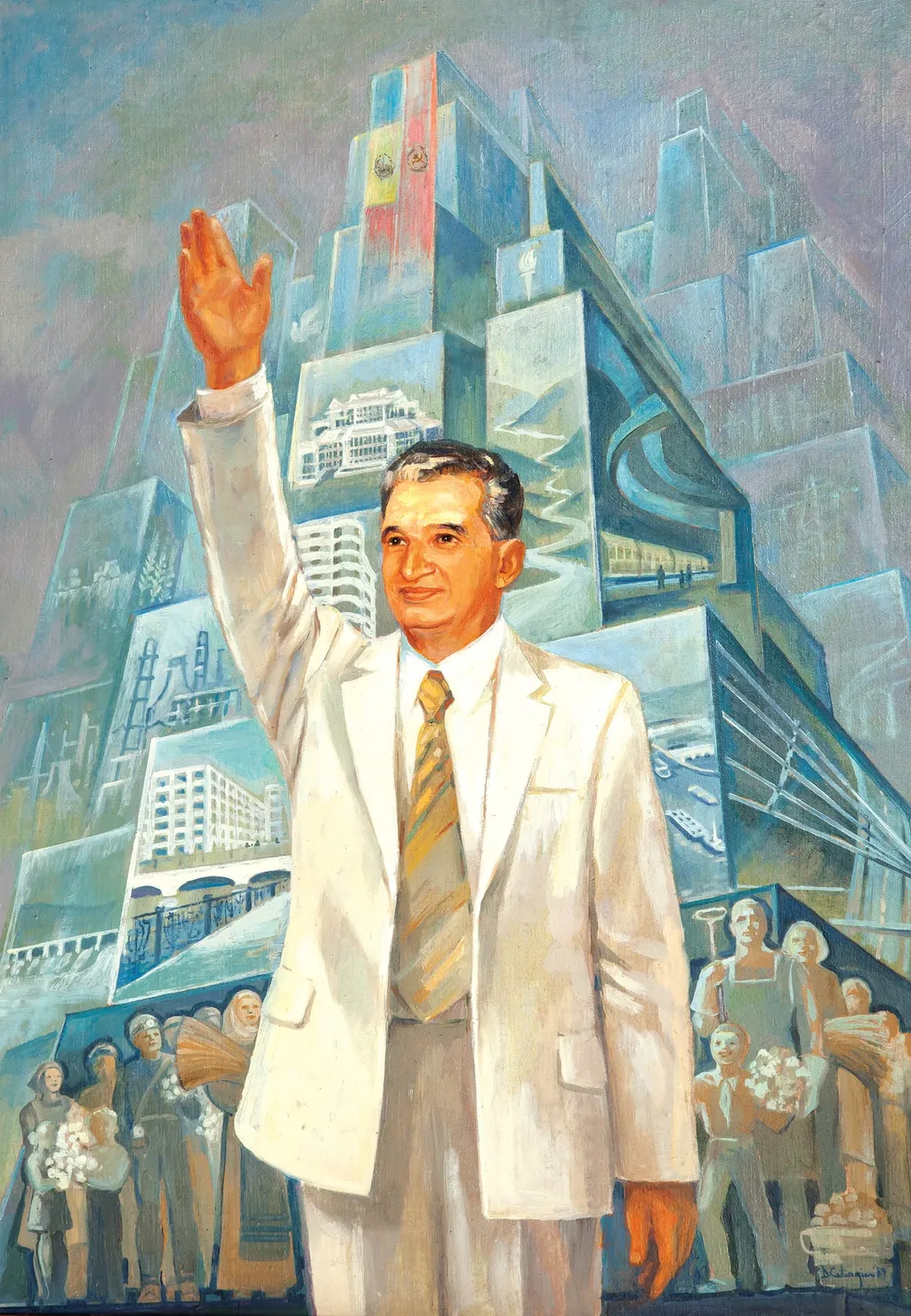
Tablou „Spre comuniste zări”, ulei pe pânză, semnat Doina Catargiu. Tabloul îl prezintă pe Nicolae Ceaușescu salutând realizările arhitecturale și industriale ale socialismului. Realizări redate în spatele său sub forma unei construcții gigantice. La baza acestei construcții stau oamenii muncii. Tablou comandat de Comitetul Județean de Partid Suceava și oferit lui Nicolae Ceaușescu cu ocazia aniversării vârstei de 71 de ani (ianuarie 1989). is a print by Doina Catargiu. It is held in the collection of the National Museum of Romanian History.
About this work
Overview
"Spre comuniste zări" is a painting by Doina Catargiu, executed in oil on canvas. It depicts Nicolae Ceaușescu acknowledging the architectural and industrial achievements of socialism, with a massive structure behind him and working-class individuals at its base.
Subject & Meaning
The painting centers on Nicolae Ceaușescu, then leader of Romania, saluting the accomplishments of socialism. The colossal building symbolizes these achievements, while the figures at its base represent the working class, emphasizing the regime's proclaimed connection with the common people.
Technique & Style
The work features bold, flat colors (notably blue and gray for the structure, with a white suit and striped tie for Ceaușescu) and lacks deep shadows, contributing to a somewhat two-dimensional appearance. The architectural elements are depicted in a jagged, puzzle-like manner.
History & Provenance
Commissioned by the Suceava County Party Committee, the painting was presented to Nicolae Ceaușescu on his 71st birthday in January 1989.
Context
Created during the late communist era in Romania, the painting reflects the regime's propaganda efforts to associate its leadership with national progress and the welfare of the working class.
Legacy
Given the painting's propagandistic nature and the downfall of the Ceaușescu regime later in 1989, its legacy is likely tied to historical and political analysis rather than independent artistic acclaim.
Artist & collection
Artist
Doina Catargiu spent the 1980s painting official portraits and grand industrial scenes for Ceaușescu’s regime.

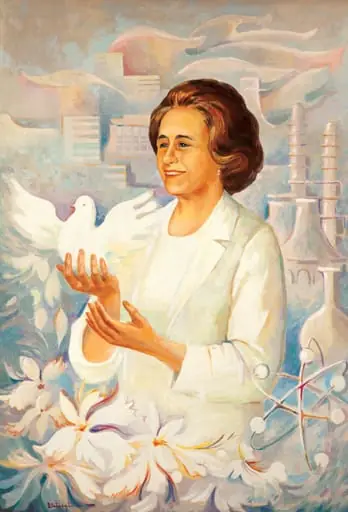 Tablou, ulei pe pânză, „Elena Ceaușescu”, semnat Doina Catargiu în partea stângă jos, nedatat. Elena Ceaușescu este reprezentată în centrul tabloului ținând în mâini un porumbel alb - simbolul păcii - cu aripile desfăcute; pe fundal un combinat petrochimic; în partea de jos a tabloului sunt reprezentate flori mari albe. În stânga jos o reprezentare a atomului. Comandat și oferit de Comitetul Județean de Partid Suceava (1985).
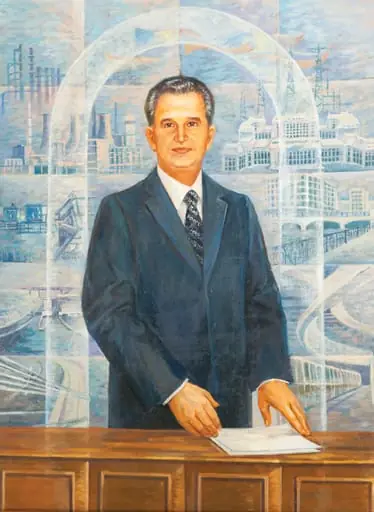 Tablou, „Epoca de aur”, atribuit Doina Catargiu. Tabloul îl prezintă pe Nicolae Ceaușescu într-un cadru oficial, la tribună. În spatele său marile realizări ale epocii sale: Casa Republicii, metroul, Canalul Dunăre - Marea Neagră, rafinării, combinate etc. Comandat și oferit de Comitetul Județean de Partid Suceava (1988).
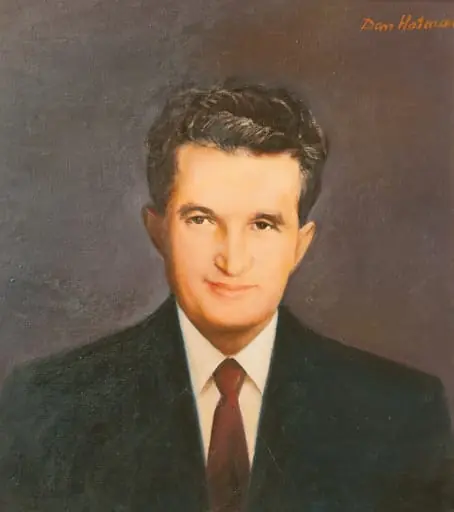 Tablou ulei pe pânză, „Nicolae Ceaușescu” semnat Dan Hatmanu în partea dreaptă sus, nedatat. Comandat de Consiliul Național al Femeilor și oferit cu ocazia aniversării zilei de naștere (ianuarie 1989).
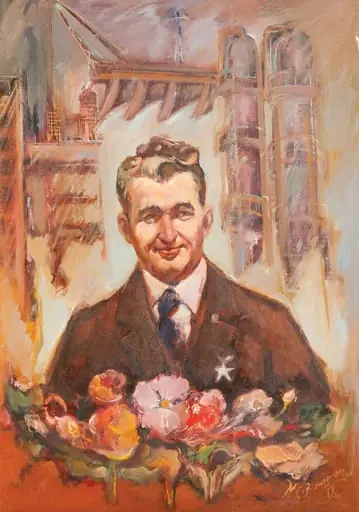 Tablou, ulei pe pânză, „Portret Nicolae Ceaușescu”, semnat C. Radovan și datat în partea dreaptă jos 1978. Nicolae Ceaușescu este reprezentat înt-o atitudine jovială, în piept are însemnul ”Erou al Republicii Socialiste România”. Pe fundal realizări ale regimului comunist. Oferit de Comitetul Județean de Partid Timiș, 22 ianuarie 1978.
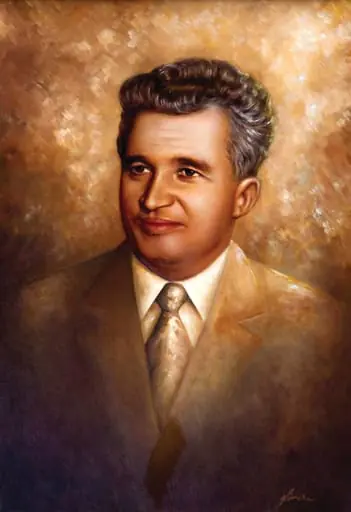 Tablou ulei pe pânză, portret Nicolae Ceaușescu semnat Gheorghe Pîrvu si datat în partea dreaptă jos. Comandat de Comitetul Municipal de Partid Călărași (1982).
 Tablou, ulei pe pânză, „Salutul președintelui”, atribuit lui Viorel Toma, nedatat. Nicolae Ceaușescu este reprezentat în centrul tabloului salutând, pe fundal steagul PCR și cel al RSR. Comandat și oferit de Comitetul Județean de Partid Timiș (1985).
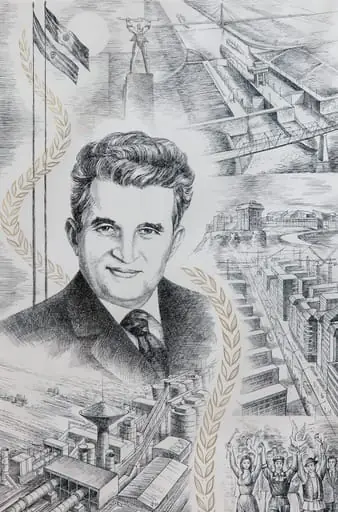 Tablou, tuș pe hârtie, „Ctitorul”, atribuit lui Levente Csutak. Tabloul îl prezintă pe Nicolae Ceaușescu și realizările sale - Canalul Dunăre Marea Neagră, Combinatul Petrochimic Midia Năvodari, Prometeu (statuia de la Barajul Vidraru), modernizarea orașelor - construcția de blocuri de locuințe pentru oamenii muncii. În partea dreaptă jos este reprezentat un grup de oameni entuziaști. Comandat și oferit de Comitetul Județean de Partid Brașov (1983).
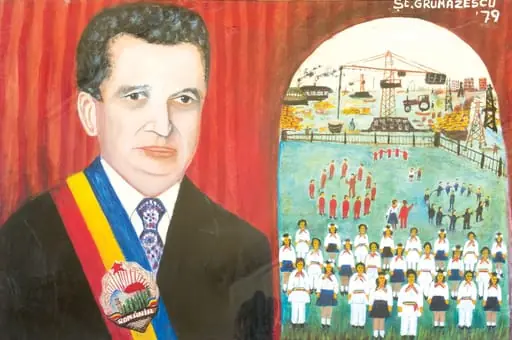 Tablou, ulei pe pânză, Nicolae Ceaușescu și copii, semnat și datat în partea dreaptă sus Șt. Grumăzescu, 1979. Nicolae Ceaușescu este prezentat în partea stângă urmărind o festivitate - pionieri, copii dansând în horă. Maniera de realizare a tabloului este una naivă. Oferit de Ștefan Grumăzescu din București.
 Tablou, tempera pe pânză, „Ceaușescu și Poporul” semnat Grigorian Rusu datat 1982 în partea dreaptă jos. Nicolae Ceaușescu este prezentat în prim plan, cu bandă tricoloră, în fundal sunt reprezentați oamenii muncii. Comandat și oferit de Comitetul Județean de Partid Dolj (1982).
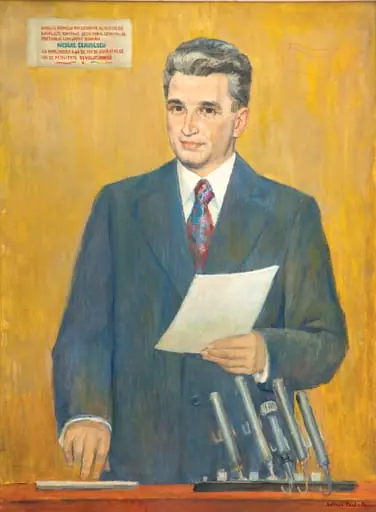 Tablou reprerzentându-l pe Nicolae Ceauțescu ținând un discurs. Semnat în partea dreaptă jos ”Adina Paula Moscu”. Oferit cadou lui Nicolae Ceaușescu pe 26 ianuarie 1978 cu ocazia aniversării vârstei de 60 de ani. În stânga sus dedicație ”Omagiu primului președinte al Republicii Socialiste România, secretar general al Partidului Comunist Român, Nicolae Ceaușescu, la împlinirea a 60 de ani de viață și 45 de ani de activitate revoluționară.”
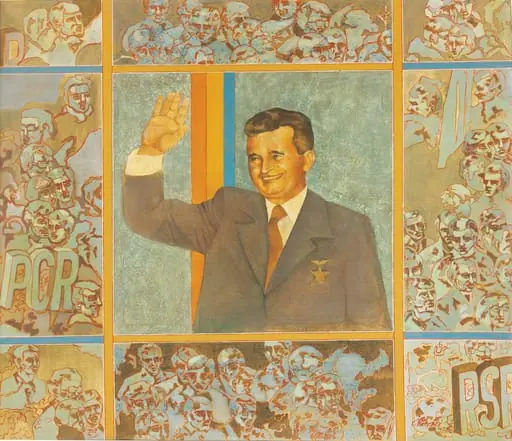 Tablou, ulei pe pânză, „Portret Nicolae Ceaușescu”, semnat în partea dreaptă jos C.Macavei și datat 1978. Tablou împărțit în mai multe registre, în plan central Nicolae Ceaușescu salutând oamenii muncii din celelalte registre. Comandat și oferit de Comitetul Județean de Partid Ilfov, 23 ianuarie 1978.
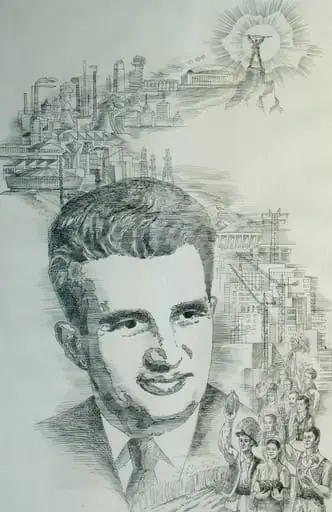 Tablou, desen cu tuș, portret Nicolae Ceaușescu pe fundal industrial, nesemnat, nedatat; atribuit lui Levente Csutak. Fundalul industrial este prezentat sub forma unui drum al realizărilor socialismului - la baza drumului stau oamenii muncii, continuă cu realizările: fabrici, uzine, combinate, hidrocentrala de la Porțile de Fier, clădirea Circului de Stat, Sala Palatului, statuia lui Prometeu de la Barajul Vidraru este luminată de un soare în formă de harta RSR. Deși nu este o realizare a socialismului este reprezentată și Coloana Infinitului a lui Brâncuși. Oferit de Comitetul Județean de Partid Brașov (1983).