Artwork
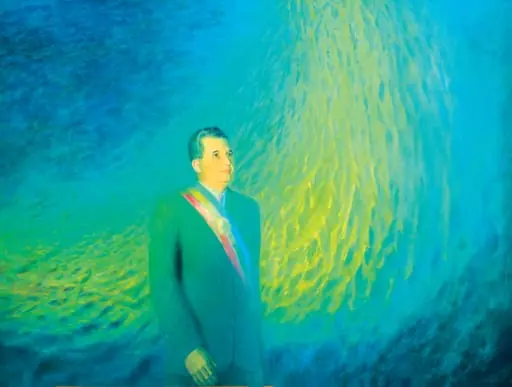
Tablou, tempera pe pânză, „Ceaușescu și Poporul” semnat Grigorian Rusu datat 1982 în partea dreaptă jos. Nicolae Ceaușescu este prezentat în prim plan, cu bandă tricoloră, în fundal sunt reprezentați oamenii muncii. Comandat și oferit de Comitetul Județean de Partid Dolj (1982).
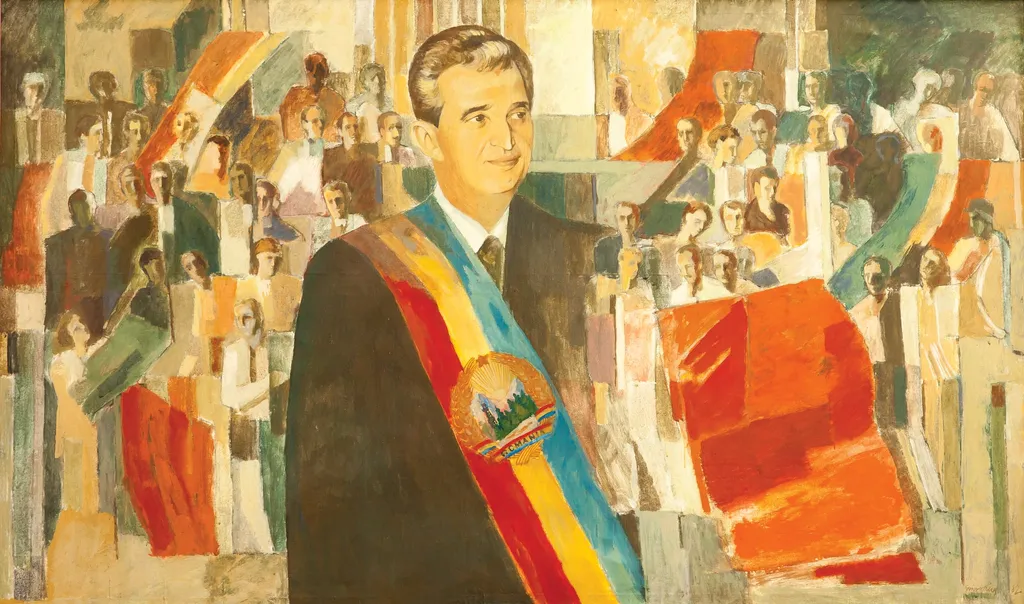
Tablou, tempera pe pânză, „Ceaușescu și Poporul” semnat Grigorian Rusu datat 1982 în partea dreaptă jos. Nicolae Ceaușescu este prezentat în prim plan, cu bandă tricoloră, în fundal sunt reprezentați oamenii muncii. Comandat și oferit de Comitetul Județean de Partid Dolj (1982). is a print by Grigorian Rusu. It is held in the collection of the National Museum of Romanian History.
About this work
The faces are blurred, but the scene looks like a big gathering with red and orange tones dominating the painting.
A man in a dark suit stands in the front, wearing a bright sash with yellow, blue, and red stripes. Behind him, a crowd of people fills the background, some holding flags with the same colors. The faces are blurred, but the scene looks like a big gathering with red and orange tones dominating the painting.
This was made in 1982 as a portrait of a leader with the people behind him, showing unity. The brushstrokes are thick and bold, giving it a rough, textured look.
Next, check out the impasto technique to see how thick paint creates depth.
Overview
"Ceaușescu și Poporul" (1982) is a tempera on canvas painting by Grigorian Rusu, depicting Nicolae Ceaușescu in the foreground with a tricolor sash, set against a backdrop of laborers. Commissioned by the Dolj County Party Committee, the work captures a moment of purported unity between the leader and the people.
Subject & Meaning
The painting's central subject is Nicolae Ceaușescu, prominently displayed with a tricolor sash, symbolizing national unity. The blurred faces of the crowd behind him emphasize the collective over the individual, conveying a message of solidarity between the leader and the working class.
Technique & Style
Characterized by thick, bold brushstrokes and a predominantly orange-red color palette, the painting features a textured, rough appearance. The use of impasto technique adds depth, with visible, raised paint layers contributing to the work's dynamic visual quality.
History & Provenance
Commissioned in 1982 by the Dolj County Party Committee, the painting was created during Ceaușescu's rule, serving as an official representation of his connection with the populace. It remains associated with its commissioning body, reflecting the political context of its creation.
Context
Produced amidst Ceaușescu's regime, the work embodies the socialist realism prevalent in Eastern European art during the late Cold War era, where art often served to bolster the leader's image and perceived harmony with the working class.
Legacy
As a piece of state-commissioned art from a specific political era, its legacy is largely tied to its historical context, serving more as a reflection of 1980s Romanian political culture than a widely recognized artistic achievement beyond its propagandistic purpose.
Artist & collection
Artist
Grigorian Rusu liked to hide his real opinions where only insiders would notice. In 1982 he painted Ceaușescu and the People for the local Party bosses in Dolj, showing the dictator front and center with a tricolor sash…

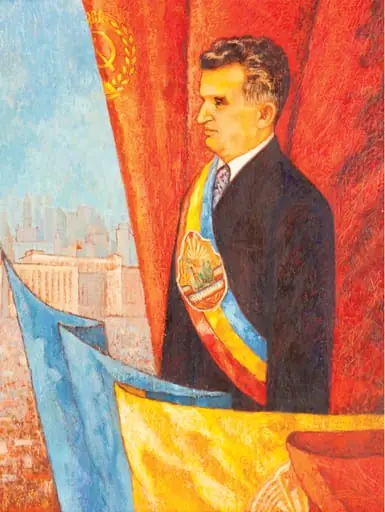 Tablou, ulei pe pânză, „Nicolae Ceaușescu, întâiul președinte al României”, semnat C.Aurel și datat 1974 în partea dreaptă jos. Nicolae Ceaușescu purtând banderolă tricoloră cu stema R.S.R., stând la balcon primind ovații din partea oamenilor muncii adunați într-o piață. În spatele său, steagul cu sigla PCR. Tablou oferit de către autor originar din Câmpina (Prahova), 19 august 1974.
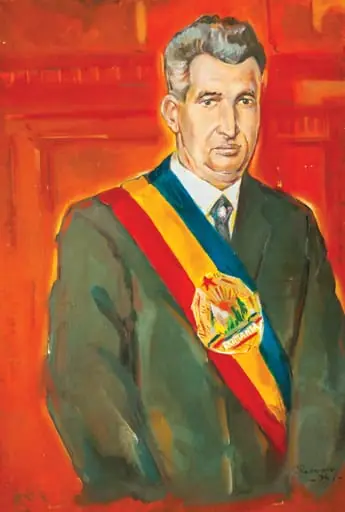 Tablou, ulei pe pânză, Nicolae Ceaușescu, semnat C.Radovan și datat 1974 în partea dreaptă jos. Nicolae Ceaușescu este prezentat într-o atitudine mirat deranjată. Tablou oferit cadou lui Nicolae Ceaușescu de către autor, Ciprian Radovan, București.
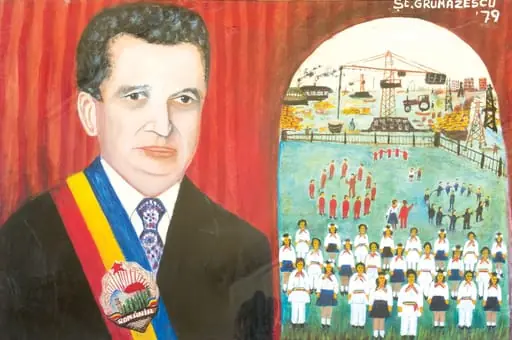 Tablou, ulei pe pânză, Nicolae Ceaușescu și copii, semnat și datat în partea dreaptă sus Șt. Grumăzescu, 1979. Nicolae Ceaușescu este prezentat în partea stângă urmărind o festivitate - pionieri, copii dansând în horă. Maniera de realizare a tabloului este una naivă. Oferit de Ștefan Grumăzescu din București.
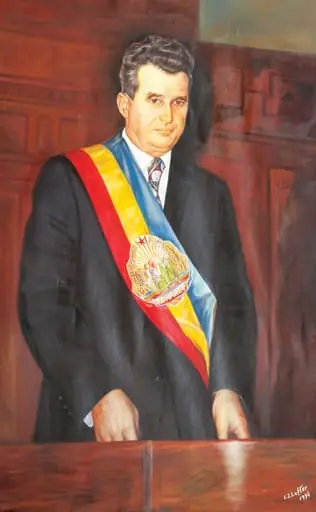 Tablou, ulei pe pânză, ”Portret Nicolae Ceaușescu”, semnat C.I. Lefter și datat 1974 în partea dreaptă jos. Reprezentat într-un cadru oficial în spatele unui pupitru, Nicolae Ceaușescu purtând eșarfa cu stema RSR. Oferit lu Nicolae Ceaușescu de Comitetul de Partid Sănătatea, cu ocazia zilei de naștere, ianuarie 1978.
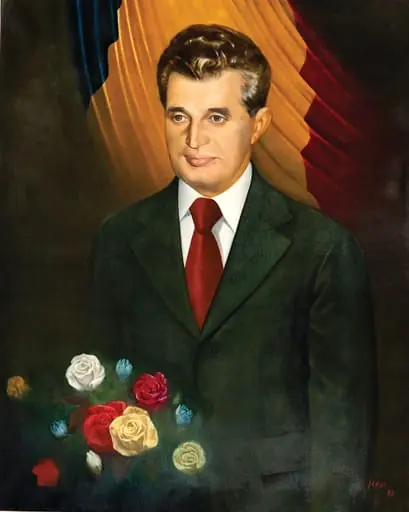 Tablou ulei pe pânză, portret Nicolae Ceaușescu semnat Ispas și datat în partea dreaptă jos. Este prezentat într-o postură solemnă cu un buchet de trandafiri, în spatele său tricolorul. Culorile drapelului se regăsesc și în coloritul trandafirilor. Comandat de Comitetul Județean de Partid Alba (1983).
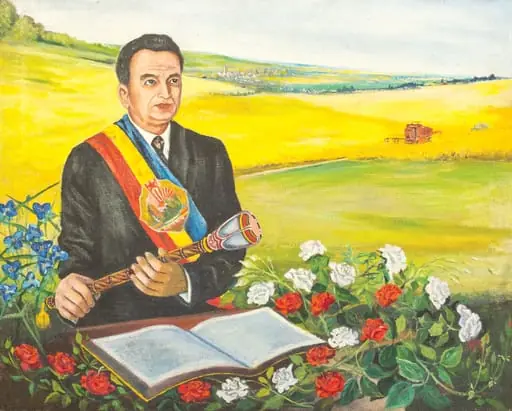 Tablou, ulei pe pânză, ”Nicolae Ceaușescu, președinte”, nesemnat, atribuit I.C. Popescu - Stolojan. Nicolae Ceaușescu este prezentat în momentul învestirii în funcția de președinte al Republicii Socialiste România. Poartă însemnele funcției eșarfa tricoloră, sceptrul prezidențial. Sala Marii Adunări Naționale a fost înlocută cu un fundal agricol - un lan de grâu treierat de o combină. Pupitrul este decorat cu trandafiri și iriși. Oferit de autor, 1976.
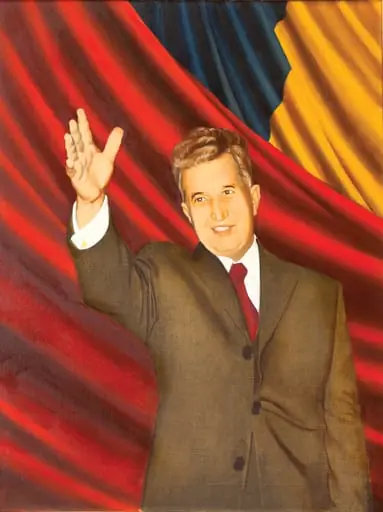 Tablou, ulei pe pânză, „Salutul președintelui”, atribuit lui Viorel Toma, nedatat. Nicolae Ceaușescu este reprezentat în centrul tabloului salutând, pe fundal steagul PCR și cel al RSR. Comandat și oferit de Comitetul Județean de Partid Timiș (1985).
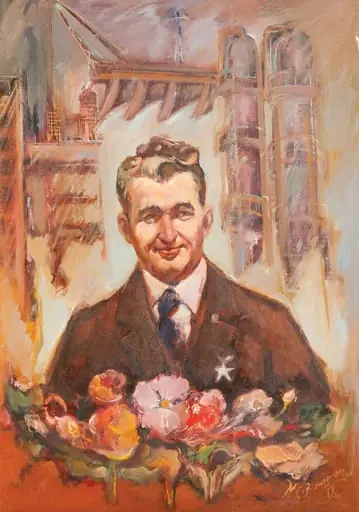 Tablou, ulei pe pânză, „Portret Nicolae Ceaușescu”, semnat C. Radovan și datat în partea dreaptă jos 1978. Nicolae Ceaușescu este reprezentat înt-o atitudine jovială, în piept are însemnul ”Erou al Republicii Socialiste România”. Pe fundal realizări ale regimului comunist. Oferit de Comitetul Județean de Partid Timiș, 22 ianuarie 1978.
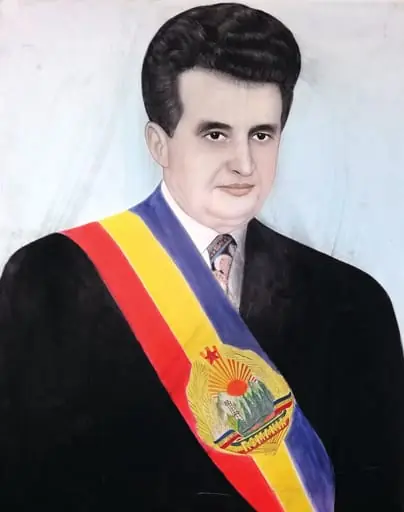 Tablou, acuarelă pe carton, ”Nicolae Ceaușescu la alegerea ca președinte”, nesemnat, atribuit lui Constantin Z. Bolovan. Portretul este realizat într-o manieră naivă, proporțiile personajului sunt puțin supradimensionate, Nicolae Ceaușescu este reprezentat cu eșarfa tricoloră cu stema RSR. Oferit de Constantin Z. Bolovan, Iași, 1978.
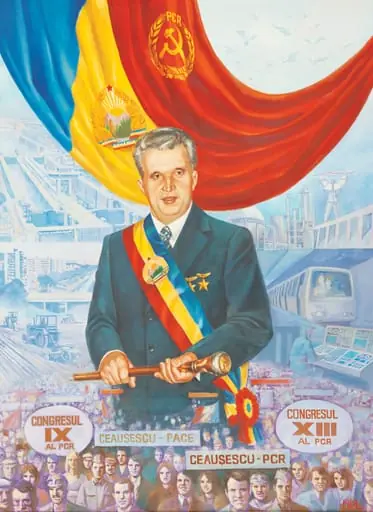 Tablou, ulei pe pânză, ”Ctitorul României Socialiste”, nesemnat, atribuit lui V.Tănase. Tabloul îl prezintă pe Nicolae Ceaușescu în prim plan purtând toate însemnele funcției: eșarfa tricoloră, sceptrul prezidențial, două însemne de ”Erou al Republicii Socialiste România”. În partea de sus a tabloului este redat steagul RSR unit cu steagul PCR. În partea de jos, poporul, oamenii muncii purtând pancarte cu ”Ceaușescu Pace”, ”Ceaușescu PCR”, ”Congresul IX al PCR” (alegerea lui Nicolae Ceaușescu în fruntea partidului), ”Congresul XII al PCR” (realegerea în fruntea partidului). Pe fundal sunt redate realizările socialismului: Canalul Dunăre Marea Neagră, Barajul Vidraru, metroul etc. Tablou comandat de Ministerul Apărării Nașionale (1985).
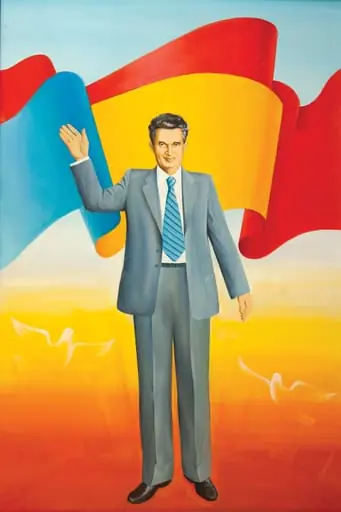 Tablou „ Ceaușescu Pace”, semnat M. Ceacîru și datat dreapta jos. Tabloul îl prezintă pe Nicolae Ceaușescu salutând, în spatele său flutură tricolorul și stegul PCR, în stânga și în dreapta sa doi porumbei albi în zbor.Comandat de Comitetul Județean de Partid Neamț (1989)
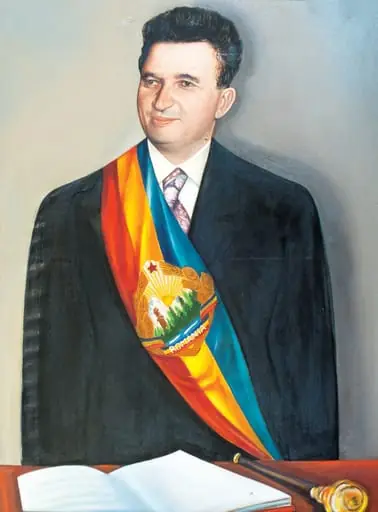 Tablou, ulei pe pânză, ”Portret Nicolae Ceaușescu”, nesemnat, atribui lui Nicolae Toma. Oferit de autor, cu ocazia zilei de naștere a lui Nicolae Ceaușescu, Ploiești, ianuarie 1978.
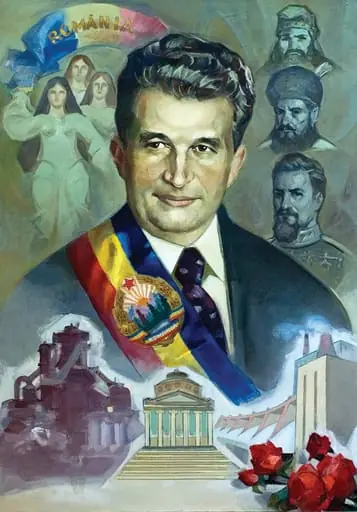 Portret Nicolae Ceaușescu, tablou nesemnat. Comadat de Ministerul de Interne, 1985. Autorul îl prezintă -pe Nicolae Ceaușescu alături de Burebista, Mihai Viteazul și Alexandru Ioan Cuza. În partea de jos a tabloului sunt prezentate alături de Atheneul Român realizările economice ale socialismului.
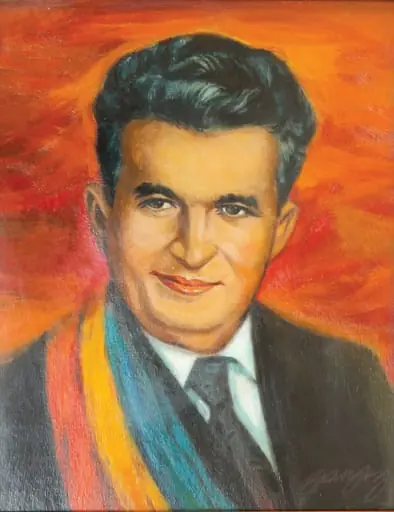 Tablou, „Portret Nicolae Ceaușescu”, semnat Barany în partea dreaptă jos, nedatat. Tabloul prezintă portretul lui Nicolae Caușescu cu banderolă tricoloră pe un fundal roșu - oranj. Comandat și oferit de Comitetul Județean de Partid Arad cu ocazia unei aniverări.
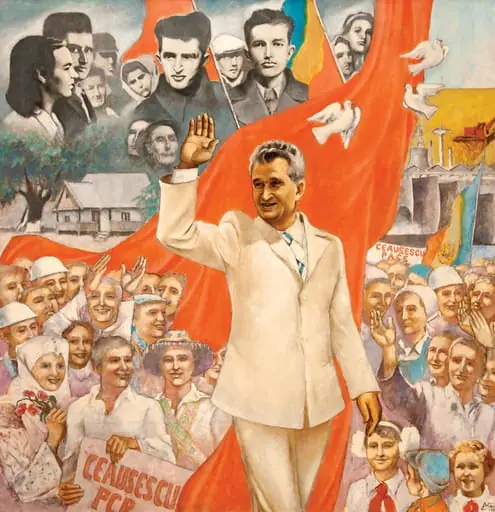 Tablou „Eroul României Socialiste” , semnat și datat în dreapta jos ”Constantin Nițescu 1988”. Comandat de Comitetul Județean de Partid Olt și oferit cadou lui Nicolae Ceaușescu la împlinirea vârstei de 70 de ani (ianuarie 1988).
 Tablou ”Omagiu” semnat Sabin Bălașa, comandat de Comitetul Municipal de Partid București și oferit lui Nicolae Ceaușescu cu ocazia zilei sale de naștere, ianuarie 1978.