Artwork
Tablou, tuș pe hârtie, „Ctitorul”, atribuit lui Levente Csutak. Tabloul îl prezintă pe Nicolae Ceaușescu și realizările sale - Canalul Dunăre Marea Neagră, Combinatul Petrochimic Midia Năvodari, Prometeu (statuia de la Barajul Vidraru), modernizarea orașelor - construcția de blocuri de locuințe pentru oamenii muncii. În partea dreaptă jos este reprezentat un grup de oameni entuziaști. Comandat și oferit de Comitetul Județean de Partid Brașov (1983).
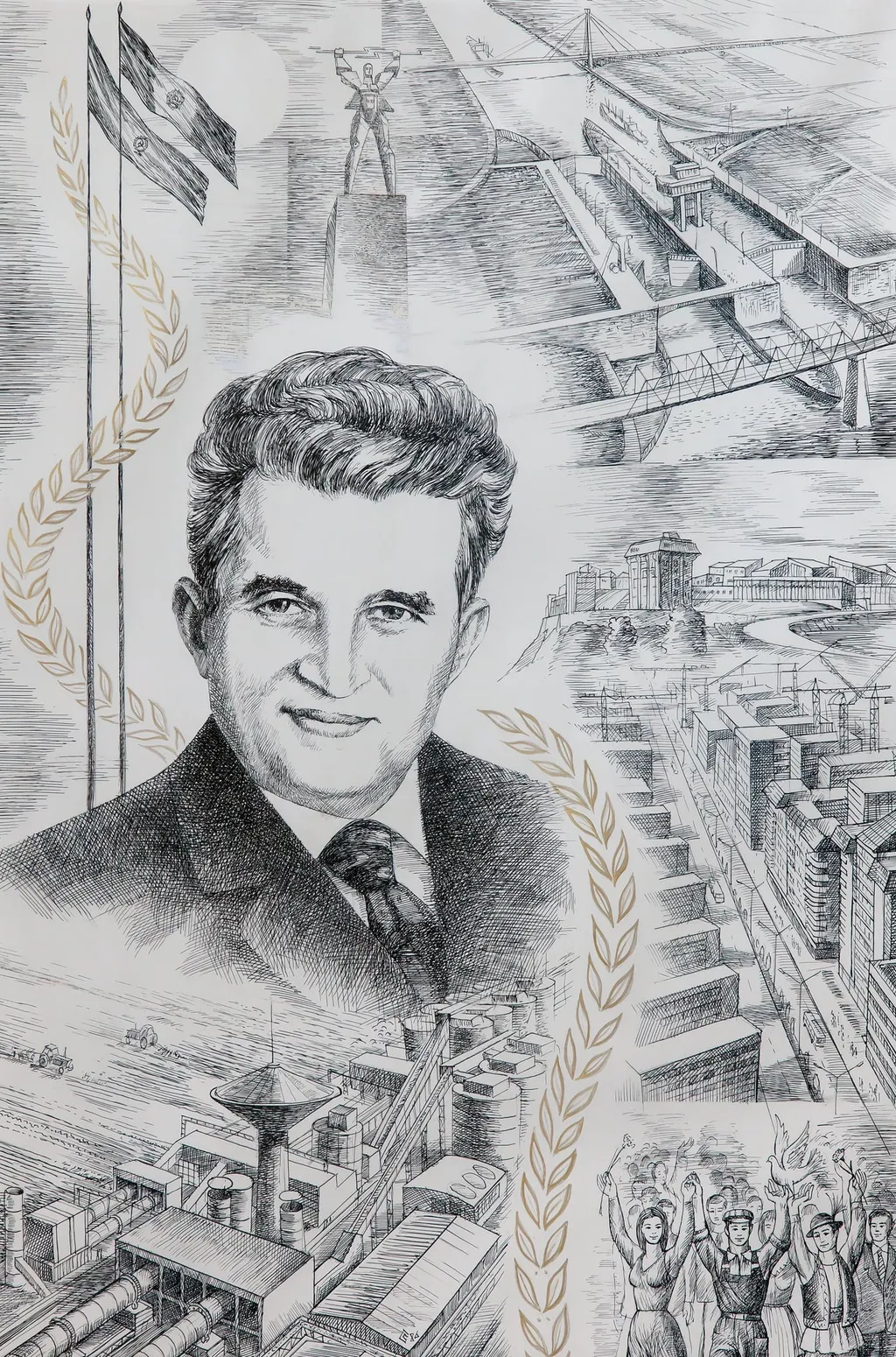
Tablou, tuș pe hârtie, „Ctitorul”, atribuit lui Levente Csutak. Tabloul îl prezintă pe Nicolae Ceaușescu și realizările sale - Canalul Dunăre Marea Neagră, Combinatul Petrochimic Midia Năvodari, Prometeu (statuia de la Barajul Vidraru), modernizarea orașelor - construcția de blocuri de locuințe pentru oamenii muncii. În partea dreaptă jos este reprezentat un grup de oameni entuziaști. Comandat și oferit de Comitetul Județean de Partid Brașov (1983). is a print by Levente Csutak. It dates from 1990 and is held in the collection of the National Museum of Romanian History.
About this work
Overview
The work, titled “Ctitorul” and executed in ink on paper, is attributed to Levente Csutak. Commissioned by the Brașov County Party Committee in 1983, the piece portrays Nicolae Ceaușescu surrounded by visual references to major infrastructure projects promoted during his rule.
Subject & Meaning
Ceaușescu is depicted centrally, flanked by symbols of industrial and civic development: the Danube–Black Sea Canal, the Midia Năvodari petrochemical complex, the Prometheus statue at Vidraru Dam, and rows of residential blocks intended for workers. A group of enthusiastic figures in the lower right corner underscores the propagandistic narrative of collective progress.
Technique & Style
Rendered in black ink, the composition relies on strong contour lines and stark contrasts to delineate architectural forms and human figures. The use of laurel branches framing the leader and a fluttering flag evokes triumph, while the simplified, almost schematic rendering of buildings reflects the official visual language of the era.
History & Provenance
The drawing was produced under a state commission and presented as a gift from the local party organization in Brașov in 1983. Its attribution to Csutak, a Hungarian‑Romanian artist active in the late communist period, is based on stylistic analysis and archival records linking him to official commissions.
Context
Created during the final decade of Romania’s socialist regime, the image functions as visual propaganda, celebrating Ceaușescu’s self‑styled role as the nation’s “builder.” The highlighted projects were flagship achievements touted by the regime to legitimize its centralized planning and cult of personality.
Artist & collection
Artist

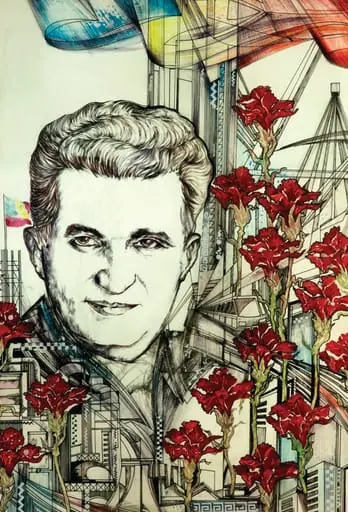 Grafică „Epoca Nicolae Ceaușescu”, tablou atribuit lui Lucian Cociuba. Tabloul îl prezintă pe Nicolae Ceaușescu alături de marile reralizări ale Epocii Socialiste; realizări ornate cu garoafe roșii și tricolor. Comandat de Comitetul Județean de Partid Arad (1988).
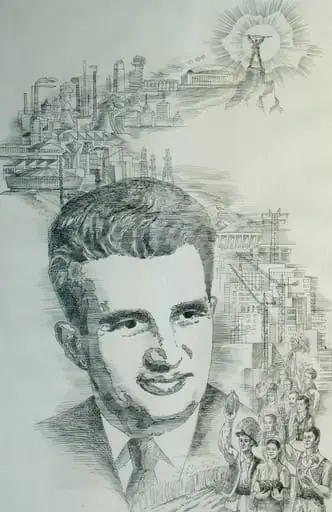 Tablou, desen cu tuș, portret Nicolae Ceaușescu pe fundal industrial, nesemnat, nedatat; atribuit lui Levente Csutak. Fundalul industrial este prezentat sub forma unui drum al realizărilor socialismului - la baza drumului stau oamenii muncii, continuă cu realizările: fabrici, uzine, combinate, hidrocentrala de la Porțile de Fier, clădirea Circului de Stat, Sala Palatului, statuia lui Prometeu de la Barajul Vidraru este luminată de un soare în formă de harta RSR. Deși nu este o realizare a socialismului este reprezentată și Coloana Infinitului a lui Brâncuși. Oferit de Comitetul Județean de Partid Brașov (1983).
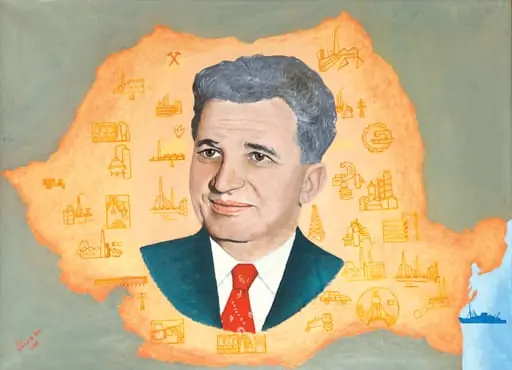 Tablou, ulei pe pânză, portretul lui Nicolae Ceaușescu este redat în mijlocul unei hărți a României, înconjurat de diferite obiective industriale. Comandat și oferit de Comitetul Județean de Partid Alba, 15 octombrie 1981.
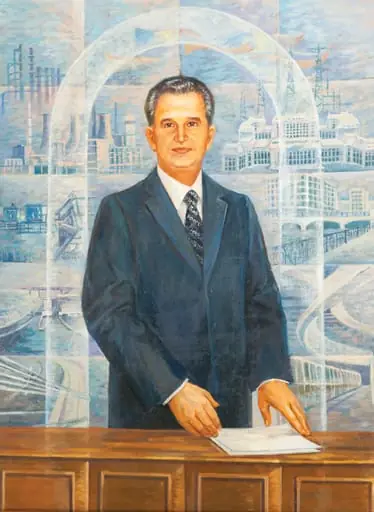 Tablou, „Epoca de aur”, atribuit Doina Catargiu. Tabloul îl prezintă pe Nicolae Ceaușescu într-un cadru oficial, la tribună. În spatele său marile realizări ale epocii sale: Casa Republicii, metroul, Canalul Dunăre - Marea Neagră, rafinării, combinate etc. Comandat și oferit de Comitetul Județean de Partid Suceava (1988).
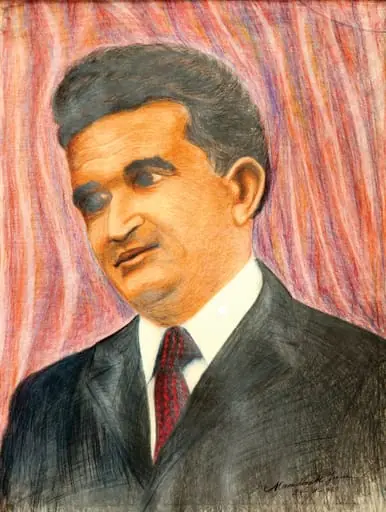 Tablou, desen pe carton, ”Nicolae Ceaușescu”, semnat cu tuș negru Jeana Macedonschi și datat 24.IX.1974, în partea dreaptă jos. Tablou oferit lui Nicolae Ceaușescu de către autor.
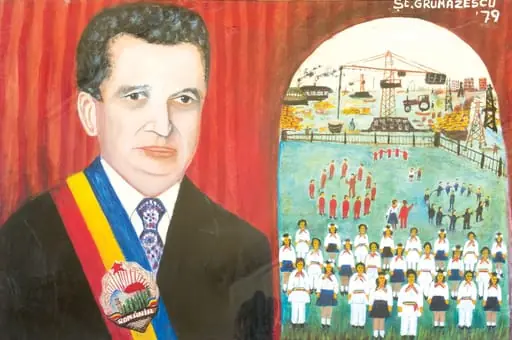 Tablou, ulei pe pânză, Nicolae Ceaușescu și copii, semnat și datat în partea dreaptă sus Șt. Grumăzescu, 1979. Nicolae Ceaușescu este prezentat în partea stângă urmărind o festivitate - pionieri, copii dansând în horă. Maniera de realizare a tabloului este una naivă. Oferit de Ștefan Grumăzescu din București.
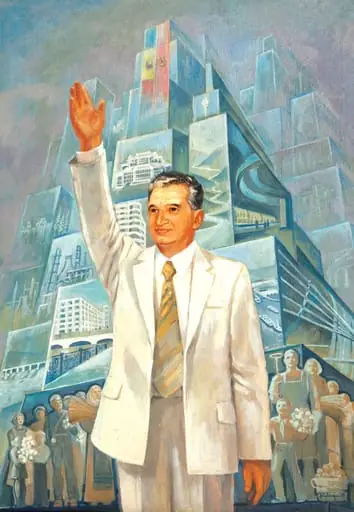 Tablou „Spre comuniste zări”, ulei pe pânză, semnat Doina Catargiu. Tabloul îl prezintă pe Nicolae Ceaușescu salutând realizările arhitecturale și industriale ale socialismului. Realizări redate în spatele său sub forma unei construcții gigantice. La baza acestei construcții stau oamenii muncii. Tablou comandat de Comitetul Județean de Partid Suceava și oferit lui Nicolae Ceaușescu cu ocazia aniversării vârstei de 71 de ani (ianuarie 1989).
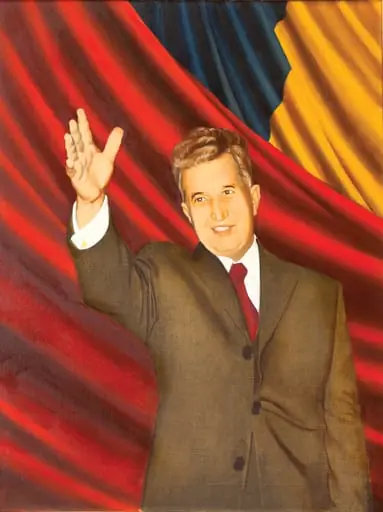 Tablou, ulei pe pânză, „Salutul președintelui”, atribuit lui Viorel Toma, nedatat. Nicolae Ceaușescu este reprezentat în centrul tabloului salutând, pe fundal steagul PCR și cel al RSR. Comandat și oferit de Comitetul Județean de Partid Timiș (1985).
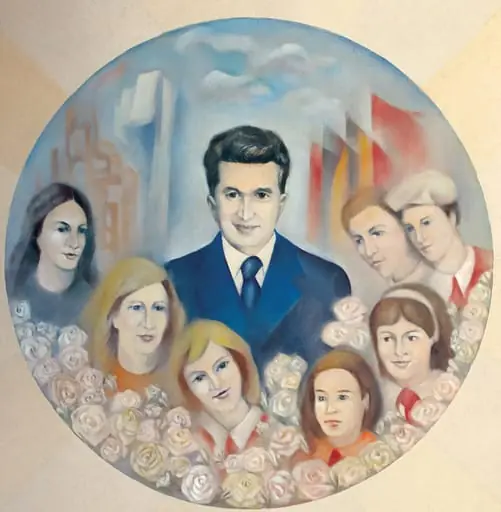 Tablou ulei pe pânză, „Nicolae Ceaușescu”, nesemnat, atribuit lui Ion Pantilie, nedatat. Nicolae Ceaușescu este reprezentat în mijlocul copiilor și tinerilor. Comandat și oferit de Comitetul Județean de Partid Argeș (1988).
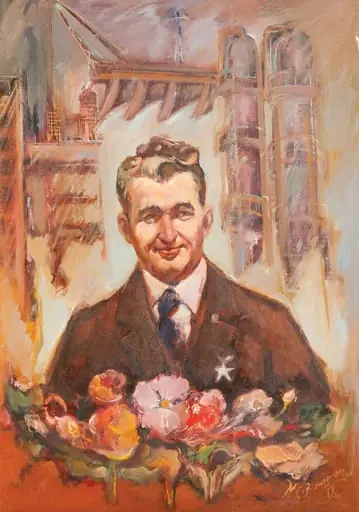 Tablou, ulei pe pânză, „Portret Nicolae Ceaușescu”, semnat C. Radovan și datat în partea dreaptă jos 1978. Nicolae Ceaușescu este reprezentat înt-o atitudine jovială, în piept are însemnul ”Erou al Republicii Socialiste România”. Pe fundal realizări ale regimului comunist. Oferit de Comitetul Județean de Partid Timiș, 22 ianuarie 1978.
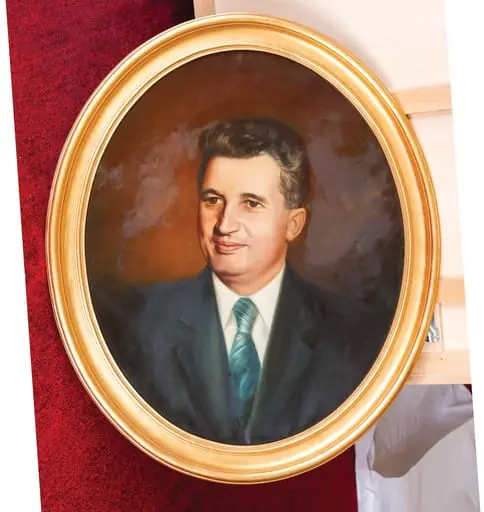 Tablou, ulei pe pânză, portret Nicolae Ceaușescu, atribuit Corneliu Brudașcu. Oferit de Uniunea Artiștilor Plastici (1979).
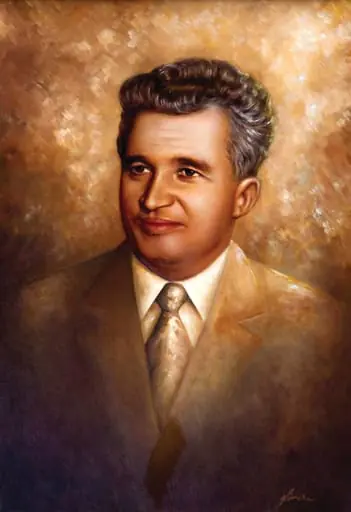 Tablou ulei pe pânză, portret Nicolae Ceaușescu semnat Gheorghe Pîrvu si datat în partea dreaptă jos. Comandat de Comitetul Municipal de Partid Călărași (1982).