Artwork
Tablou, desen cu tuș, portret Nicolae Ceaușescu pe fundal industrial, nesemnat, nedatat; atribuit lui Levente Csutak. Fundalul industrial este prezentat sub forma unui drum al realizărilor socialismului - la baza drumului stau oamenii muncii, continuă cu realizările: fabrici, uzine, combinate, hidrocentrala de la Porțile de Fier, clădirea Circului de Stat, Sala Palatului, statuia lui Prometeu de la Barajul Vidraru este luminată de un soare în formă de harta RSR. Deși nu este o realizare a socialismului este reprezentată și Coloana Infinitului a lui Brâncuși. Oferit de Comitetul Județean de Partid Brașov (1983).
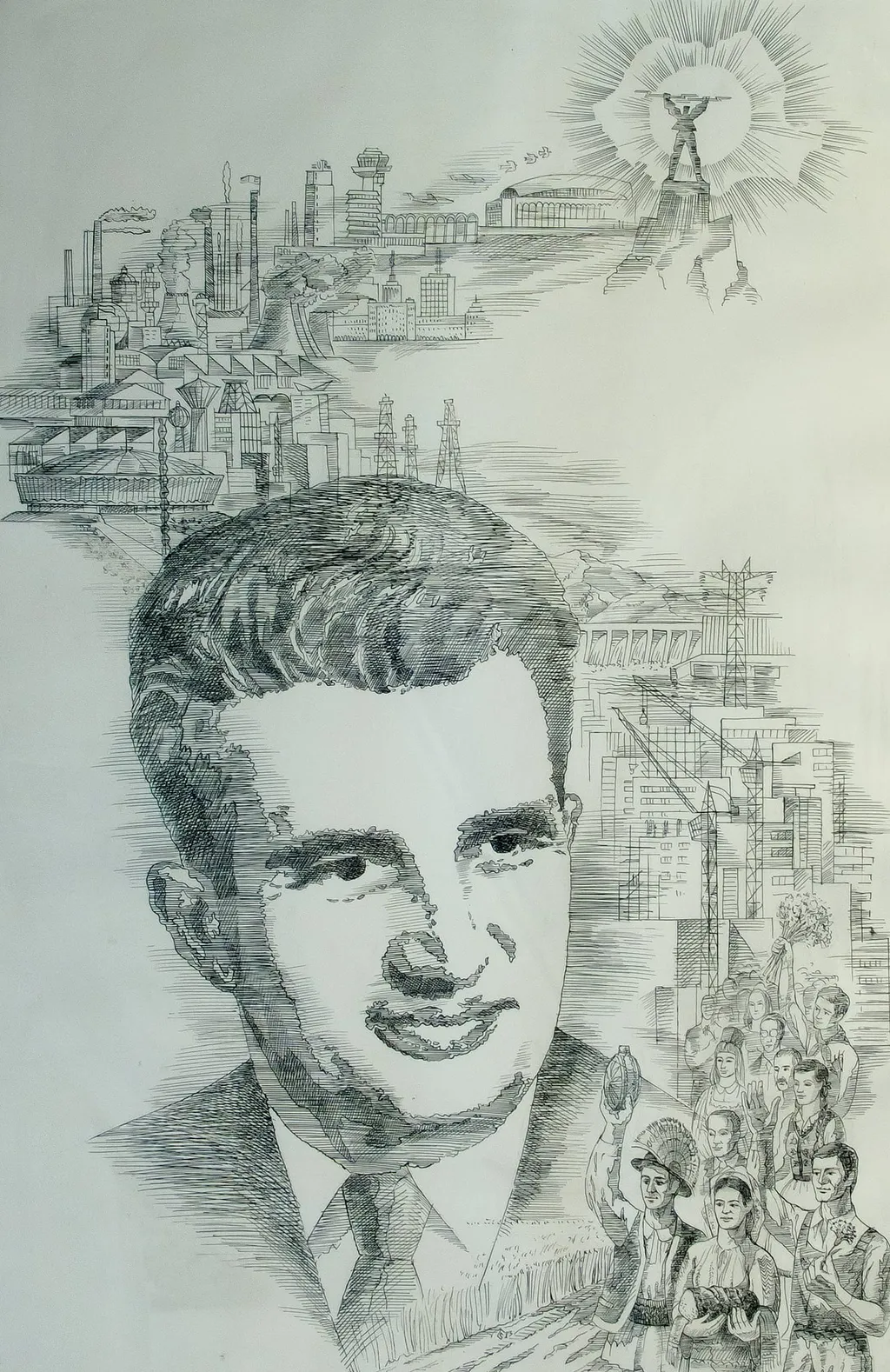
Tablou, desen cu tuș, portret Nicolae Ceaușescu pe fundal industrial, nesemnat, nedatat; atribuit lui Levente Csutak. Fundalul industrial este prezentat sub forma unui drum al realizărilor socialismului - la baza drumului stau oamenii muncii, continuă cu realizările: fabrici, uzine, combinate, hidrocentrala de la Porțile de Fier, clădirea Circului de Stat, Sala Palatului, statuia lui Prometeu de la Barajul Vidraru este luminată de un soare în formă de harta RSR. Deși nu este o realizare a socialismului este reprezentată și Coloana Infinitului a lui Brâncuși. Oferit de Comitetul Județean de Partid Brașov (1983). is a print by Levente Csutak. It dates from 1990 and is held in the collection of the National Museum of Romanian History.
About this work
Overview
This unsigned, undated artwork, attributed to Levente Csutak, features a portrait of Nicolae Ceaușescu set against an industrial backdrop symbolizing the achievements of socialism. The composition juxtaposes the communist leader with a visual narrative of national progress.
Subject & Meaning
Notably, Brâncuși's Column of Infinity, a non-socialist achievement, is also included, reflecting a broader national pride narrative.
Nicolae Ceaușescu is prominently depicted in the foreground, while the background illustrates a 'road of socialist achievements' founded on 'working people', progressing through factories, industrial complexes, and notable landmarks like the Iron Gate Hydroelectric Power Station, the State Circus Building, and the Palace Hall. Notably, Brâncuși's Column of Infinity, a non-socialist achievement, is also included, reflecting a broader national pride narrative.
Technique & Style
The artwork combines portrait drawing with a detailed, illustrative industrial landscape, executed in ink. The style blends realism in the depiction of Ceaușescu and the landscapes with symbolic, almost propagandistic, elements, such as the map of Romania shaped as a sun.
History & Provenance
Donated by the Brașov County Party Committee in 1983, the work's actual creation date is estimated around 1990, though it remains unconfirmed due to the lack of signature and date on the piece.
Context
Created during the late communist era in Romania, the artwork reflects the regime's propaganda efforts, highlighting industrial and national achievements under Ceaușescu's leadership. The inclusion of mixed symbols (socialist achievements alongside Brâncuși's modernist art) suggests an attempt to unify national identity with communist ideology.
Legacy
As an example of late socialist realism in Romanian art, the work provides insight into the political and cultural climate of the era. Its legacy is more as a historical artifact than a celebrated artwork in its own right, offering a window into the intersection of art, politics, and national identity in late 20th-century Romania.
Artist & collection
Artist

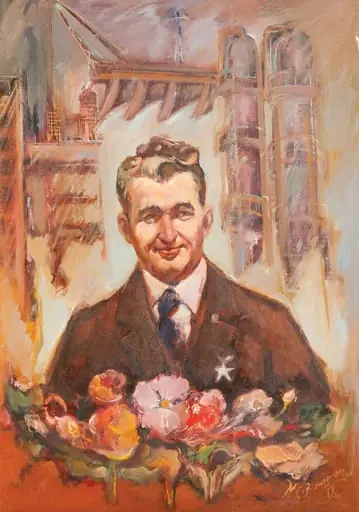 Tablou, ulei pe pânză, „Portret Nicolae Ceaușescu”, semnat C. Radovan și datat în partea dreaptă jos 1978. Nicolae Ceaușescu este reprezentat înt-o atitudine jovială, în piept are însemnul ”Erou al Republicii Socialiste România”. Pe fundal realizări ale regimului comunist. Oferit de Comitetul Județean de Partid Timiș, 22 ianuarie 1978.
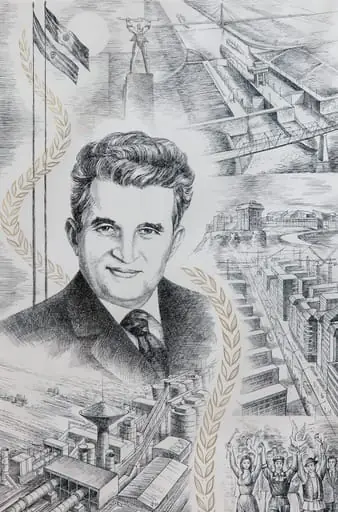 Tablou, tuș pe hârtie, „Ctitorul”, atribuit lui Levente Csutak. Tabloul îl prezintă pe Nicolae Ceaușescu și realizările sale - Canalul Dunăre Marea Neagră, Combinatul Petrochimic Midia Năvodari, Prometeu (statuia de la Barajul Vidraru), modernizarea orașelor - construcția de blocuri de locuințe pentru oamenii muncii. În partea dreaptă jos este reprezentat un grup de oameni entuziaști. Comandat și oferit de Comitetul Județean de Partid Brașov (1983).
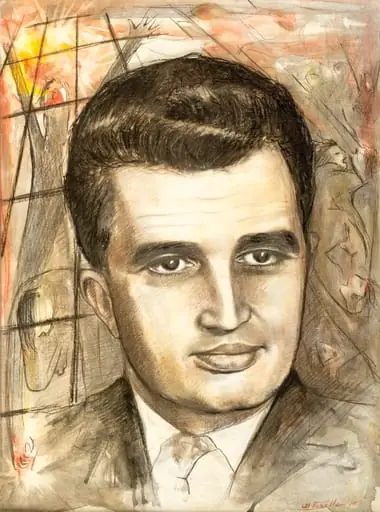 Portret Nicolae Ceaușescu, tablou realixat prin tehnică mixtă, semnat Al. Torella și datat 1975 în partea dreaptă jos.A fost oferit lui Nicolae Ceaușescu de delegația italiană condusă de Benito Craxi cu ocazia vizitei în România din noiembrie 1978
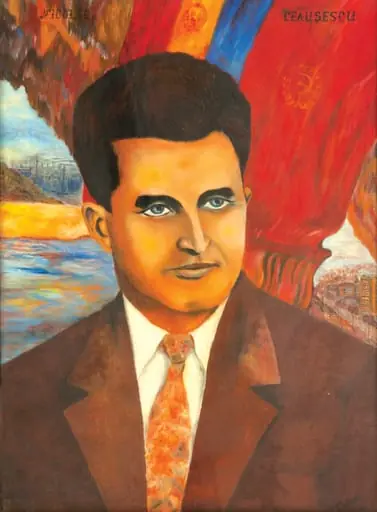 Tablou, ulei pe pânză, ”Portret Nicolae Ceaușescu”, nesemnat, atribuit lui Teodor Istrati. Portret Nicolae Ceaușescu pe fundal steagul cu stema R.S.R. și steagul cu sigla P.C.R., elemente de peisaj urban, inscripție cu majuscule în partea de sus ”NICOLAE CEAUȘESCU”. Oferit de autor lui Nicolae Ceaușescu, București, 25 iunie 1971.
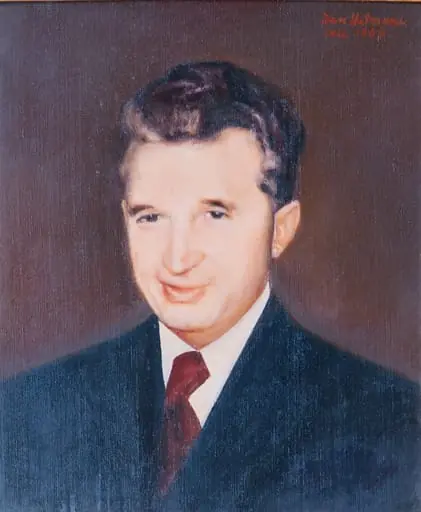 Tablou reprezentându-l pe Nicolae Ceaușescu, semnat Dan Hatmanu. Comandat de Comitetul Județean de Partid Iași și oferit cu ocazia zilei de naștere a președintelui RSR (ianuarie 1989).
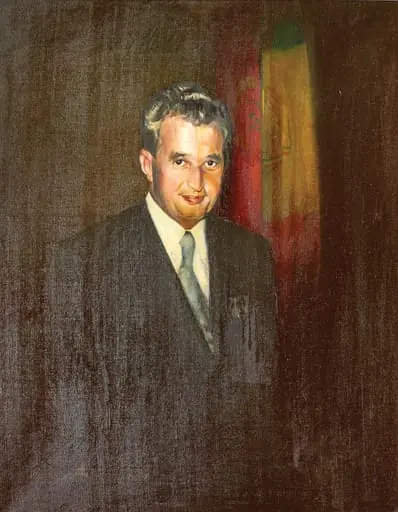 Tablou, ulei pe pânză, Portretul lui Nicolae Ceaușescu, nesemnat, atribiut lui Eugen Palade. Nicolae Ceaușescu cu două însemne de ”Erou al Republicii Socialiste România”, în spatele său steagul cu stema RSR și steagul PCR. Comandat și oferit de Ministerul de Interne, Direcția de Securitate și Gardă, 25 ianuarie 1978.
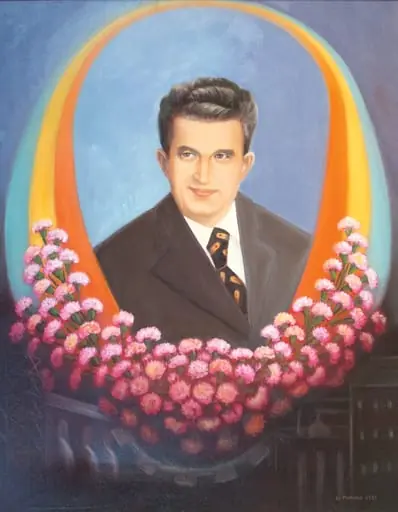 Tablou „Omagiu” semnat N. Porumb și datat în partea dreaptă jos. Tabloul îl reprezintă pe Nicolae Ceaușescu cu tricolorul în spate sub formă de curcubeu; în partea de jos a tabloului o ”mare” de garoafe și realizările socialismului. Comandat de Comitetul Județean de Partid Sibiu și dăruit lui Nicolae Ceaușescu cu ocazia zilie de naștere (ianuarie 1989).
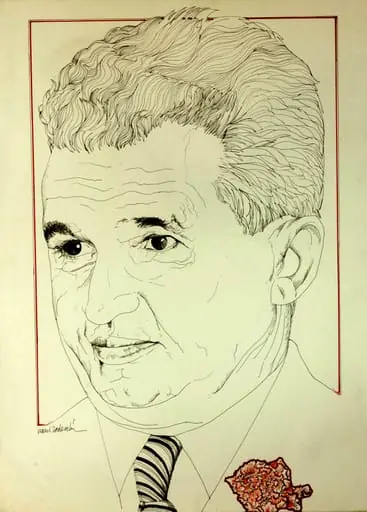 Grafică, portretul lui Nicolae Ceaușescu, semnat stânga jos Nanni Tedeschi, nedatat. Oferit de delegația italiană condusă de Benito Craxi cu ocazia vizitei în România. București, noiembrie 1978.
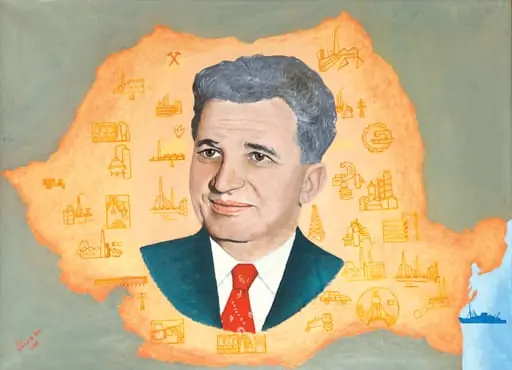 Tablou, ulei pe pânză, portretul lui Nicolae Ceaușescu este redat în mijlocul unei hărți a României, înconjurat de diferite obiective industriale. Comandat și oferit de Comitetul Județean de Partid Alba, 15 octombrie 1981.
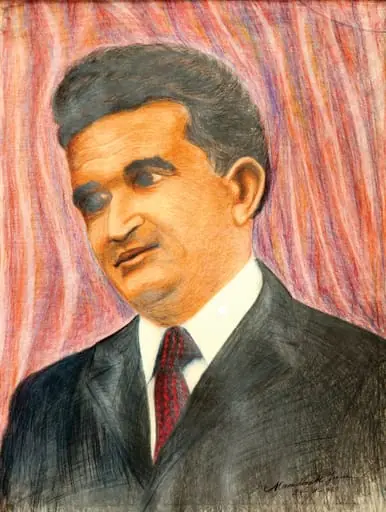 Tablou, desen pe carton, ”Nicolae Ceaușescu”, semnat cu tuș negru Jeana Macedonschi și datat 24.IX.1974, în partea dreaptă jos. Tablou oferit lui Nicolae Ceaușescu de către autor.
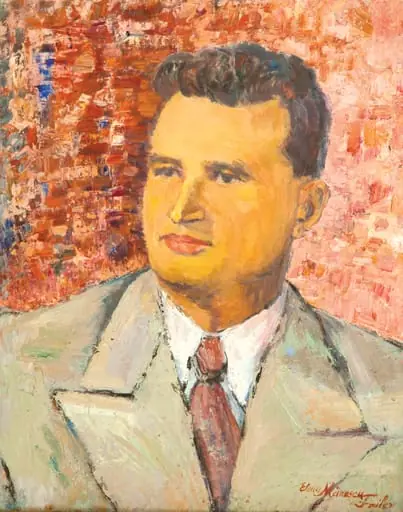 Tablou, ulei pe pânză, ”Portret Nicolae Ceaușescu”, semnat Elena Mănescu-Failer în partea dreaptă jos. Autoarea tabloului a folosit ca sursă de inspirație pentru acest tablou primul portret oficial a lui Nicolae Ceaușescu. Oferit lui Nicolae Ceaușescu de autoare, Elena Mănescu-Failer, 1978.
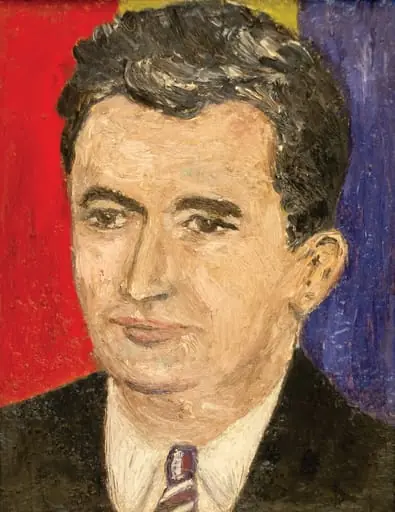 Pablou, ulei pe carton, portret Nicolae Ceaușescu. Oferit lui Nicolae Ceaușescu de Aurica Pânzaru, prof. de matematică fizică din Dorohoi, 23 ianuarie 1978.
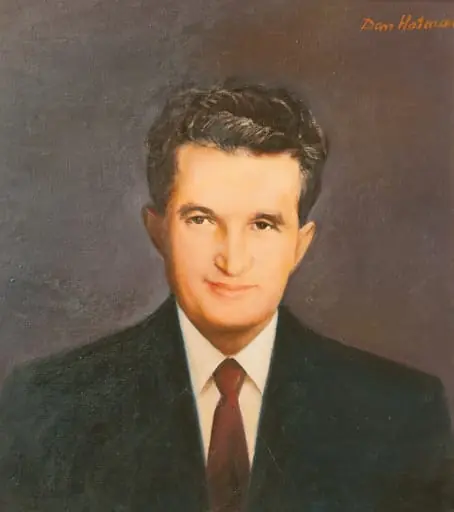 Tablou ulei pe pânză, „Nicolae Ceaușescu” semnat Dan Hatmanu în partea dreaptă sus, nedatat. Comandat de Consiliul Național al Femeilor și oferit cu ocazia aniversării zilei de naștere (ianuarie 1989).
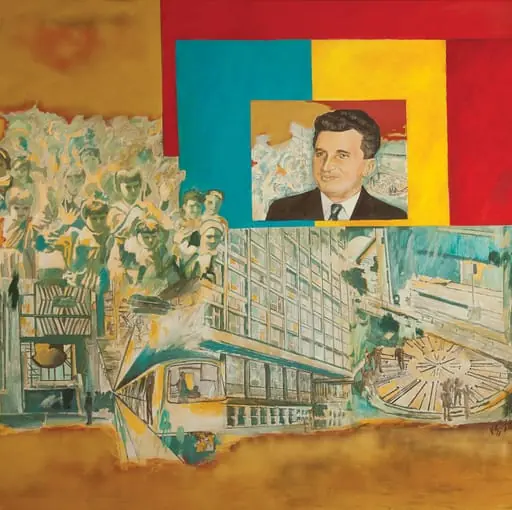 Tablou „Omagiu”, semnat Ion Bitzan și Vladimir Setran.Tabloul prezintă portretul lui Nicolae Ceaușescu încadrat de tricolor în partea dreaptă sus. Restul tabloului este completat de realizările epocii socialiste. Comandat de Comitetul Municipal de Partid 1981.
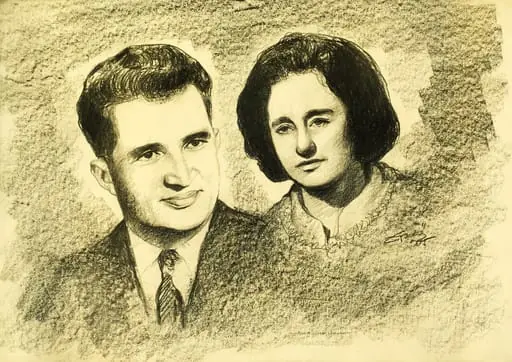 Tablou, desen în cărbune, ”Nicolae și Elena Ceaușescu”, semnat Erdoș și datat în partea dreaptă jos. Comandat și oferit de Comitetul Județean de Partid Satu Mare, 1975.
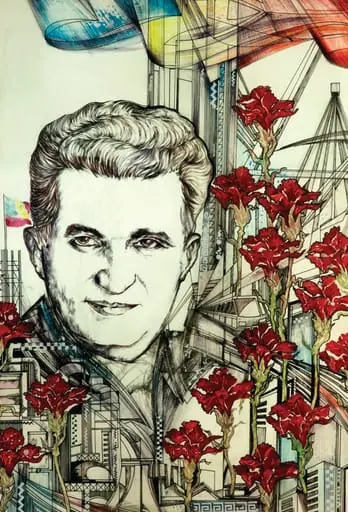 Grafică „Epoca Nicolae Ceaușescu”, tablou atribuit lui Lucian Cociuba. Tabloul îl prezintă pe Nicolae Ceaușescu alături de marile reralizări ale Epocii Socialiste; realizări ornate cu garoafe roșii și tricolor. Comandat de Comitetul Județean de Partid Arad (1988).