Artwork
Scenes from the Life of Saint Lucia
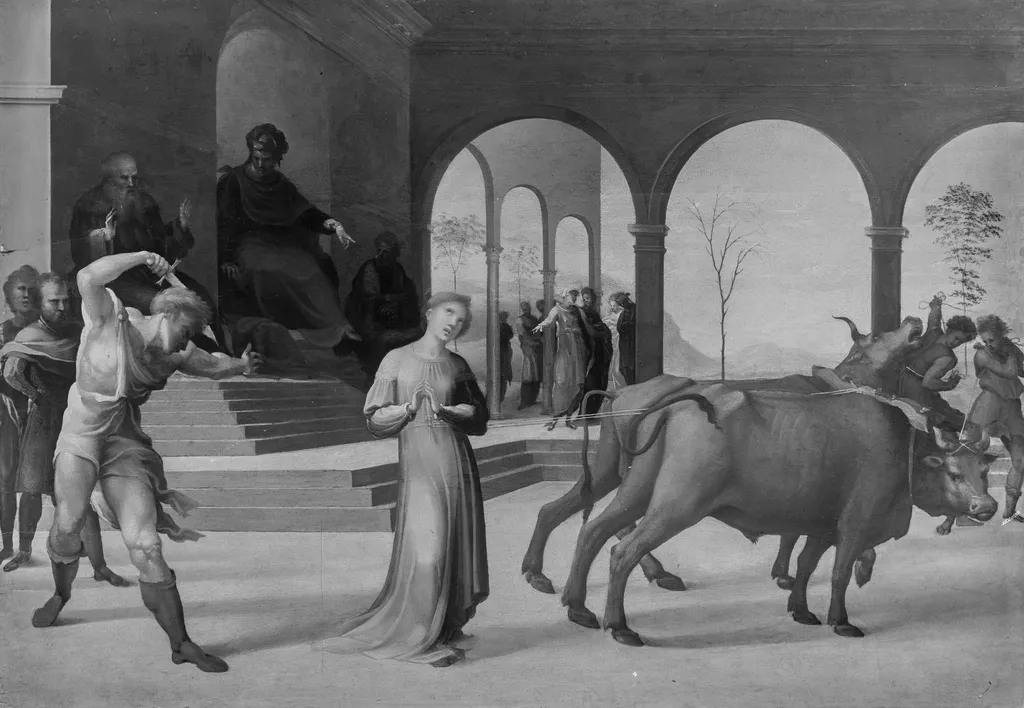
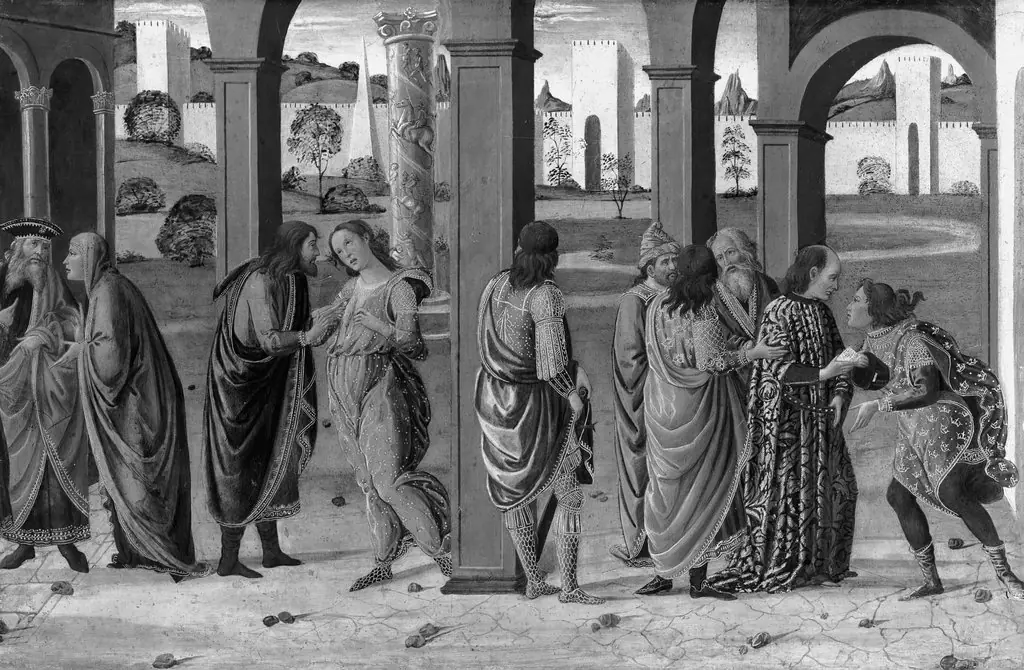
Scenes from the Life of Saint Lucia is a paint painting by the Mannerist artist Domenico Beccafumi. It dates from 1520 and is held in the collection of the Gemäldegalerie Berlin.
About this work
Overview
Executed in tempera or oil on panel, it forms part of a larger devotional cycle now housed in the Gemäldegalerie, Berlin.
Painted in 1520 by Domenico Beccafumi, this work depicts episodes from the life of Saint Lucia. Executed in tempera or oil on panel, it forms part of a larger devotional cycle now housed in the Gemäldegalerie, Berlin. The composition centers on the saint’s martyrdom, rendered with quiet intensity rather than dramatic spectacle, reflecting the artist’s Mannerist tendencies and his interest in spatial depth and psychological nuance.
Subject & Meaning
The painting illustrates the moment when Saint Lucia, refusing to renounce her faith, is led to execution. She stands calmly with hands clasped, her demeanor contrasting with the surrounding figures—some observing, others preparing the sacrificial ox. The inclusion of the cow and rope alludes to the legend that her body could not be moved until divine intervention. The scene conveys steadfastness in the face of persecution, emphasizing spiritual resolve over physical force.
Technique & Style
Beccafumi employs a restrained palette and elongated forms to heighten emotional tension. The figures are arranged in a shallow, architectural space defined by arches and stairs, creating a stage-like setting. Brushwork is precise yet fluid, with attention to textile folds and subtle shifts in light. The background figures are rendered with minimal detail, directing focus to the saint’s stillness amid motion, a hallmark of his Mannerist approach.
History & Provenance
The painting was likely commissioned for a religious institution in Siena, where Beccafumi was active. It entered the Berlin collection in the 19th century, possibly through the acquisition of Italian Renaissance works by Prussian patrons. Its survival through centuries of religious upheaval and political change reflects its enduring value as a devotional object and artistic artifact, though its original context within a larger altarpiece remains partially undocumented.
Context
Created during the High Renaissance’s transition into Mannerism, the work responds to evolving devotional practices in post-Reformation Italy. While Florence and Rome embraced grandeur, Sienese artists like Beccafumi favored intimate, psychologically charged narratives. The depiction of Saint Lucia—a patron of the blind—resonated in a period when personal faith and martyrdom were central to Catholic identity, especially amid growing Protestant critiques.
Legacy
Beccafumi’s treatment of Saint Lucia influenced later Sienese painters through its emotional restraint and spatial complexity. Though less widely known than contemporaries like Raphael, his work contributed to a regional style that prioritized introspection over spectacle. Today, the painting stands as a quiet testament to the persistence of devotional art in a time of religious transformation, valued for its understated power rather than its scale.
Artist & collection

Artist
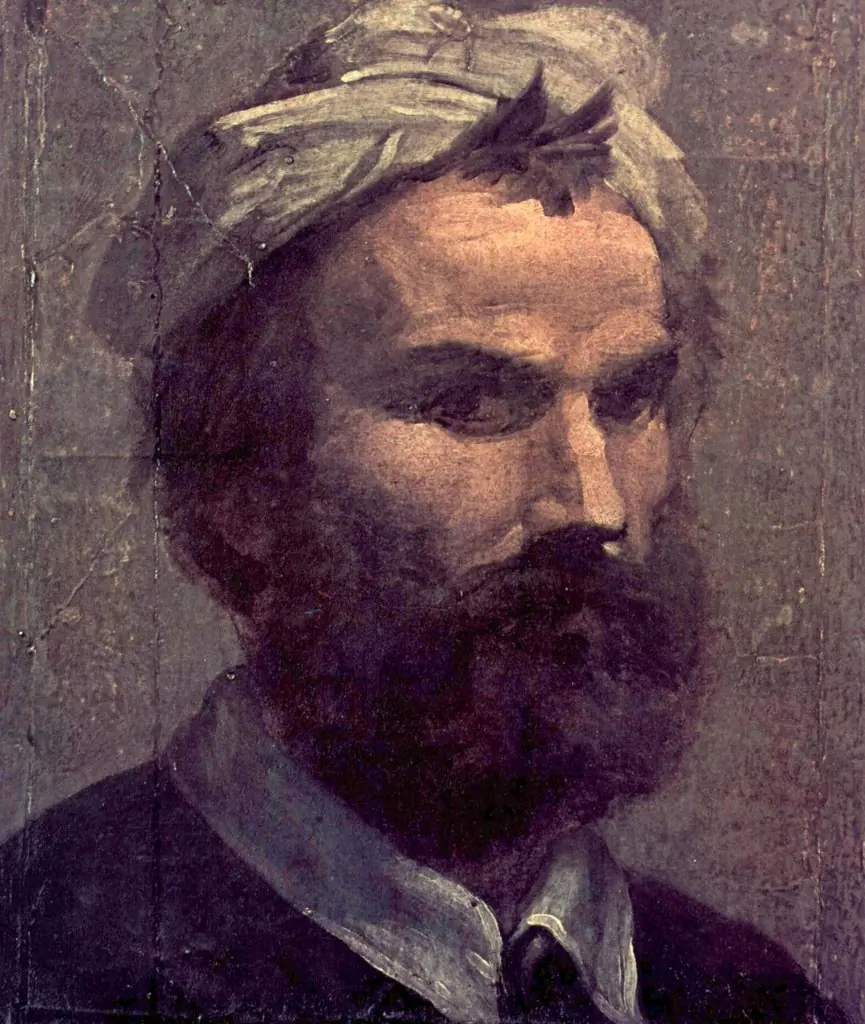
Domenico di Pace Beccafumi (1486 – May 18, 1551) was an Italian Renaissance-Mannerist painter active predominantly in Siena. He is considered one of the last undiluted representatives of the Sienese school of painting.

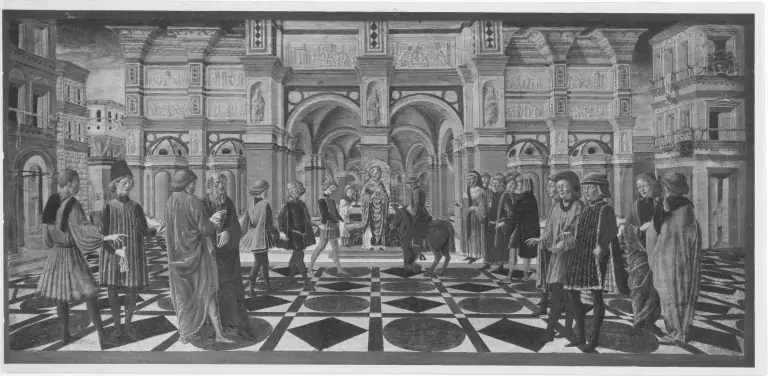 Das Eselswunder des hl. Antonius
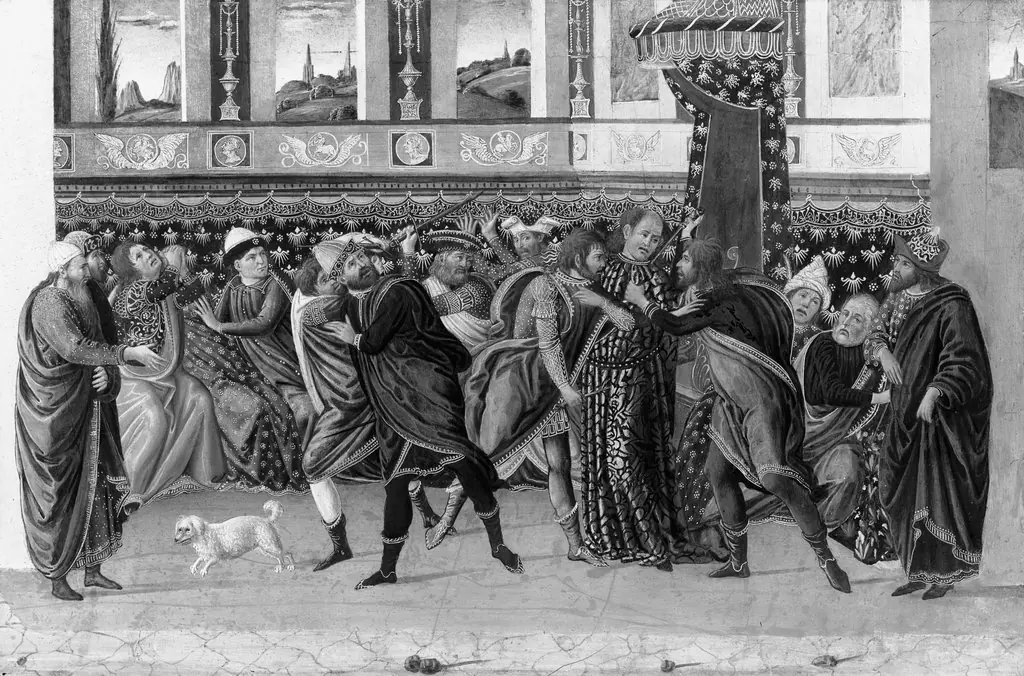 Julius Caesar's assassination
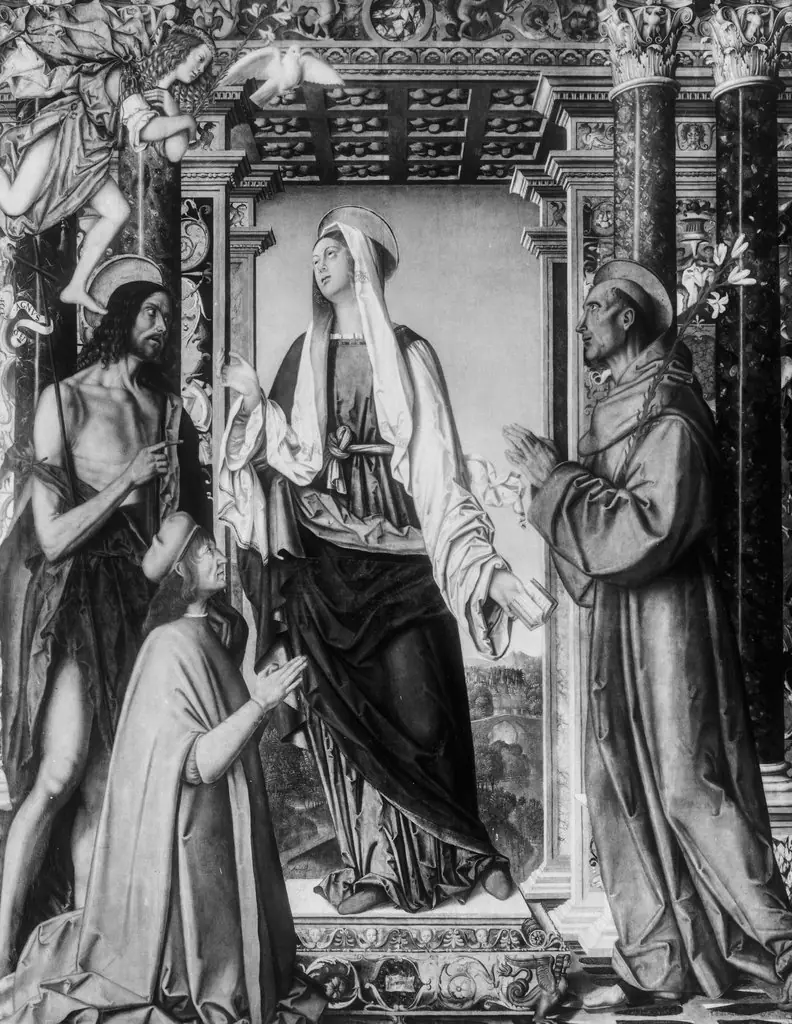 Annunciation to Mary with John the Baptist, Anthony of Padua and a donor
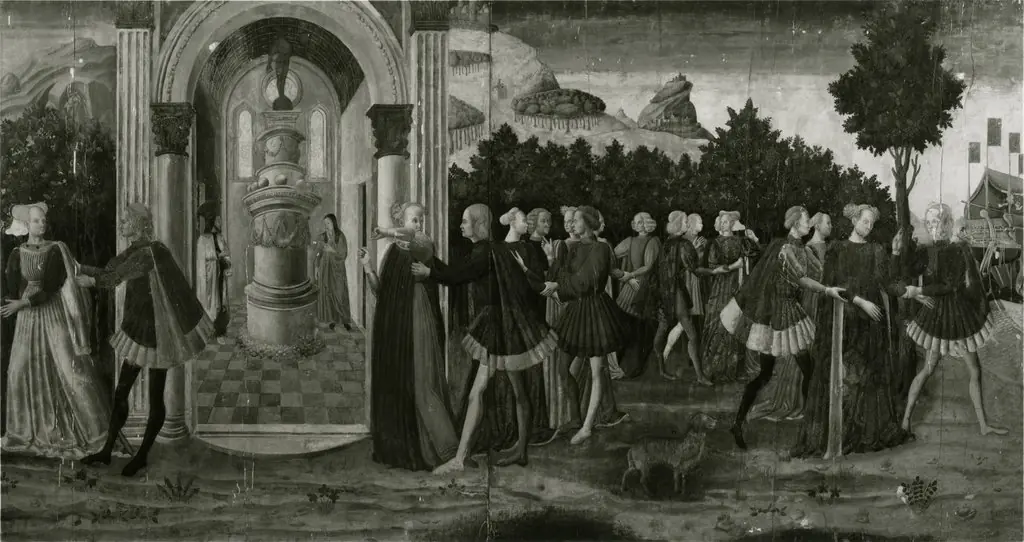 The Abduction of Helen and her Companions
 Bacchus and Ariadne
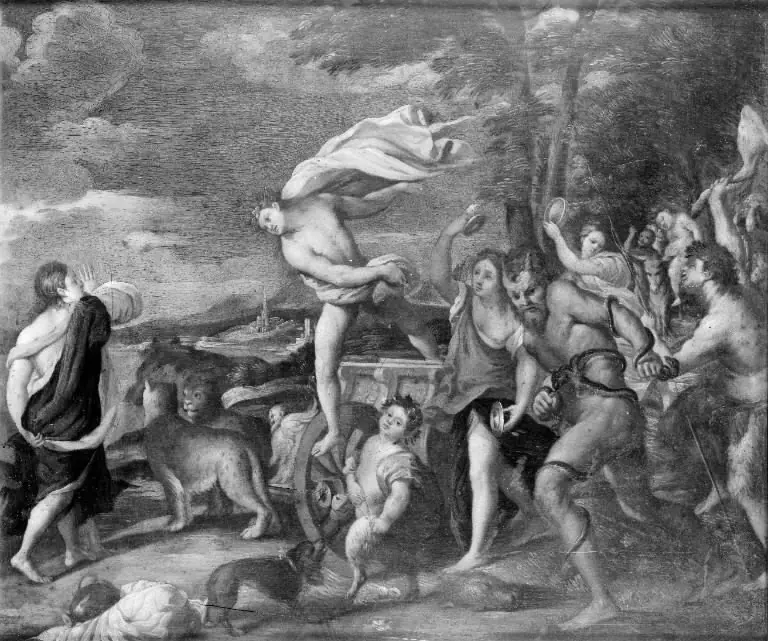 Bacchus and Ariadne
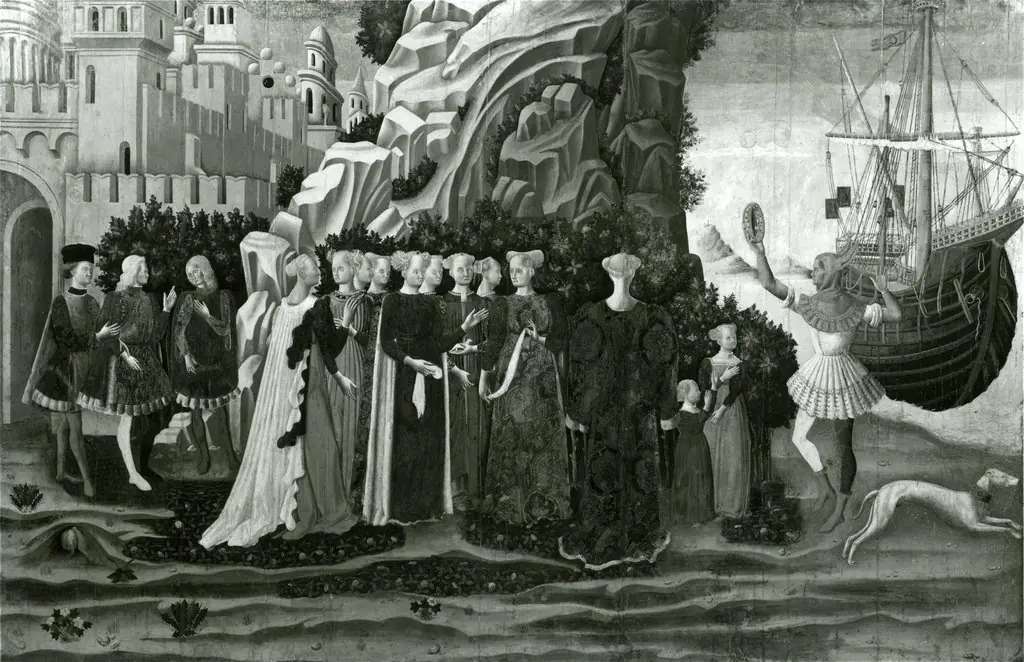 The Embarkation of Helen for Cythera
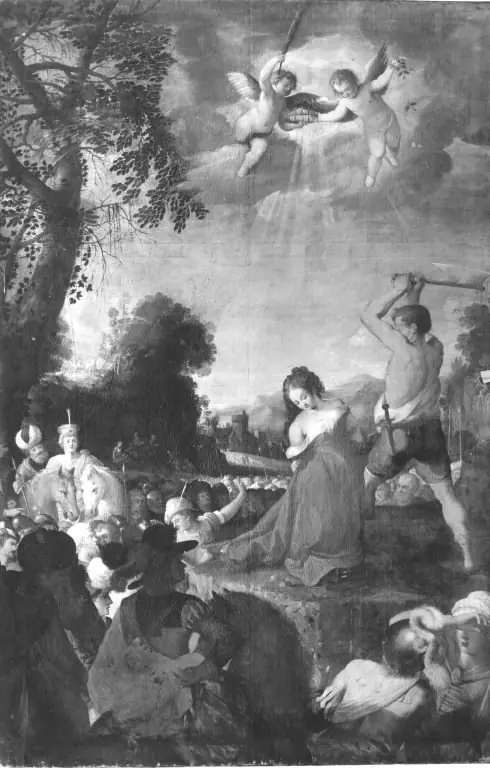 Enthauptung der hl. Katharina (?)
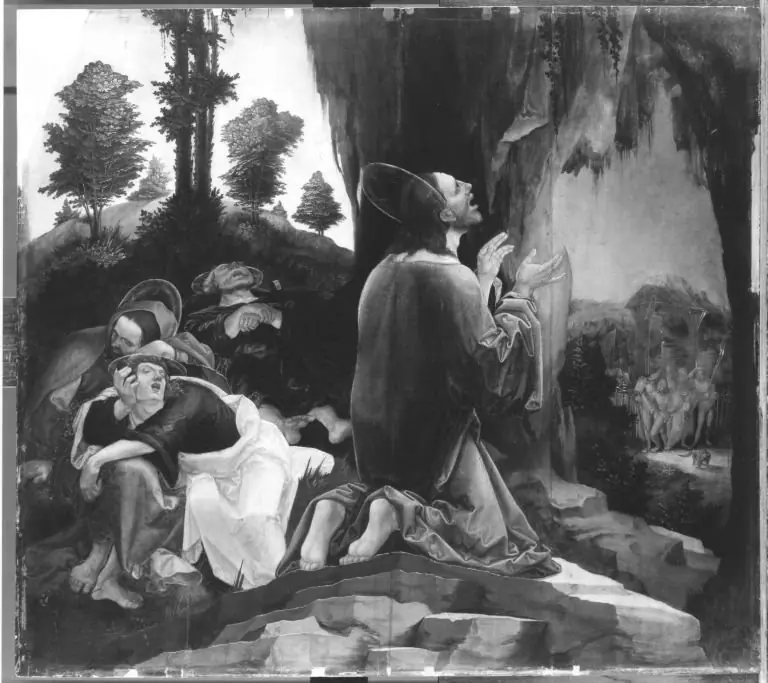 Christus am Ölberg
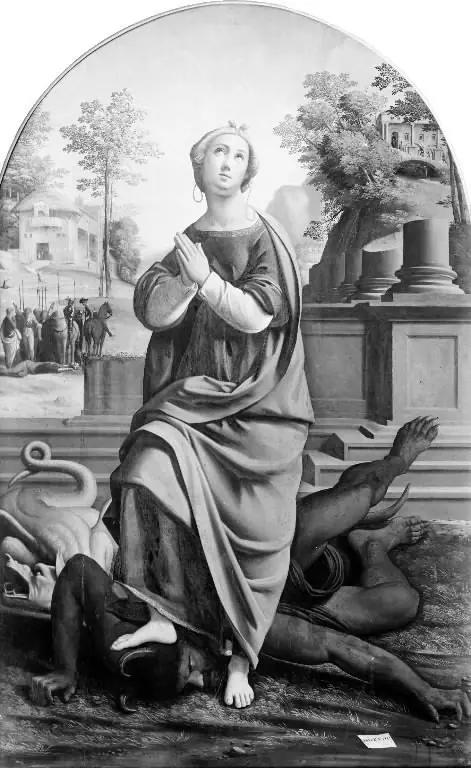 St Margaret
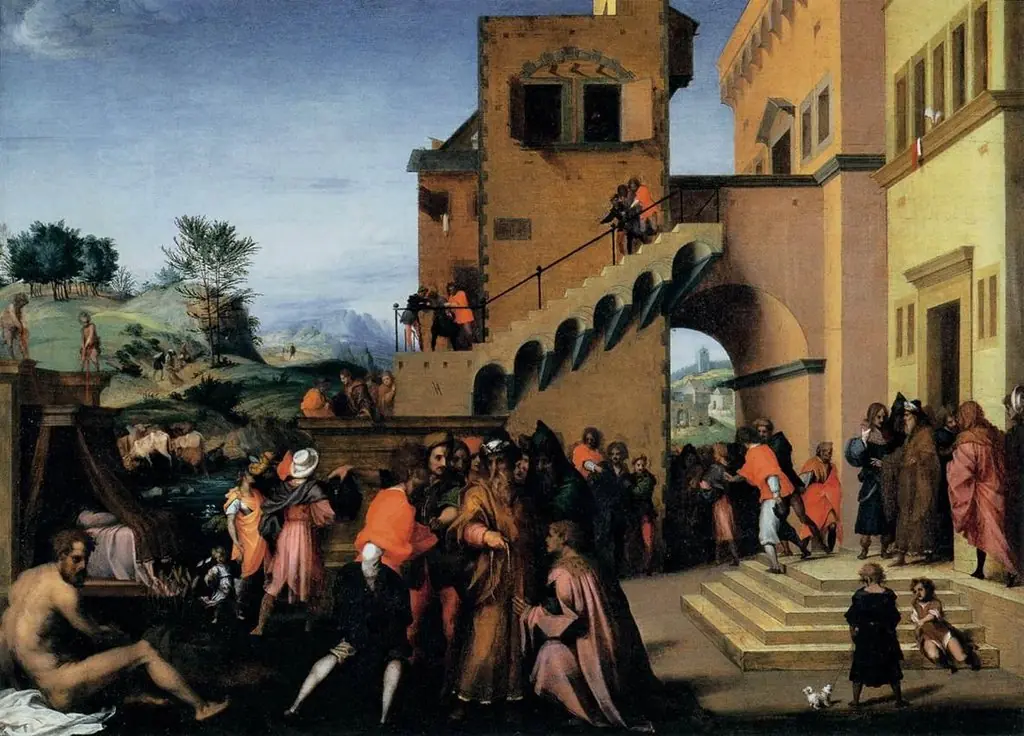 Joseph interpreting Pharaoh's dresm
 Julius Caesar before his assassination