Artwork
Virgin and Child
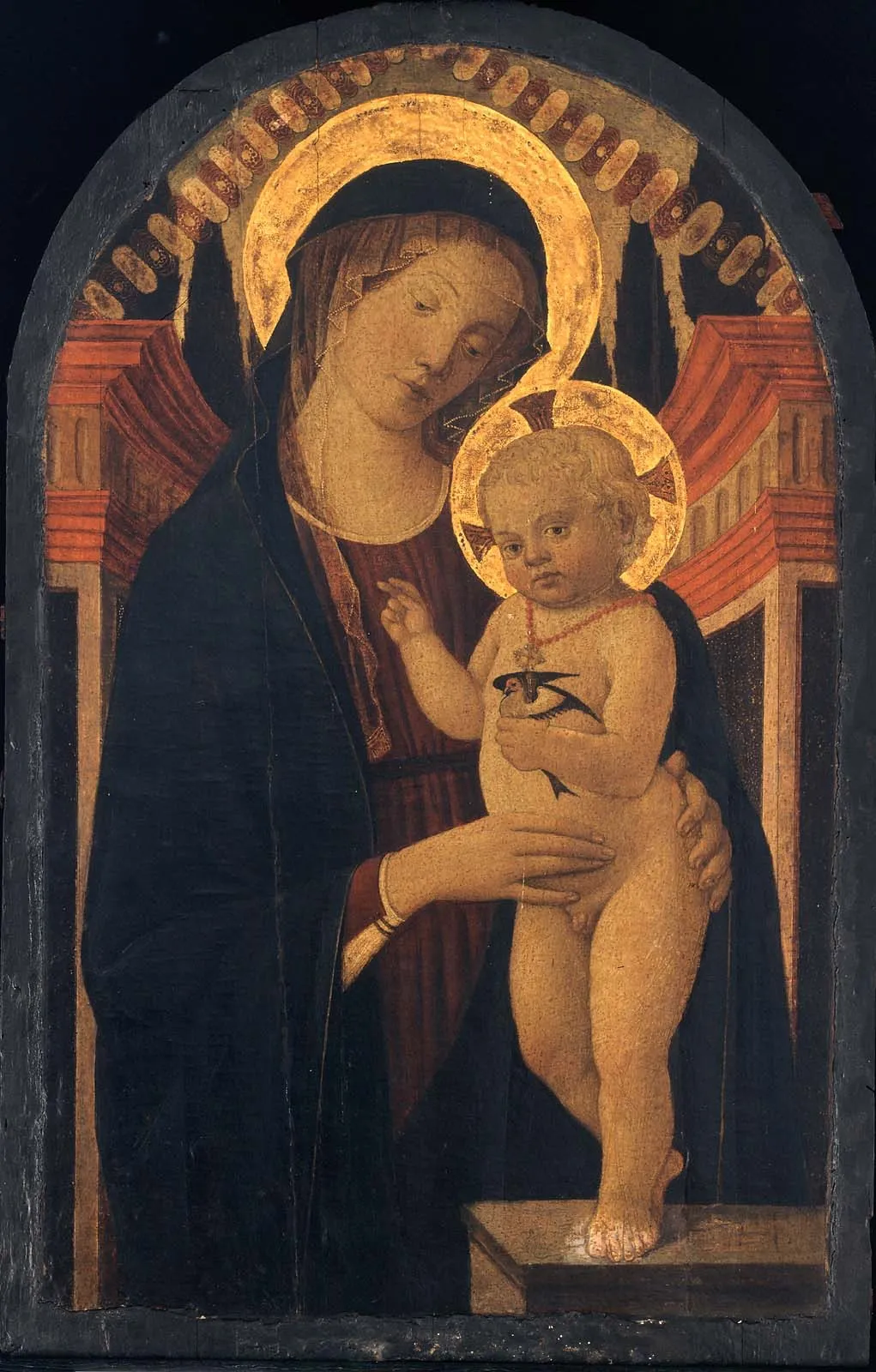
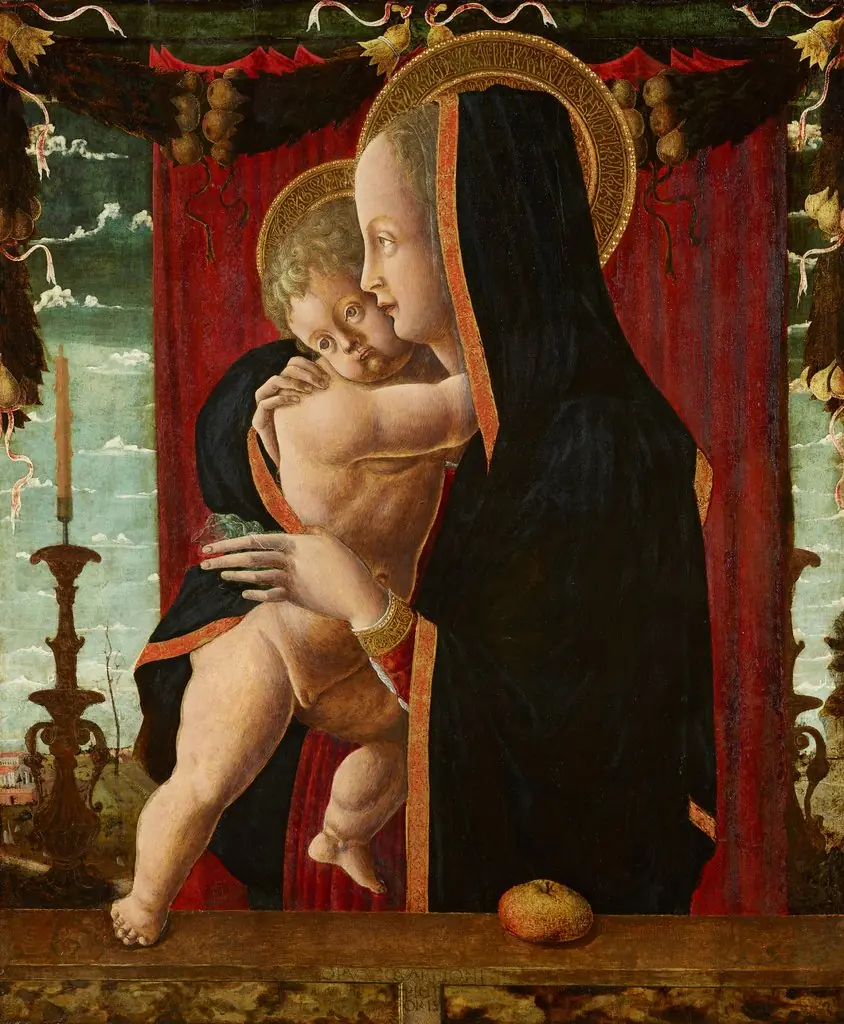
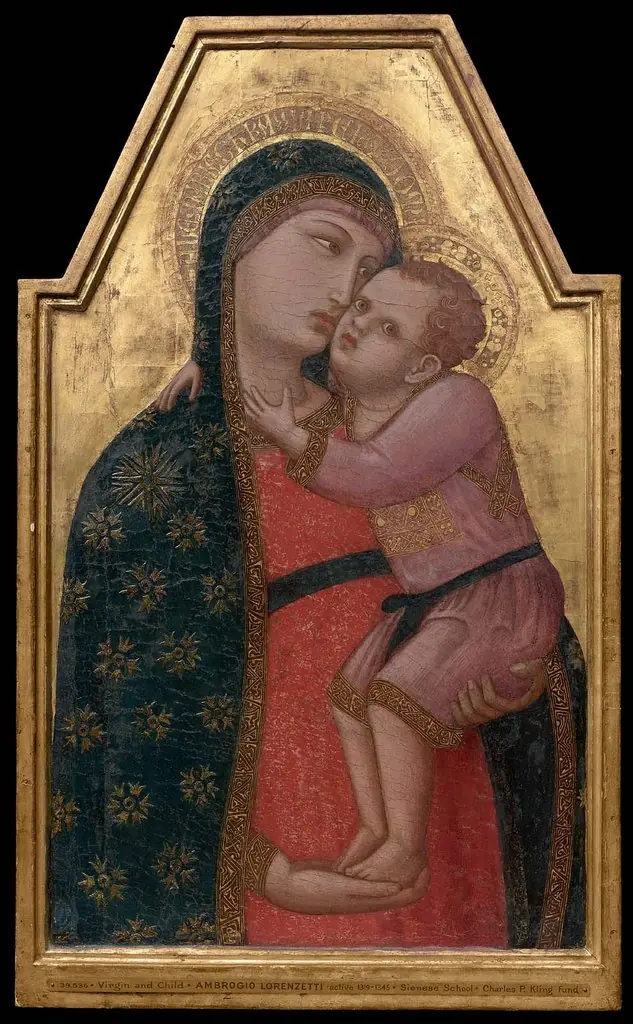
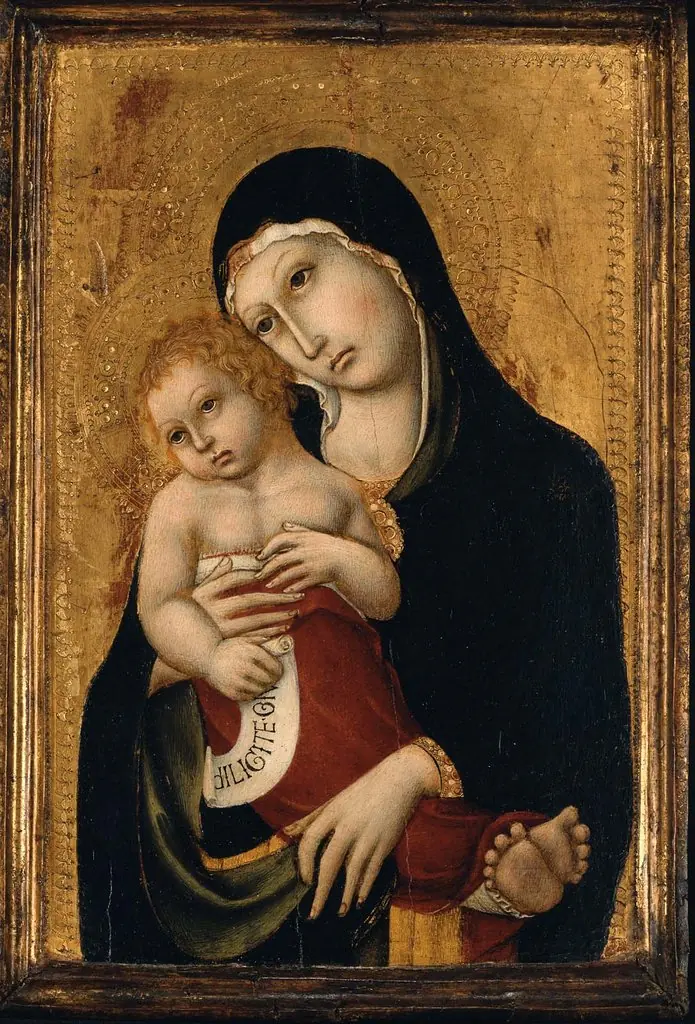
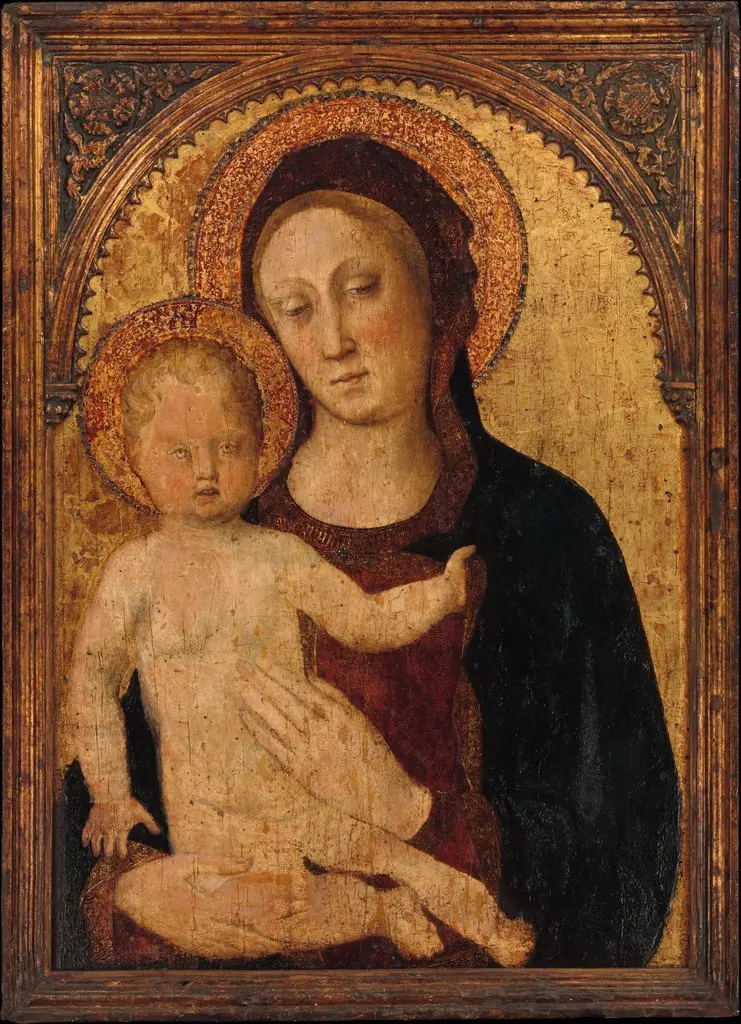
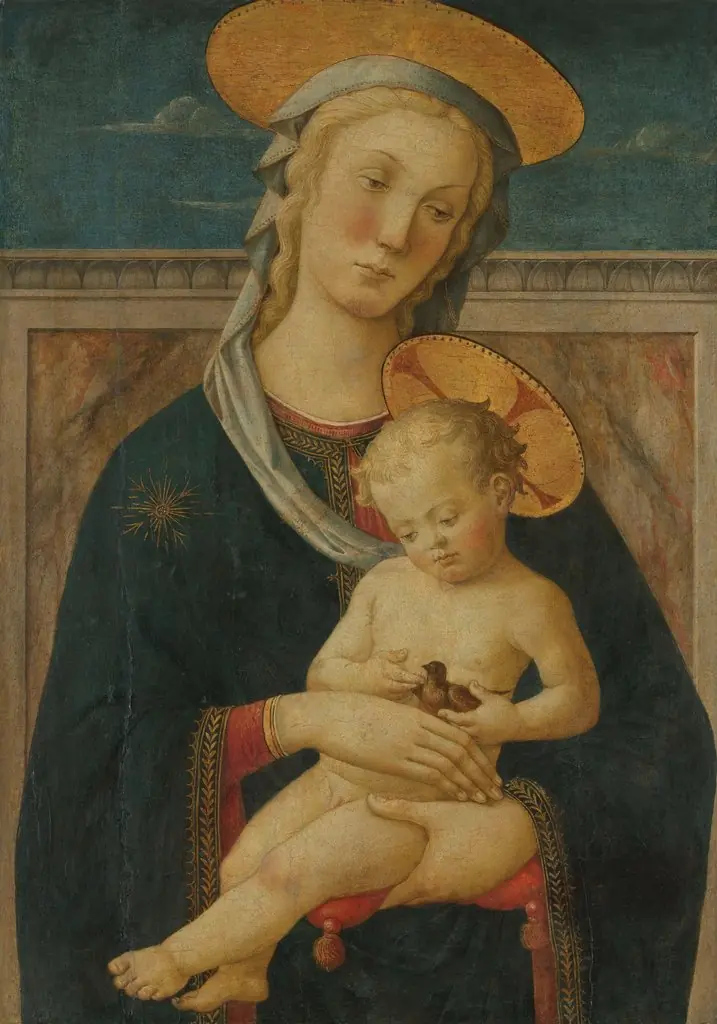
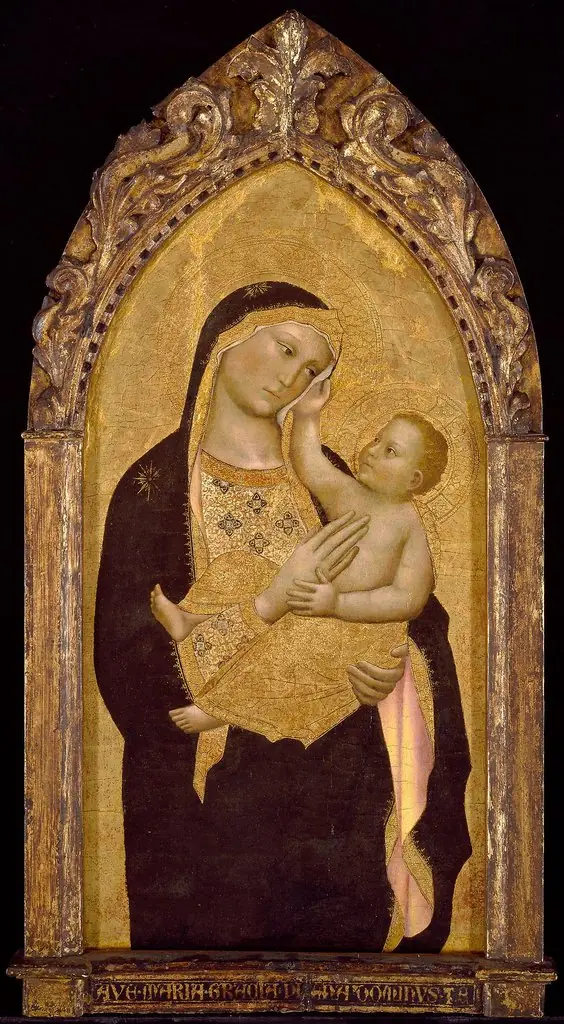
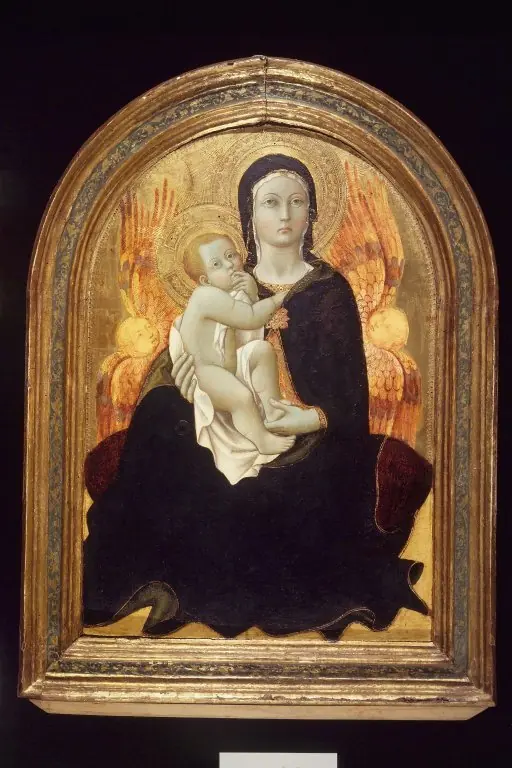
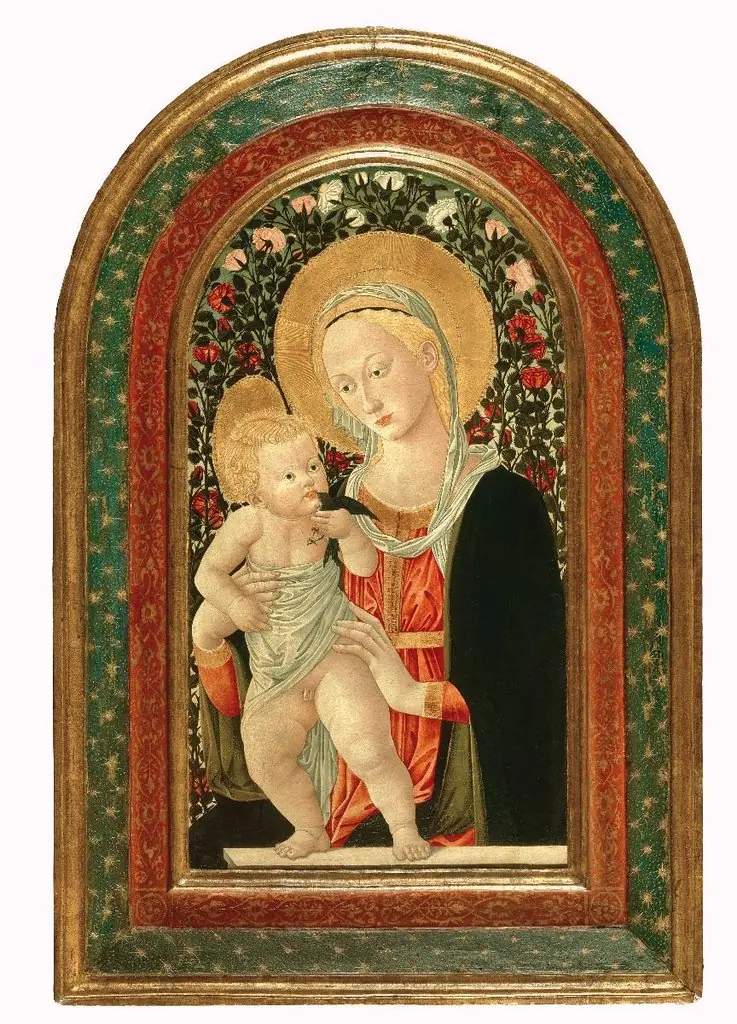
Virgin and Child is an unspecified painting by the Early Renaissance artist Domenico di Zanobi. It dates from 1470 and is held in the collection of the Museum of Fine Arts Boston.
About this work
Overview
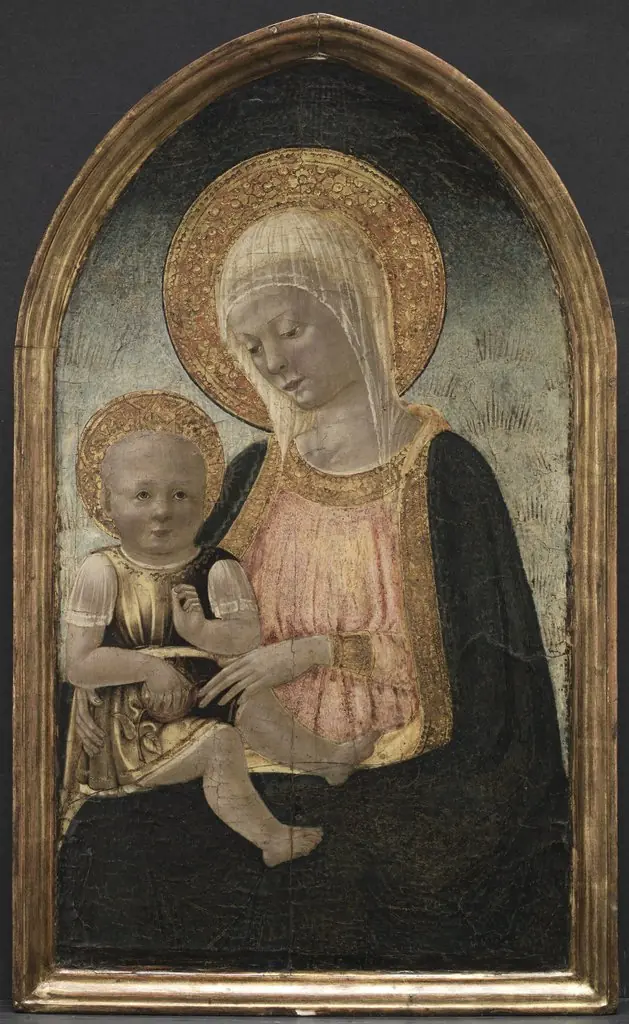
Domenico di Zanobi, an Italian painter active in the late 1460s and early 1470s, produced the panel titled *Virgin and Child* around 1470. The work depicts the Virgin Mary cradling the infant Jesus, both surrounded by luminous halos. It is part of the Museum of Fine Arts, Boston’s collection.
Subject & Meaning
The composition presents Mary in a dark red garment over a lighter blue underlayer, holding a barefoot Christ child whose pale skin contrasts with the deep shadows. The infant’s raised hand and the small object he grasps suggest a gesture of blessing or revelation, a common devotional theme in early Renaissance religious art.
Technique & Style
The painting employs chiaroscuro, with strong light falling on the faces of mother and child, creating a gentle glow against a dark blue background. This handling of light and shadow gives the figures a three‑dimensional presence while the modest architectural element behind them adds depth without distracting from the central figures.
History & Provenance
The work was first linked to Domenico di Zanobi in 1966 by scholar Everett Fahy, who recognized a series of unsigned panels sharing stylistic traits. Since that attribution, the panel has remained in the Museum of Fine Arts, Boston, where it is displayed as an example of early Renaissance devotional painting.
Artist & collection
Artist
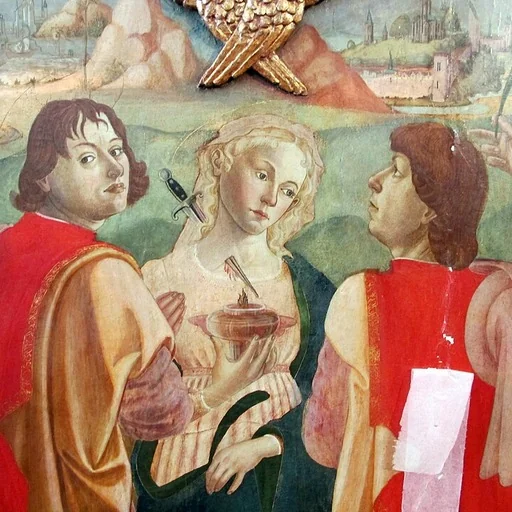
Domenico di Zanobi, formerly known as the Master of the Johnson Nativity, was an Italian Renaissance painter.