Artwork
Dwarf Musicians of Granada
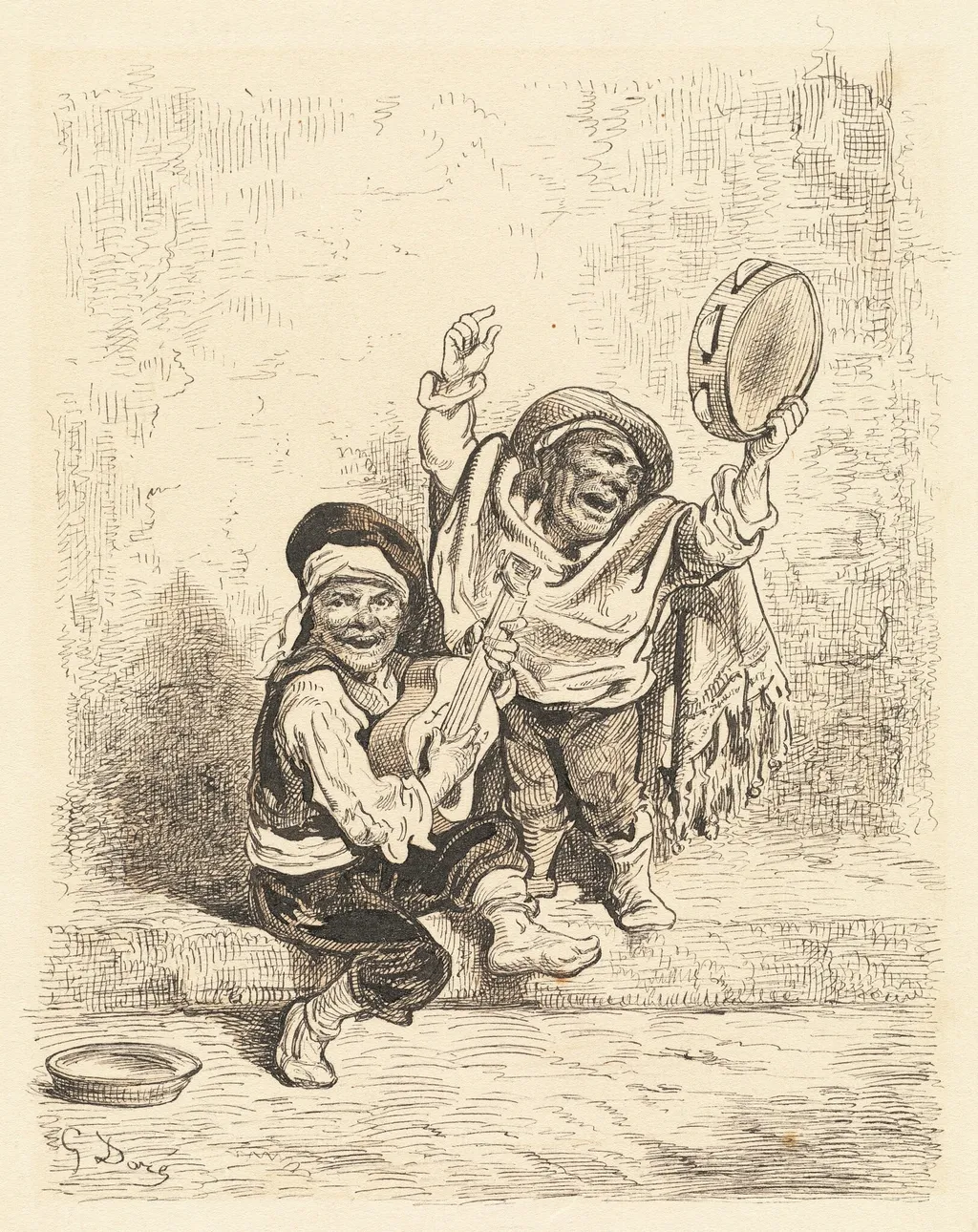
Dwarf Musicians of Granada is an ink drawing by the Impressionist artist Gustave Doré. It dates from 1862 and is held in the collection of the National Gallery of Art.
About this work
The artist used pen, black ink, and light brown wash to create this work, which is now held at the National Gallery of Art, Washington.
The painting is called Dwarf Musicians of Granada.
It was made by Gustave Doré in 1861/1862.
The artist used pen, black ink, and light brown wash to create this work, which is now held at the National Gallery of Art, Washington.
Doré's use of different mediums like pen and ink shows his skill with various techniques.
This work is associated with Impressionism and Realism, two styles that focus on everyday life and accurate representation.
Check out the movement Realism to learn more about this style.
Overview
Dwarf Musicians of Granada is a drawing by Gustave Doré, executed in 1861-1862, utilizing pen, black ink, and light brown wash on wove paper. It is currently part of the collection at the National Gallery of Art in Washington.
Subject & Meaning
The subject depicts a scene of dwarf musicians, set against the backdrop of Granada, implying a focus on everyday life and potentially the social or cultural nuances of the time.
Technique & Style
Doré demonstrated versatility in techniques by combining pen, black ink, and light brown wash. While associated with Impressionism and Realism, the piece's precise execution leans more towards Realist tendencies, emphasizing detailed representation.
History & Provenance
Created between 1861 and 1862, the drawing is now housed at the National Gallery of Art in Washington, D.C., though the full provenance history prior to its current location is not detailed here.
Context
Emerging during a period when Realism and early Impressionist movements were gaining prominence, the work reflects the era's interest in ordinary subjects and meticulous depiction of reality.
Legacy
As a lesser-discussed work by Doré, its legacy is more nuanced, yet it contributes to the broader understanding of the artist's technical range and the transitional artistic climate of the late 19th century.
Artist & collection


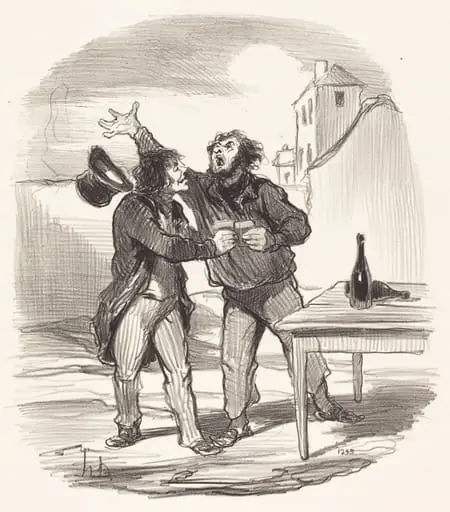 Membre... du dix Décembre prenant le la...
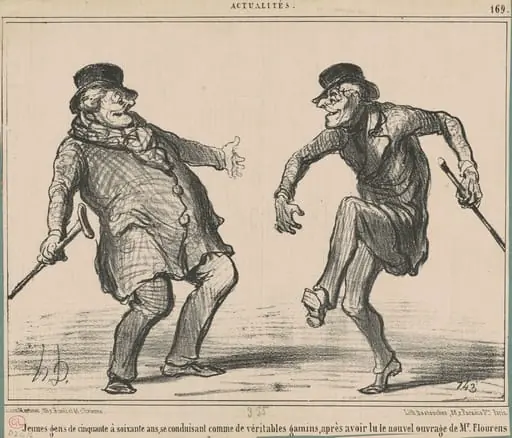 Jeunes gens de cinquante a soixante ans ...
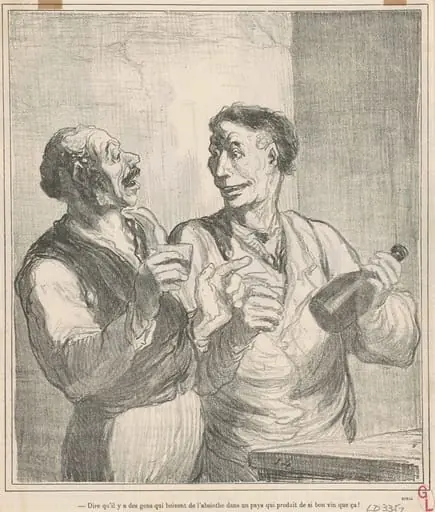 Dire qu'il y a des gens qui boivent de l'absinthe ...
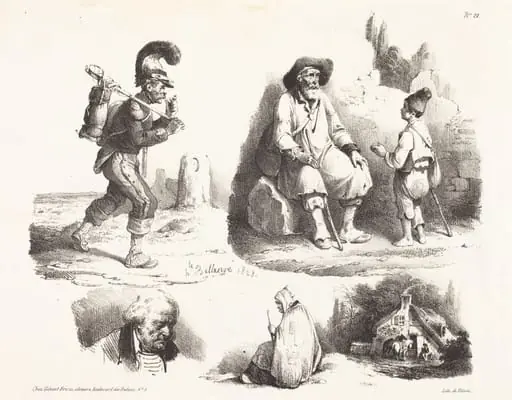 Five Vignettes
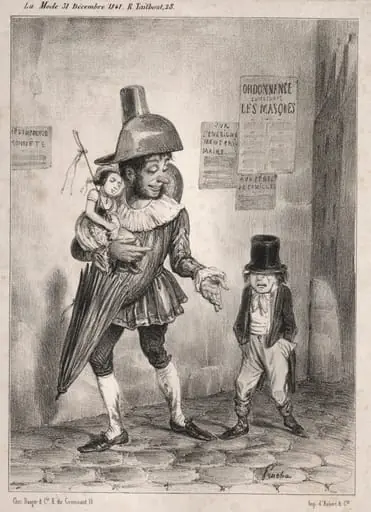 Pochades de carnaval: Vois-tu, si ton maître est bien content de toi et si tu as le prix de sagesse cette année! je te laisserai deguiser en paillasse! ...l'année prochaine!!
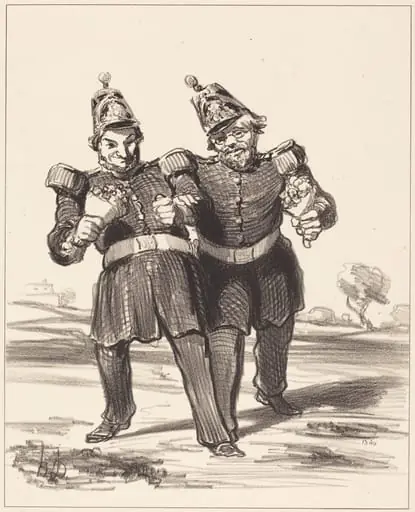 Les Deux banqueteurs en joie
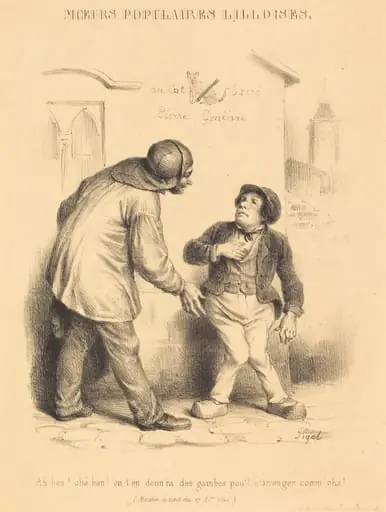 Ah Ben!...
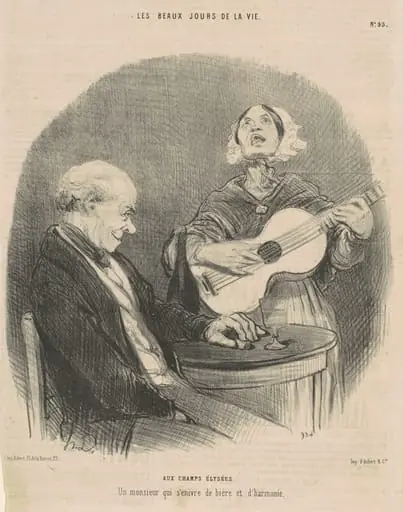 Aux Champs-Elysées
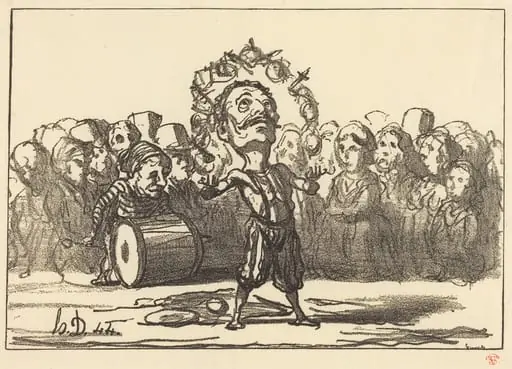 Les saltimbanques
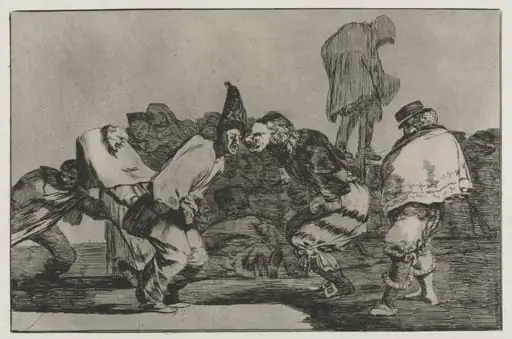 The Proverbs: Carnival Folly