Artwork
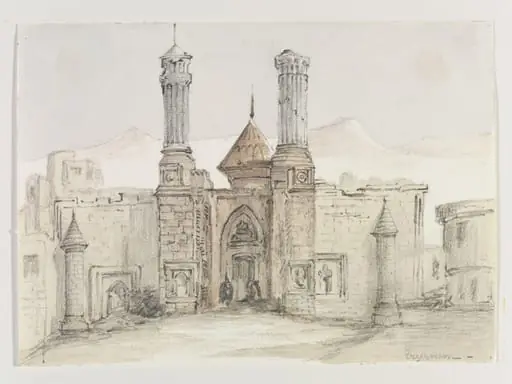
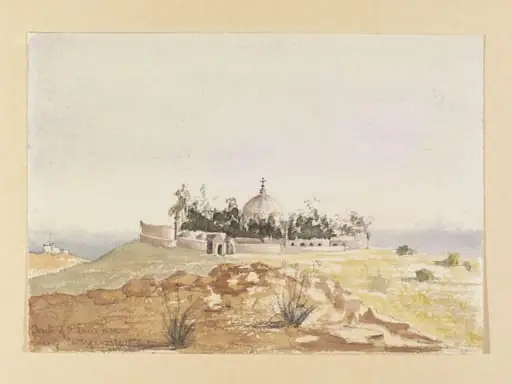
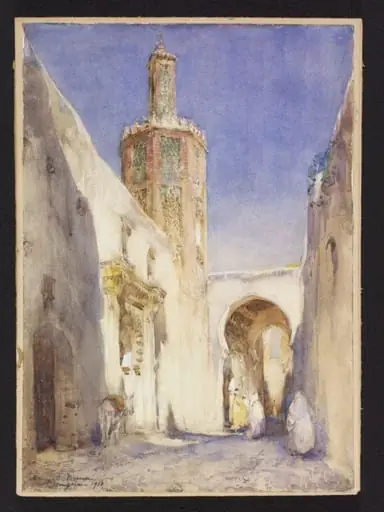
Mosque of Sidi el-hal-lui [Saiyyid al-Halawi] (the cake man) the oldest mosque in Tlemcen
![Mosque of Sidi el-hal-lui [Saiyyid al-Halawi] (the cake man) the oldest mosque in Tlemcen, by John Baptist Joseph Dormer, watercolor, 1870](https://artifactworldgallery.com/img/john-baptist-joseph-dormer--mosque-of-sidi-el-hal-lui-saiyyid-al-halawi-the-cake-man-the--be58e84276206cf9-w1024.webp)
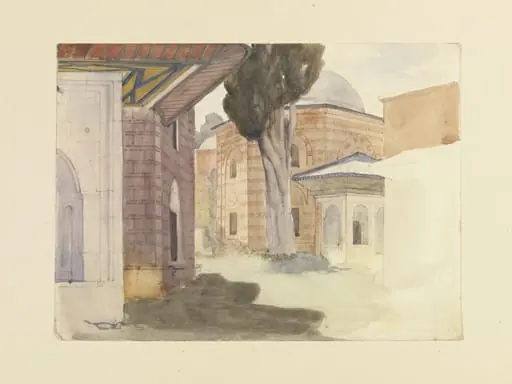
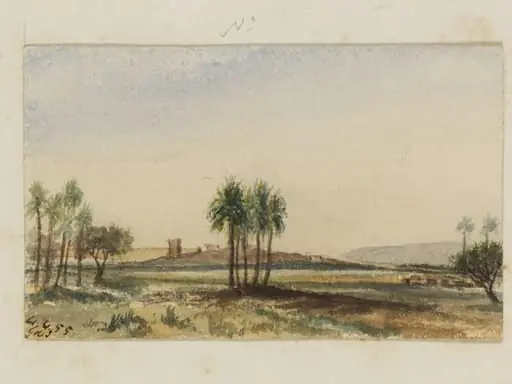
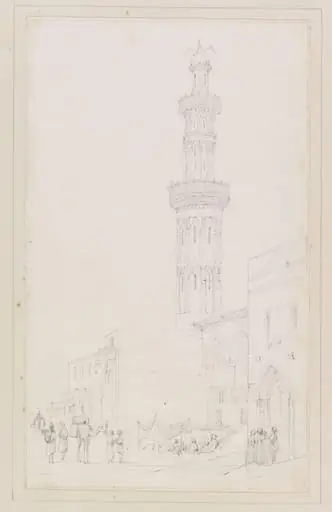
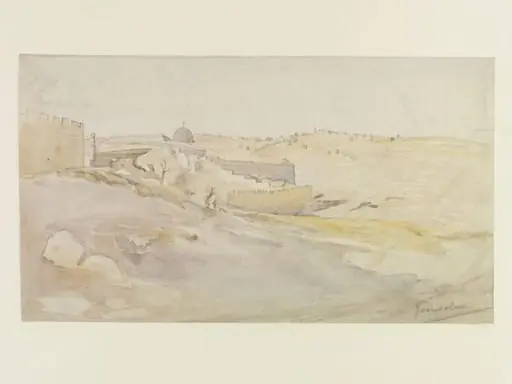
Mosque of Sidi el-hal-lui [Saiyyid al-Halawi] (the cake man) the oldest mosque in Tlemcen is a watercolor work on paper by the Impressionist artist John Baptist Joseph Dormer. It dates from 1870 and is held in the collection of the Victoria and Albert Museum.
About this work
In the background, a tree stands next to a hill with faint outlines of distant buildings.
This sketch shows a simple mosque tower rising over a flat-roofed building. The tower has a small balcony near the top and a simple cross on its peak. In the background, a tree stands next to a hill with faint outlines of distant buildings. The colors are mostly pale—soft browns, greens, and a light sky.
The artist labeled it as the "oldest mosque in Tlemcen," drawn in 1870. The style is loose and quick, like a quick sketch rather than a detailed painting.
Next, look up Dormer, John Baptist Joseph (Sir, 12th Baron) to see more of his work.
Overview
A watercolour sketch from 1870 by John Baptist Joseph Dormer, the 12th Baron Dormer, depicts the Mosque of Sidi el-Hal-lui in Tlemcen. Recognized as the city’s oldest mosque, the work captures the structure with minimal detail, emphasizing its modest form. The artist’s loose brushwork and restrained palette suggest a spontaneous field study rather than a polished composition, reflecting the observational habits of 19th-century travellers documenting architectural sites.
Subject & Meaning
The mosque, dedicated to Sidi el-Hal-lui—locally known as 'the cake man'—is a site of local veneration. Dormer’s sketch focuses on its simple minaret rising above a low, flat-roofed prayer hall, underscoring its unadorned, early character. The inclusion of a tree and distant hills situates the building within its natural and urban context, hinting at its role as a quiet anchor in the landscape rather than a monumental religious center.
Technique & Style
Executed in pale washes of brown, green, and soft blue, the watercolour employs light, rapid strokes that prioritize atmosphere over precision. The minaret’s cross-like finial and balcony are rendered with minimal definition, while the background structures fade into hazy outlines. This sketch-like approach reflects a topographical tradition common among British travellers, valuing immediacy and record over artistic finish.
History & Provenance
Created during Dormer’s travels in North Africa, the sketch is part of a personal archive of architectural studies made in 1870. As a British nobleman with an interest in antiquities, Dormer documented sites across Algeria, including Tlemcen. The work likely served as a personal record, later preserved in family collections, offering a rare visual account of the mosque before modern interventions.
Context
In the 1870s, French colonial administration was reshaping urban landscapes in Algeria, yet many historic structures like this mosque remained relatively untouched. Dormer’s sketch captures a moment before widespread restoration, preserving the mosque’s original scale and setting. His depiction aligns with European travellers’ interest in documenting Islamic architecture as a vanishing heritage.
Legacy
Though not widely exhibited, Dormer’s watercolour contributes to a small corpus of 19th-century visual records of Tlemcen’s early Islamic architecture. Its simplicity offers insight into how foreign observers perceived local religious sites—not as grand monuments, but as humble, integrated elements of daily life. The sketch remains a quiet testament to the mosque’s enduring, unassuming presence.
Artist & collection
Artist
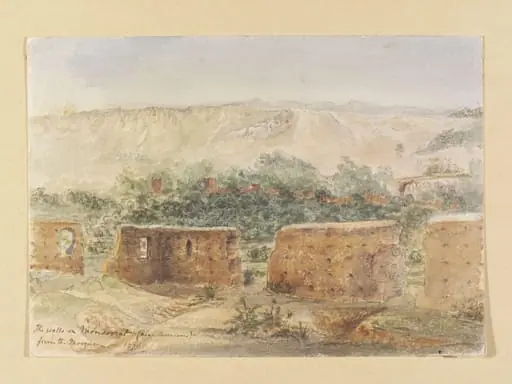
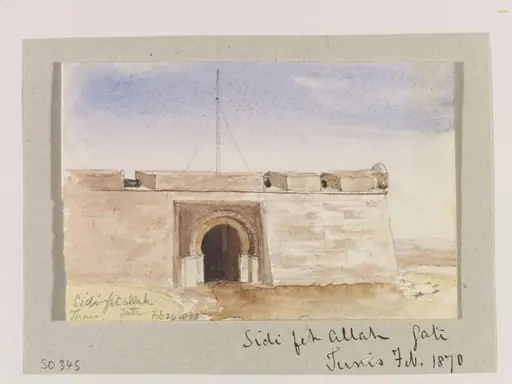
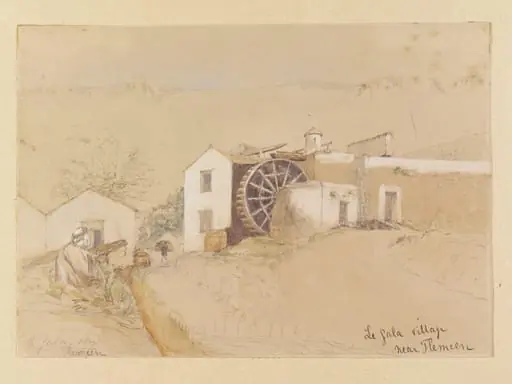
John Baptist Joseph Dormer painted North-African watercolors in the 1870s. He shows the Mosque walls on Monsoorat, the Sidi fet allah gate in Tunis, and the oldest mosque in Tlemcen. Each sheet records a town, a gate,…