Artwork
Façade, Temple of Augustus and Livia, Vienne
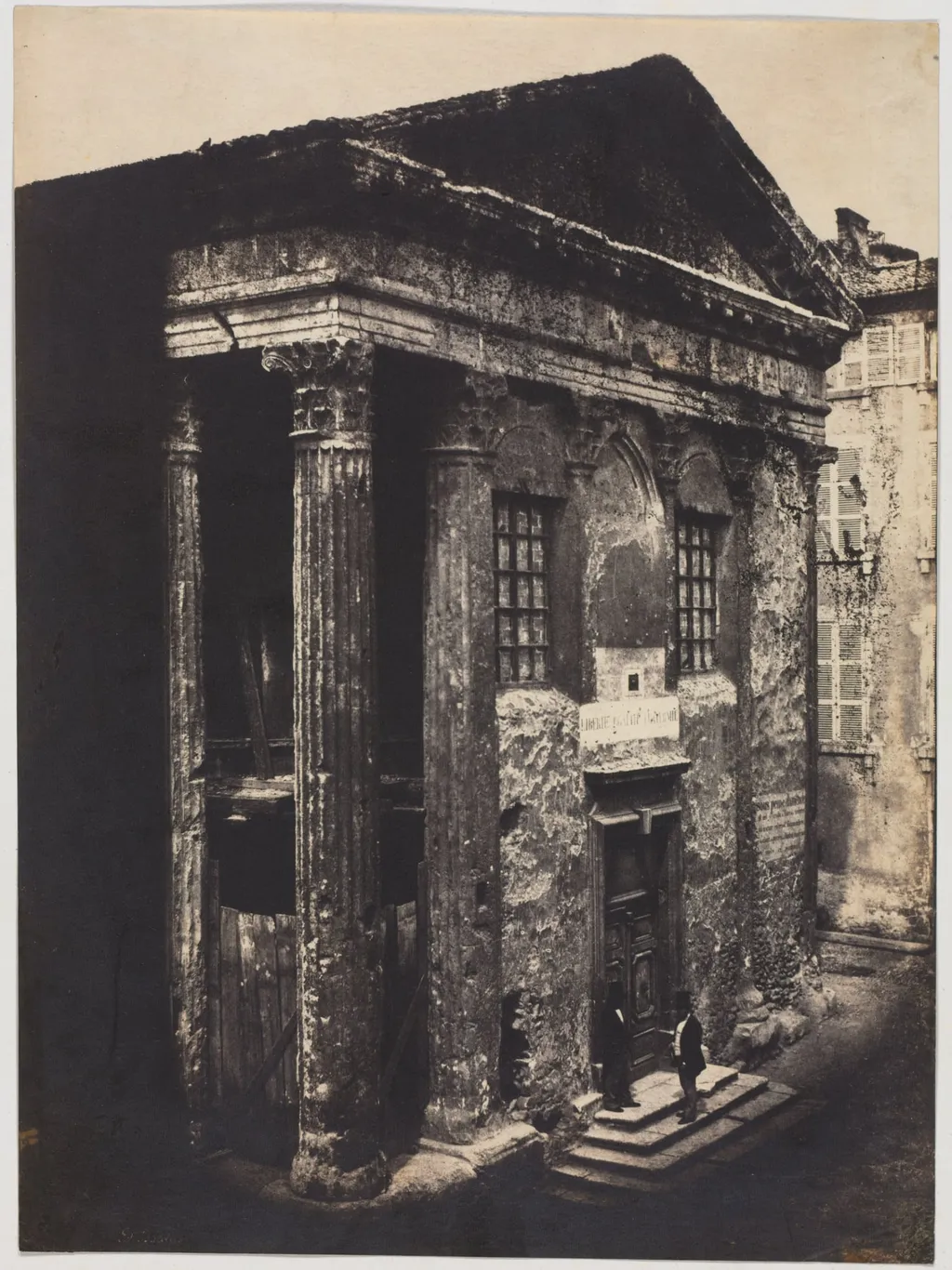
Façade, Temple of Augustus and Livia, Vienne is a photography by the Impressionist artist Édouard Baldus. It dates from 1851 and is held in the collection of the Cleveland Museum of Art.
About this work
Overview
The image is held in the collection of The Cleveland Museum of Art, where it is valued for its historical precision and tonal subtlety.
This photograph, taken by Édouard Baldus in 1851, captures the front elevation of the Temple of Augustus and Livia in Vienne, France. It is one of the earliest photographic records of the ancient Roman structure, made during a period when photography was beginning to serve documentary and archival purposes. The image is held in the collection of The Cleveland Museum of Art, where it is valued for its historical precision and tonal subtlety.
Subject & Meaning
The temple, dedicated to the imperial cult of Emperor Augustus and his wife Livia, stands as a symbol of Roman authority in provincial Gaul. Baldus’s photograph emphasizes its enduring presence through the weight of its stonework and the erosion of time. The composition avoids romanticism, instead presenting the monument as a silent witness to centuries of change, its form preserved yet weathered by nature and history.
Technique & Style
Baldus employed the wet collodion process, which allowed for sharp detail and extended tonal range. The image is rendered in monochrome, with deep shadows accentuating the architectural depth of the columns and entablature. Light falls unevenly across the surface, highlighting areas of smoother stone while leaving others in muted gray, reinforcing the texture of age and decay without embellishment.
History & Provenance
The temple, constructed in the early first century CE, was repurposed over centuries before being excavated in the 19th century. Baldus photographed it during a wave of archaeological interest in Roman ruins. The photograph entered the Cleveland Museum of Art’s collection in the 20th century, where it remains as part of a broader effort to preserve early photographic documentation of antiquities.
Context
In the 1850s, photography emerged as a tool for recording cultural heritage, especially in France, where state-sponsored surveys of monuments were underway. Baldus was among the first to apply the medium systematically to architectural subjects. His work contributed to scholarly understanding of Roman architecture and influenced later preservation efforts across Europe.
Legacy
Baldus’s photograph of the temple set a precedent for architectural documentation, prioritizing accuracy over aesthetic idealization. It remains a reference for archaeologists and historians studying the temple’s original form. The image also illustrates photography’s early role in shaping public and academic perceptions of antiquity, grounding historical study in visual evidence rather than interpretation alone.
Artist & collection

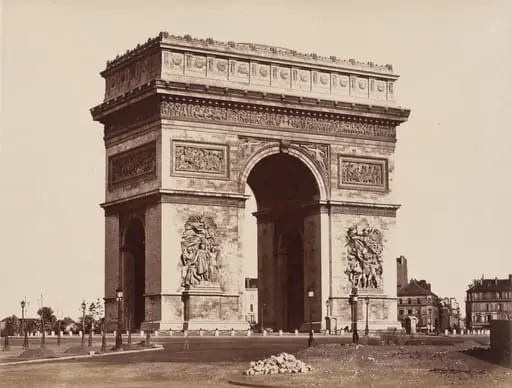 Arc de Triomphe de l'Etoile, Paris
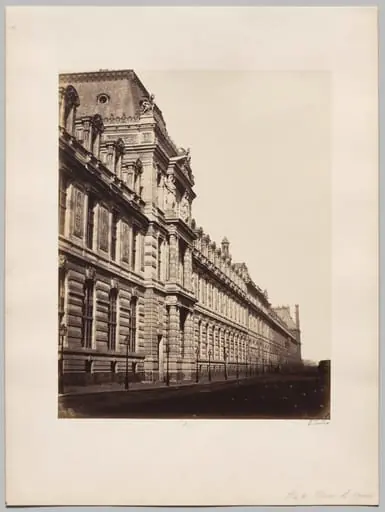 Louvre, Façade rue de Rivoli, Paris
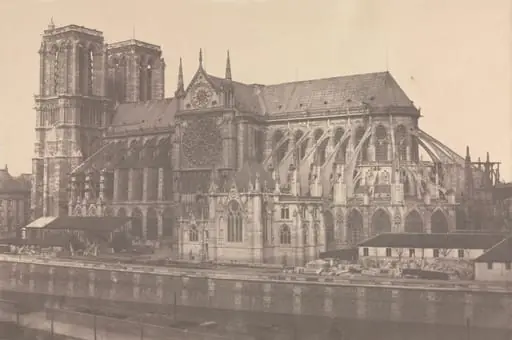 Notre-Dame, Paris
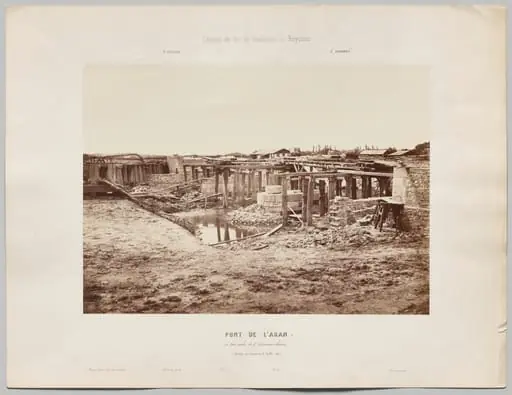 Chemin de fer de Toulouse à Bayonne. Pont de l'Aran (en trois arches de 17m d'ouverture chacune). Situation des travaux au 21 juillet 1861
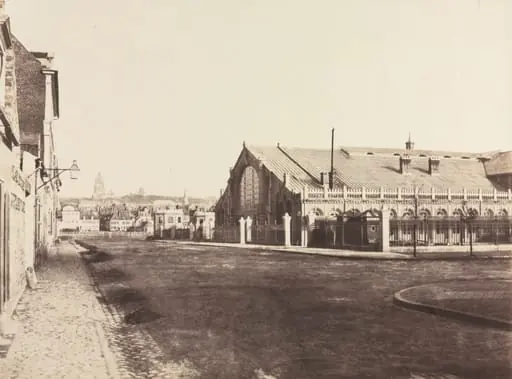 South Gable of the Boulogne Railway Station
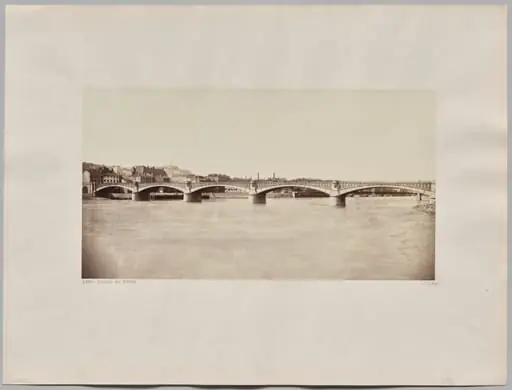 Lyon. Viaduc du Rhône
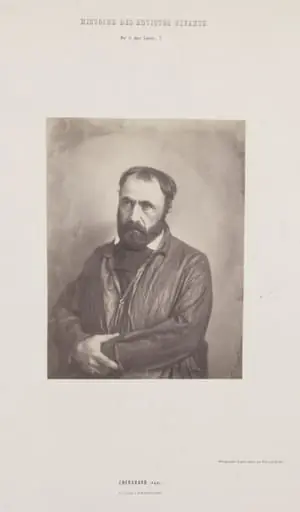 Portrait of Paul Chenavard, from the series "Histoire des Artistes Vivants"
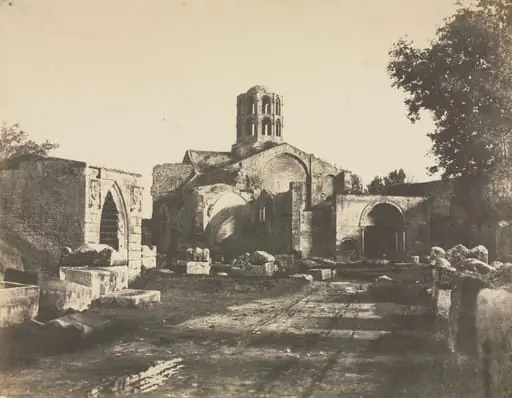 Saint-Honorat, Prés d'Arles
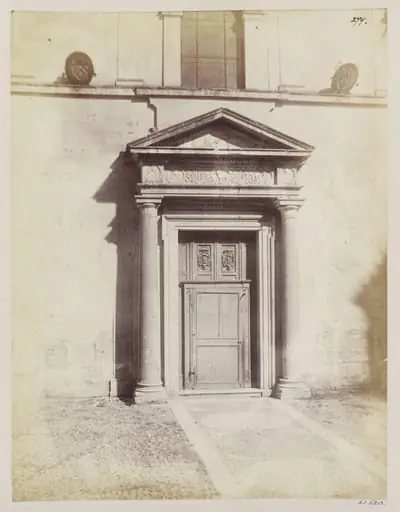 Church of S. Pudentina. Doorway, with shallow Sculpture of the eighth century (?), over it the Doorway rebuilt in the seventeenth century.
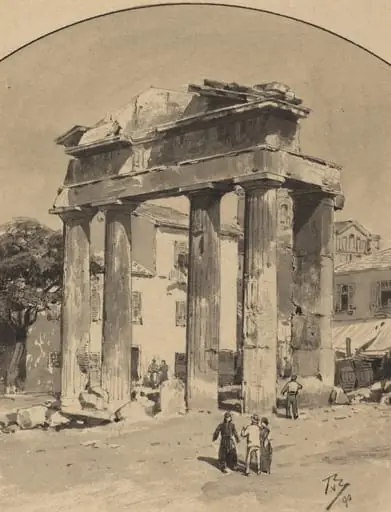 Old Market Gate
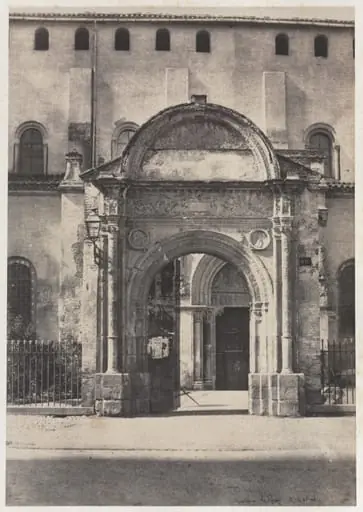 Porte Bachelier, Eglise Saint-Sernin, Toulouse (Haute-Garonne)
 Farmyard
 Cathedral Moorish Door (or door of Pardon), Seville
 Rue de la Victoire (70). Hôtel Bonaparte
 Goldsmith's Arch, Rome
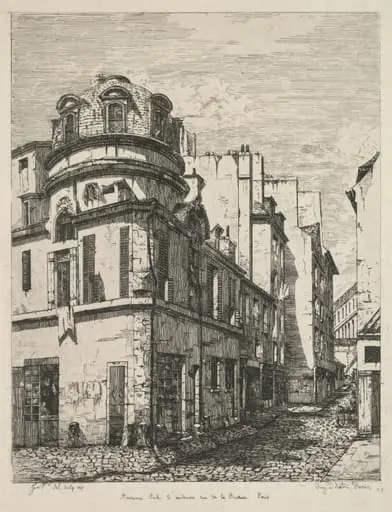 Eaux-Fortes sur le Vieux Paris: Ancienne école de médecine rue de la Bûcherie (Etchings of Old Paris: Former Medical School, rue de la Bucherie)
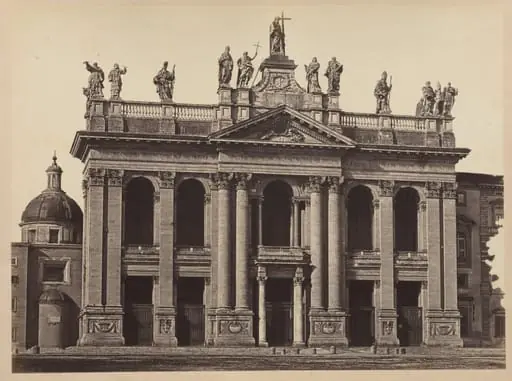 St. Jean de Lateran, Rome
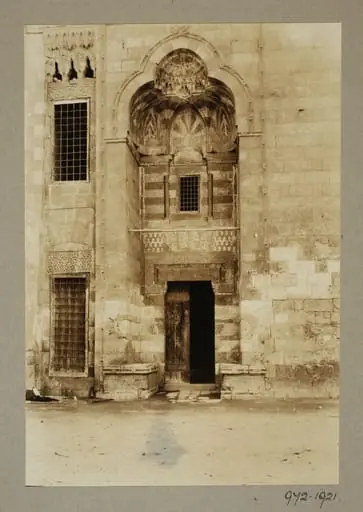 Entrance portal of the mosque of Qadi Yahya Zayn al-Din (Habbaniyya), Cairo
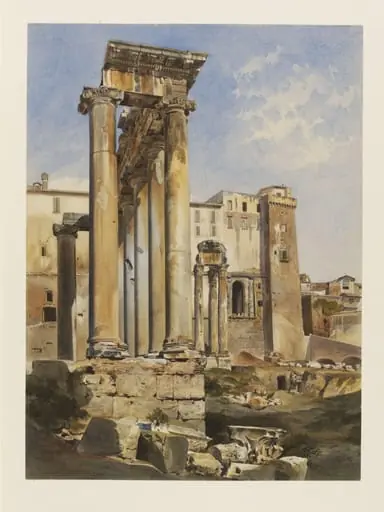 The Temple of Saturn and the Temple of Concord, Rome