Artwork
Notre-Dame, Paris
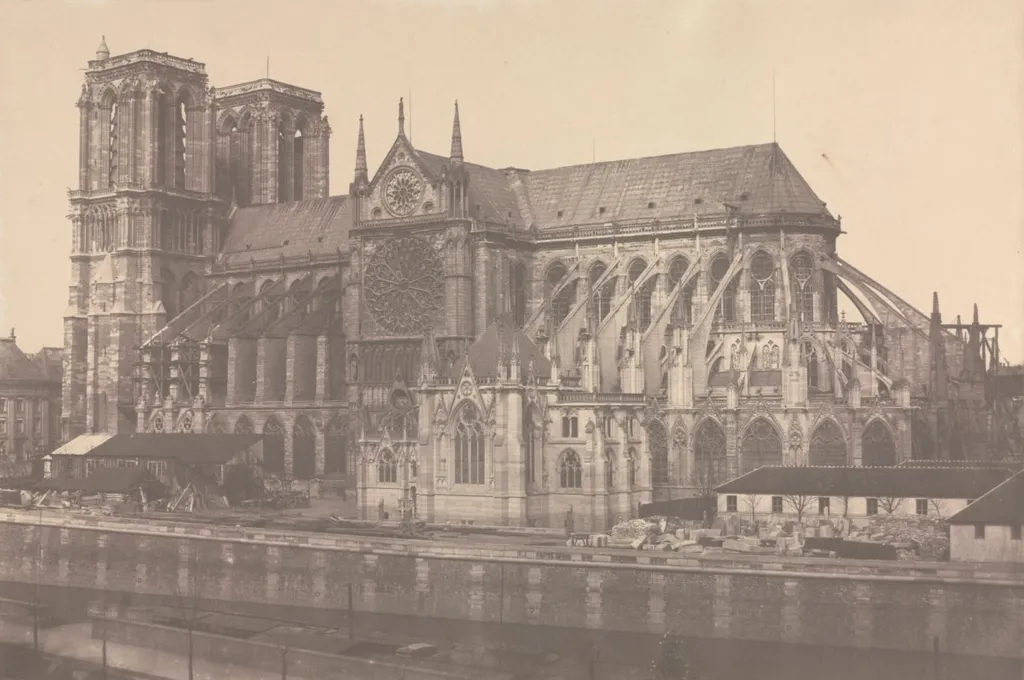
Notre-Dame, Paris is a photography by the Impressionist artist Édouard Baldus. It dates from 1852 and is held in the collection of the Cleveland Museum of Art.
About this work
Overview
This 19th‑century photograph presents a full‑frame view of Paris’s cathedral of Notre‑Dame, rendered in the warm gray tones characteristic of the salt‑print process. The composition isolates the structure, eliminating people and clouds, so the stone façade and soaring volume dominate the image.
Subject & Meaning
By omitting contemporary activity, the photograph emphasizes the timeless architectural presence of the cathedral, inviting contemplation of its physical mass and its symbolic role as a historic monument within the urban landscape.
Technique & Style
The image was produced by Gustave Le Baldus using the salt‑print method, a labor‑intensive technique that yields delicate tonal gradations. An oblique perspective was chosen to accentuate the building’s three‑dimensional form, while the expansive sky serves as a neutral backdrop that highlights the negative space around the edifice.
History & Provenance
Created in the mid‑1800s, the photograph reflects Baldus’s reputation as a leading architectural photographer of his era. Original prints remain in several European collections, documenting both the cathedral’s pre‑restoration appearance and the evolution of photographic practice.
Context
During the period, architectural photography was emerging as a means to document heritage sites. Baldus’s work aligns with contemporary interests in precise, scientific representation, yet his compositional choices also echo the chiaroscuro aesthetic, balancing light and shadow to model form.
Artist & collection

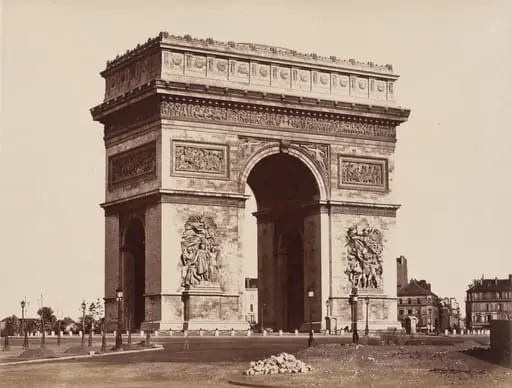 Arc de Triomphe de l'Etoile, Paris
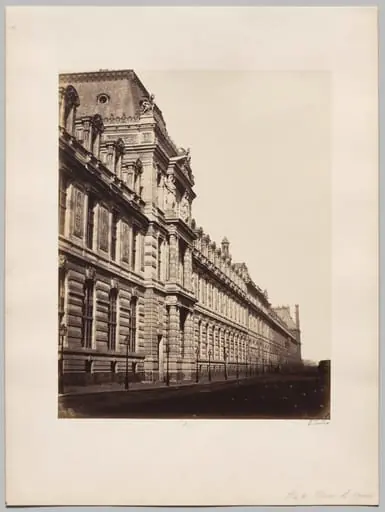 Louvre, Façade rue de Rivoli, Paris
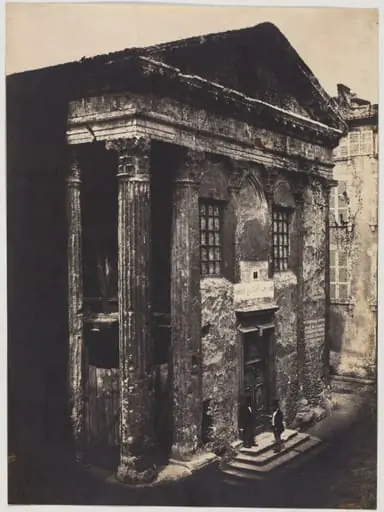 Façade, Temple of Augustus and Livia, Vienne
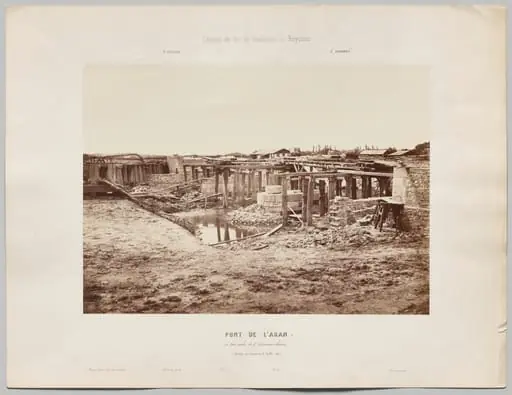 Chemin de fer de Toulouse à Bayonne. Pont de l'Aran (en trois arches de 17m d'ouverture chacune). Situation des travaux au 21 juillet 1861
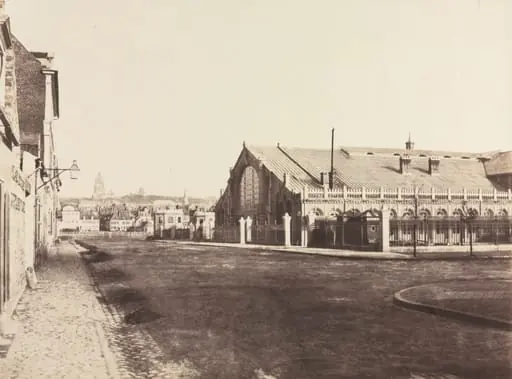 South Gable of the Boulogne Railway Station
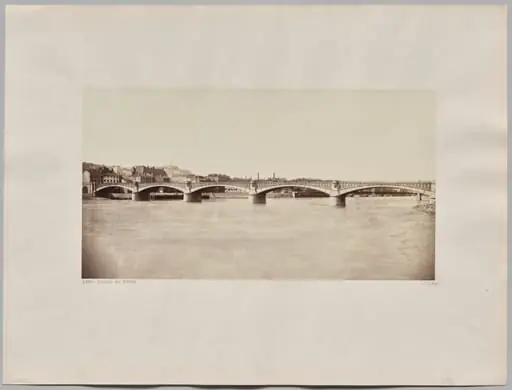 Lyon. Viaduc du Rhône
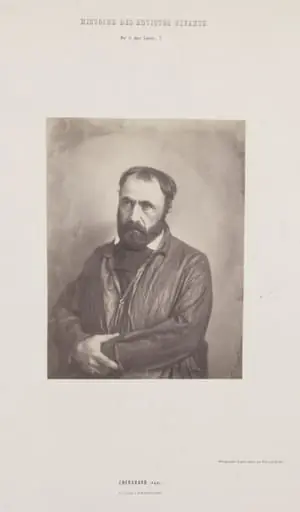 Portrait of Paul Chenavard, from the series "Histoire des Artistes Vivants"
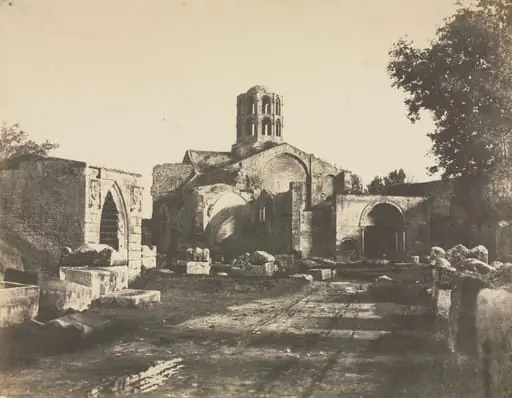 Saint-Honorat, Prés d'Arles
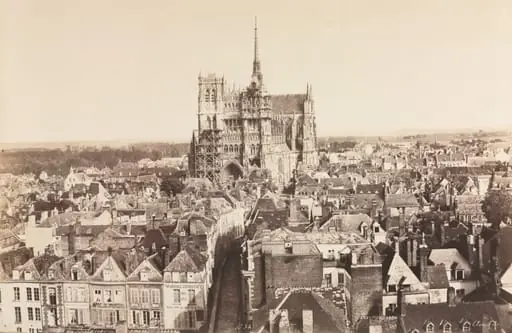 Amiens
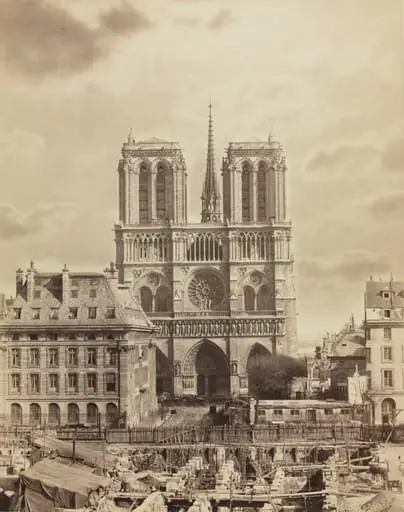 Notre Dame de Paris
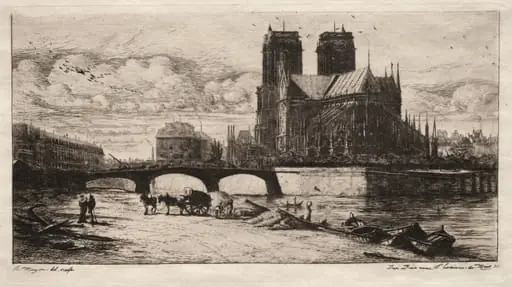 Etchings of Paris: The Apsis of the Cathedral of Notre Dame
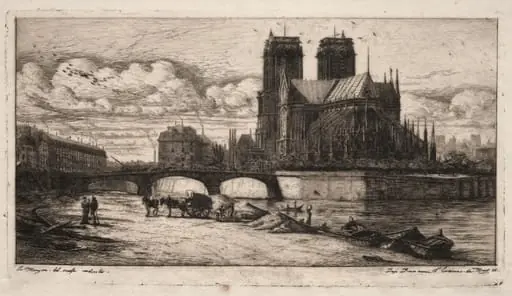 Etchings of Paris: The Apse of the Cathedral of Notre Dame
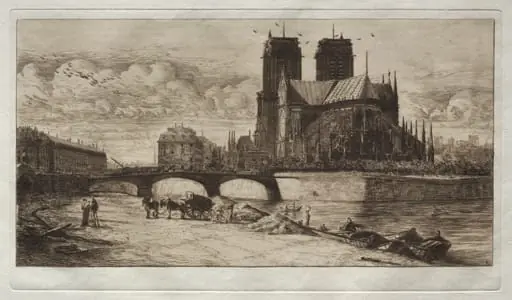 L'Abside de Notre Dame de Paris
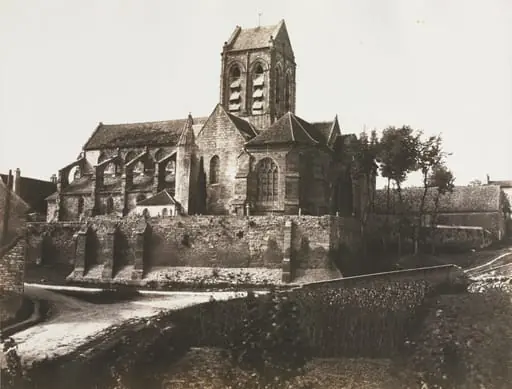 Church at Auvers
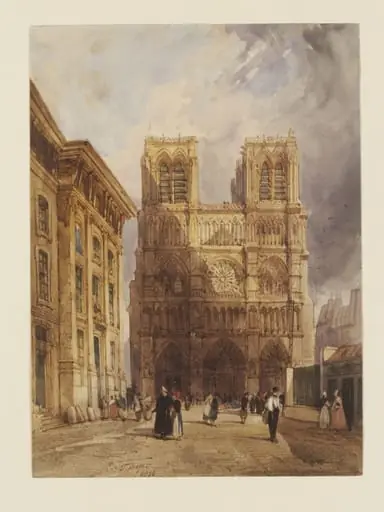 Notre Dame, Paris
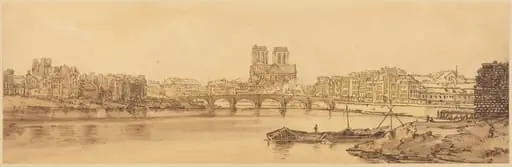 View of Pont de la Tournelle and Notre Dame Taken from the Arsnel: pl.11
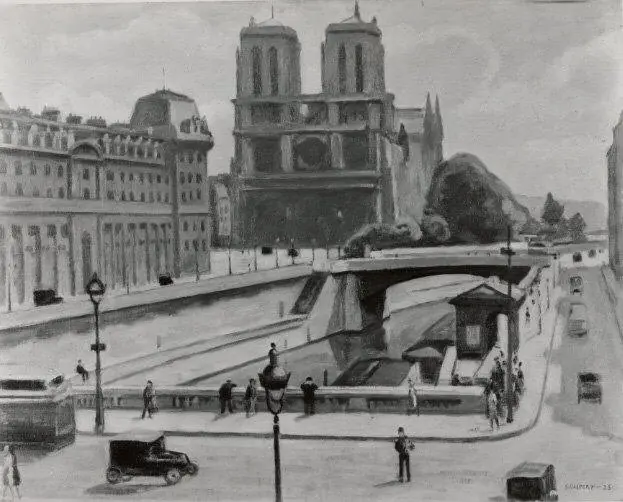 Notre Dame, Paris
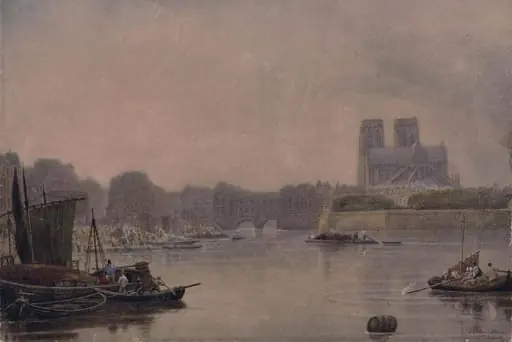 Notre Dame, Paris
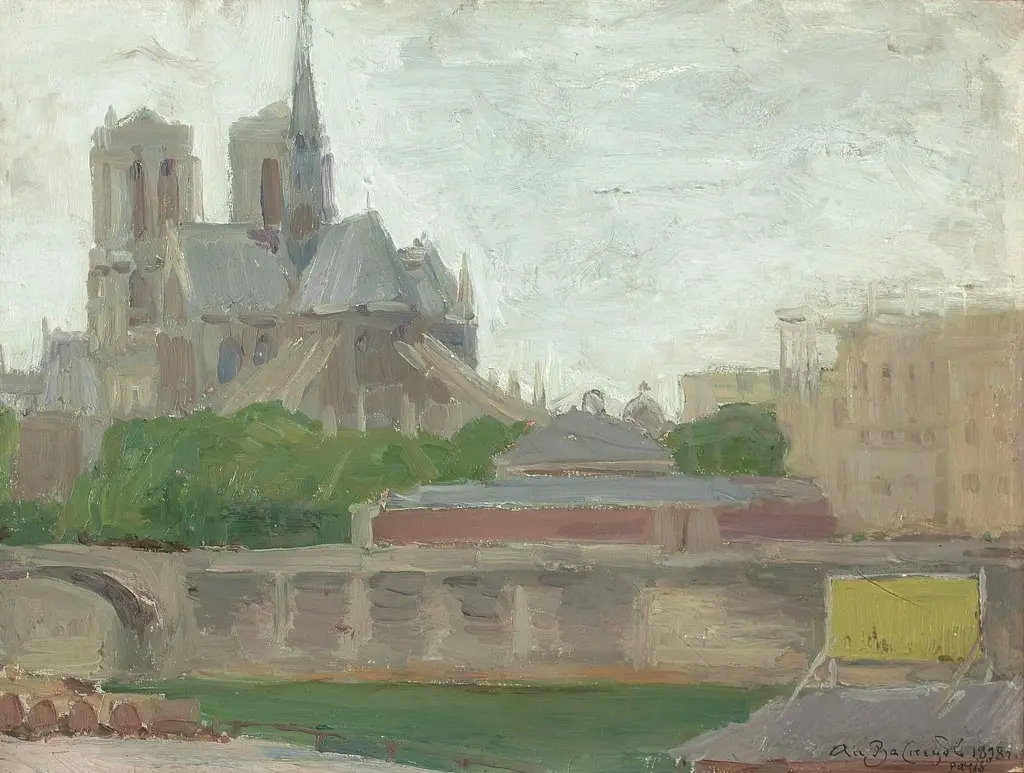 Notre Dame de Paris