Artwork
Rue de la Victoire (70). Hôtel Bonaparte
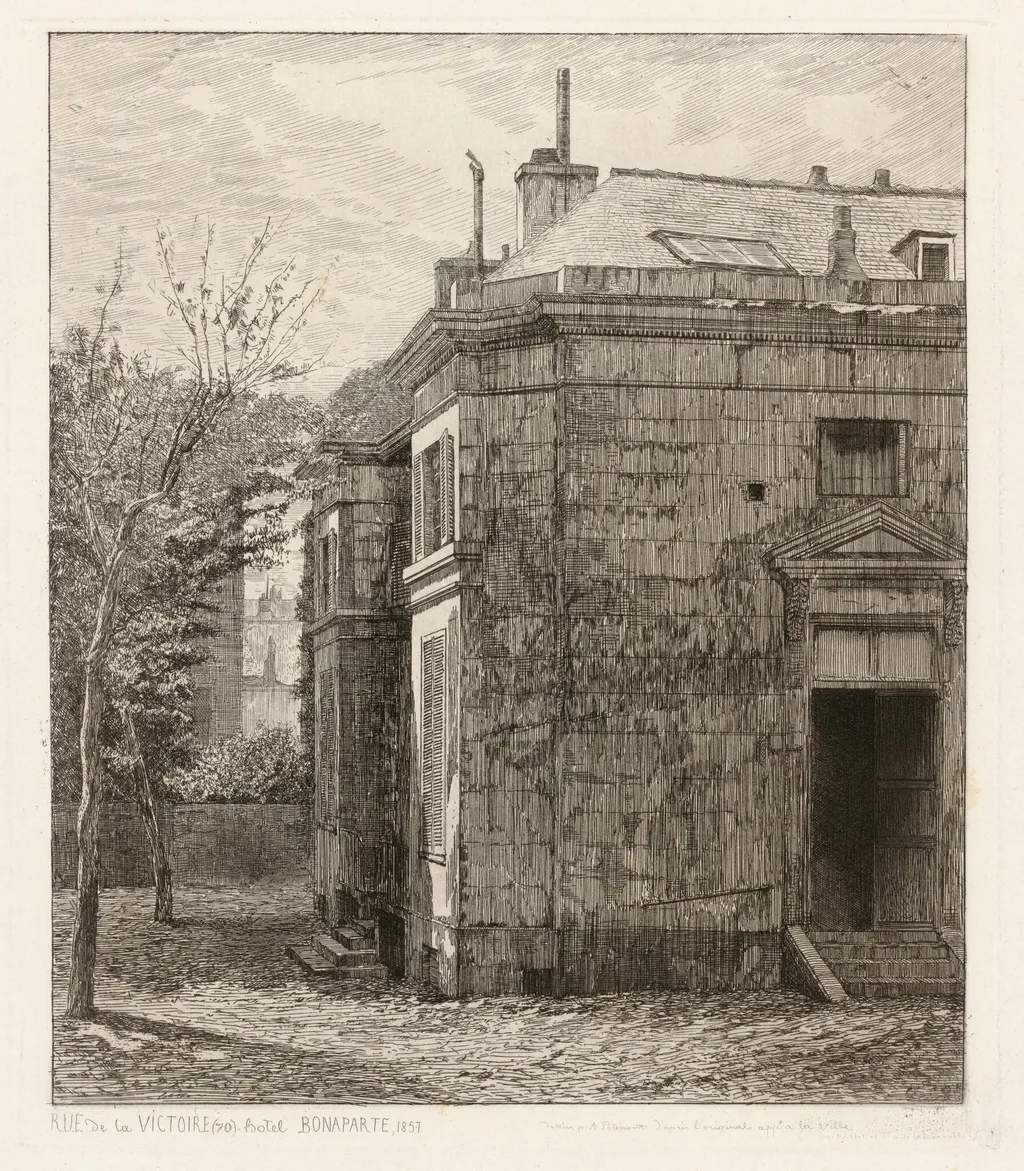
Rue de la Victoire (70). Hôtel Bonaparte is an ink print by the Impressionist artist Adolphe Théodore Jules Martial Potémont. It dates from 1857 and is held in the collection of the National Gallery of Art.
About this work
The artist used fine lines to show the damp air and soft shadows, making the scene feel still and a little lonely.
This etching shows a quiet Paris street lined with tall, narrow houses and a few bare trees. A single gas lamp glows faintly in the evening light.
Potémont made this print in 1857, just as gas lighting was spreading across the city. The Hôtel Bonaparte, a real building, sits on the left—it was once home to Napoleon’s family. The artist used fine lines to show the damp air and soft shadows, making the scene feel still and a little lonely.
If you like this, look up the technique of etching.
Overview
Created in 1857, this etching by Adolphe Théodore Jules Martial Potémont presents a modest Parisian street scene. Rendered on wove paper, the print captures the evening atmosphere of Rue de la Victoire, where a solitary gas lamp casts a faint glow on the wet pavement and the façades of narrow, tall houses.
Subject & Meaning
The composition centers on the Hôtel Bonaparte, a historic residence that once housed members of Napoleon’s family. By placing the building on the left side of the view, the artist emphasizes its presence amid an otherwise quiet, almost deserted urban setting, suggesting a lingering sense of nostalgia and solitude.
Technique & Style
Potémont employed the etching process, using delicate, intersecting lines to render the damp air and subtle shadows. The fine hatching conveys the texture of stone walls and the faint illumination of the gas lamp, while the restrained palette of black ink on paper enhances the mood of stillness.
History & Provenance
The work was produced during a period when gas lighting was rapidly expanding throughout Paris, a technological shift reflected in the lamp’s soft glow. The print has been documented in several 19th‑century collections of French urban views, tracing its ownership from private collectors to museum holdings.
Context
Set in mid‑19th‑century Paris, the etching illustrates the transformation of the city’s streets as modern infrastructure, such as gas illumination, altered everyday life. The Hôtel Bonaparte’s association with the Bonaparte family adds a layer of historical resonance, linking personal memory to the broader urban landscape.
Own this work as a print
Artist & collection

Artist
Adolphe Théodore Jules Martial Potémont
Adolphe Théodore Jules Martial Potémont (1862–1862) was an artist.

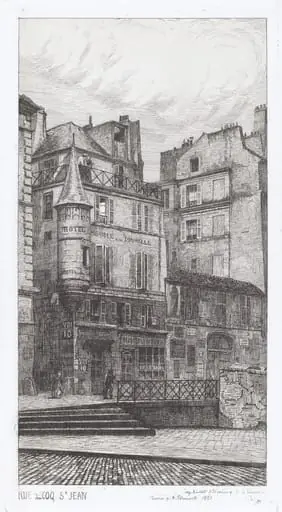
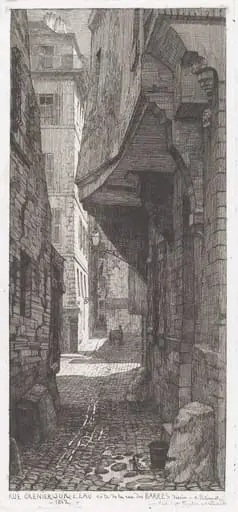
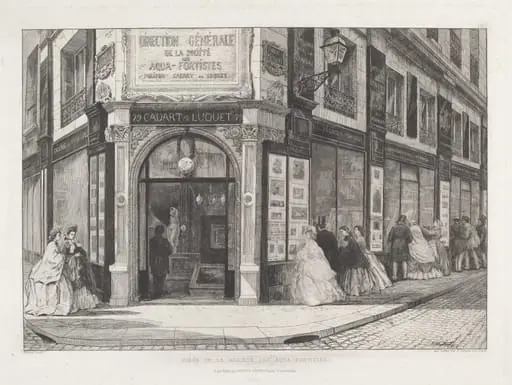
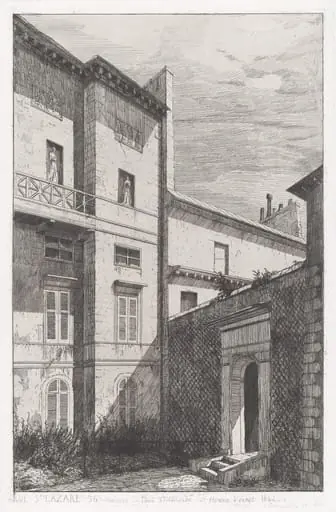
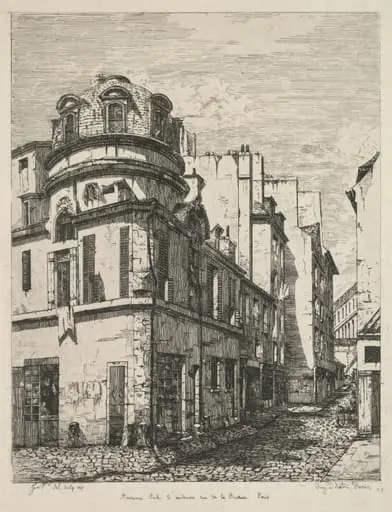 Eaux-Fortes sur le Vieux Paris: Ancienne école de médecine rue de la Bûcherie (Etchings of Old Paris: Former Medical School, rue de la Bucherie)
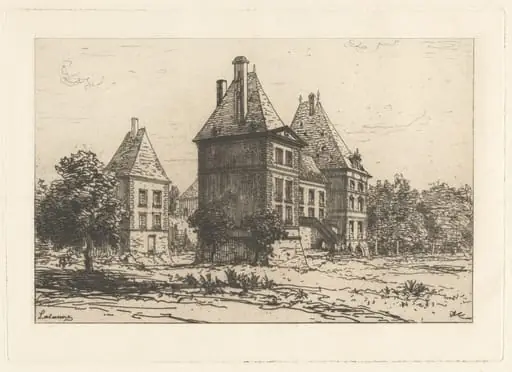 Castle with Two Wings
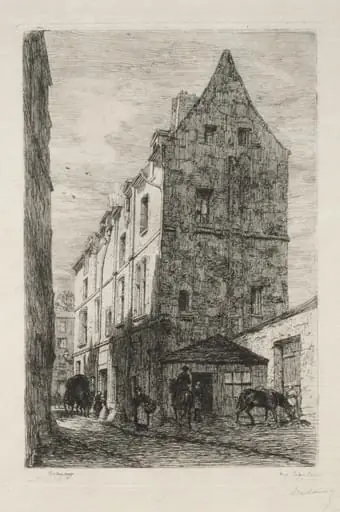 Maison dite de la Reine Blanche, Rue de Marmousets
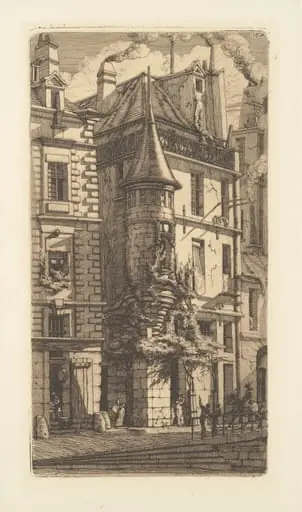 Tourelle, Rue de la Tixeranderie
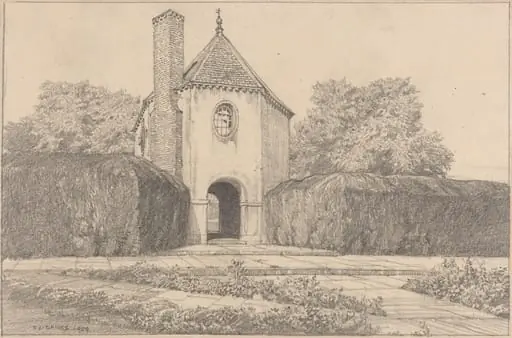 Garden House
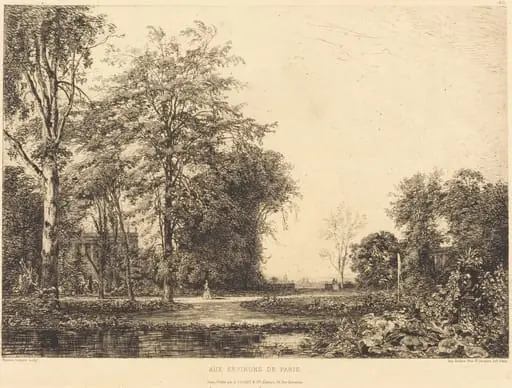 Aux environs de Paris
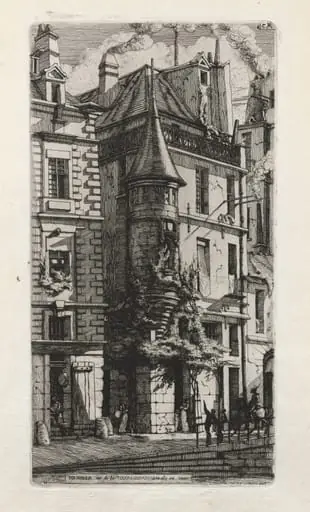 House with a Turret, rue de la Tixéranderie, Paris
 Castle with Two Towers
 La Maison Enchantée (The Haunted House)
 La rue des Quatre Vents