Artwork
Church at Auvers
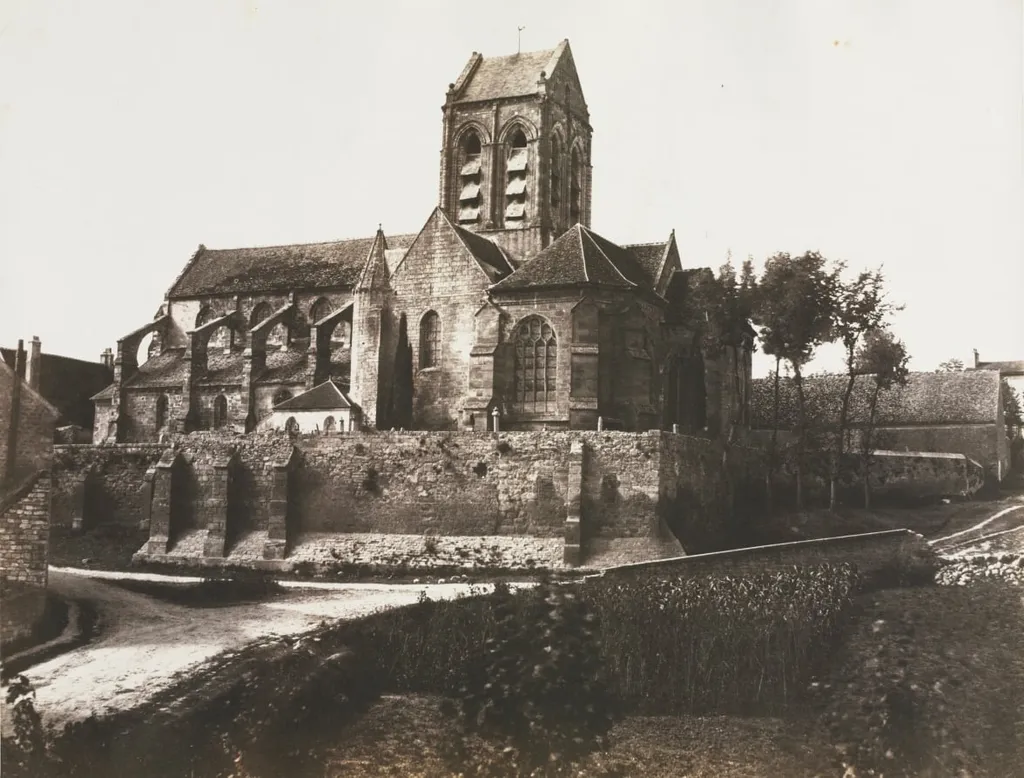
Church at Auvers is a photography by the Impressionist artist Édouard Baldus. It dates from 1855 and is held in the collection of the Cleveland Museum of Art.
About this work
This is a black-and-white photo of a small stone church with tall narrow windows.
This is a black-and-white photo of a small stone church with tall narrow windows. The building sits on a little hill, surrounded by bare trees. The sky above is light and flat.
Baldus took this shot as part of a series documenting railroad sights. He focused on the church’s simple Gothic lines and rough texture. The trees have no leaves, so you really notice the church’s shape.
If you like this style, check out Édouard Baldus (French, 1813–1889).
Overview
Édouard Baldus captured this black-and-white photograph of the Church at Auvers-sur-Oise as part of a commissioned series documenting railway infrastructure and landmarks between Boulogne-sur-Mer and Paris. Taken in the 1850s, the image reflects his systematic approach to architectural documentation, emphasizing structure over atmosphere. The church, perched on a gentle rise, is framed by leafless trees and a uniform sky, highlighting its form against a muted landscape.
Subject & Meaning
The church, originally a private chapel attached to a now-vanished manor, stands as a quiet relic of medieval rural life. Its Gothic architecture—narrow windows, simple stonework, and modest tower—suggests local craftsmanship rather than grand ecclesiastical ambition. Baldus’s focus on its unadorned silhouette underscores its role as a functional, enduring presence in the countryside, detached from ceremonial grandeur.
Technique & Style
Baldus employed large-format glass plate photography to render fine details of the church’s weathered stone and pointed arches. The composition is deliberate: the bare winter trees frame the building without distraction, while the flat, even sky eliminates depth cues, reinforcing architectural clarity. His use of natural light and careful framing prioritizes structural accuracy over emotional effect, aligning with early documentary practices.
History & Provenance
The photograph was produced in the mid-1850s for a state-sponsored project to record France’s evolving transportation network. Baldus’s series included over fifty views, intended as both archival records and public demonstrations of technological progress. The Church at Auvers was selected not for its fame but for its location along the rail route, reflecting a shift in how heritage was cataloged during industrialization.
Context
While Baldus documented the church as a static monument, Vincent van Gogh would later reinterpret it in 1890, just months before his death. Van Gogh’s expressive painting of the same structure reveals a different cultural moment—one where emotional resonance replaced documentary precision. The contrast between the two works illustrates how the same subject could embody both industrial record and personal vision within a single generation.
Legacy
Baldus’s photographs of French architecture laid groundwork for later institutional efforts to preserve visual records of historic sites. Though overshadowed by the fame of van Gogh’s painting, Baldus’s image remains a key example of early architectural photography’s role in shaping historical consciousness. His methodical approach influenced how buildings were perceived—not as monuments alone, but as embedded elements within changing landscapes.
Artist & collection

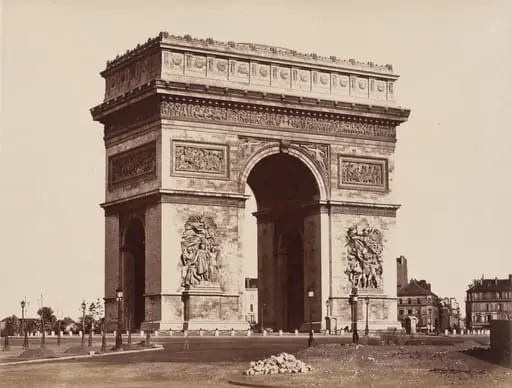 Arc de Triomphe de l'Etoile, Paris
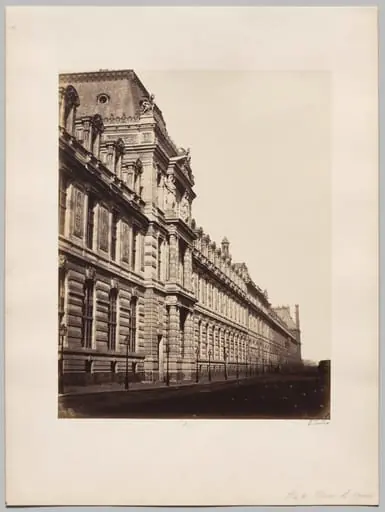 Louvre, Façade rue de Rivoli, Paris
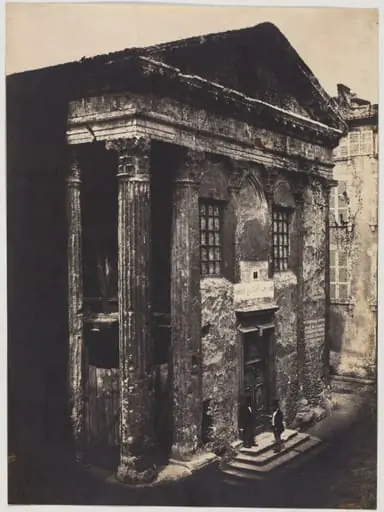 Façade, Temple of Augustus and Livia, Vienne
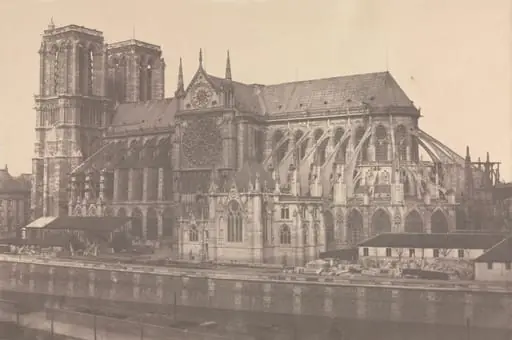 Notre-Dame, Paris
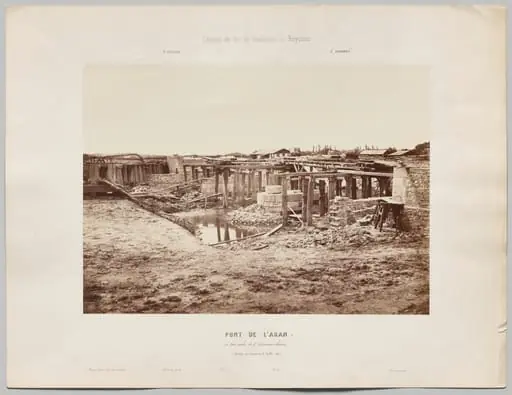 Chemin de fer de Toulouse à Bayonne. Pont de l'Aran (en trois arches de 17m d'ouverture chacune). Situation des travaux au 21 juillet 1861
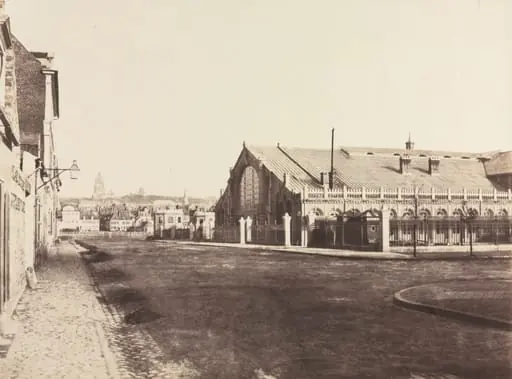 South Gable of the Boulogne Railway Station
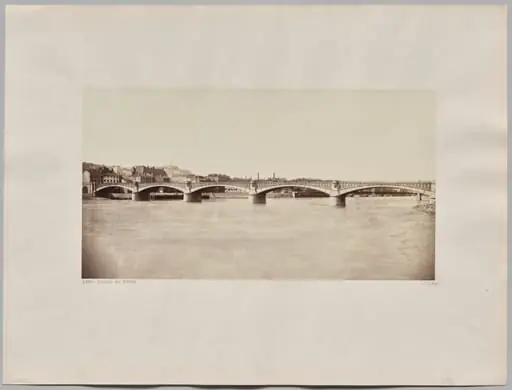 Lyon. Viaduc du Rhône
 Portrait of Paul Chenavard, from the series "Histoire des Artistes Vivants"
 Doorway to Sèvres Factory
 Architecture of the Middle Ages: Church at Serran, near Gisore
 View of Évreux
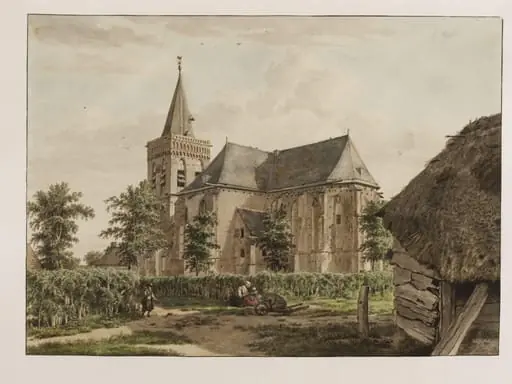 View of the Oude Kerk at Ede in Gelderland
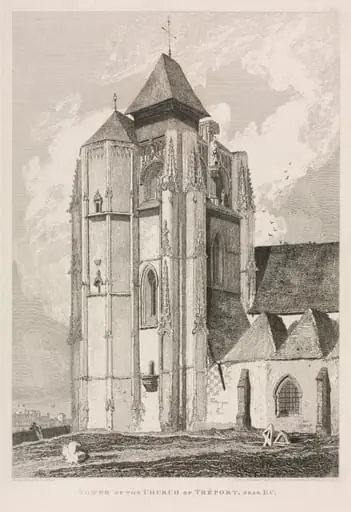 Architectural Antiquities of Normandy (Vol. II), Pl. 66: Tower of the Church of Tréport, near Eu
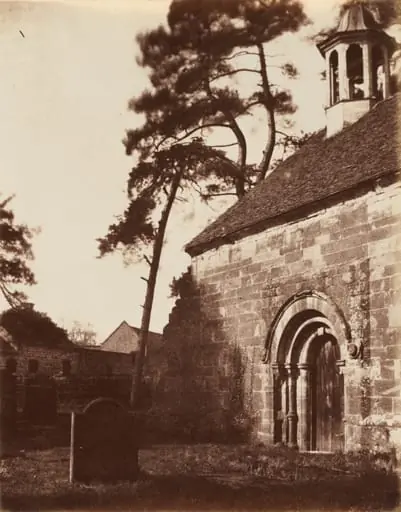 Woodcote
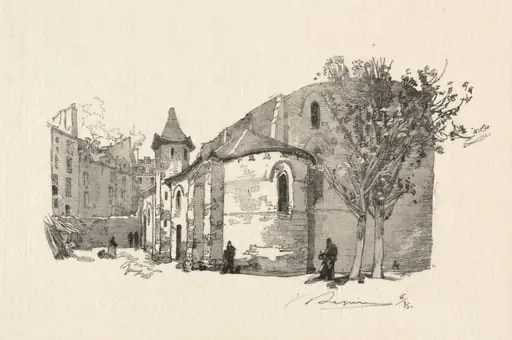 St. Julien le Vauvre, Vue extérieur
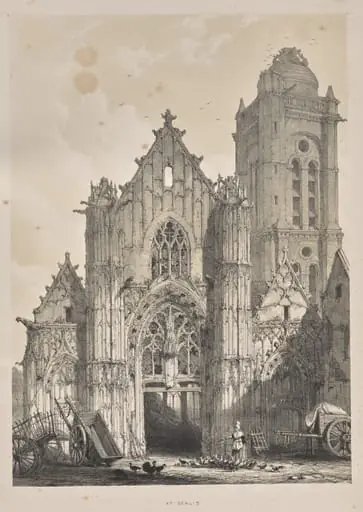 Architecture of the Middle Ages: At Senlis