Artwork
Pavilion Richelieu, Louvre, Paris
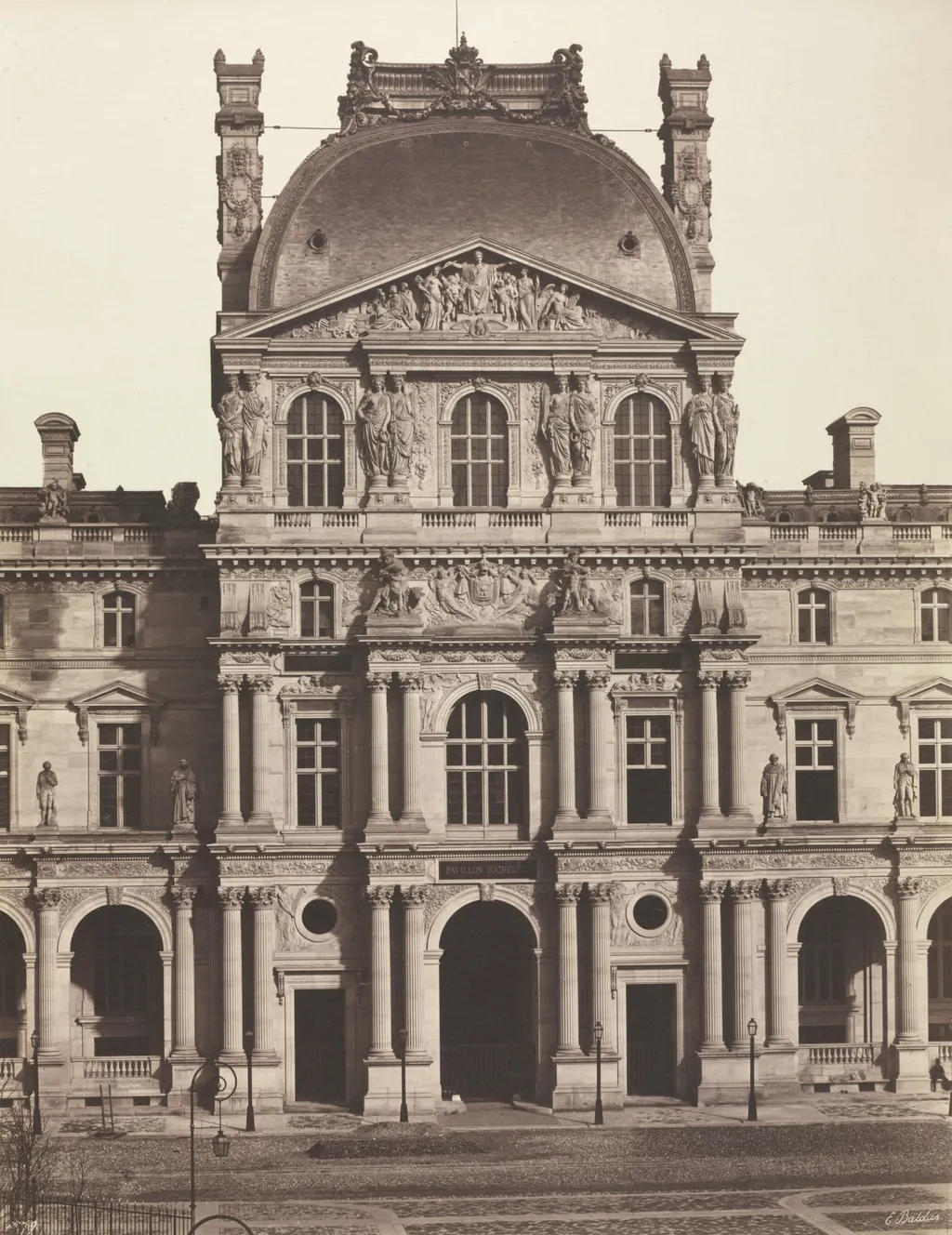
Pavilion Richelieu, Louvre, Paris is a photography by the Impressionist artist Édouard Baldus. It dates from 1856 and is held in the collection of the Cleveland Museum of Art. Taken in 1854, this photograph captures the newly completed Pavilion Richelieu at the Louvre in Paris.
About this work
Above the entrance, there’s a big semicircle with more carvings of figures, almost like a stage set.
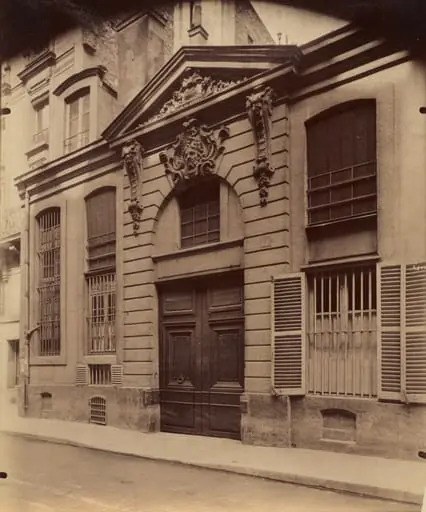
This building looks like a grand, fancy palace made of stone. Tall columns line the front, and statues of people stand between the windows. Above the entrance, there’s a big semicircle with more carvings of figures, almost like a stage set.
The photo is in black and white, so it looks old-fashioned. The details are sharp, showing how carefully the carvings and windows were made.
Next, check out Édouard Baldus (French, 1813–1889) to see more of his work.
Overview
Taken in 1854, this photograph captures the newly completed Pavilion Richelieu at the Louvre in Paris. Commissioned as part of a broader project to document the expansion of the Louvre Palace, the image records a key moment in the architectural unification of the Louvre and Tuileries complexes. Shot by Édouard Baldus, it reflects the era’s interest in systematically preserving urban transformation through photography.
Subject & Meaning
The Pavilion Richelieu was designed to house administrative functions, not art, and remained separate from the museum’s public collections until 1993. Its classical façade—adorned with columns, statues, and sculpted reliefs—emphasized state authority and continuity with royal tradition. The photograph, while documentary in intent, subtly underscores the building’s symbolic role as a monument to imperial ambition under Napoleon III.
Technique & Style
Baldus employed large-format glass plate negatives to achieve exceptional detail and tonal range. The black-and-white image reveals precise rendering of stonework, window tracery, and sculptural elements, showcasing the camera’s capacity to capture architectural nuance. His compositional clarity and steady perspective reflect a methodical approach, aligning photographic practice with the precision expected of architectural documentation.
History & Provenance
Commissioned by the French government in 1854, Baldus’s photographs were part of an official record of the Louvre’s expansion under Napoleon III. The Pavilion Richelieu, finished just before the photograph was taken, was originally part of a larger urban plan to link the Louvre with the Tuileries. The images served archival and promotional purposes, later becoming key historical records of 19th-century Parisian architecture.
Context
The mid-19th century saw Paris undergo sweeping urban renewal, with the Louvre’s expansion symbolizing the state’s cultural and political ambitions. Photography was emerging as a tool for both documentation and legitimation. Baldus’s work intersected with state-sponsored projects, contributing to a visual archive that framed modernization as an extension of France’s historical legacy.
Legacy
Baldus’s photographs of the Louvre’s expansion remain among the earliest systematic visual records of architectural modernization in France. The Pavilion Richelieu’s eventual integration into the museum in 1993 gave new significance to these images, transforming them from administrative records into historical witnesses of institutional evolution. They continue to inform studies of 19th-century urbanism and the role of photography in public memory.
Artist & collection

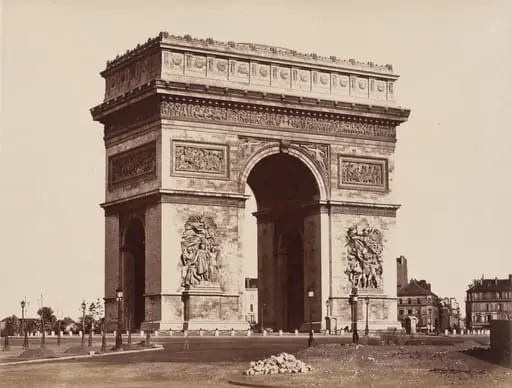 Arc de Triomphe de l'Etoile, Paris
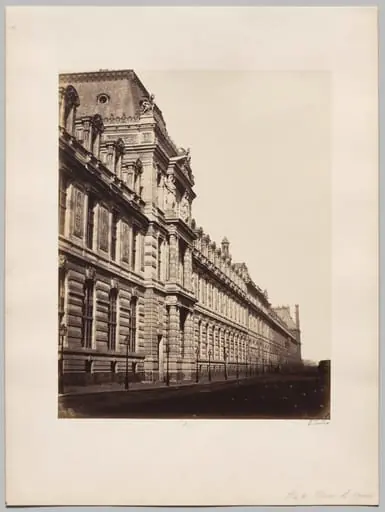 Louvre, Façade rue de Rivoli, Paris
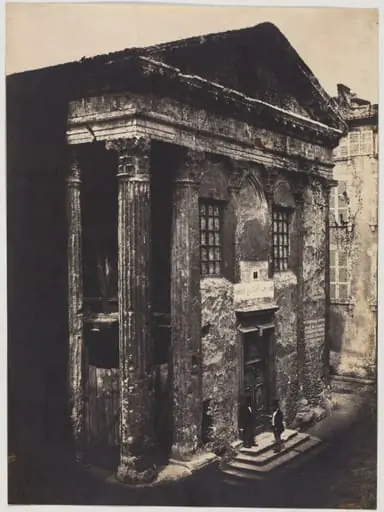 Façade, Temple of Augustus and Livia, Vienne
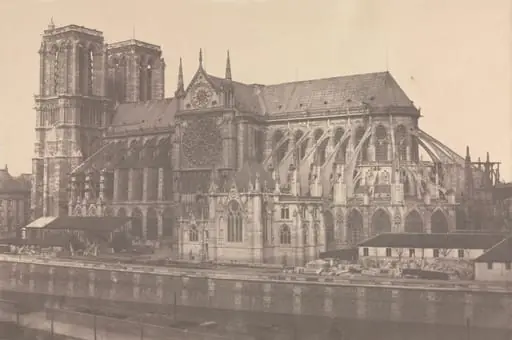 Notre-Dame, Paris
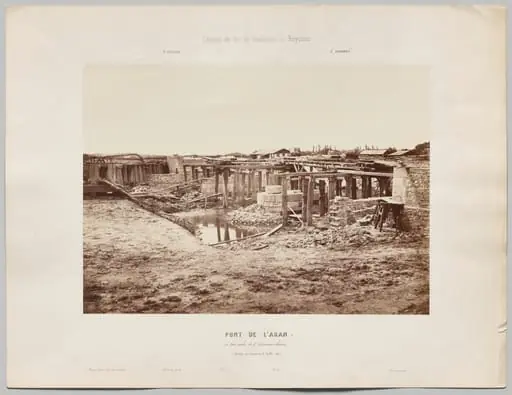 Chemin de fer de Toulouse à Bayonne. Pont de l'Aran (en trois arches de 17m d'ouverture chacune). Situation des travaux au 21 juillet 1861
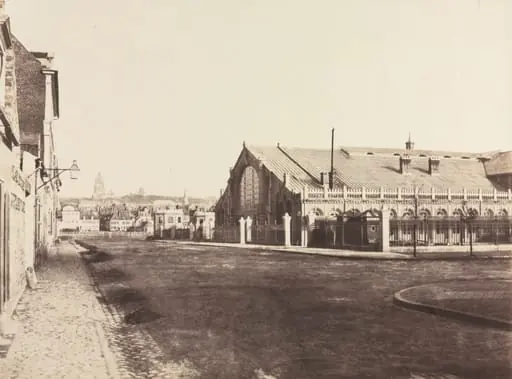 South Gable of the Boulogne Railway Station
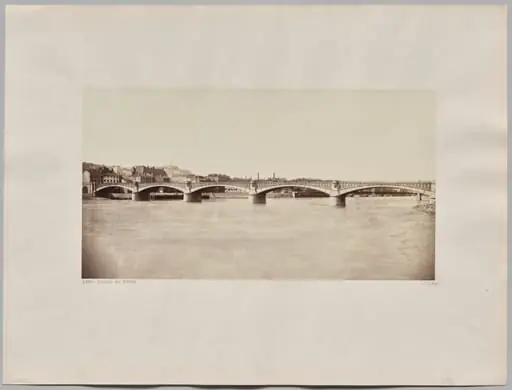 Lyon. Viaduc du Rhône
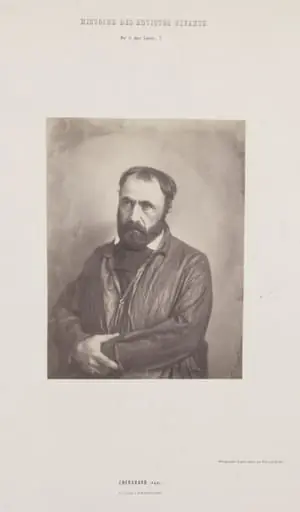 Portrait of Paul Chenavard, from the series "Histoire des Artistes Vivants"